Paper-Feet creates sustainable sandals in Ann Arbor

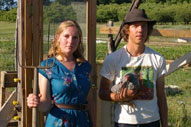
Walking is seen as the most sustainable modes of transportation but one Ann Arbor-based start-up is taking a big step forward with that concept - Paper-Feet takes old billboard signs and cuts them into a paper-thin sandals. Founder Jimmy Tomczak came up with idea while walking down his gravel driveway without shoes. "I wanted to toughen up my feet so we started experimenting with different materials," Tomczak says. He had been using the old vinyl billboard sheets for a tarp and decided to turn part of one into a sandal. Now the 6-month-old firm is creating some testing products for limited sale. It hopes to have a final product by July and some of these sandals in local retailers later this year.The sandals are pretty inexpensive. Paper-Feet is selling its first test pairs at cost. When shipping is added in the total price is under $10. The idea is to make a durable, comfortable, highly affordable sandal that makes outdoor adventure less cost prohibitive. The sandals can be bought at the start-up's website here."I think this idea has great potential," Tomczak says. "There is a great viral quality to these. Each pair is unique."Source: Jimmy Tomczak, founder of Paper-FeetWriter: Jon Zemke

InfoReady spins off 6 new jobs, plans to hire 6-10 more

Grant writing is the go-to technique for governments, universities and non-profits to acquire new revenue streams. A new start-up in Ann Arbor thinks it's come up with a way that will make it easier for them to win that funding.InfoReady specializes in providing software as a service, helping organizations effectively apply for grant funding. The idea is that a lot of these organizations don't know the ropes of submitting a successful application, but will be willing to invest a few dollars in figuring out the finer details of the process."There is a tremendous market demand for this product from research universities, schools districts, local governments and economic development agencies," says Bhushan Kulkarni, CEO of InfoReady. "It's an untapped market that is hungry for new revenue."The GDI Infotech spin-off is already growing quickly. It has created a staff of six people since March. Two interns are expected to come on board this summer and the staff is expected grow from 6-10 new hires within the next year. Helping fuel that growth is a loan from Detroit-based TechTown's First Step Fund last month."We plan on growing this baby very quickly," Kulkarni says.Source: Bhushan Kulkarni, CEO of InfoReadyWriter: Jon Zemke

Mobile Sign Language wins elevator pitch competition at SPARK East

Entrepreneurs came, they pitched and they went away with a better idea of how to win support and even funding for their fledgling businesses at the Ann Arbor SPARK elevator pitch competition last week.Six entrepreneurs from six local start-ups gave their best pitch on why their business idea will be the next big thing. Jason Gilbert of Mobile Sign Language Systems landed the prize, $50,000 worth of Ann Arbor SPARK services, for his pitch for creating sign language software for smart phones."Jason did a great job with the presentation," says Paul McCreadie, a principal of Arboretum Ventures (an Ann Arbor-based venture capital firm) who served as one of the judges. "He did a great job of conveying the frustration in the deaf community."McCreadie's smart phone application translates spoken English into a video of sign language in real time. It's designed for deaf people who struggle to communicate with those who don't know sign language. The short-term goal is to create test program for the market. The long-term goal is to be acquired."We have a small version of what our product will be," Gilbert says.Other start-ups giving pitches included a firm that creates an in-rack air conditioner for data centers (Aeradigm), a point-of-sale system for independent coffee houses (Own), an ethanol formula for diesel fuel (Eco-Fueling) and a test that will help parents know the best time to conceive in order to achieve the preferred gender of their next child (Urobiologics).Many of the businesses have hopes of big dollar acquisition in a few years and one, Eco-Fueling, is a spin-off of an Australian company looking to break into the North American market. Some of the entrepreneurs stumbled during their pitch delivery while others commanded the room with the confidence of their product. "The reason it took us so long (to choose the winner) is because we had five good proposals," says David Mielke, dean of the Eastern Michigan University School of Business.Source: Paul McCreadie, a principal of Arboretum Ventures, David Mielke, dean of the Eastern Michigan University School of Business and Jason Gilbert of Mobile Sign Language SystemsWriter: Jon Zemke

More start-ups move into Ann Arbor SPARK’s wet lab incubator

The Michigan Life Science Innovation Center has almost reached the tipping point in Plymouth.The former Pfizer wet lab now houses 16 start-ups that range from one-or-two-person firms to name-brand anchor tenants, such as Esperion and Lycera. That's puts the 18-month-old facility managed by Ann Arbor SPARK at 75 percent occupancy, up from 50 percent a year ago. Half a dozen new life science firms have moved in during that time."Many of them have been pure start-ups," says Greg Fronizer, managing director of finance and administration for Ann Arbor SPARK who also managed the wet lab incubator. "These are companies that need half a bench or a full bench of lab space."The Michigan Life Science Innovation Center features 57,000-square-feet of space geared toward companies based in life sciences. The amenities include state-of-the-art labs, office space, conference rooms and a loading dock. Ann Arbor SPARK purchased the lab 18 months ago with help from a number of major organizations, such as the Michigan 21st Century Jobs Fund, Wayne County and the New Economy Initiative."There are 16 different companies in there that wouldn't be if it weren't for the help of organizations like NEI," says Mike Finney, executive director of Ann Arbor SPARK.Fronizer expects the wet lab to hit its optimal occupancy of 85-90 percent within the next year. "We always want to leave a little bit of extra space for the existing firms to grow," Fronizer says.Source: Greg Fronizer, managing director of finance and administration for Ann Arbor SPARKWriter: Jon Zemke

Washtenaw firms take advantage of military, homeland security growth

Ann Arbor might not be the happiest about its country being at war, but it knows how to take advantage of all of the defense homeland security jobs that come with it.Excerpt:University spinouts and intellectual capital for innovation are turning Washtenaw County into a burgeoning defense research and engineering cluster to design the devices of high-tech warfare. Private-sector employers in Ann Arbor and neighboring Ypsilanti with major defense and homeland security contracts could account for up to 1,500 jobs — or nearly 2 percent of the combined employed workforce for those two cities in March, according to recent employer data furnished to Ann Arbor Spark and Crain's. That number could climb soon: The Procurement Technical Assistance Center at Schoolcraft College reports 63 other companies in Washtenaw County became clients in 2008-2009, up from just 12 new client companies in 2007. The PTAC centers help client small businesses obtain new government contracts in defense and other areas.Read the rest of the story here.

U-M partnerships with GM on the rise

Two of the biggest institutions in Michigan have been working together more and more as of late. Seems about right for two titans of the new economy that share a region.Excerpt:A little over a year ago General Motors and the University of Michigan announced the formation of the Institute of Automotive Research and Education with nothing less than the goal of "reinventing the automobile." With initial research in battery technology, engine systems, smart materials and advanced manufacturing techniques, the intent was to find a route to greater fuel economy and the electrification of the car.One year into this extensive collaboration, I had the chance to attend one of the regular review meetings where Institute progress is tracked. Building upon the four initial focus areas, GM and U-M have begun developing opportunities for additional research work in safety, alternative energy and infotainment. Read the rest of the story here.

U-M Hospital, Bank of Ann Arbor, AATA push forward sustainability projects

As if Tree City wasn't green enough, several Ann Arbor institutions have been recognized for their efforts in energy efficiency, recycling and other environmentally responsible efforts. The Ann Arbor Transportation Authority has implemented cost- and energy-saving measures, while Bank of Ann Arbor and the University of Michigan Hospitals and Health Centers have received awards for their green efforts. Three Ann Arbor Transportation Authority facilities have installed energy management control systems, which are expected to produce substantial cost-savings, up to 20 percent, over the previous system. The energy management system allows timed control of the temperatures throughout TheRide’s main office and at its Blake and Ypsilanti transit center facilities. This new system will allow TheRide to control the heating, cooling and lighting schedules throughout the day and night, as well as automatically control the temperatures and lighting in different areas of each building. TheRide expects to recover its $78,000 investment in the new system in two years.The University of Michigan Hospital was named for a fourth year as a member of the Environmental Leadership Circle, the most prestigious award from Practice Greenhealth, a national membership organization of health care facilities committed to environmentally responsible operations. The Hospitals and Health Centers were recognized for exemplifying environmental excellence and high standards for environmental practices in health care. Among the hospital system's programs are a mercury-free program, smoke-free environment, recycling initiatives ranging from paper to lab solvents, removal of an on-site incinerator, reduction of medical wastes, using locally grown food for patient and retail food services, and more.Bank of Ann Arbor has been awarded a Business Recycling Leadership Award for its recycling and sustainability efforts. Awarded by Recycle Ann Arbor, businesses must recycle a high percentage of waste as determined by an audit, have a staffer designated to coordinate recycling, recycle special items such as printer cartridges or fluorescent light bulbs, and other efforts. From April 1, 2008 through April 30, 2010, Bank of Ann Arbor recycled 18,936 pounds of paper and cardboard and 11,502 pounds of mixed containers. Bank of Ann Arbor also recycles batteries, toner cartridges, fluorescent light bulbs, polystyrene, and shopping bags. Bank of Ann Arbor has an employee team that meets to discuss recycling and sustainable projects, and an internal website provides articles on sustainability practices and waste reduction in the office environment.Also, the Sierra Club and the U.S. Green Building Council are hosting their "Green Buildings for Cool Cities 2010" tour this weekend. The tour is an opportunity to learn about energy-efficient and sustainable home building methods directly from their builders and architects. Visitors will experience the inner workings of homes with features that keep their owners and communities, and the earth, safe and healthy. Guided tours are 9 a.m. to 3 p.m. Saturday and Sunday, and self-guided tours are from 9 a.m. to 5 p.m. both days. The suggested minimum donation is $5, which goes toward local charities. For information, click here. Sources: Ann Arbor Transportation Authority, University of Michigan Hospitals and Health Centers, Recycle Ann Arbor, the Sierra Club and U.S. Green Building CouncilWriter: Kristin Lukowski


Ann Arbor transit study presents travel corridor options

Streetcars, monorail, and light rail transit are among the possibilities for enhanced transportation along one of Ann Arbor's high-travel corridors.The results coming partway through the Ann Arbor Connector Feasibility Study, presented at an informational public meeting Tuesday, explored options for the Plymouth Road exit off U.S. 23 to downtown (as well as South State Street to Briarwood Mall) in an effort to improve north-south mass transit lines. The $250,000 study looked at a summary of and types of travel activity, and identified the high-activity areas. Buses in that corridor are often filled to standing-room capacity.Among the travel options presented were bus rapid transit -- enhanced bus services (separate from existing bus options), streetcars, monorail, light rail transit, and automatic guideway, which is reminiscent of the Detroit People Mover. "They're all being explored by the study team," says Eli Cooper, the city of Ann Arbor's transportation program manager. "Each one has its strengths and weaknesses."In addition to studying the current level of demand, the study is also investigating what transit systems are needed currently and for the future. And although price tags play a role in the final decision -- an enhanced buses system can start at $10 million, and light rail can cost $250 million -- there's no point in building a top-of-the-line, high-tech system if there's no demand to ride it, Cooper explain.The planning team is also examining financial, community, environmental and engineering standpoints to determine what works best for the corridor. "We're trying to take an informed approach as we begin to narrow down the technology that meets demand," Cooper said.The city is working with the Ann Arbor Downtown Development Authority, Ann Arbor Transportation Authority and University of Michigan on the study, as they all would benefit from mass transportation decisions. "It's truly a collaborate effort," Cooper said. "Each of the primary stakeholders have an interest in the project."The study will likely continue through the year with a final report completed by December.Source: Eli Cooper, City of Ann Arbor transportation program managerWriter: Kristin Lukowski

MASTERMIND: Jason Frenzel

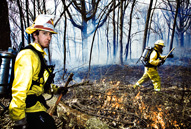
Ann Arbor is known for its parks... and we're not just talking baseball diamonds and soccer fields. The city has lots and lots of natural spaces to maintain. Enter Jason Freznel, who is part of the Natural Area Preservation Unit. Combating incursions by non-native plants, rallying local volunteers, and coordinating controlled burns, he's the city's go-to guy for green spaces.

Zingerman’s Seeds Entrepreneurship

It's no surprise that Zingerman's breeds a love of food in its staff, but entrepreneurship? Julianne Mattera talks to a trio of former employees who've taken what they've learned from Ann Arbor's beloved deli and turned it into successful businesses of their own.

Our Partners

30044
30045
30046
30047
30049
Washtenaw ISD logo
Eastern Michigan University
Ann Arbor Art Center
UMS
U of M Arts Initiative
Engage EMU

Common Ground Is Brewing

Support local stories and receive our signature roast straight to your door when you join at the Standard level (or above).

Drink Better, Read Local

Close the CTA

Don't miss out!

Everything Ann Arbor and Ypsilanti, in your inbox every week.

Close the CTA

Already a subscriber? Enter your email to hide this popup in the future.