
Ann Arbor Comprehensive Land Use Plan approved by planning commission, advances to city council
Ann Arbor City Council will consider allowing massive land use changes intended to improve affordability in the city, following the Ann Arbor Planning Commission’s unanimous Wednesday night vote to pass the draft Comprehensive Land Use Plan 2050.
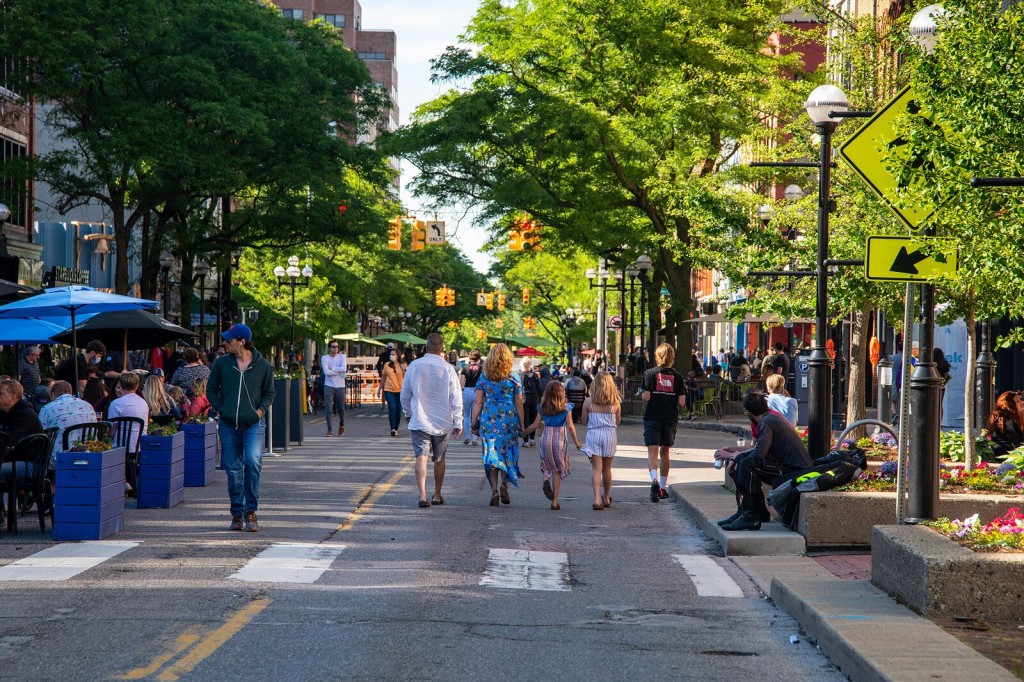
Ann Arbor City Council will consider allowing massive land use changes intended to improve affordability in the city, following the Ann Arbor Planning Commission’s unanimous Wednesday night vote to pass the draft Comprehensive Land Use Plan 2050. The plan’s key strategies are increasing housing density and diversity citywide; diversifying the city’s economy by supporting growing startups, sustainability-oriented businesses, and “mini-downtowns”; and improving transit infrastructure and climate resilience.
Public comment for and against the plan lasted three and a half hours, with a polite but fierce divide between pro-and-anti-plan voices.
“It seems like a lot of folks on both sides of the issue are looking for a perfect plan, a perfect law,” Michael Wheedon, a University of Michigan law student, told the commission during the public comment period. “There’s no such thing as a perfect law. There are only better laws. … The Constitution of the United States has been debated for 250 years. … There isn’t a single lawyer in this country who will tell you that document isn’t written with errors or something that could’ve been written a little bit clearer. The law is always alive and will always change. You’ll change the comp plan again and again, so the only question you should be asking … is not, ‘Is this a perfect plan?’ It’s, ‘Is it a better plan?’ I think this plan moves the city forward.”
But not everyone is convinced. Drive through any Ann Arbor neighborhood and you’ll notice numerous “Stop the Plan” signs, signifying worry that such a radical change will hurt property values while failing to slow the key driver of Ann Arbor’s unaffordability problem – the cost of housing.
Charles Ream, who is running for city council in Ward 3 this November, opposes the plan on environmental grounds.
“Trees are left naked before the bulldozers with no new protection,” he said during last night’s meeting. “We could grow Ann Arbor, and get more density, without cutting it down.”
Ream spoke out against the plan’s lack of protection for existing flora because it “will result in the degradation of our tree cover.”
“Your build-at-any-cost-approach creates destructive upzoning,” he said. “‘Erase and replace’ development will [result in] clear-cut development as your default site plan.”
In addition to environmental worries, those who oppose the plan have raised concerns about lack of community outreach and the speed of forming the plan. They’ve also expressed skepticism about real estate developers’ motivations.
Neighbors for More Neighbors – which advocates changing single-family zoning laws to allow for denser housing options like duplexes – supports it. The Equitable Ann Arbor Land Trust, which advocates for a more cooperative housing model, does too.
City council will consider the plan on March 2.
Author

Related Articles
Recast Leaders aim to revitalize local economies
Ypsilanti and six other Michigan communities are working on building their local economies in the Recast Leaders program. Here’s a look at how the program works.

Get household items repaired for free at Ypsi library’s new “repair clinic” events
The Ypsilanti District Library (YDL) is launching a pilot repair clinic program where residents can use YDL supplies and equipment to repair household items for free.
African-American cemetery in Ypsi Township will be surveyed to identify lost graves
Woodlawn Cemetery was deemed abandoned in 1965, but recent efforts have sought to clean it up and identify grave sites.


