
Ann Arbor to generate its own renewable power through new Sustainable Energy Utility
This spring the city of Ann Arbor will take sustainability goals into its own hands by launching a Sustainable Energy Utility that will generate its own renewable power for residents.
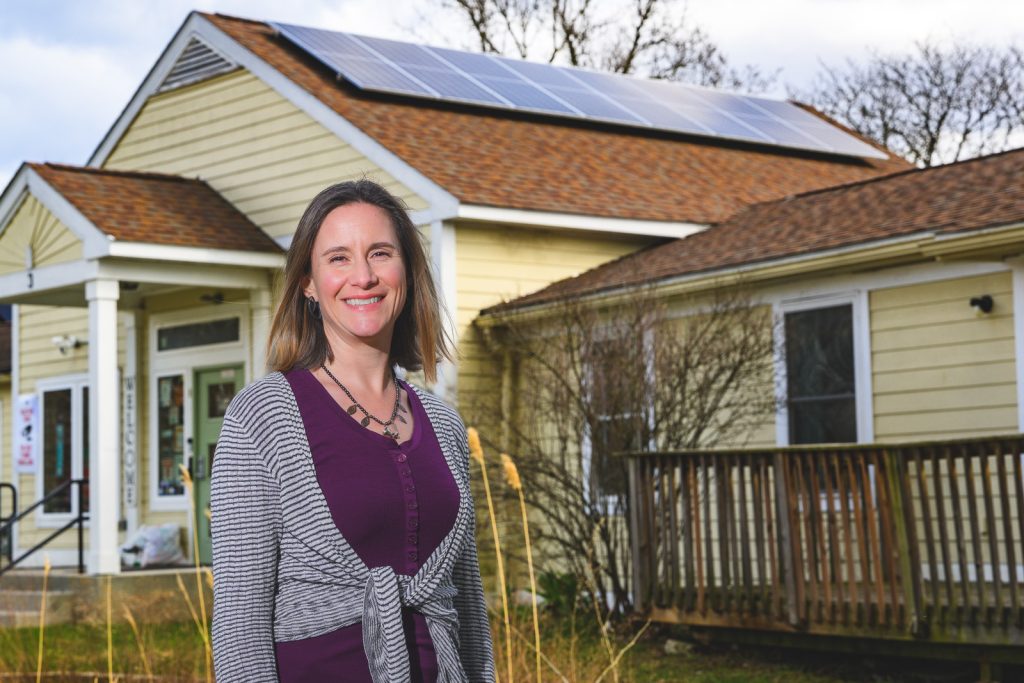
This spring the city of Ann Arbor will take sustainability goals into its own hands by launching a Sustainable Energy Utility (SEU) that will generate its own renewable power for residents. The SEU, which is the first of its kind anywhere in the nation, will begin with a pilot at the Bryant Community Center and surrounding neighborhood.
The city created the utility in 2024 and set it up as an arm of the city government in 2025 because Ann Arbor’s aggressive A2Zero climate goals would be nearly impossible to reach without such big, tangible changes.
“Residents of Ann Arbor are putting solar on their homes by choice, and the public schools are putting solar up,” says SEU Executive Director Shoshannah Lenski. “Everyone is doing it, and still we find about a 30% gap between where we think the city could naturally get to on its own by 2030 and what our commitment to carbon neutrality was.”
Lenski says that, as city staff sought to close that gap, they saw the utility program as the step that would gain them the most ground.
Grant dollars from the ICLEI – Local Governments for Sustainability USA and the Coalition for Green Capital allowed Ann Arbor to market the utility’s services, prepare an operational plan, and develop a financial strategy.
The city had a number of partners working on the logistics and planning behind the utility. Johanna Mathieu, an associate professor of electrical engineering and computer science at the University of Michigan (U-M), donated her expertise to early studies of the SEU on a volunteer basis.
She ran scenarios with the city about how electric power systems work. One of the initial complications for the program was that power generated by the SEU couldn’t be “back-fed” to the DTE electrical grid for legal reasons, so engineers had to think through back-stops and breakers to fix this issue before launch. However, now SEU customers will have interconnection agreements with DTE to solve this challenge.
“This enables us to try out a new model and not default to the status quo,” Mathieu says. “It also creates lots of new challenges and things to learn from, but my forecast is that, in 10 years, we’ll be seen as a national leader.”
Mike Shriberg, director of the U-M Water Center and a professor in the U-M School for Environment and Sustainability, asked students in an interdisciplinary program with U-M’s Law School Problem Solving Initiative to prepare a report looking into the feasibility of the SEU and other clean energy issues across the state.
Shriberg says there’s “no perfect solution” to reaching the city’s climate goals, but the SEU has significant advantages over other approaches the city could have looked into. And it’s far more aggressive in its goals than any other program in the country that’s remotely similar, like sustainable energy efforts in Delaware and Washington, D.C.
“They have the opportunity to build the energy infrastructure of the future without being beholden to the infrastructure of the past,” Shriberg says.
Lenski says that, while the right for Ann Arbor to create its own utility authority is expressly written into Michigan’s state constitution, the utility is only feasible only because of technological advances in the last few decades.
“Historically, it never made sense outside the last 10 or 15 years,” says Missy Stults, Ann Arbor’s sustainability and innovations director.
Utilities have long been considered a “natural monopoly” because most residents don’t want two competing power companies to run two sets of wires down each side of the street, for instance.
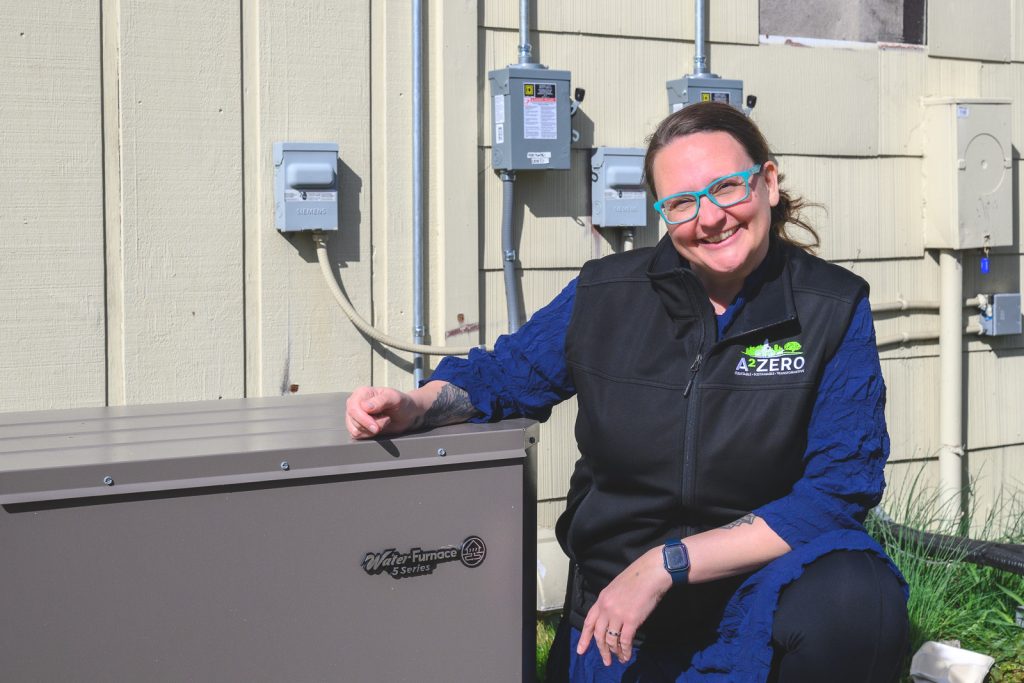
But Ann Arbor isn’t looking to build or take over fragile, aging infrastructure. City staff are happy to let DTE continue doing that while providing an opt-in, supplemental plan for those interested in using power that’s been generated sustainably. The first offerings will be solar-powered, but the utility plans to add geothermal power in the near future as well.
“We will also be able to offer energy services, support for energy efficiency, [and] electrical appliances for people who want to get off fossil gas appliances in the home or business,” Lenski says.
Eventually, the SEU could offer some “micro-grid” infrastructure, for instance connecting multiple adjacent commercial buildings to a solar grid. Lenski says she can also imagine a scenario where a school might have a solar grid producing more power than it needs during summer months when fewer people are in the building. A micro-grid could share that power to residential neighbors.
But that’s not the main goal for the SEU, especially at first. The initial focus is on clean energy production and distribution, and to a lesser extent on energy storage.
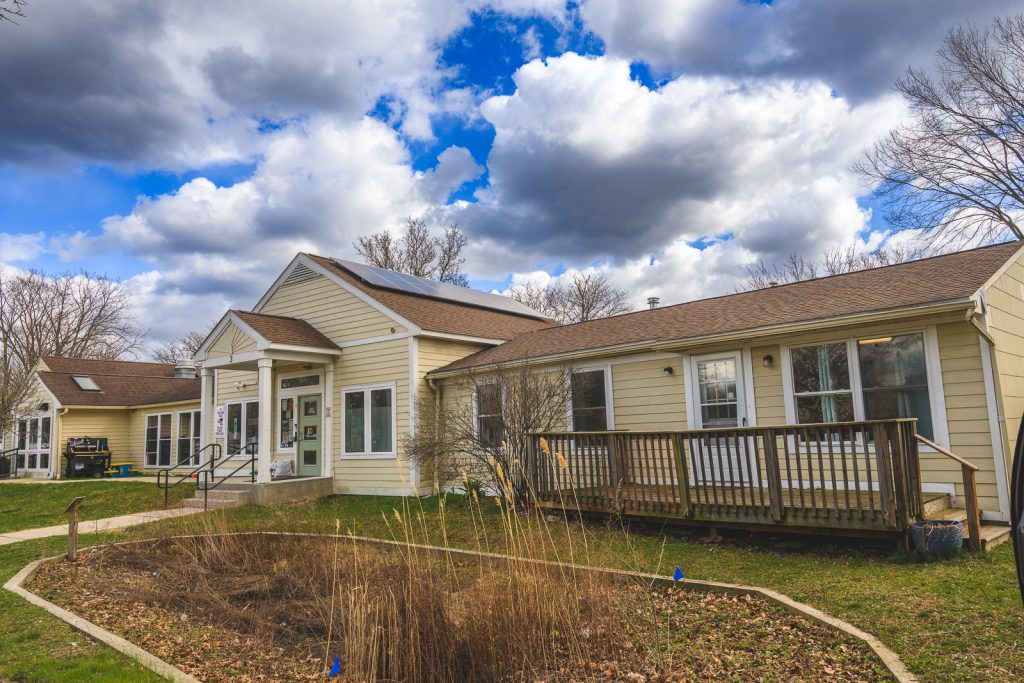
Earlier this year, the SEU asked for non-binding “expressions of interest” from residents and businesses as the city plans to hook its first customers up to renewable energy starting this spring and early summer.
Lenski notes that an “expression of interest” isn’t a binding contract, just a chance for the city to see “how many folks are interested, and where that interest lies from a geographic perspective.”
“Will it be largely residential or largely business interest? That will help with deployment and inform how it’s scaled, how many people we can reasonably get signed up when we’re ready to begin building,” Lenski says.
Stults says the SEU is starting with the Bryant neighborhood in part because the community center already has a solar grid but also because part of the city’s climate plan includes racial and economic equity. She says local nonprofit Community Action Network suggested Bryant as a place for that equity work, and now residents are excited to promote their community center as one of the most sustainable buildings in the city.
The SEU plans to expand to more of Ann Arbor in 2027. Residents can watch a video about the SEU and express interest, commitment-free, at www.A2SEU.com.
Lenski says that because the SEU is so unique, there’s “no playbook to follow.” But Ann Arbor may be creating a playbook for other cities.
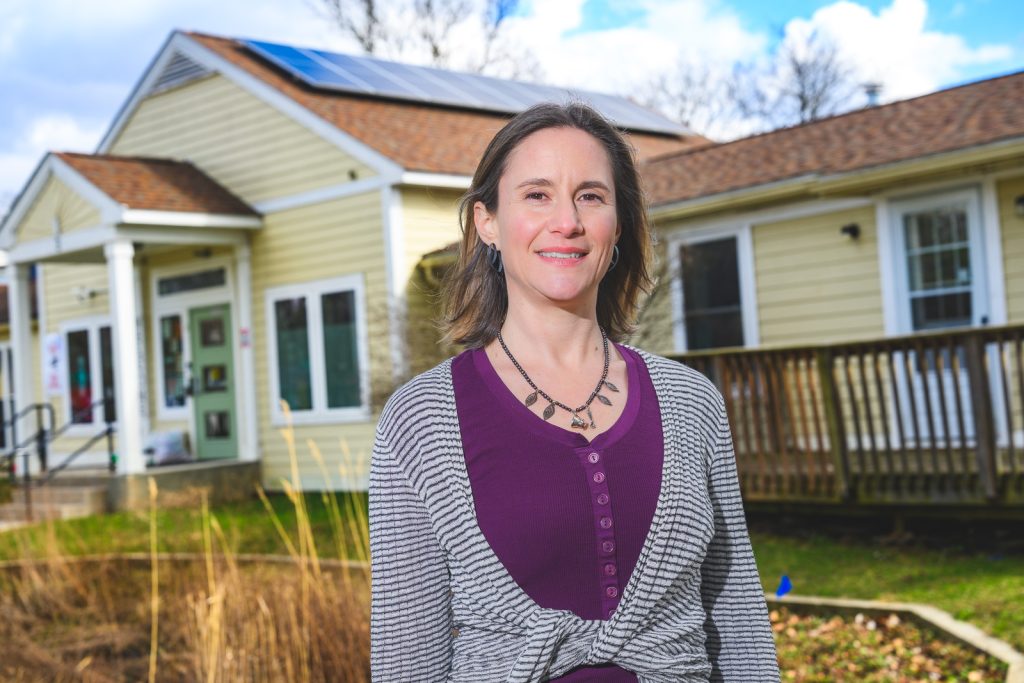
“We believe the model would be highly replicable,” Lenski says. “Of course, as others adopt the model, it could shift to reflect the values of each local community, its needs and priorities. We’re taking a lot of care as we learn and develop our own processes to document this and create a record for others to follow so they won’t have to go it alone.”
Author

Related Articles
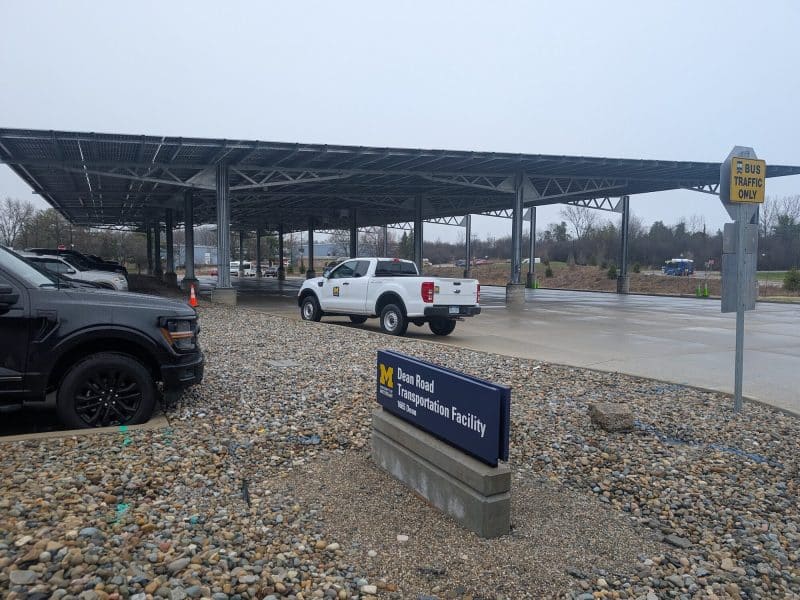
U-M launches two new solar arrays, pursuing ambitious greenhouse gas reduction goals
The University of Michigan has brought two new solar arrays online on its North Campus.
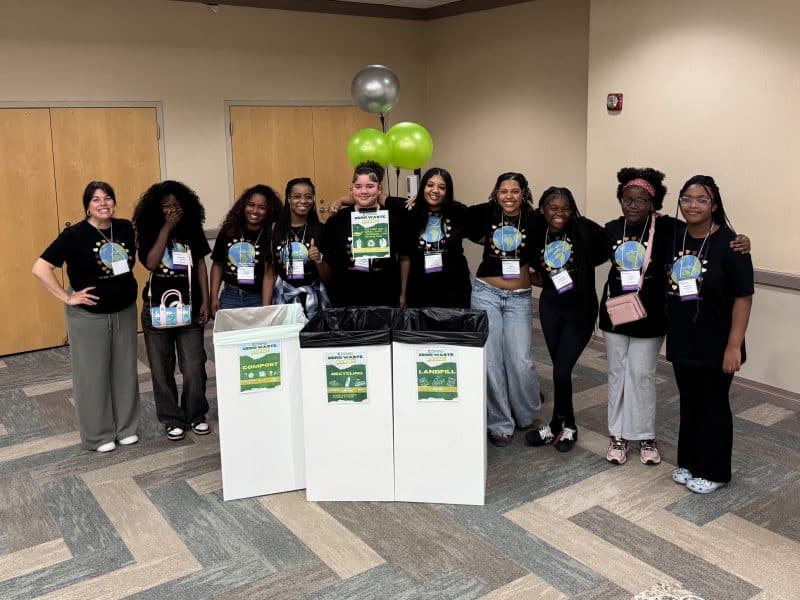
Students lead successful effort to reduce waste at annual forum at EMU
Eastern Michigan University (EMU) students spearheaded a recent effort to transform the annual Southeast Michigan Stewardship Coalition Community Forum into a zero-waste event for the first time.
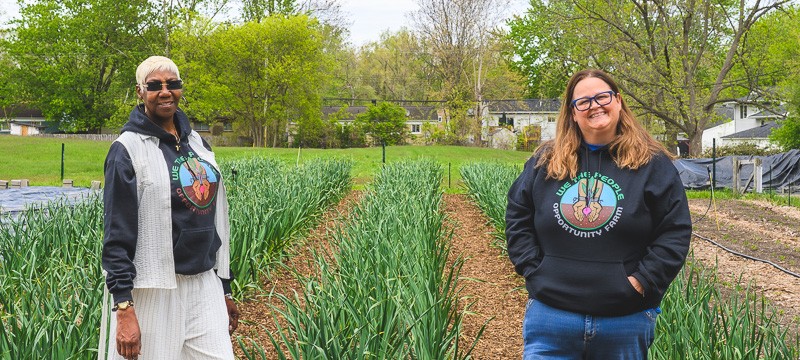
Ypsi’s We the People Opportunity Farm will continue founder Melvin Parson’s mission after his sudden passing
Leadership at Ypsilanti nonprofit We The People Opportunity Farm is focused on ensuring the organization continues founder Melvin Parson’s legacy after his unexpected death.


