
Ann Arbor’s ambitious Treeline trail project advances with $1 million state earmark
A three-mile non-motorized greenway connecting downtown Ann Arbor to the Huron River is taking a vital step forward thanks to a recent $1 million earmark in Michigan’s 2026 state budget.
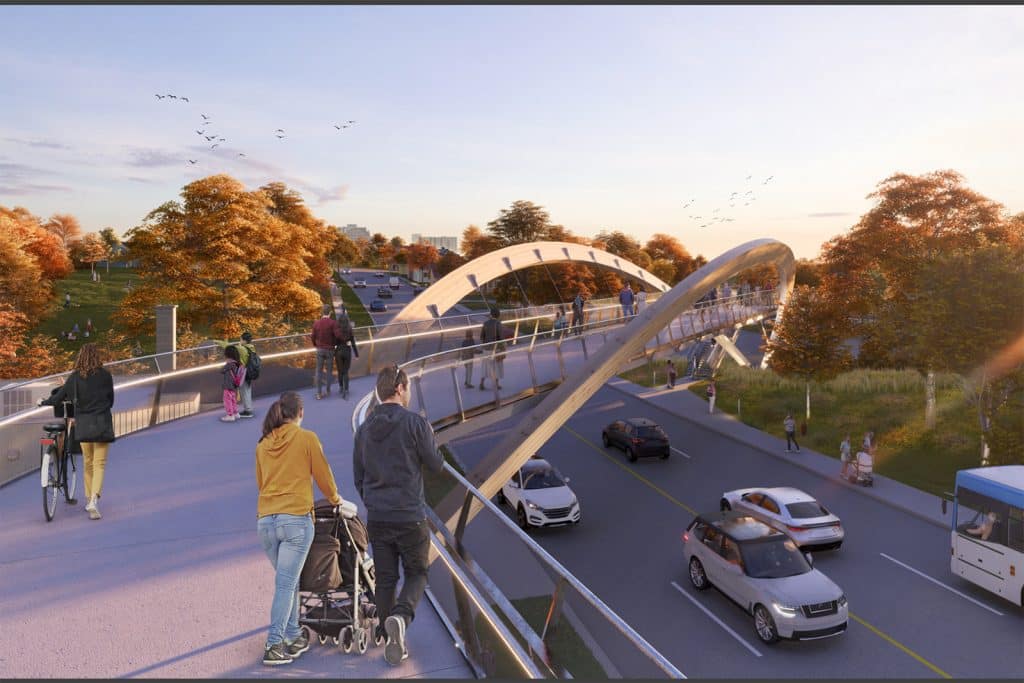
Ann Arbor’s Treeline – a three-mile non-motorized greenway connecting downtown to the Huron River – is taking a vital step forward thanks to a recent $1 million earmark in Michigan’s 2026 state budget. As the largest single public commitment to date, the state grant covers roughly a third of the estimated $2.8 million needed to start construction on the Treeline’s Gateway segment, which will run from Ann Arbor’s new Broadway Park West to Felch Street.
“This has been a dream, an idea, a vision, for over 20 years. At first, it was just a group of city leaders, but it’s really picked up speed,” says Cynthia VanRenterghem, executive director for development at the nonprofit Treeline Conservancy. “We like to say that it’s an idea that’s been around for a long time, but we’re very much like a startup, because so much has had to happen for it to become a reality.”

The conservancy, in collaboration with the city of Ann Arbor, has been spearheading the creation of the Treeline. State Reps. Jason Morgan, Jennifer Conlin, Morgan Foreman, and Carrie Rheingans, and state Sens. Sue Shink and Sen. Jeff Irwin, were among those who helped nurture this next vital stage of growth.
“We’re building something that is really for our children and grandchildren. It’s a community asset that will live on for decades after this work has been done,” VanRenterghem says. “There’s just so many wonderful things that can happen once this is built.”
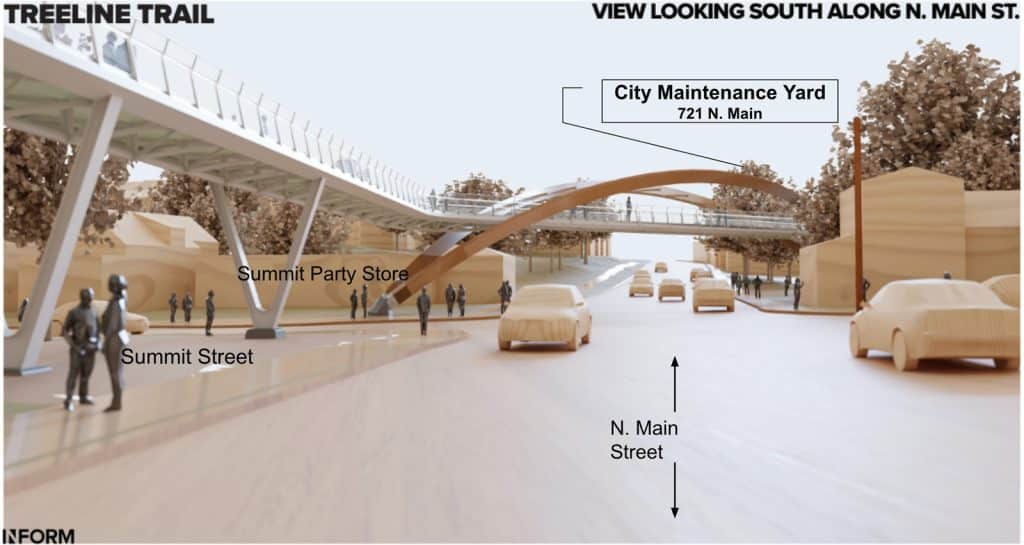
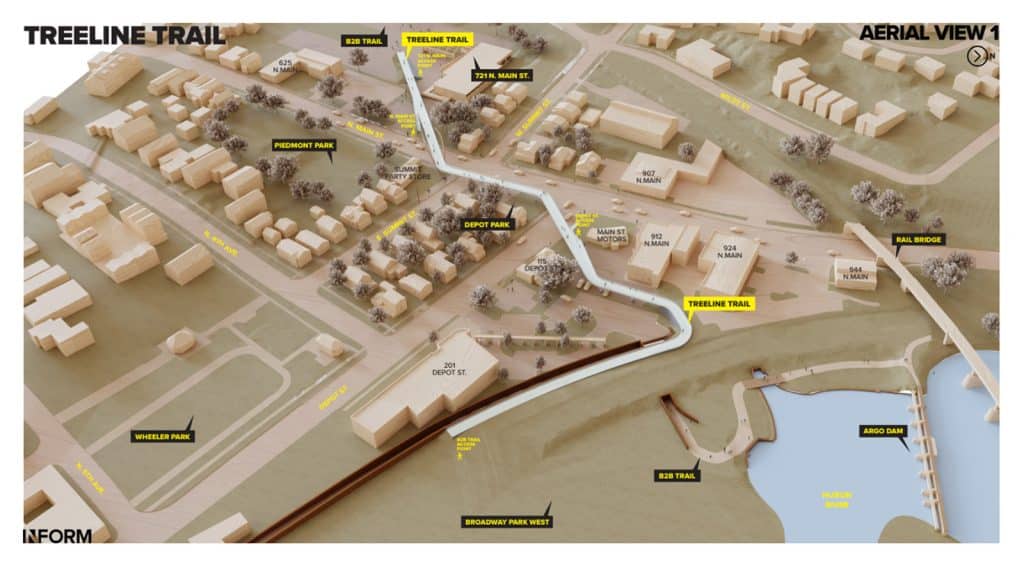
The Gateway will intersect the Washtenaw County Border to Border (B2B) Trail at the Depot pedestrian tunnel. It will then rise to form a bridge over Depot Street, Summit Street, and North Main Street before returning to grade at 721 N. Main St. The project’s goal is to safely bridge prominent city sites including the B2B Trail, the Argo Cascades, and Broadway Park West.
The Gateway is the first of three planned Treeline segments. The other two are known as the Neighborhood and Wolverine Way segments. The Treeline is expected to span three miles from the B2B Trail and Broadway Park West to the Big House, weaving together some of Ann Arbor’s most iconic destinations.
Norman Herbert, Treeline Conservancy board co-chair, further underscores the value of pedestrians, cyclists, residents, and visitors being able to connect to the city’s parks, business districts, campus, neighborhoods, and University of Michigan campus via the Treeline. He highlights its safety, environmental, and health benefits amidst Ann Arbor’s push for carbon neutrality, and the growing need for alternatives to car travel.
The Treeline is a timely solution to an infrastructure gap. Specific to the Gateway area, data gathered by the nonprofit PeopleForBikes revealed highly stressful conditions for cyclists. Pedestrians navigating crosswalks have also experienced difficulties.
“Congestion in the downtown area is increasing. We have 29,000 cars a day coming in off M-14. That presents real challenges if you’re trying to provide for safe access, whether it’s on foot or by car,” Herbert says. “The timing, from an environmental standpoint, is very significant.”
Looking to other visionary projects such as the Highline in New York, the Treeline’s next big milestone is a global search for the best engineering talent for the Gateway. The bridge will stand as an iconic destination in its own right. Following the completion of engineering and design work, which is expected to take at least 18 months, the hope is to have shovels in the ground within three years. The segment should be completed in four to five years, during which there will be a focus on securing the rest of the project funding from private and institutional donors.
Looking forward, Herbert says the Gateway isn’t just for Ann Arbor, but for the wider Washtenaw County community to be able to more easily enjoy all that Ann Arbor has to offer.
He says one only has to look to Gallup Park, which was introduced back in the ’60s and has since been a signature Ann Arbor destination.
“If you go out there on any nice day, even on days that people are just walking, you’ll see tremendous utilization,” he says. “This particular vision that we’ve got will be an amenity that will have a similar level of enthusiasm in hopefully less than 50 years.”
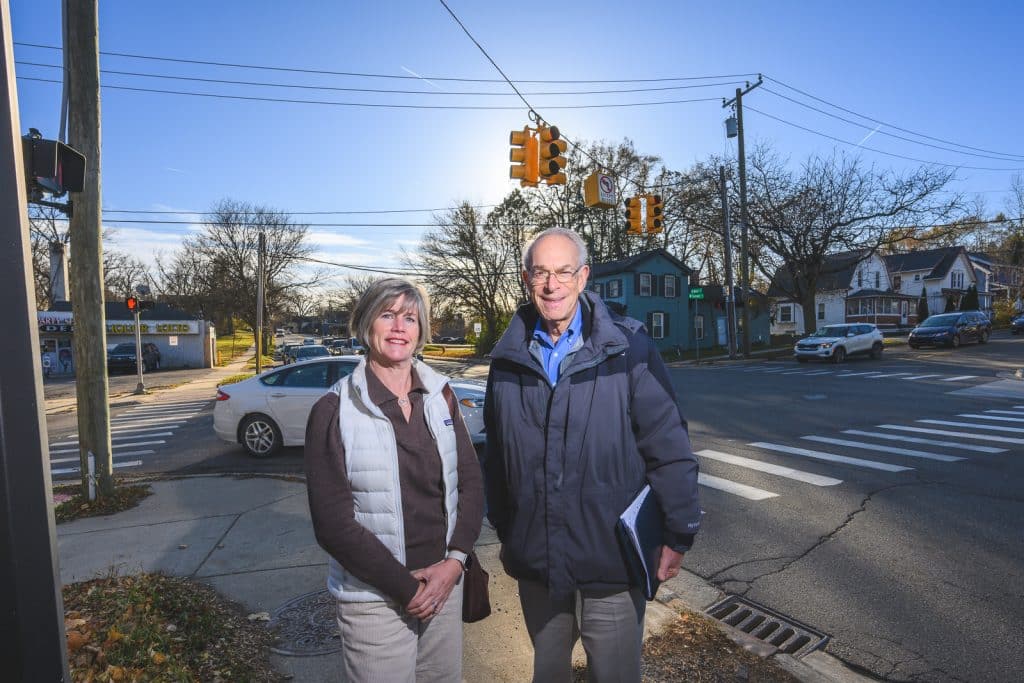
VanRenterghem adds that the Treeline’s benefits will be “truly multifaceted, and really long-term.” She also cites Gallup Park as an inspiration.
“In the ’70s, there was the same idea of, ‘Why do we need to do this?’ And it took many years, and a lot of investment, and a lot of championing by local leaders,” she says. “Now … we can’t imagine Ann Arbor without such a community draw.”
Author

Related Articles
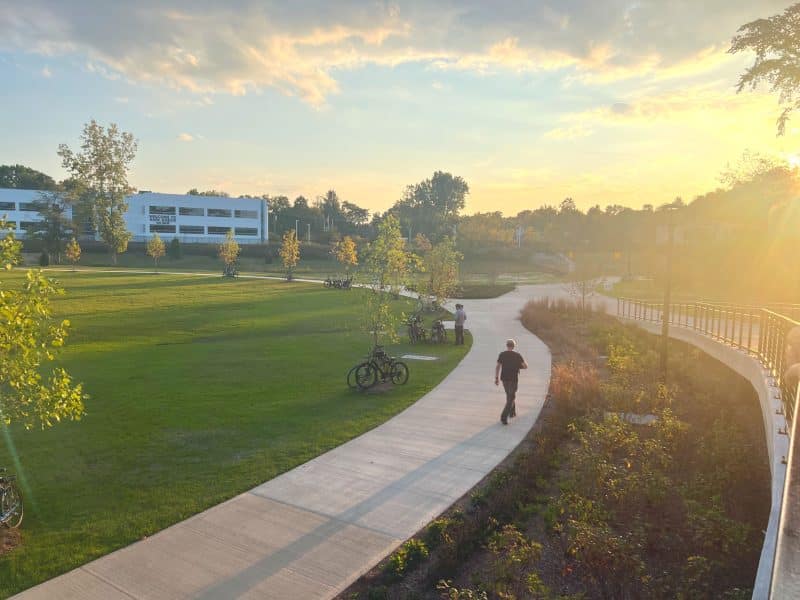
First public programming at new Ann Arbor park includes Pilates, yoga classes
Ann Arbor’s new Broadway Park West is coming alive this summer with its first public programming, featuring free Pilates and yoga classes for residents of all ages and experience levels.
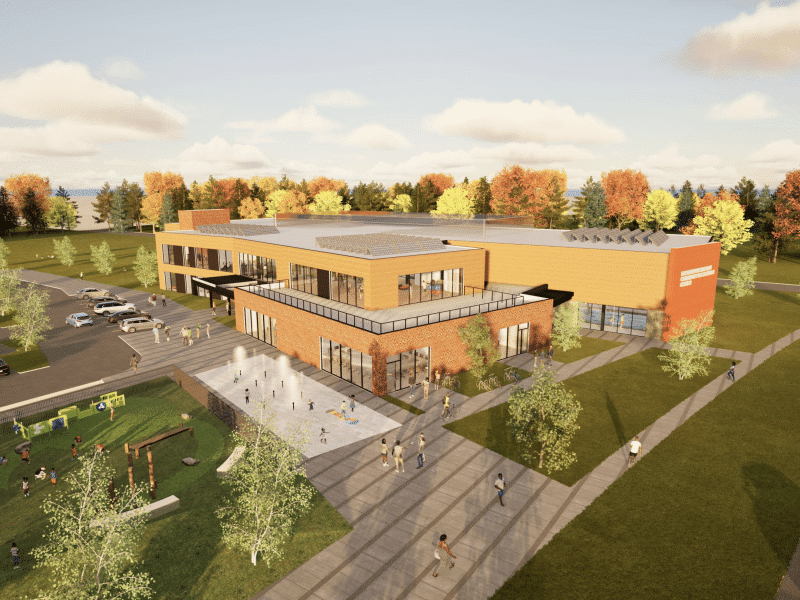
Ypsi and Superior Township recreation center moves forward with architect selection
The Eastern Washtenaw Community Recreation Center in Ypsilanti and Superior townships is one step closer to reality.
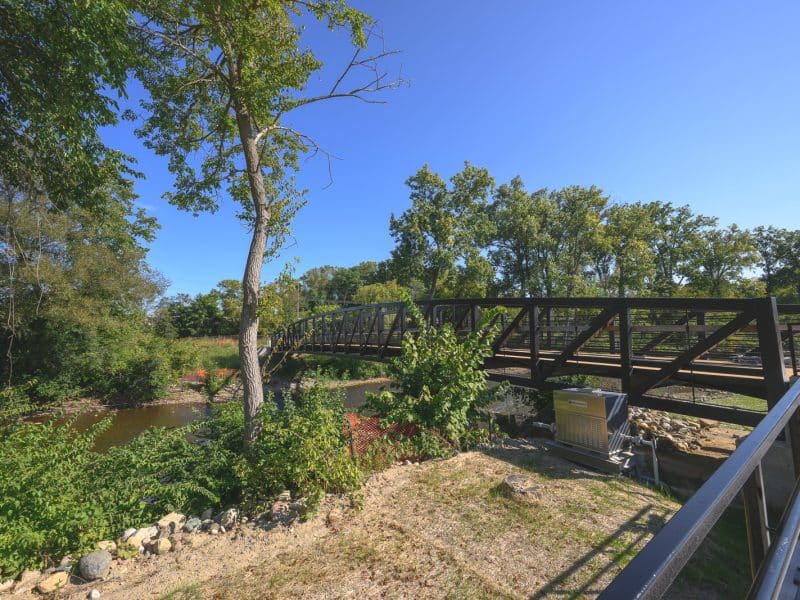
See inside Ann Arbor’s newest park before it opens this weekend
The seven-acre Broadway Park West includes trails, a bridge connecting to the Washtenaw County Border-to-Border Trail, river access, and a commons for events.


