
Ann Arbor officials lay out city income tax plan to shift tax burden to commuters, increase revenues
Ann Arbor city officials are looking to close the latest budget gap with a new revenue generator – an income tax.Excerpt:Marcy Bailey is one of an estimated 75,000-plus people who make the daily commute to work in Ann Arbor, but don’t currently pay taxes to the city.Under a new proposal for a city income tax, the Fenton resident could see a portion of her paycheck from the University of Michigan redirected to Ann Arbor’s coffers. City officials released the final draft of a feasibility study Friday that includes a 1-percent tax for city residents and 0.5-percent tax for non-residents – the highest amounts allowed under state law.”I’ve worked in other cities that have city income taxes,” said Bailey, a manager at the Hatcher Graduate Library. “It’s not something that I find particularly offensive. And especially if the tax money that they collect is used for reasonable things – the greater good – then I wouldn’t have a problem with it.”With Ann Arbor’s future budget projections looking grim, talk of placing a city income tax question on the November ballot is gaining momentum.Under the city’s charter, if an income tax is adopted, Ann Arbor’s general operating millage would be eliminated. That means property taxes would come down by 6.2 mills, or about 15 percent overall.A property tax decrease would help offset the cost of the income tax for many residents, while non-residents would for the first time pay about $12.4 million a year to Ann Arbor.”The burden continues to be on property owners to pay for local government services,” said City Administrator Roger Fraser. “In our city, there are over 75,000 people that commute every day into work who do not pay for any portion of their services unless they happen to meet one of our finest on the street. We believe that in Ann Arbor, this question is one that we ought to be asking folks.”Read the rest of the story here.
Ann Arbor city officials are looking to close the latest budget gap with a new revenue generator – an income tax.
Excerpt:
Marcy Bailey is one of an estimated 75,000-plus people who make the daily commute to work in Ann Arbor, but don’t currently pay taxes to the city.
Under a new proposal for a city income tax, the Fenton resident could see a portion of her paycheck from the University of Michigan redirected to Ann Arbor’s coffers. City officials released the final draft of a feasibility study Friday that includes a 1-percent tax for city residents and 0.5-percent tax for non-residents – the highest amounts allowed under state law.
“I’ve worked in other cities that have city income taxes,” said Bailey, a manager at the Hatcher Graduate Library. “It’s not something that I find particularly offensive. And especially if the tax money that they collect is used for reasonable things – the greater good – then I wouldn’t have a problem with it.”
With Ann Arbor’s future budget projections looking grim, talk of placing a city income tax question on the November ballot is gaining momentum.
Under the city’s charter, if an income tax is adopted, Ann Arbor’s general operating millage would be eliminated. That means property taxes would come down by 6.2 mills, or about 15 percent overall.
A property tax decrease would help offset the cost of the income tax for many residents, while non-residents would for the first time pay about $12.4 million a year to Ann Arbor.
“The burden continues to be on property owners to pay for local government services,” said City Administrator Roger Fraser. “In our city, there are over 75,000 people that commute every day into work who do not pay for any portion of their services unless they happen to meet one of our finest on the street. We believe that in Ann Arbor, this question is one that we ought to be asking folks.”
Read the rest of the story here.
Related Articles
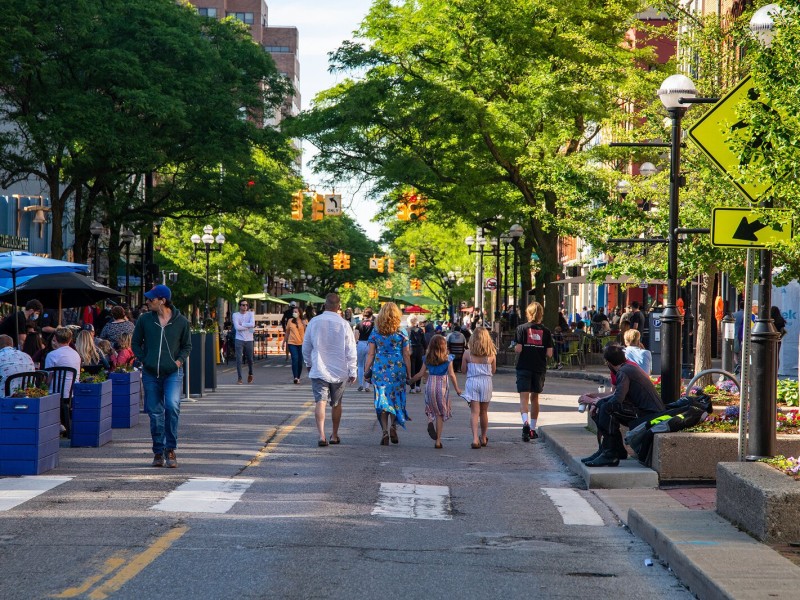
Washtenaw County residents invited to contribute to new 10-year tourism plan
Destination Ann Arbor is inviting residents and local stakeholders to help directly shape the future of tourism in Washtenaw County from 2027-2036.

Ypsi Township church has fed hundreds in twice-monthly food distributions for nearly 20 years
The food pantry at the Community Family Life Center, 1375 S. Harris Rd. in Ypsilanti Township, has been a family-feeding machine, distributing groceries twice a month to an average 300-400 families.
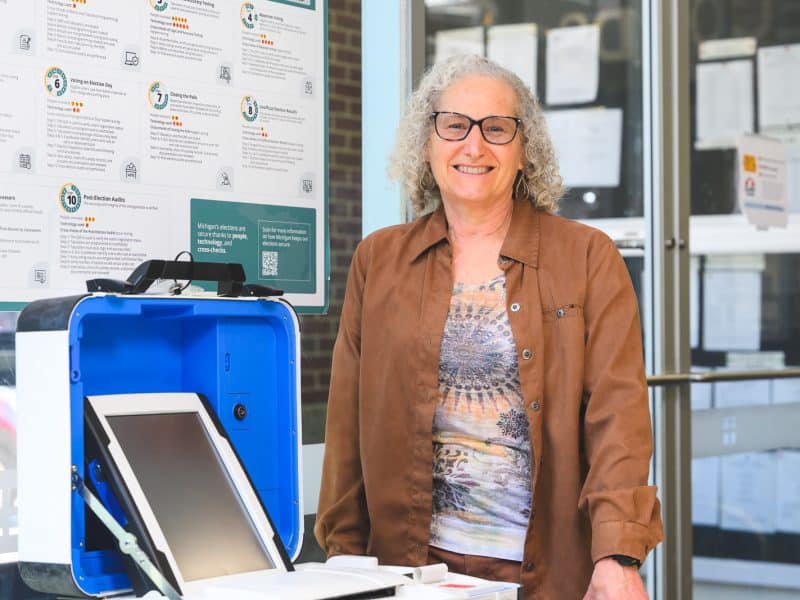
Washtenaw County officials say local elections are secure despite Trump calls to “nationalize” them
Washtenaw County elections officials say they’re well-prepared to protect against fraud in this year’s midterms and any other election. We interviewed them about their system and President Trump’s statement that elections should be “nationalize[d].”


