
Bottled Water at Issue in Great Lakes
Once again, Ann Arbor is mentioned as one of the leaders in the U.S. environmentalism trends. This time its all about water. Excerpt: Even as a 10-year campaign to block wholesale export of Great Lakes water came to a successful conclusion in Congress last week, some legislators and environmentalists vowed to continue their fight to close a “bottled-water loophole,” a campaign that taps into a national debate over sales of H2O in disposable containers. A provision of the Great Lakes Compact allows water to be diverted from the basin if it is in containers holding less than 5.7 gallons. The question is whether bottling water from the aquifers that feed the lakes, the largest repository of fresh water on Earth, should be seen as ordinary human consumption, commercial production, or export of a treasured natural resource. In August, Nestle Waters North America was granted permits for a new well and pipeline at its Ice Mountain facility in Mecosta County, Mich., where it bottles 700,000 gallons a day. Nestle also recently renewed permits for its plant in Guelph, Ontario. Both have sparked vocal opposition from those who say the industry is privatizing a public good and harming the environment. Americans drank 8.8 billion gallons of bottled water in 2007, up 7 percent from 2006, according to the Beverage Marketing Corp. But bottled water has drawn increasing criticism, leading San Francisco, Salt Lake City and Ann Arbor, Mich., among other municipalities, to ban buying bottled water with city funds. Read the rest of the story here.
Once again, Ann Arbor is mentioned as one of the leaders in the U.S. environmentalism trends. This time its all about water.
Excerpt:
Even as a 10-year campaign to block wholesale export of Great Lakes water came to a successful conclusion in Congress last week, some legislators and environmentalists vowed to continue their fight to close a “bottled-water loophole,” a campaign that taps into a national debate over sales of H2O in disposable containers.
A provision of the Great Lakes Compact allows water to be diverted from the basin if it is in containers holding less than 5.7 gallons. The question is whether bottling water from the aquifers that feed the lakes, the largest repository of fresh water on Earth, should be seen as ordinary human consumption, commercial production, or export of a treasured natural resource.
In August, Nestle Waters North America was granted permits for a new well and pipeline at its Ice Mountain facility in Mecosta County, Mich., where it bottles 700,000 gallons a day. Nestle also recently renewed permits for its plant in Guelph, Ontario. Both have sparked vocal opposition from those who say the industry is privatizing a public good and harming the environment.
Americans drank 8.8 billion gallons of bottled water in 2007, up 7 percent from 2006, according to the Beverage Marketing Corp. But bottled water has drawn increasing criticism, leading San Francisco, Salt Lake City and Ann Arbor, Mich., among other municipalities, to ban buying bottled water with city funds.
Read the rest of the story here.
Related Articles
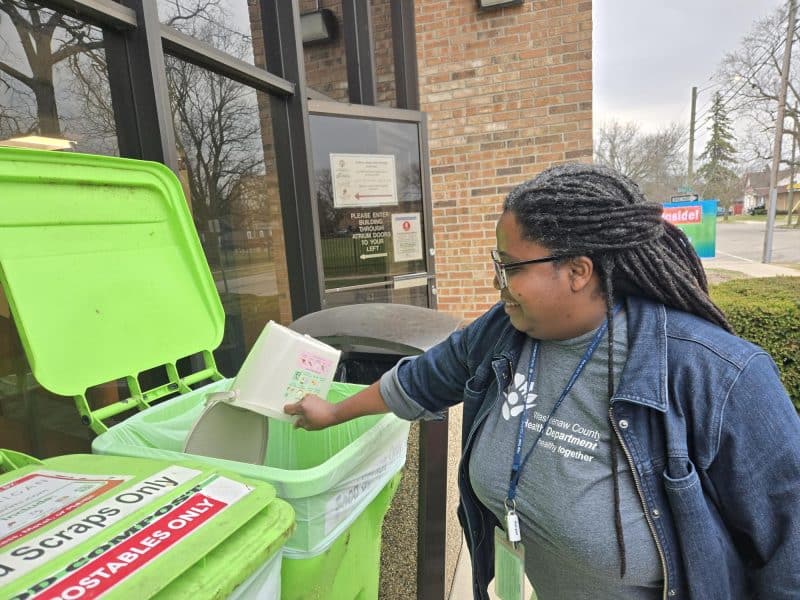
Washtenaw County food scrap drop-off program expands to Dexter and Salem Township
The Washtenaw County Water Resources Commissioner’s Office is expanding its Food Scrap Drop-off Pilot Program to serve Dexter and Salem Township.
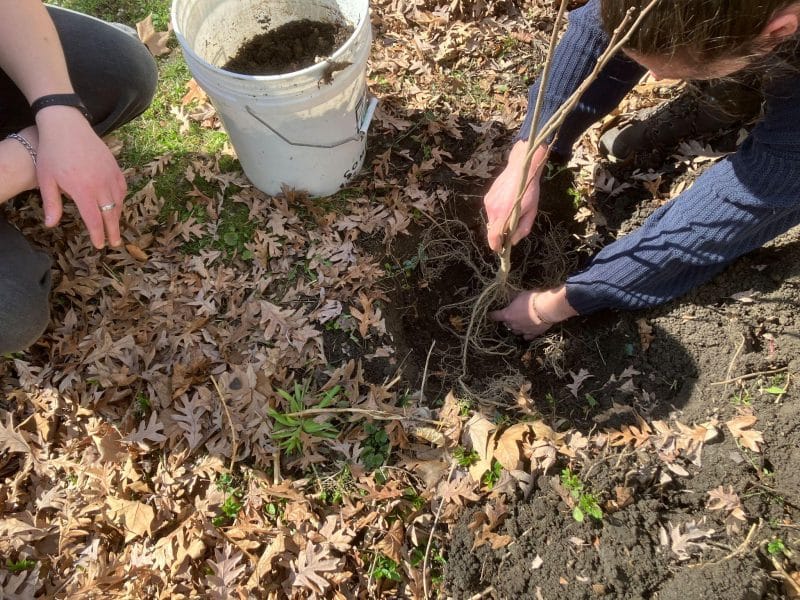
Ypsi Free Tree Distro will give out over 2,000 trees, emphasizing food security for marginalized residents
Organizers of Ypsilanti’s fourth annual Free Community Tree Distro will hand out over 2,000 free saplings of several tree species this weekend, with an emphasis on distributing food-producing trees to marginalized residents.
Inaugural State of the County address celebrates Washtenaw County’s recent achievements
The event marked the county’s bicentennial and looked back at its pre-colonization roots while highlighting recent government achievements.


