
Cybersecurity programs prepare Washtenaw County high schoolers for future careers
As Michigan continues to build a reputation as a powerhouse in the world of cybersecurity, Washtenaw County high schoolers have the opportunity to become leaders in the field.
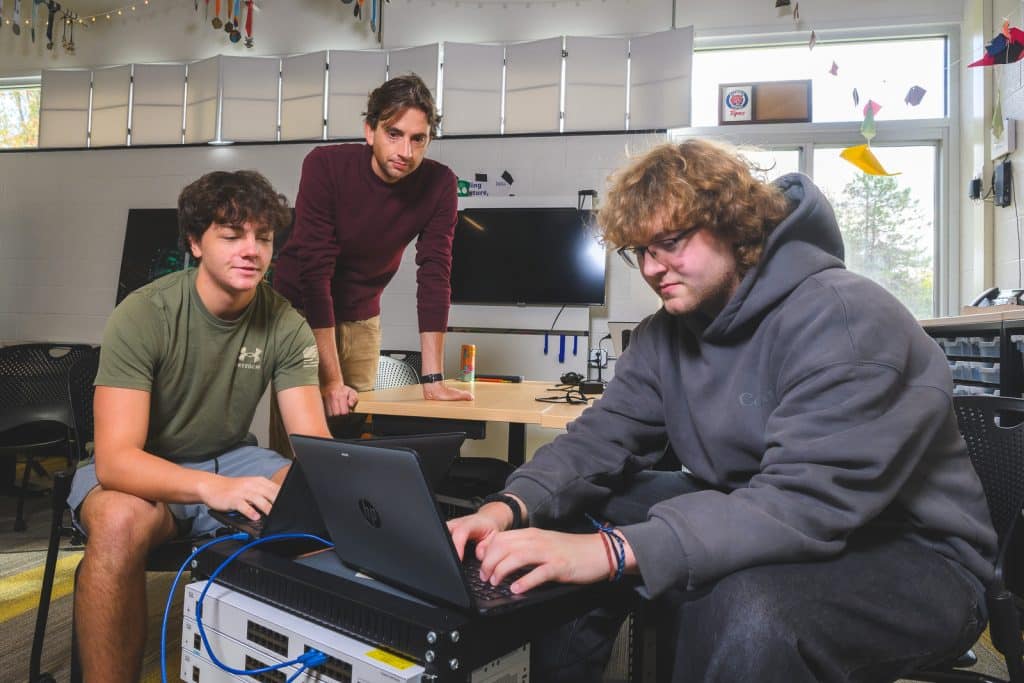
This article is part of Concentrate’s Voices of Youth series, which features stories written by Washtenaw County youth with guidance from Concentrate staff mentors, as well as adult-written stories spotlighting local youth perspective. In this installment, adult writer Jaishree Drepaul interviews students and instructors in Washtenaw County’s high school cybersecurity programs.
As Michigan continues to build a reputation as a powerhouse in the world of cybersecurity, Washtenaw County high schoolers have the opportunity to become leaders in the field. With multiple cybersecurity programs among the 70 state-approved career technical and education (CTE) programs available in the county, students are acquiring the hands-on skills and curiosity needed to succeed.
Zach Underwood, a CTE student in the cybersecurity program at Chelsea High School, says the program is providing him an early, in-depth understanding of his future career.
“Wrapping my head around why the math works like it does can be hard, because it’s very not intuitive like algebra or any of your generic math classes,” he says. “But they’ll teach you everything you need to be able to do to be successful in the classes. You just need to be willing to try.”

The county’s CTE programs are housed in local high schools across four districts/consortia – Ann Arbor, Whitmore Lake, Ypsilanti, and the South and West Washtenaw Consortium (representing Chelsea, Dexter, Lincoln, Manchester, Milan, and Saline school districts.) Jason Rickli, who heads the cybersecurity program at Chelsea High School, states that interest in the program has steadily increased since its start four years ago.
The curriculum covers foundational networking skills, practical labs such as social engineering exercises, firewall configuration, and simulated cyberattacks. Students spend a significant portion of their time preparing to earn their CompTIA Security+ certification. The globally recognized certification confirms the knowledge and practical skill sets needed for entry-level cybersecurity roles. It’s also often favored by employers in the field.
“We have a partnership with Washtenaw Community College [WCC], so students can use that to carry over and articulate some credits out and start ahead of the game,” Rickli says. “Some of our graduates are working at help desk jobs at the universities. One student worked at WCC and is now back working here at the high school.”

He highlights that the program’s strength has been built through an advisory board made up of cybersecurity professionals including representatives of Consumers Energy, university professors, a U.S. Department of Defense expert, and local school district information technology leaders. The group provides critical guidance on curriculum development, ensuring that course content stays current with industry trends, as well as educational and workforce needs.
“We have students doing a lot of different labs involved in social engineering. They’ll do labs in, say, firewalls,” Rickli says. “They’ll also set up a couple of virtual machines and establish an attack on one, then use another machine to see what the attack looks like so they know how to defend it, and build out what the response should look like from a company.”
He underscores that his students also benefit from real-world experiences and networking outside of the classroom.
“The kids get to tour the Consumers Energy response headquarters, for example. They get to check out what things look like,” Rickli says. “They get to talk to all the people defending the infrastructure in Michigan against any cyberattacks, and see what it looks like to kind of back that up.”
One of his students, 17-year-old Liam Favre, highly recommends the program and is already confident about its impact on his career prospects.
“It lets you explore your options of what you want to do after high school, along with just more,” he says. “I think it’s better-looking on resumes, too, which would help.”
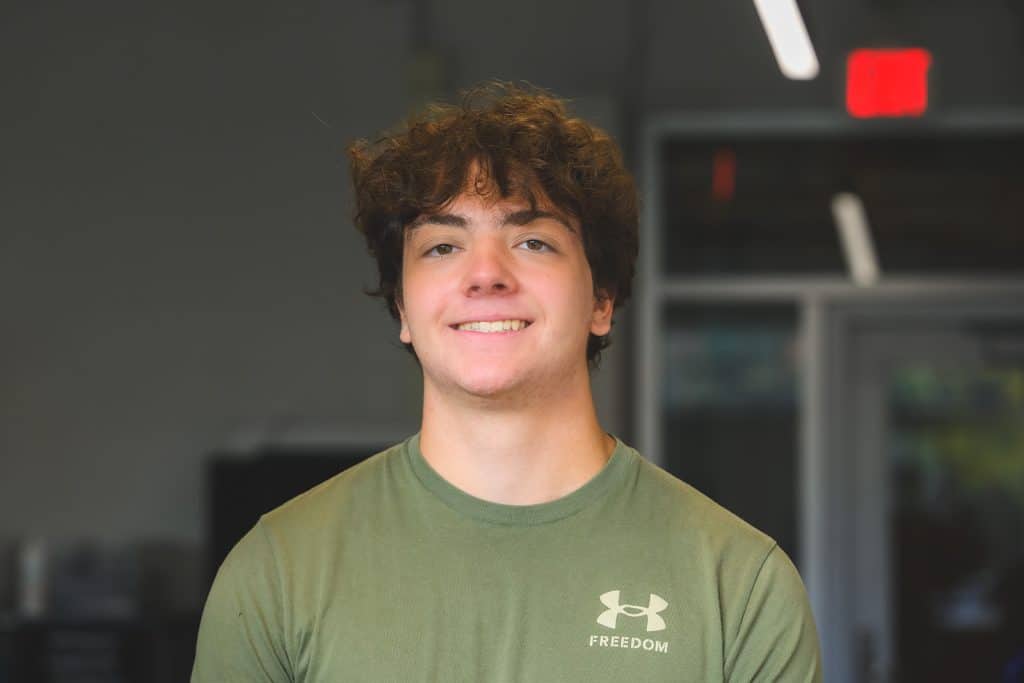
Favre describes the course as “challenging,” requiring “patience” and “determination.” He also shares that he didn’t realize how applicable the hands-on CTE training could be “in everyday life.”
“Last year we learned a lot about networking, and how to set up routers,” he says. “When my family decided to get a new router last year, I was the one who set all of it up, which was actually pretty easy.”
Underwood’s plan is to go college and work in the cybersecurity industry. He’s not sure what sub-sector of the field he’d like to pursue and is currently considering the options.
“I get to leave the CTE experience with real-world certifications and real-world knowledge, which will skip schooling and save me time once I’m looking for a job,” he says. “It’ll allow me to get entry-level jobs, and then a lot of those entry-level jobs will pay for me to go to school.”
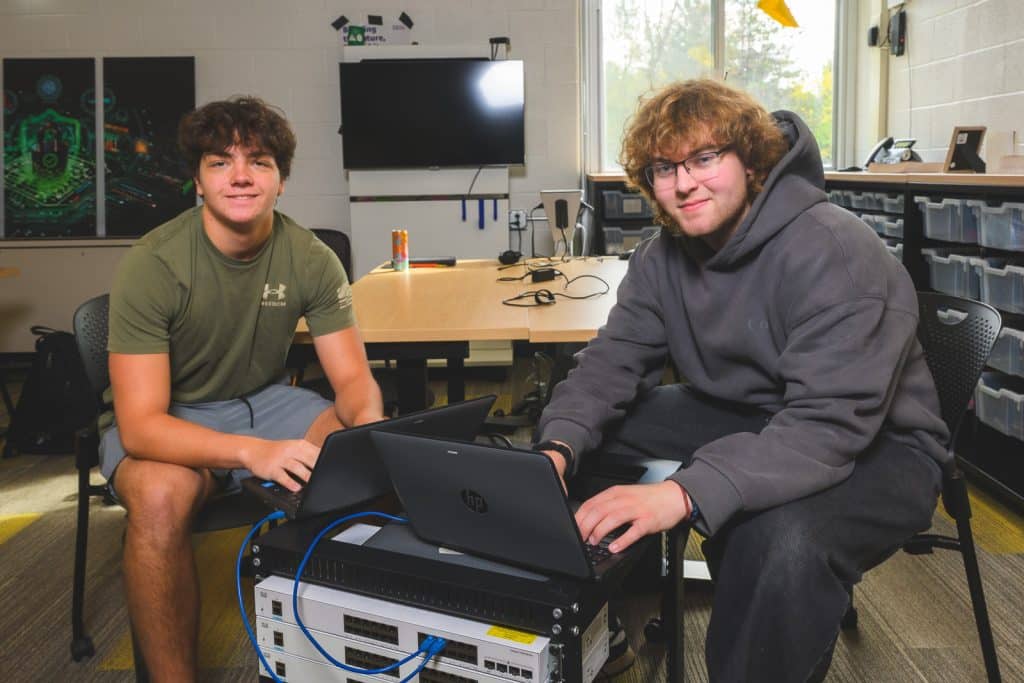
He shares that he’s excited about just how far his certification could take him along his career path.
“Every so often we get job interest cards, and we get to look at different fields. … The pay ranges from like $60,000 to $400,000 a year, depending on what you’re doing,” Underwood says. “The top end is usually the people who are severely, like, decorated in certifications, mostly like manager positions in high-ranking IT firms.”
Rickli says the program welcomes students from all backgrounds and that a common misunderstanding is that only “computer nerds” can succeed.
“We’ve had students who have had coding experience, and students who have none. We have students who struggle in school up to the valedictorians,” he says. “The misconception is that you have to be really, really smart with tech. You really don’t. As long as you have an interest in how the world is working, you can come in and be successful.”
Click here to read more from the Voices of Youth series.
Author

Related Articles

Home-based providers call for flexibility as Michigan expands Pre-K for All
Home-based providers in Ypsilanti and beyond could play a significant role in making Pre-K for All available to more children.

Ann Arbor PTO Council fundraiser aims to close equity gap for schools serving low-income families
The Ann Arbor PTO Council is seeking donations of $30 or more for a fundraiser benefiting Ann Arbor’s Title I schools, or those that receive federal funding to support low-income students.

Since Great Depression, Ann Arbor preschool has offered low-cost child care and supportive services
For over 90 years, Foundations Preschool of Washtenaw County has not only provided high-quality, affordable, and accessible child care, but also served as a community resource for enrolled families.


