
Data centers in Washtenaw County: Economic boon or environmental liability?
Data center developers and advocates tout their projects as responsible, job-creating economic development engines, but many residents are opposing what they see as threats to their utility bills and the environment.
This article is the third in a three-part series about the impacts of artificial intelligence (AI) in the Washtenaw County community. You can read the first installment, about AI’s impact on Ann Arbor’s tech sector, here. The second installment, about AI’s impact on education in Washtenaw County, is available here.
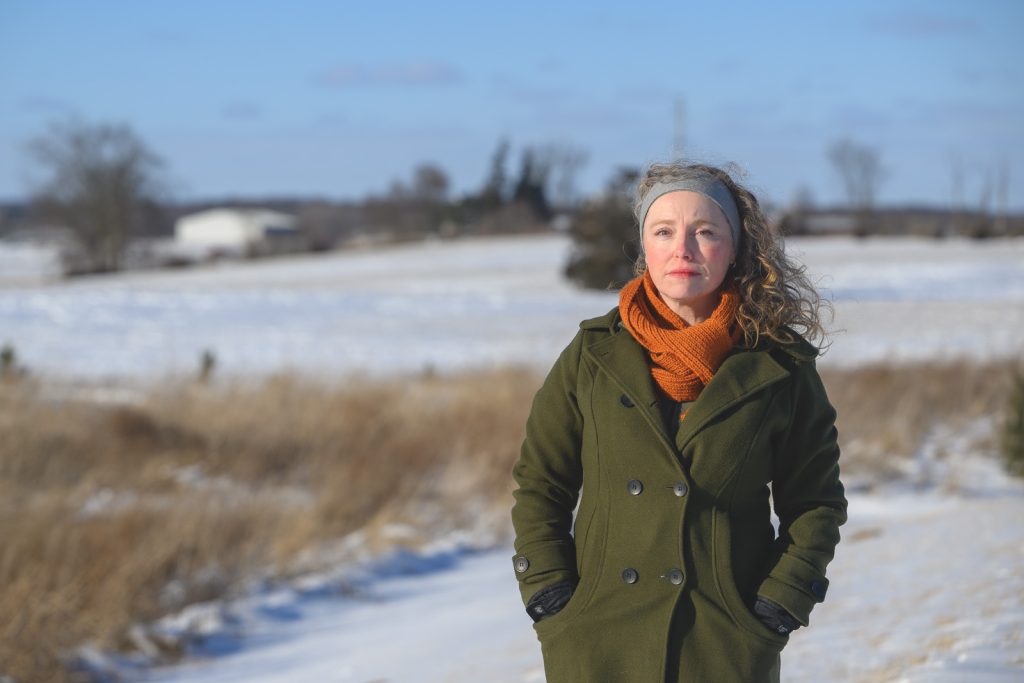
Kathryn Elizabeth Haushalter says she “wasn’t really worried” when she first found out that a data center was to be built just a few minutes’ walk from her Saline Township home. Data centers are large facilities housing computing systems that can be used for a variety of purposes, and they’ve proliferated in recent years to serve the rapidly growing usage of AI. Haushalter says she assumed the Saline Township Board knew that she and other residents “want [the data center] out of here.”
“We are farmers,” she says. “We’re a farming community. We are not industrial, so we assumed that they were going to take care of it. Then we found out that they weren’t.”
Haushalter filed a lawsuit on Dec. 13 to seek intervention in the project. She felt she had to after Saline Township settled a lawsuit filed against it by landowners and an LLC associated with Related Digital, which is developing the center to serve tech companies including Oracle and OpenAI. That lawsuit alleged that the township board’s vote to deny rezoning for the project constituted exclusionary zoning. The resulting settlement includes $14 million for farmland preservation, community investment, and fire services; the preservation of 200 acres of the data center site for agricultural use; and a conservation easement for 47.5 acres of wetlands on the site. Haushalter’s suit alleges that township officials violated the Open Meetings Act in their decision-making on the settlement.
This week township officials rezoned the land for agricultural use after rezoning it for light industrial use two weeks earlier. That step that will only affect future uses of the site unrelated to the data center, as the settlement allows the data center to go forward regardless of zoning.
The tug-of-war over the Saline Township project is emblematic of data center projects across the country, including others in Washtenaw County. Opposition to data centers is so strong in rural communities in general that a Rural Michigan Defense Fund was recently set up. The nonprofit organization is dedicated to conducting whatever litigation is necessary to keep data centers out of rural communities. The fund’s website describes the Saline Township project as the “test case for how rural communities can defend themselves when corporate resources feel overwhelming.”
As data center developers and advocates tout their projects as responsible, job-creating economic development engines in Saline Township, Ypsilanti Township, Augusta Township, and elsewhere, many residents are opposing what they see as threats to their utility bills and the environment.
The state of data centers in Washtenaw County
There are currently 3,846 proposed data center projects or completed data centers in the U.S., according to datacentermap.com. The site lists 64 commercial data center projects in Michigan, including five in Washtenaw County. Three of those have already been completed in Ann Arbor. The other two are the Saline Township project and a proposed project in Augusta Township called Form8tion, which would turn 810 acres into a $1 billion data center. A grassroots organization called Protect Augusta Township (PACT) is attempting to stop that project with a 2026 ballot initiative.
One major project not listed on datacentermap.com is a $1.25 billion facility in Ypsilanti Township, a joint project of the University of Michigan (U-M) and Los Alamos National Laboratory (LANL). U-M materials on the project emphasize that it is “not a commercial data center” but a “high-performance computational facility,” emphasizing its use for research as the main distinction between it and projects like the Saline Township data center. U-M also emphasizes the project’s smaller scale in comparison to commercial data centers. It would include both a facility for classified federal research and a smaller facility for academic use, collectively occupying just over 6.5 acres, compared to the 250-acre Saline Township facility.
One proposed site for the U-M/LANL project is on Textile Road along the Huron River in Ypsi Township, next to an old hydroelectric dam. Ypsilanti Township Supervisor Brenda Stumbo and legal counsel Douglas Winters say they have concerns about transparency from U-M and LANL.
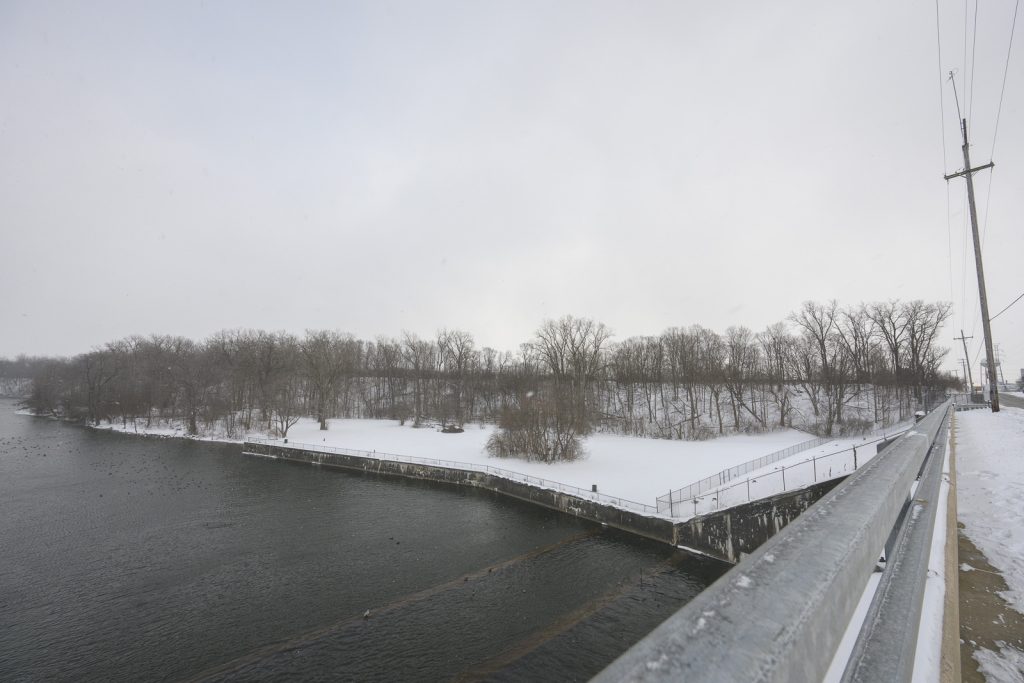
“It’s the worst possible location to put two data centers… on 144 acres of virgin land, on the banks of the Huron River, next to a hydroelectric power station, destroying hundreds of trees in the process, when there’s an alternative location a few miles away [at the American Center for Mobility], which is now owned by the state of Michigan, and has been completely remediated of all contamination and is available,” Winters says. “It’s a horrible, horrible thing for this community to put this data center at the corner of Bridge and Textile Road. They’re going to do a 110-megawatt substation, with all of the electrical transmission lines on top of that. You couldn’t’ve picked a worse location.”
Stumbo also wants the project to be relocated to the former Willow Run Transmission site, now generally known as the American Center for Mobility (ACM). Proponents of locating the U-M/LANL facility there argue that it’s already developed for industrial use and therefore more suitable than the Huron River site.
“You can’t eliminate data centers in communities,” Stumbo says. “It’s exclusionary zoning, so communities can’t do that. Putting them in the proper place and the proper zoning is the right way to approach it.”
Steve Ceccio, a U-M professor of mechanical engineering and of naval architecture and marine engineering, emphasizes that U-M is still in the site selection process. He says U-M earlier considered the ACM site and rejected it due to challenges related to its former industrial use. Chris Kolb, U-M’s vice president for government relations, adds that the need to lease that property and purchase electricity through ACM was a downside compared to the Textile Road site, which U-M owns. However, Ceccio and Kolb stress that U-M is reconsidering the ACM site at the township’s request.
“We don’t anticipate occupation until 2030 or 2031, so it’s quite a ways down the road,” Kolb says. “So we’re not like a private developer that finds a piece of property, we know we’re going to build on it, and we need to go forth because of our financing, costs, et cetera. We’re on a slightly different timeline. I know that frustrates people, but it’s the truth. We probably don’t need to break ground until sometime in 2027 to get completion by the end of 2030.”
The Michigan Economic Development Corporation invested $100 million in the Ypsilanti Township facility at the end of 2024. State Rep. Jimme Wilson Jr., who represents the area, introduced a bill attempting to rescind that grant in December.
“The University of Michigan has not been fully transparent with this project and has refused to collaborate with the Ypsilanti Township officials throughout this planning process,” Wilson told Planet Detroit.
Ypsilanti Township officials are emphatic about keeping the U-M/LANL project off the Textile Road site. Winters made it clear that the township is still considering every possible legal avenue to challenge plans at that location.
A Feb. 19 meeting is intended for the U-M community and the general public to submit comments on the project to the U-M Board of Regents. Those interested in participating must sign up between 9 a.m. Feb. 12 and 4 p.m. Feb. 16.
Energy usage and utility bill concerns
The primary concern people raise about data centers is that the facilities’ high power consumption could drive up energy bills. A study from Carnegie Mellon University and North Carolina State University found last October that “data center and cryptocurrency mining growth through 2030 could increase average U.S. electricity generation costs by 8% and greenhouse gas emissions from power generation by 30%.”
Daniel Brown, a climate resilience strategist at the Ann Arbor-based nonprofit Huron River Watershed Council (HRWC), says that just how much more stress data centers will put on Michigan’s electric grid is a big unknown right now. Each project is different, and project design results in hugely different climate effects. Brown has seen estimates range from a 12% increase in energy consumption to 60%. He says lack of regulation encouraged by a 2024 state law trying to attract data centers to Michigan makes it hard to track and monitor data center construction.
“What I think is very clear is that there is simply not enough energy in the grid, from renewable sources, to meet all of DTE and Consumers Energy’s renewable energy goals,” Brown says. “So in terms of emissions, we’ll certainly see an increase because they’re gonna be increasing demand across all sources on the grid. We simply just can’t build renewable power plants fast enough to account for the energy demand that this is going to drive. And a lot of it is due to utilities lobbying in the past, which has resulted in a lot of obstacles to private owners putting solar on their rooftops, big box stores putting solar on top of Walmarts and Meijers. A lot of the obstacles that utilities have lobbied for in the past are getting in the way of providing the surge of demand that the data centers will create.”
These concerns were what motivated a bipartisan group within the Michigan Legislature to change policy last year on data centers, offering data center developers tax breaks for locating here but also stipulating that they pay enough tax to prevent ordinary residents from subsidizing their infrastructure and operating costs.
The Michigan Public Service Commission (MPSC) approved DTE Energy’s plan for energy contracts for the Saline Township data center on Dec. 18. The MPSC is requiring that, in the event of an “energy emergency,” power be cut off or reduced at the data center before it is for other customers. It also requires that DTE file additional information on the resource requirements associated with the electric load incurred by Oracle subsidiary Green Chile Ventures. An MPSC press release states that “the Commission found that its conditional approval of DTE Electric’s special contracts will not increase rates, rate schedules or costs of service for other customers,” and therefore qualified for review without public hearings or contested cases.
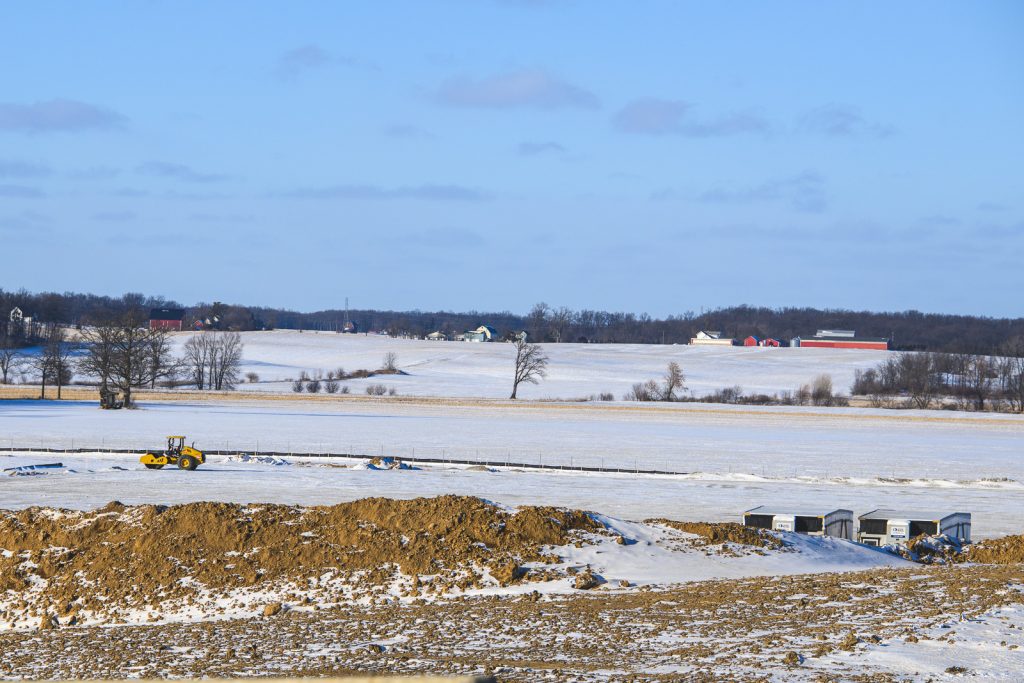
Asked about the U-M/LANL project’s energy usage, Ceccio first stresses the project’s smaller scope; it is projected to use less than one-tenth of the power that the Saline Township project will. He also emphasizes that U-M will need to build, and pay for, its own electrical substation for the facility.
“We have our own purchase power agreement with DTE that sets our rate that’s negotiated,” Kolb says. “And we pay all of that. And those costs are not passed along to anyone but to us.”
Environmental concerns
Those advocating against data centers have also raised concerns about their environmental impacts.
“Data centers are the most immediate emerging threat to the ecology of Michigan right now just because the pace of their construction is so rapid and could compromise so many ecosystem services around the state,” Brown says.
One of the key environmental concerns raised about data centers is the amount of water needed to support the facilities’ cooling needs. An HRWC blog post co-written by Brown cites estimates of data center water use ranging from 10 million to 110 million gallons per year. It also says there is “a lot unknown about the quality of the water discharged from these facilities.”
HRWC’s blog post says that while the Ypsi Township project “will have high electrical and water needs, as proposed, it is of significantly less impact than other commercial data centers.” But it still advocates for the facility to be moved to the ACM site, suggesting that “scrutiny” is called for “when the proposed facility may compromise the ecology of one of the last remaining natural parcels along an impaired stretch of the Huron River.”
A U-M website on the Ypsi Township project says there will be “no impact to the Huron River – no water drawn from or discharged into it” because municipal water will be used instead to provide the necessary cooling. Ypsilanti’s drinking water comes from the Great Lakes Water Authority (GLWA) – a multi-county public authority that provides drinking water for the almost 40% of Michiganders living in Detroit and most of its suburbs. Its water comes not from the Huron River, but the Detroit River, Lake Huron, and groundwater from across Southeast Michigan.
However, the U-M/LANL plan has prompted further resident concern about utility bill increases. Kolb says the facility’s maximum daily usage would be 500,000 gallons of water. GLWA’s water treatment plants have excess capacity of 1,720 million gallons per day. Kolb says GLWA officials “were not concerned” about the project’s water consumption.
Those who oppose data centers have also raised concerns about carbon emissions. Morgan Stanley research found that data centers will emit an extra 2.5 billion metric tons of carbon emissions into the atmosphere between now and 2030.
Michigan state law requires all utility companies to run on 100% renewable energy by 2040, theoretically mitigating these concerns in the long run. In an emailed interview, DTE Energy Director of Corporate Communications Jill M. Wilmot says DTE Energy will continue to comply with Michigan’s renewable energy standards. Because compliance with those standards is based on a percentage of utilities’ sales, Wilmot says DTE Energy’s deployment of renewables will increase in keeping with the utility’s increased sales from data centers.
“Bringing on new data center load of this magnitude actually creates affordability – and therefore headroom – to comply with the state’s clean energy targets,” Wilmot says.
Data centers can sometimes have renewable energy built in as part of the project. Kolb notes that the U-M/LANL project is designed so that 40% of the structure could house rooftop solar panels. Renewable energy is not built into the Saline Township project. However, in an email interview, Related Digital spokesperson Kathleen Corless says the project will include just 12 generators, used roughly one hour a month for emergency situations and routine maintenance, “while a typical data center of this size has approximately 600 generators.” She also says the project “does not utilize water-intensive, evaporative cooling technology.”
Corless notes that the data center itself will occupy just 250 acres of its 575-acre site, with the remaining space “preserved as open space, farmland, wetlands and woodlands.” She also notes that two Saline Township landowners have written an open letter about why they want to sell their family’s agricultural property to Related. Corless says Related’s “responsible development plan respects Michigan’s natural resources and water.”
“Despite some opposition, it is important to know that we have always enjoyed significant community support in Saline Township, and from the beginning many members of the community and neighbors greatly preferred our proposal to the alternatives that would have been developed on the site had our project not moved forward,” she says.
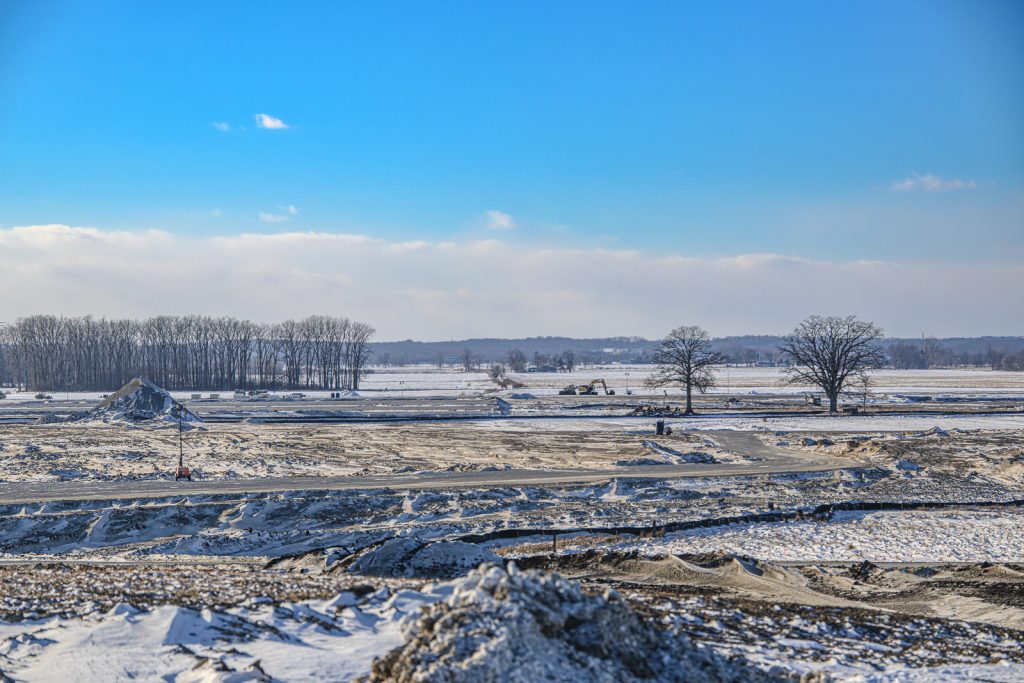
However, many in Saline Township are unconvinced, raising concerns about the wetlands on the site and possible harm to the groundwater that many in the community rely on. Jordan Rice, a member of the Stop Saline Data Center opposition group, says she thinks the project “has to be fought on every possible front.” She criticizes a Related representative’s behavior during a recent Michigan Public Services Commission meeting as “extremely dismissive.”
“At times we felt like there were just outright lies being told,” Rice says. “It feels like they’re not a good-faith partner and don’t really care to be. I think they’re checking some boxes that look good to people who are looking at the dollars and cents, and that’s where the blinders are attached. But in terms of people who are talking about the environment, the electrical grid, I don’t think any of us have heard in a meaningful way from the company at all.”
All of the Washtenaw County-affiliated AI entrepreneurs interviewed for this series expressed discomfort with their industry’s environmental impact. Some are working on using AI more efficiently, thereby reducing energy usage and carbon emissions. Rada Mihalcea, a U-M professor of computer science and founder of Initium AI, says those who oppose data centers have “a fair concern.” She offers specialized AI models like her own, a program designed to assist with grant applications, as a more environmentally friendly alternative to more generalized models like ChatGPT.
“Then you can have the benefit of having a smaller energy footprint as opposed to just throwing more data in it and hoping something will come out, which eventually will require those big data centers, because you do need to process a lot of data,” she says.
Economic impact of data centers
Proponents of AI say the industry will provide the next jobs renaissance in the same way that the internet did. The U-M data center would reportedly provide 30 to 50 jobs in the facility itself and over 200 research and development jobs elsewhere. The U-M website on the project says it “will strengthen Michigan’s role in advanced research while keeping talent and opportunity here at home.”
As noted in the first article of this series, the American economy is currently being propped up by an AI boom, and many concerns have been raised about that bubble bursting. The state government’s goal has ostensibly been to attract data center construction as an economic boon. But Brown criticizes the state law that invited in so many data center projects, saying it is clearly an attempt to capture a moment in time. The law went into effect last year and will expire in 2029, by which time Brown says the AI bubble may have long since burst.
Bill Mayer, senior vice president of entrepreneurial services at Ann Arbor SPARK, describes data centers as a major infrastructure need akin to America’s interstate highway system.
“When the interstate highway system was built, it was very disruptive to many landowners,” Mayer says. “Could it be built today? I don’t honestly know. People are heavily using their phones and other devices running AI. It’s a ‘you can’t have one without the other’ situation and I do not see humans using less compute power in the foreseeable future.”
Authors


Related Articles
Ann Arbor SPARK annual meeting emphasizes power of local collaboration in challenging times
Ann Arbor SPARK’s 2026 annual meeting emphasized the Ann Arbor area’s innovation ecosystem as a bulwark against tumultuous times, while also recognizing top local entrepreneurial achievers.

Ann Arbor SPARK joins global network of innovation districts
Ann Arbor SPARK has joined The Global Institute on Innovation Districts Global Network, allowing it to collaborate with over 50 innovation districts in 14 countries.
American Center for Mobility marks 10 years of evolution and innovation in Ypsi Township
What began as a test track for autonomous vehicles has grown to support tech startups working in electrification, cybersecurity, and advanced mobility systems.


