
Documentary on Pulitzer-winning political cartoonist set for Ann Arbor premiere and director Q&A
A new documentary traces the life and work of cartoonist Pat Oliphant, “with all his human frailties … and spectacular career,” in director Bill Banowsky’s words.
This story is part of a series about arts and culture in Washtenaw County. It is made possible by the Ann Arbor Art Center, the Ann Arbor Summer Festival, Destination Ann Arbor, Larry and Lucie Nisson, and the University Musical Society.
“I don’t know that anyone would say there’s been a more influential political cartoonist in the United States than Pat Oliphant,” says Bill Banowsky, director of “A Savage Art: The Life and Cartoons of Pat Oliphant.”
The documentary traces the life and work of the Pulitzer Prize-winning, Australian-born artist, “with all his human frailties … and spectacular career,” in Banowsky’s words.
Banowsky will attend an upcoming screening of “A Savage Art” on Nov. 16 at 3 p.m. at the Michigan Theater, 603 E. Liberty St. in Ann Arbor. After the film, Banowsky will be joined by journalist Charles Eisendrath and political cartoonist Mike Thompson for a discussion moderated by Lynette Clemetson, director of the University of Michigan’s Wallace House Center for Journalists.
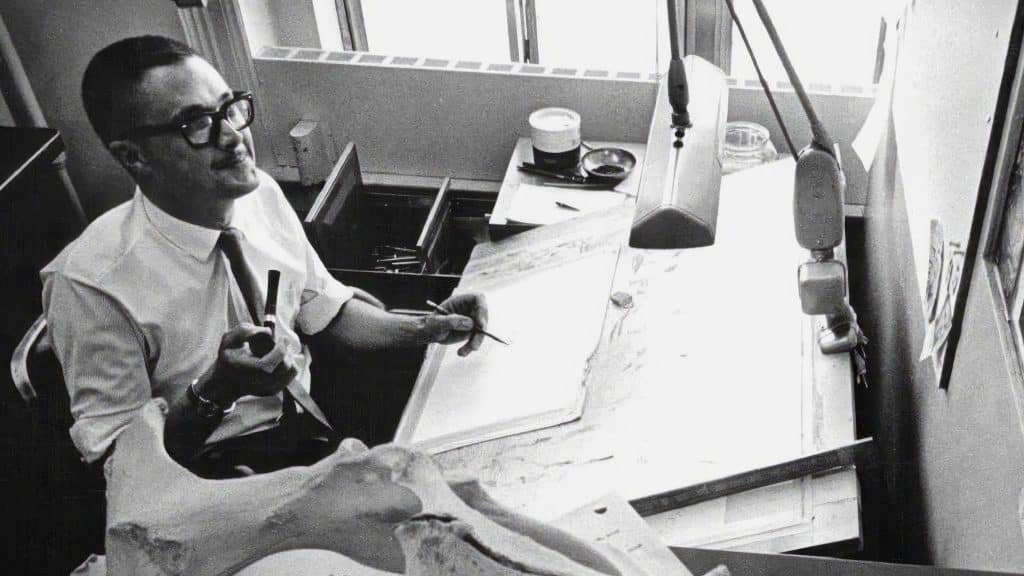
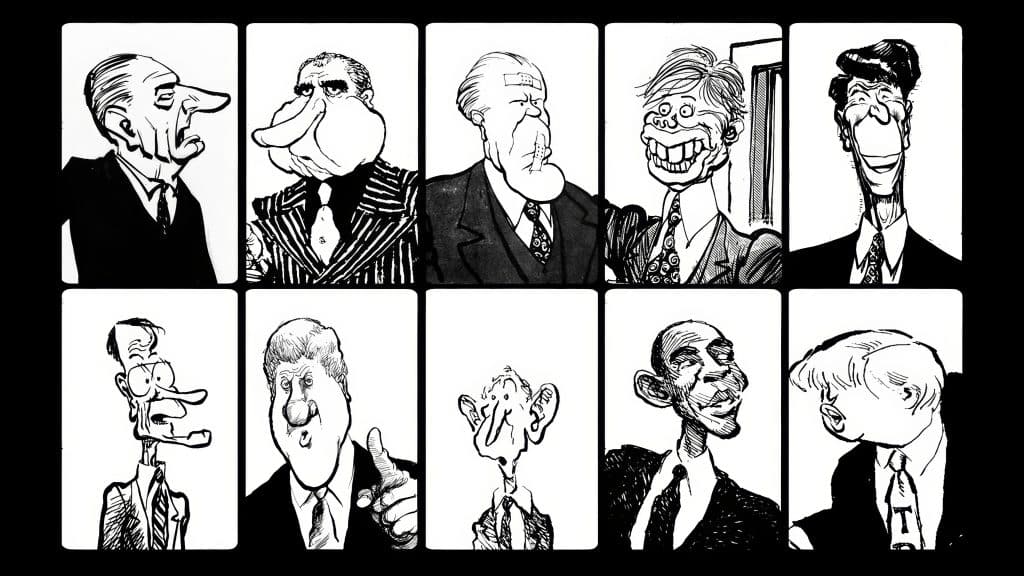
Oliphant himself is now 90 years old and living in Santa Fe, N.M. Whether or not you’ve heard his name before, you’ve surely seen his cartoons; at the very least, you’ve seen cartoons that were influenced by Oliphant’s cartoons. As “A Savage Art” makes clear, no other political cartoonist in the United States has had Oliphant’s influence or reach.
In 1964, Oliphant moved to Denver from his native Australia with his first wife, Hendrika DeVries, and children. He retired in 2015. In between, he covered not only presidents and political intrigue, but environmental catastrophe, corporate overreach, and all sorts of issues related to social justice.
As his son, Grant Oliphant, says in Banowsky’s film, “[Pat Oliphant] helped shape the narrative of what happened in those [decades].”
Oliphant was employed by the Denver Post between 1964 and 1975, at which point he moved to Washington, D.C. to work for the Washington Star. But six years later, that paper folded, and Oliphant struck out on his own. As an independently syndicated cartoonist, he achieved a rare form of autonomy.
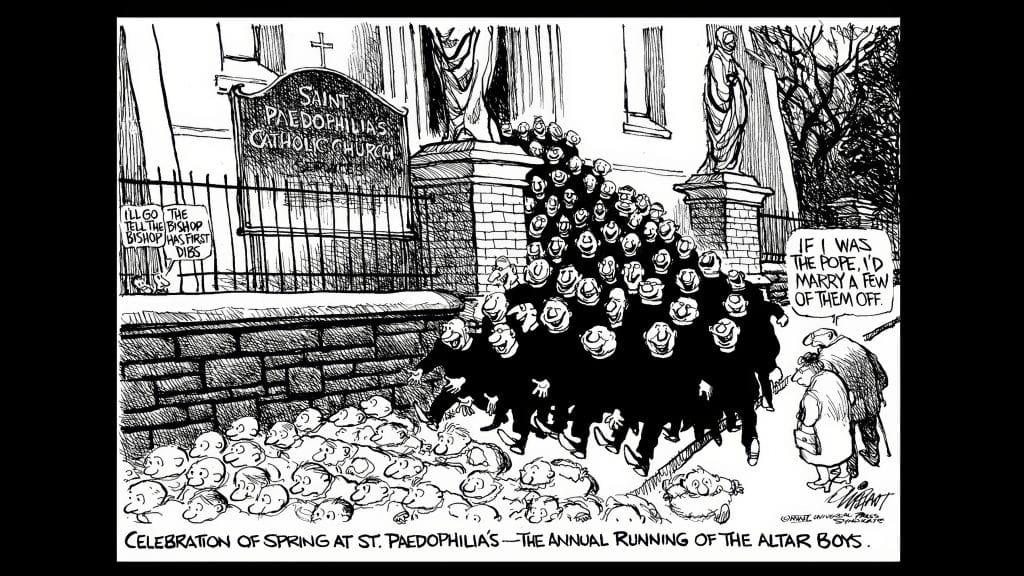
As Banowsky says, Oliphant “no longer had any editors to tell him what to draw and what not to draw.”
Throughout his career, Oliphant “resisted editorial control of his work,” which he believed was “stifling” and “inappropriate,” according to Banowsky.
Oliphant was awarded the Pulitzer Prize for Editorial Cartooning in 1967, for a cartoon in which Ho Chi Minh is depicted with a dead Vietnamese man’s body in his arms. But the prize apparently only served to further disillusion Oliphant about the awards process.
(The cartoon had been published with a small – but, for Oliphant, crucial – edit. Oliphant had originally captioned the cartoon: “They Won’t Get Us To The Peace Table … Will They?” But before publication, his editor had replaced “Peace Table” with the milder “Conference Table.” Oliphant felt the cartoon wasn’t particularly strong in the first place, and had been further watered down by the editorial interference.)
“A Savage Art” is Banowsky’s directorial debut, though he’s been a mainstay of the film industry for decades. In 2001, he co-founded the prominent film distribution company Magnolia Pictures. He’s also produced and executive-produced many films, including 2016’s “Starving the Beast” and 2010’s “Casino Jack and the United States of Money.”
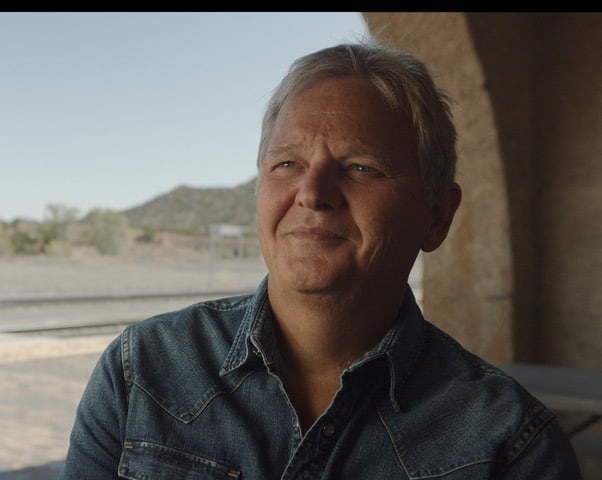
Banowsky first met Oliphant a decade ago, when they became neighbors in Santa Fe and quickly formed a friendship. Banowsky says his original idea was to make a short film about Oliphant and other “interesting people who live in Santa Fe.” He nixed that idea soon after sending a film crew out to interview Oliphant.
“That’s when I decided I wanted to make a feature film about Pat Oliphant and political cartooning, and I set out to do it,” Banowsky says.
The film took seven years to complete. Banowsky says it was only in the last of those years, when he interviewed Oliphant’s daughter Susanne, that he began to uncover some of the difficult family dynamics “buried under the surface” of Oliphant’s story. After moving with his family to Washington, D.C., Oliphant walked out on his wife and had little to do with her or his children afterwards.
Banowsky is remarkably forthcoming about his friendship with Oliphant, which, he says, initially made him “hesitant to get into anything [in the film] that might be perceived as a negative.”
He ultimately decided, largely because of what he viewed as Oliphant’s own longstanding artistic integrity, that Oliphant “would have been disappointed if someone had tried to sugarcoat his life and not tell the complete story.”
“Here’s a guy who was unsparing in his criticism of others. He would have been disappointed if I had been sparing in the way that I addressed his life — and he trusted me to make this film about his life,” Banowsky says.
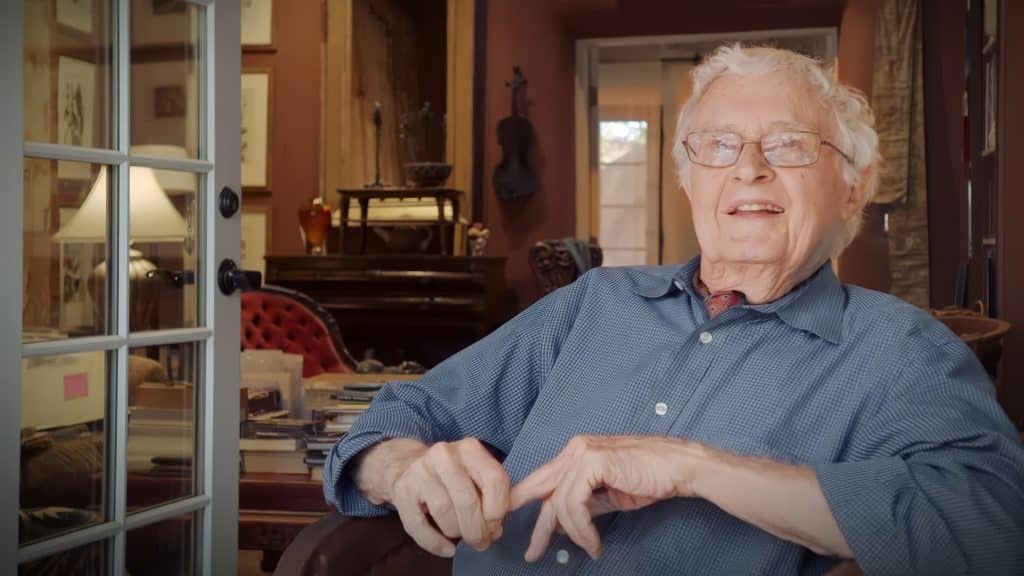
Banowsky says Oliphant “has seen the film several times [and] I have never once gotten any sense that he has been at all disappointed with [it].”
Late in life, Oliphant was diagnosed with macular degeneration and glaucoma — a tragic irony for an artist.
“Our current president is the one president I think Pat wishes he could have drawn … before he lost his eyesight,” Banowsky says.
In the film, Oliphant is quoted saying, “I’ve hoped to get back into the saddle again, but — realistically? Probably not.”
Banowsky describes Oliphant’s own politics as progressive but non-partisan: he was as critical of President Bill Clinton as he was of Presidents Ronald Reagan, George H.W. Bush, or George W. Bush, Banowsky points out.
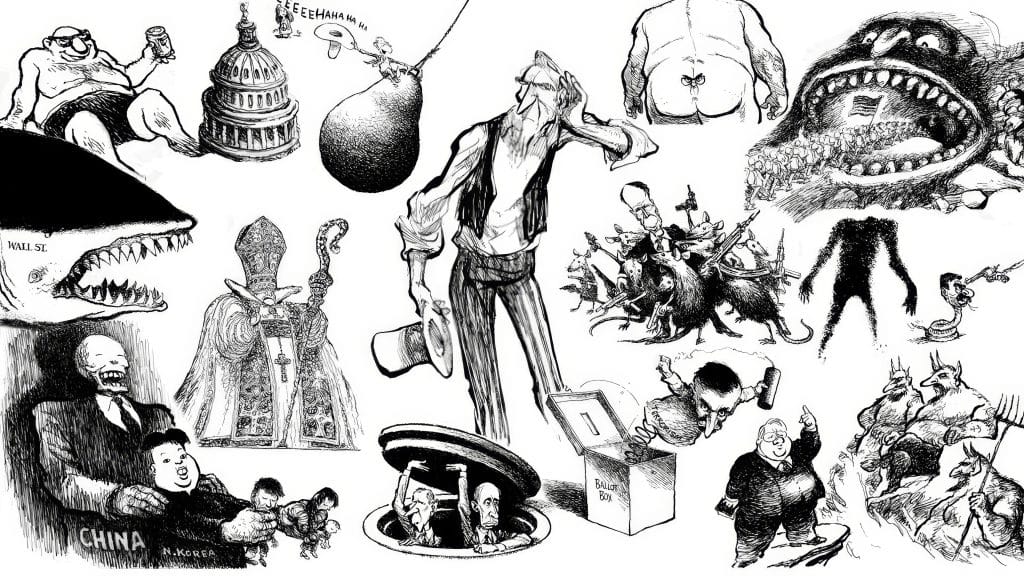
In its last third, “A Savage Art” touches on the current state of political cartooning in the United States, and the picture it paints is bleak. Rob Rogers, who was fired from the Pittsburgh Post-Gazette for his depictions of President Donald Trump, is mentioned, as is Ann Telnaes, who resigned from the Washington Post after a cartoon portraying Jeff Bezos (the paper’s owner) was rejected for publication.
“Political cartooning is a form of satire, and satire turns on mockery. Mockery is about giving offense — so if you can’t do that anymore, you don’t have political cartoons,” Eric Gibson of the Wall Street Journal says in the film.
But in our conversation, Banowsky strikes a slightly more hopeful note. Political cartoonists are “not a dying breed,” he insists. “They’re a shrinking breed.”
Meanwhile, he says, cartoons “have the same power now that they’ve had for years, which is: they convey a political message in a snapshot.”
Tickets for the Michigan Theater’s screening of “A Savage Art” are available here.
Author

Related Articles

Ypsilanti’s Matt Jones and The Reconstruction make long-awaited return to music scene
Matt Jones and The Reconstruction will return to The Ark for the first time in over a decade to celebrate the release of their new album, “The Good Life.”

EMU fashion student wins scholarship established by iconic designer Virgil Abloh
Lindsay Jenkins, an Eastern Michigan University student majoring in fashion marketing innovation, was one of 60 recipients of a $10,000 college scholarship from the Virgil Abloh “Post-Modern” Scholarship Fund this year.

Jazz luminaries to celebrate 100 years of Miles Davis and John Coltrane in Ann Arbor concert
As saxophonist Ravi Coltrane and trumpeter Terence Blanchard embark on a tour celebrating the 100th anniversary of jazz legends Miles Davis’ and John Coltrane’s births, Ravi Coltrane says “the real plan is not to try to recreate the past.”


