
Drone pilot program offers Ypsi-area high schoolers early training for aviation careers
A new drone aviation technology pilot program is giving students hands-on experience, mentorship, and a focus on real-world skills.
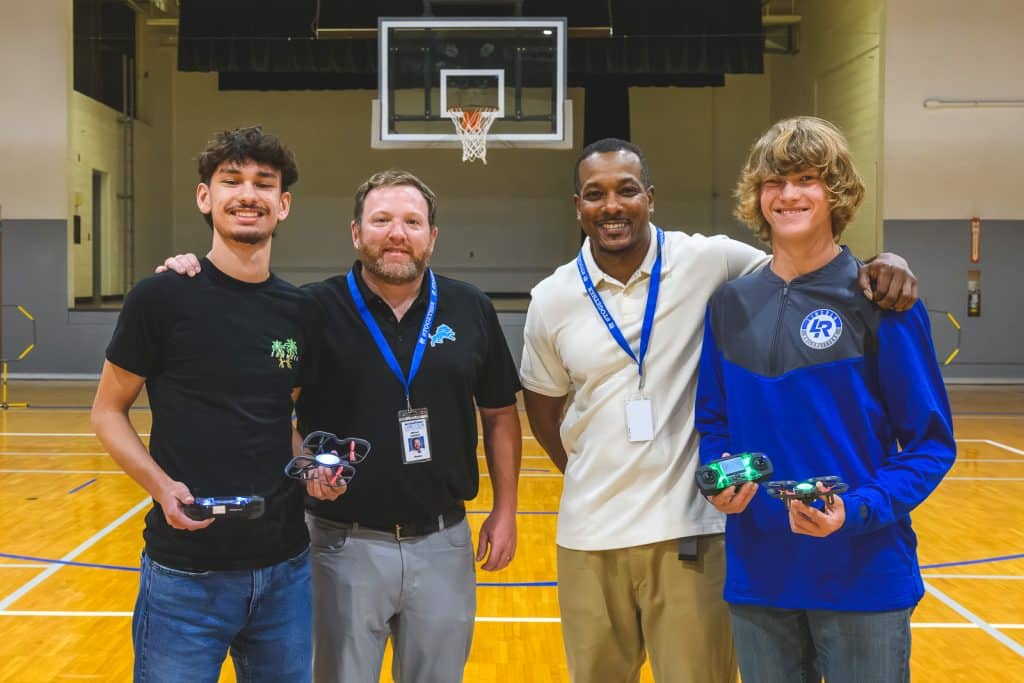
This article is part of Concentrate’s Voices of Youth series, which features stories written by Washtenaw County youth with guidance from Concentrate staff mentors, as well as adult-written stories spotlighting local youth perspective. In this installment, adult writer Jaishree Drepaul talks to students and teachers about a new drone aviation pilot program at two local high schools.
As interest in drone technology continues to rise, a new career and technical education (CTE) opportunity is helping Washtenaw County students gain a competitive edge. Through hands-on experience, mentorship, and a focus on real-world skills, a new drone aviation technology pilot program at Ypsilanti Community High School and Lincoln High School is showing students that the sky’s the limit.
“Drones are not just for war. Drones are for improving the environment and improving the surroundings, and to get things into remote places,” says Marshaun Brooks, supervisor of CTE at the Washtenaw Intermediate School District (WISD). “We’re looking to get drones to start taking packages to people, or to drop off electric vehicle batteries when things go bad. We’re looking at drones for a lot of different things.”
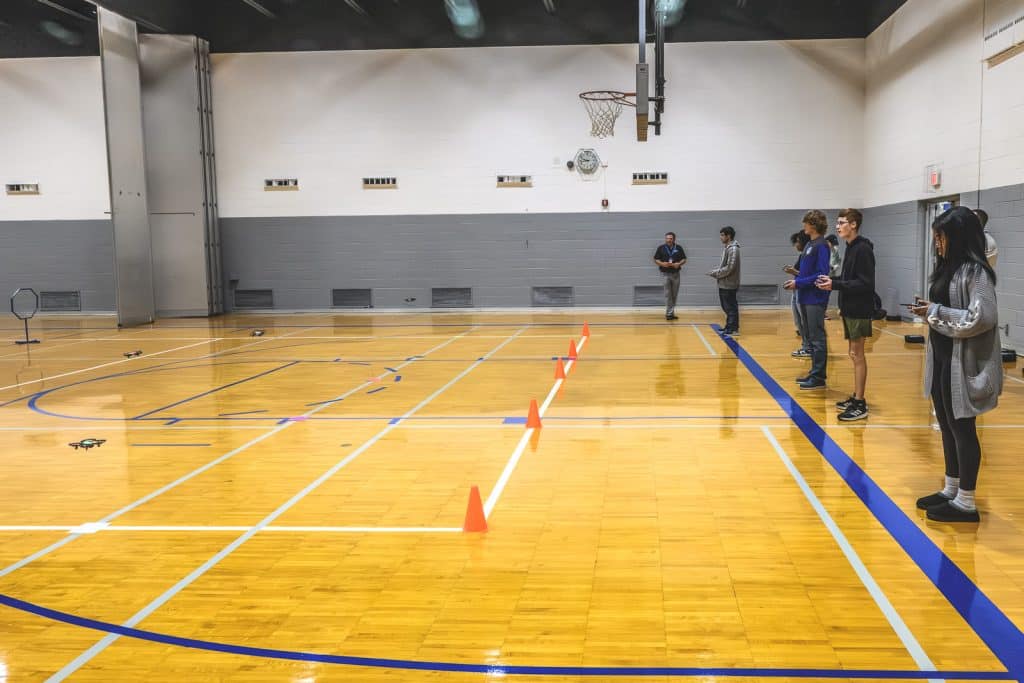
Throughout the course of their studies, students gain hands-on experience in aerospace and engineering, learning not only how to build and fly drones, but also how to apply mathematics, mapping, and scientific principles.
The program not only includes industry partnerships and future work-based placements, but also prepares students for the Federal Aviation Administration (FAA) Part 107 exam. The FAA controls national airspace and the certification allows people to fly drones commercially.
“I think people should take this class seriously and join it next year,” says Wendell Turner, 17, a student in the program. “It really gets you in the door with this license, and you learn a lot, especially if you want to go the aviation route.”
“State-of-the-art” opportunity
Brooks himself is a former high school CTE student. He’s proud that the county’s new drone and aviation technology program is already receiving statewide attention. The Washtenaw County program already offers a state-approved drone aviation pathway for 11th and 12th graders, and Brooks hopes to create a similar educational pathway for grades K-10. He also hopes the year-long program will eventually become available at all Washtenaw County schools.
“This is the first time anything like this has ever been done in Washtenaw County, and everything is state-of-art. It’s a phenomenal opportunity,” Brooks says. “If we’re ever going to continue our workforce and keep our workforce going, we have to get these young folks trained.”
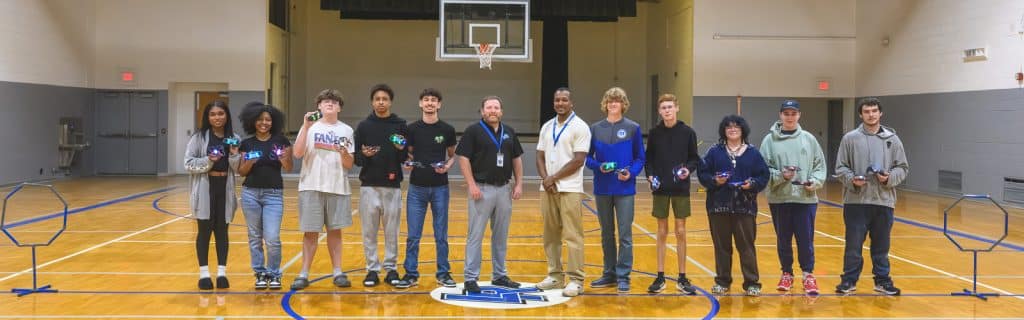
Twenty students are enrolled in the program at Ypsilanti Community High School and eight at Lincoln High School. Turner says he’s enjoying everything about the program, which is housed in the former Bessie Hoffman Elementary School building in Belleville. Turner, who would like to get his private pilot licence, says that learning to fly drones has been the highlight so far. He shares that the class is “exciting” and “the learning curve can be steep.”
“You gotta be very precise flying the drones, because you can crash them very easily,” he says. “But, once you get the hang of it, it’s actually pretty easy. I’m still learning. We all are.”
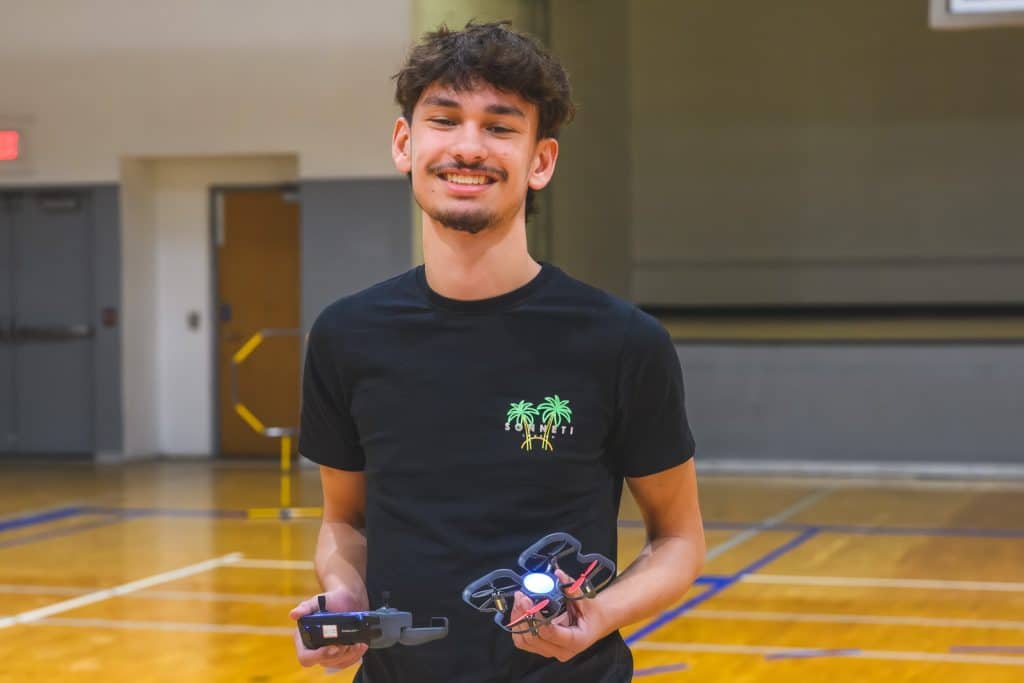
Turner adds that he loves videography and photography, and contributes to his school yearbook. He is already envisioning the different ways the program will broaden his horizons.
“I’ve always liked drone shots, and in movies they’re used everywhere,” he says. “It’d be cool to be able to be the person flying the drone that you see in an upcoming movie.”
Preparing for myriad aviation careers
Michael Cushman, lead instructor in the pilot program, sees his job as a “perfect” fit given his background in both education and aviation. When he graduated high school 25 years ago, he went to Western Michigan University’s flight college, with dreams of becoming an airline pilot.
Then 9/11 happened, the airline industry changed, and Cushman navigated a new path. He got a master’s degree in education, taught elementary school, and became a flight instructor. For the last 13 years he taught third and fourth grade. Now, he’s helping students navigate their own paths.
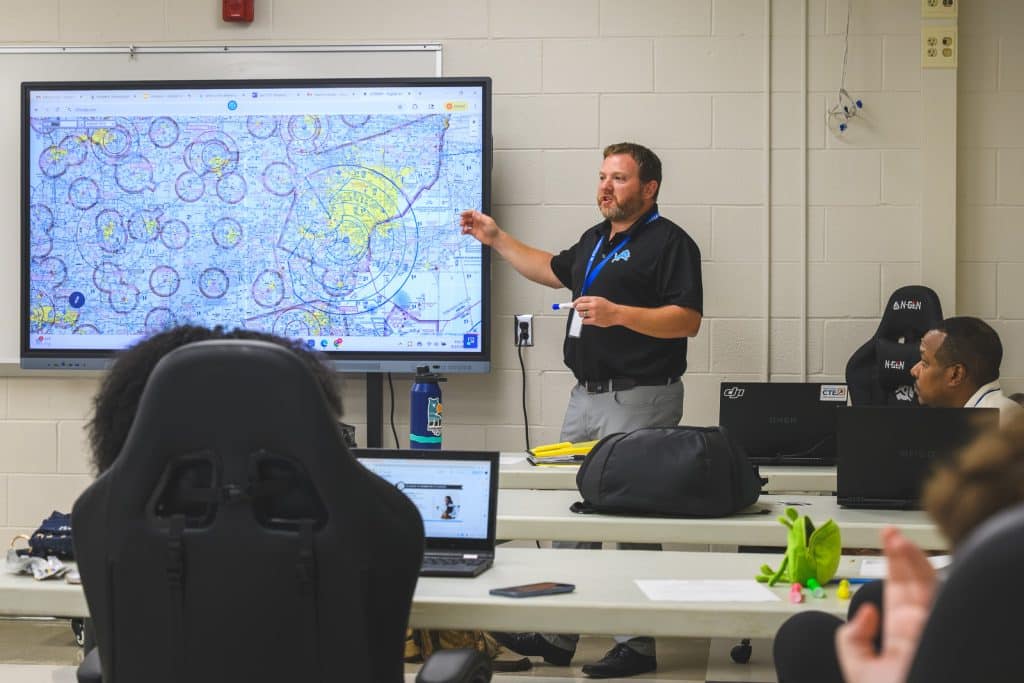
“In the world of aviation, only 10% are pilots,” Cushman says. “There are so many other roles in the aviation community that are available, many of which just require a certification, like what our students will come away with.”
He says students will get lots of flight time, gain experience with different types of drones, learn different types of missions, and receive training on safety-related issues. Cushman is already impressed with students’ potential, recalling the first day of class.
“There was a young man who had zero experience flying the drone, and he whipped around this obstacle course,” Cushman says. “It was like, ‘Holy cow, that was incredible.’ We put a stopwatch on it and it was faster than what I could do.”
Building more than just technical skills
Sixteen-year-old Roy Aben, an 11th grader at Manchester High School, advises students to take the program next year. The FAA recently granted him TRUST certification, which allows Aben to fly drones recreationally. He’s grateful to be able to pursue education in a field that is meaningful to his family history.
“My great uncle Dean worked on jet engines, and my cousin Jeremy is in the Air Force and they’re pretty happy for me,” he says. “This program is helping me get ahead and making me a better candidate for a future career as a pilot.”
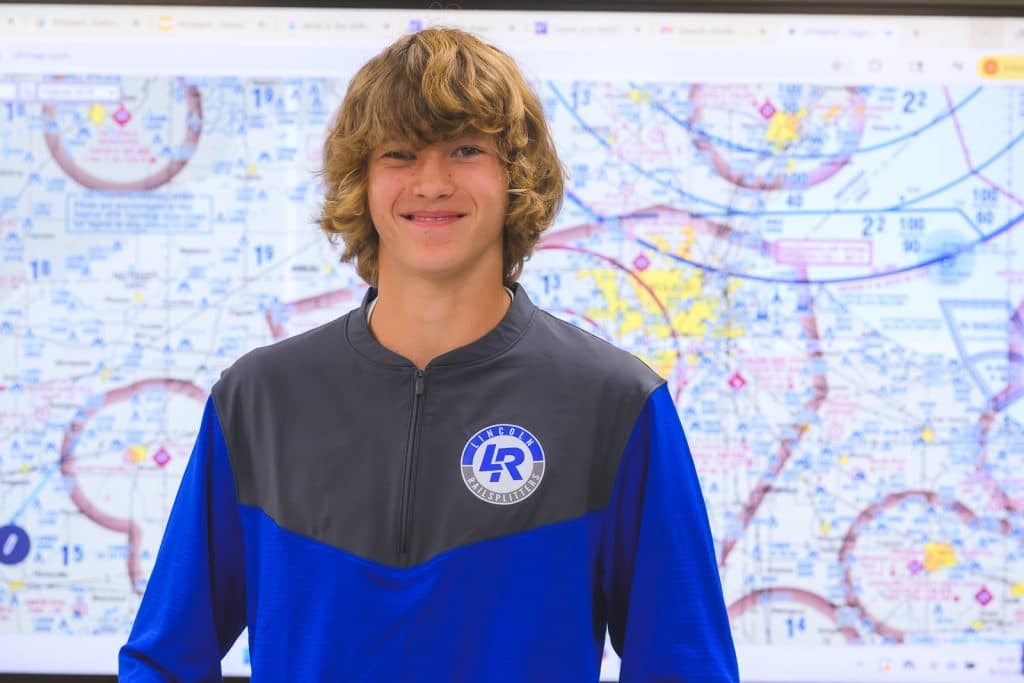
Aben reports that the program’s benefits go beyond technical skills. Coming from the close-knit community of Manchester, he says the program has helped him grow socially, too.
“I’ve made new friends from other schools and become more comfortable meeting new people. It’s a completely different environment than Manchester, and it’s taught me a lot,” he says.
Aben recently went to his first Lincoln football game, where he was part of a small drone demonstration. He was very anxious about not knowing anyone at the game.
“Then I looked and two of my classmates were in the student section, so I went up there in the fourth quarter, and they welcomed me like we were already friends,” he says. “I had so much fun. And I felt like after that game, me and those two classmates were a lot closer and more comfortable around each other.”
He thinks his experience foreshadows a successful future in the aviation industry.
“I think the skill that I’m going to take away from this class is how to coexist and work together well with classmates or teammates,” he says. “When we have separate ideas of what could be going on, or what could be wrong, with a drone, an airplane, or anything else in our world, that is important.”
Author

Related Articles
Ann Arbor PTO Council fundraiser aims to close equity gap for schools serving low-income families
The Ann Arbor PTO Council is seeking donations of $30 or more for a fundraiser benefiting Ann Arbor’s Title I schools, or those that receive federal funding to support low-income students.

Since Great Depression, Ann Arbor preschool has offered low-cost child care and supportive services
For over 90 years, Foundations Preschool of Washtenaw County has not only provided high-quality, affordable, and accessible child care, but also served as a community resource for enrolled families.
Ypsi schools’ Resiliency Center expands significantly over five years serving families in need
Since 2020, Ypsilanti Community Schools’ Resiliency Center has been quietly serving hundreds of families who are experiencing housing insecurity and other challenges.


