
EMU boosts student mental health resources through “Building a Community of Caring” initiative
Eastern Michigan University’s Mental Health Task Force is expanding its “Building a Community of Caring” initiative, now in its third year.
This article is part of a series about mental health in Washtenaw County. It is made possible with funding from Washtenaw County’s Public Safety and Mental Health Preservation Millage.
Eastern Michigan University’s (EMU) Mental Health Task Force (MHTF) is expanding its “Building a Community of Caring” initiative, now in its third year, with new programs designed to prioritize students’ mental well-being. Backed by a $50,000 Flinn Foundation grant and guided by the Jed Foundation, the task force is rolling out resources like a digital mental health hub, serenity spaces, and faculty mini-grants to integrate wellness into classrooms. The effort comes amid rising mental health concerns among college students nationwide, with EMU leaders aiming to create a campus culture where students feel valued and supported by faculty and peers alike.
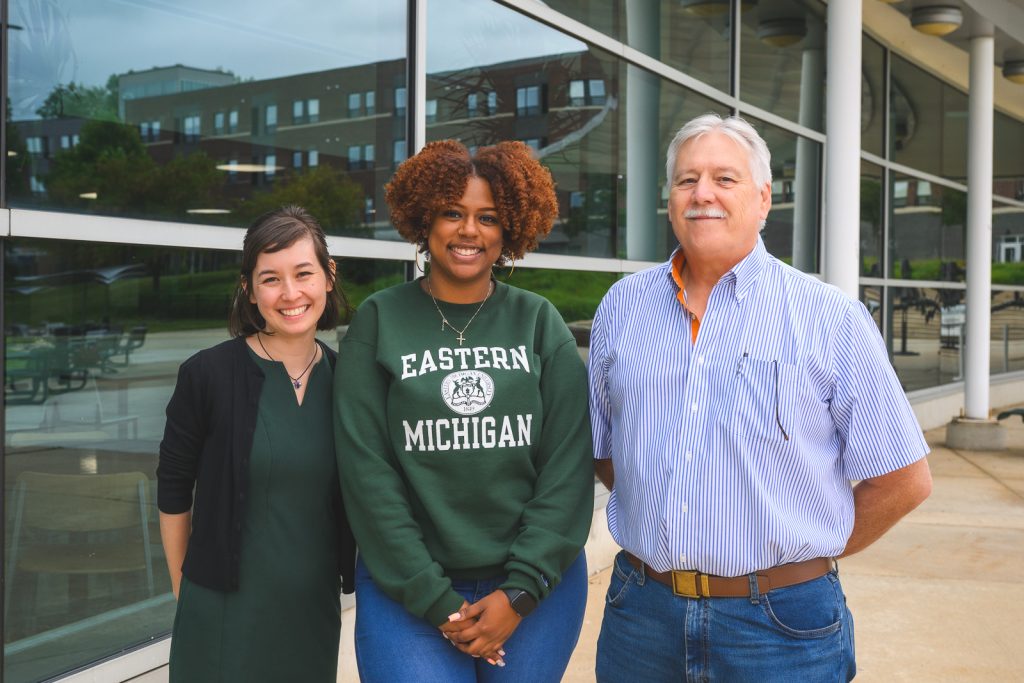
“Universities are notorious for doing things to students and not necessarily for students,” says MHTF founder and EMU Professor Ron Flowers. “We are taking a very student-centered approach because of that, and having a lot more conversations and opening space for those conversations about what we can do to improve the campus experience.”
Flowers began work on the task force in 2023 following the passing of his son, saying that “you wouldn’t have known the suffering he was going through in the classroom” because of his outgoing and social behavior and classroom performance. Flowers wanted to address the fact that other students could be struggling in a similar way without knowing where to find resources, or who to even ask for help. After bringing his idea to the EMU Provost’s Office, Flowers says his idea was met with overwhelming support. The MHTF continues to expand today, with more and more faculty and administrative staff members either joining the task force or providing ideas to improve well-being on campus.

“We knew this had to be a campus-wide initiative,” Flowers says. “Over 20 faculty members responded and wanted to be a part of it within 24 hours. There are a lot of caring people on our campus.”
A student-centered approach has led the task force to have extensive conversations with students and their families about the struggles students are currently facing, potential changes to improve their experience on campus, and possible additions to campus resources. Kati Lebioda, professor in EMU’s Department of Leadership and Counseling and member of the task force, says students are “very enthusiastic” when it comes to bringing issues to light. She says they often bring up ideas that neither she nor Flowers would have considered, sometimes due to the availability of financial resources. Despite those limitations, she says it’s important to MHTF members to consider EMU community members’ ideas and find ways to implement them.
“Students want a place that feels like home and less institutional,” Lebioda says. “We’re taking the things they’re telling us to heart, and we don’t want to tell anyone no. We want to find ways to make their ideas work.”
Throughout the 2025 summer semester, Lebioda and Flowers have been working closely with students to develop and expand new mental health resources to launch this fall. These include serenity spaces – quiet areas across campus designed for students to decompress and reduce stress outside of the classroom. Another new offering is a mental health and wellness landing website for the EMU community, which houses an abundance of resources both on campus and throughout Ypsi. Flowers and Lebioda are working closely with campus resources like Counseling And Psychological Services and the Trinity Health IHA facility to advertise their resources more effectively and ensure students know about the services available to them.
Both Flowers and Lebioda also recognize that many first-generation students may never have had experience with counseling, therapy, or even openly discussing mental and behavioral health struggles before coming to campus. This may be due to cultural differences or a general mistrust of medical professionals. Lebioda hopes that by centralizing student voices – especially marginalized ones – EMU community members will be more open about their struggles.
“Sometimes a student’s marginalized identity drives their story, but sometimes it’s just part of it,” Lebioda explains. “Sharing stories with one another and then using those to advocate for change helps us to build connections and the feeling of a caring community.”

“We’re not only listening, but we’re allowing voices to speak that haven’t had a chance to,” Flowers says.
Including and emphasizing student voices in the creation of these materials has been integral to the task force’s success, Flowers explains. Ashleigh Douglas is an EMU graduate student who has been working alongside the task force over the summer semester. She says her own struggles with mental health throughout her undergraduate studies at another institution stoked her interest in the MHTF.
“I wasn’t completely aware of the resources available to me and I didn’t know how to ask for help,” Douglas says. “This task force is working hard to ensure that students know about the available resources and allowing said resources to be available at their fingertips.”
Douglas got involved with the task force as part of an independent study program in her master’s degree program. She has been developing Wellness Wednesday, a weekly digital initiative that shares wellness and self-care tips through the university’s Eagle App. Students will be able to access these resources in the upcoming fall semester. Douglas says she’s open to working with the task force on future programs and projects.
“Collaborating with the task force has allowed me to meet new people and network, and they have always made sure I knew I could come to them for any help,” she says.

Douglas feels that the importance of a resource like the MHTF on EMU’s campus cannot be understated, particularly in a time when many college students are struggling with mental health. A 2023 Mayo Clinic Health System report found that 15% of college students experience serious suicidal thoughts, while 44% report symptoms of depression, but 75% hesitate to seek help. Douglas hopes that as mental health resources continue to expand at EMU, students will feel more comfortable seeking help when they’re struggling.
“As someone who experiences challenges with my own mental health, I am constantly advocating for others and making sure people have the resources to care for themselves,” Douglas says. “Having a resource like this on this campus or any campus is very important.”
Lebioda hopes to further expand MHTF’s work by collaborating with local organizations such as Garrett’s Space and Ozone House, as well as the Holland-based nonprofit Team Be Better.
“Our priority is our campus, but we’re also thinking more broadly than Ypsi and even just Washtenaw County,” Lebioda says. “Everyone has a personal connection to mental health.”
For more information about “Building a Community of Caring,” visit the initiative’s website or email We_Care@emich.edu.
“If we can help a first-generation student to enroll and ultimately graduate from this institution, the impact it can have on them and their family is life-changing,” Flowers says. “If we can multiply that, we also serve ourselves as a community.”
Related Articles
“It’s okay to get help”: New program offers mental health support for Black men and boys in Ypsi and Ann Arbor
Packard Health’s new Healing Brothers United program will soon launch a variety of mental health services aimed at local Black men and boys.

Ypsi event to celebrate women and girls in sports with youth sports clinic, panels, and more
The event will feature an educational panel, a youth sports clinic, and the opportunity to cheer on the Eastern Michigan University Eagles at a basketball game, followed by post-game autographs and photos.

“It all feels miraculous”: New family shelter in Ypsi addresses growing need for emergency housing
Alpha House East offers 30 individual housing units where families can stabilize, regroup, and begin the process of moving toward permanent housing.


