
EMU speech and hearing clinic has life-changing effects for variety of clients
From rehabilitating stroke patients to helping autistic or hearing-impaired clients communicate, EMU students and faculty are changing lives in Ypsilanti and beyond.
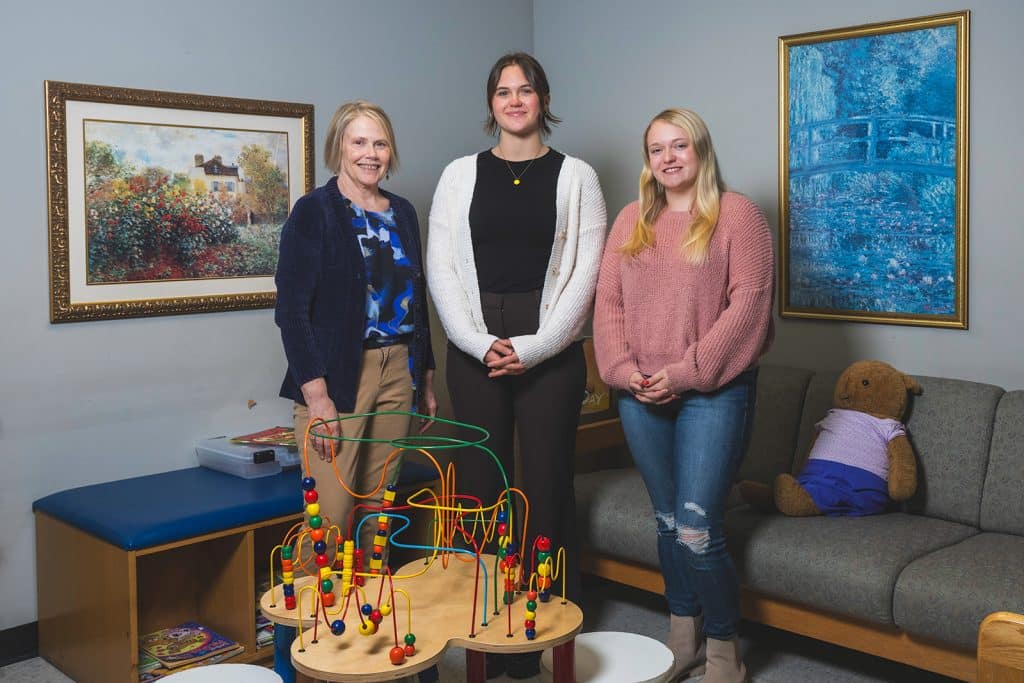
From rehabilitating stroke patients to helping autistic or hearing-impaired clients communicate, Eastern Michigan University’s (EMU) Communication Sciences and Disorders Programs (CSDP) and their speech and hearing clinic are changing lives in Ypsilanti and beyond.
Karen Parish-Foster, clinical educator and co-coordinator of EMU’s Speech and Hearing Clinic, recalls a 3-year-old client who came into the clinic right before the COVID-19 pandemic. The child could say some short syllables like “ma” or “da,” but not complete words.
“A 3-year-old should have/use approximately 1,000 words, and this little guy had none,” Parish-Foster says. “He was on our caseload all through the pandemic, completely online, but that little guy worked so hard with the clinicians. Three years later, he was able to talk in sentences and express himself. That self-expression was the biggest improvement, because communication is so important.”
EMU offers bachelor’s and master’s degrees in CSDP, with multiple semesters of hands-on practice for master’s students. Master’s students do a rotation at the EMU speech and hearing clinic, and another rotation with a community partner like a school or hospital.
Parish-Foster says the CSDP program also partners with other EMU programs, especially occupational therapy (OT).
“We have a great collaboration with our OT students. Their students and ours divide up into teams with some OT and some of our students,” she says. “They review a case together and then talk about their roles and thoughts on the case and how each discipline sees the same thing differently.”
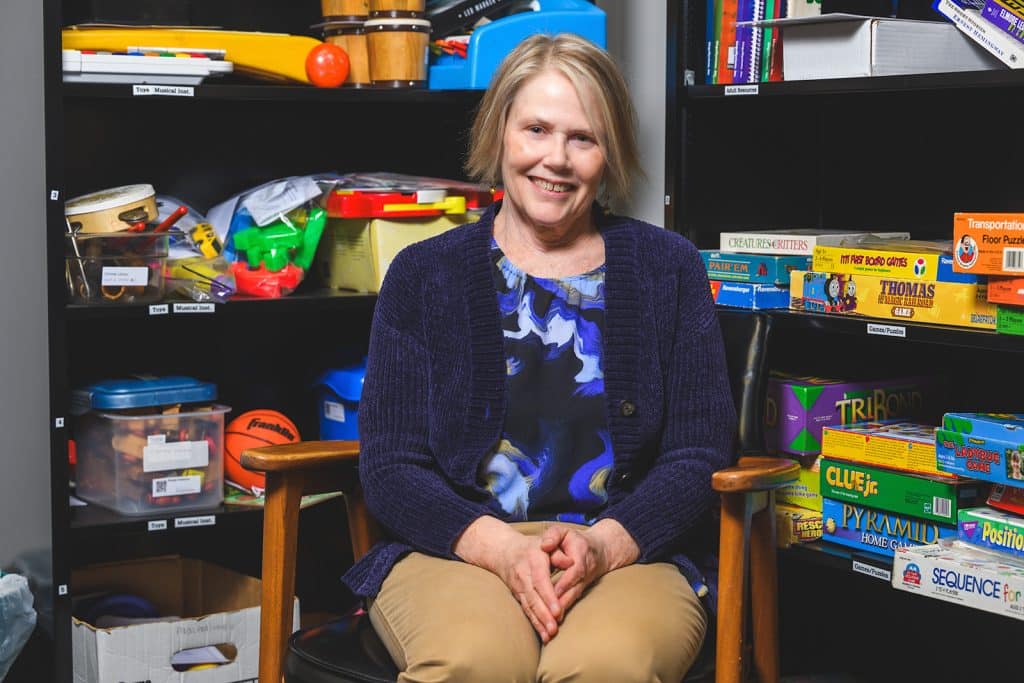
Parish-Foster says the master’s program, in particular, draws students from many other disciplines. She says she knows people who wanted to make a career change from being a teacher, police officer, or dental hygienist and ended up thriving in the CSDP program.
Parish-Foster says clients end up at the EMU speech and hearing clinic for a variety of reasons, but all are related to challenges expressing and understanding language, like stuttering or other speech impediments. Staff audiologists also do hearing evaluations at the clinic, since hearing problems contribute to speech deficits.
The clinic also works with people who have cochlear implants. Parish-Foster says children who get one of these devices that help hearing-impaired people hear sounds later in childhood might have missed some early language acquisition, and the clinic can help with that too.
The clinic doesn’t just help with spoken language. Staff also help hearing-impaired clients and autistic children communicate with sign language and Augmentative and Alternative Communication (AAC), respectively.
“People who have autism and have a speech [disorder] might know what they want to say, but the motor planning is not working to make the movements,” Parish-Foster says. Some people’s speech is affected by a brain injury or stroke as well, she says.
CSDP graduate student Jaidyn Hinkley says she originally thought she wanted to be a teacher, but her mother, who worked for the local intermediate school district, suggested Hinkley check out the field of speech pathology and shadow someone who works in the field.
“So I shadowed a woman from my mom’s district three times, and I enjoyed what I saw,” Hinkley says. “It was a lot of fun every time.”
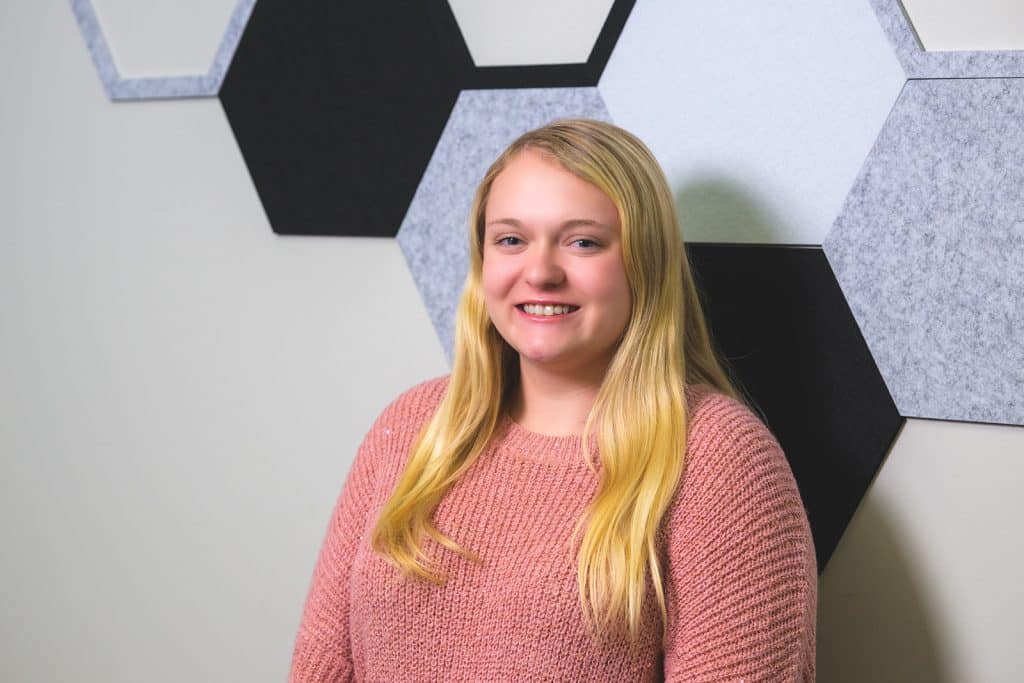
That experience made her reflect on students in her high school who could have benefited from more intense speech therapy.
“They’d only show up once or twice a week, just due to the lack of speech pathologists out there,” Hinkley says. “They’re in high demand and can get hired anywhere.”
Hinkley says her favorite undergrad class was phonetics, where she learned about the different speech sounds in the English language. She also had to learn some biology so she could understand how people produce speech with their lungs, epiglottis, esophagus, and other body parts.
One surprise to Hinkley was just how many places a speech pathologist might end up working.
“I didn’t know that they helped with swallowing in hospitals, and I didn’t know speech pathologists went into hospitals and worked with people who have traumatic brain injury, or work on rehabilitation with people who have strokes,” she says.
Parish-Foster says many graduating students will end up working in schools, nursing homes, or hospitals.
“The wonderful thing about this profession is its versatility,” she says. “They can work at a private practice, be a voice coach, work in autism centers, or take leadership courses to become a special education administrator or a school principal. The sky is the limit.”
Hinkley is in the middle of her clinic class and is helping one child client for a semester. Her next internship will involve working at a partner school for a semester. Finally, she’ll have to work with one adult client over another semester.
Despite the many places a speech pathology degree can take you, Hinkley has known from the beginning that she wants to work with children. She says working with a child in the clinic has only reinforced that wish.
“I might work in a school, or maybe private practice,” she says. “I mostly just want to help people. When you’re young, it must be so frustrating and isolating to not be able to communicate. I want to help anybody I can, but I especially want to help children learn to communicate and express themselves.”
Mollie Spencer, a CSDP graduate student in her third semester, says she knew about the power of speech pathology from a young age. Her father had a stutter and told her how much speech therapy increased his quality of life.
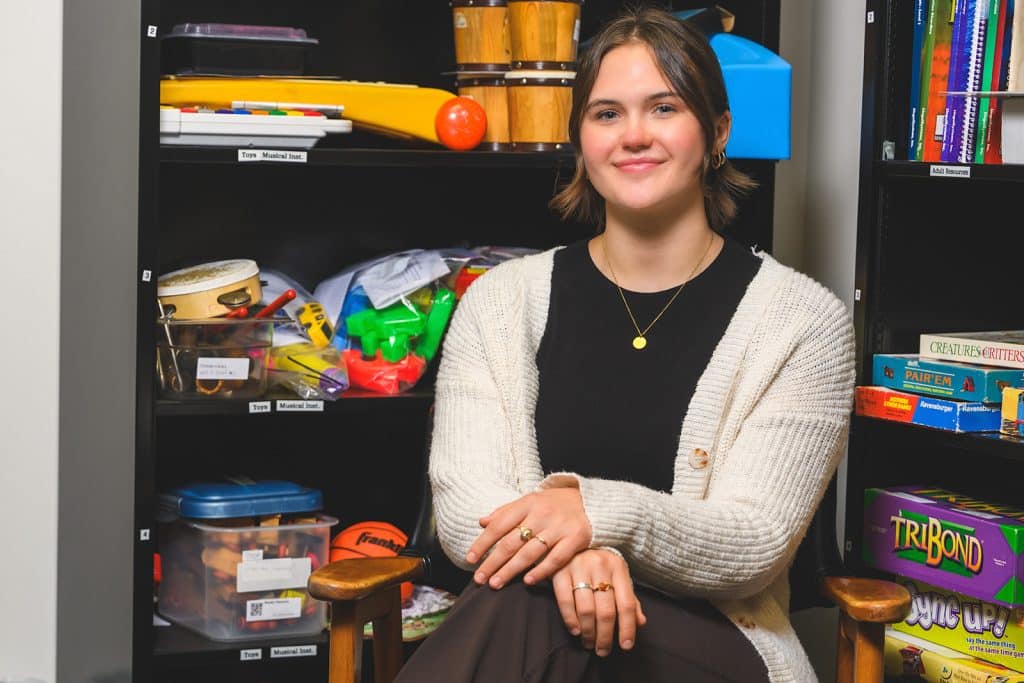
As an undergrad, Spencer minored in children’s literature. She points out that stories are just another form of communication. She also greatly enjoyed courses about language disorders in people with autism, and she hopes to concentrate in that field when she graduates.
Spencer says that, especially when working with people who have autism, it’s “important to share that communication comes in so many different forms, not just verbal.”
“I worked with a client who was nonverbal, but one of the smartest people,” she says. “Just because someone communicates differently doesn’t mean they’re less intelligent.”
Author

Related Articles
Ypsi organizations offer free youth summer basketball program in 5 parks
A coalition of community groups has come together to offer a free youth basketball program called Ballin’ Summer ’26 in locations across the Ypsilanti area.
School mental health mini-grants have big impacts in Washtenaw County
Over the last seven years, many Washtenaw County students and their teachers have been empowered to lead mental health-related projects through a series of mini-grants.
Navigating autism now more difficult for Michiganders
Autism Alliance of Michigan has laid off 75% of staff due to unexpected state funding cut.


