
Facing federal cuts, Washtenaw County food assistance providers prepare for uncertainty and resilience
As food insecurity rises nationwide, Washtenaw County food banks and pantries are bracing for fallout from federal legislation slashing the Supplemental Nutrition Assistance Program (SNAP).
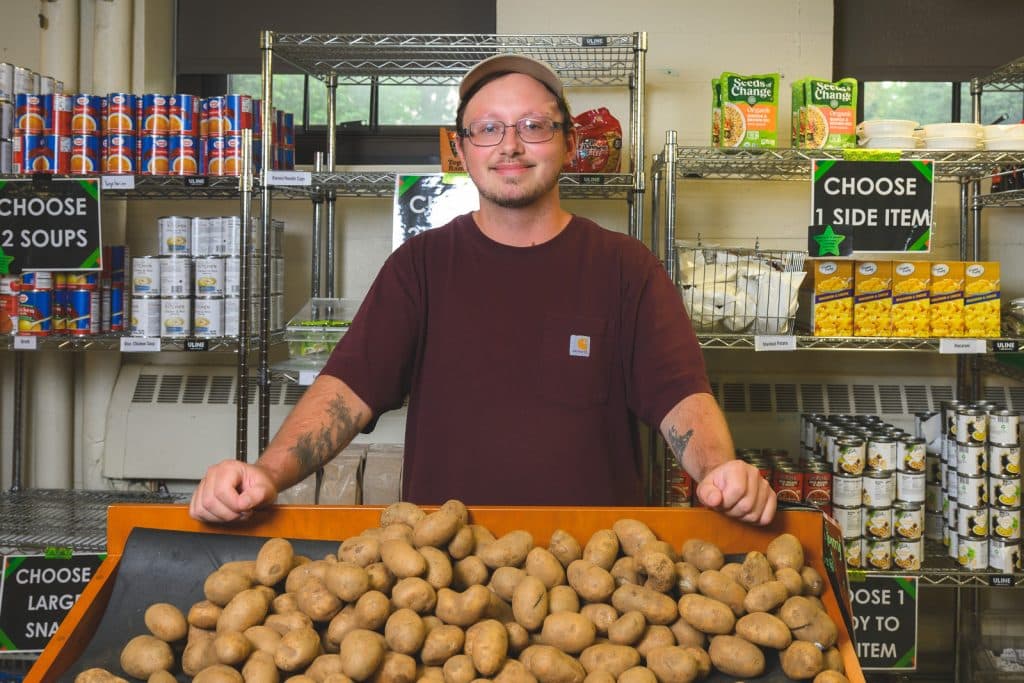
As food insecurity rises nationwide, Washtenaw County food banks and pantries are bracing for fallout from federal legislation slashing the Supplemental Nutrition Assistance Program (SNAP). The cuts, they warn, will have devastating consequences for the county’s most vulnerable residents.
“Our community has built up this really strong safety net, and we have been very agile and strategic,” says Eileen Spring, executive director of Ann Arbor-based food bank Food Gatherers. “But the federal government is sort of this leg of a stool that has been cut off without any planning or notice or explanation.”
The recently passed One Big Beautiful Bill Act will cut about $186 billion over the next 10 years from SNAP, which serves 1.4 million people in Michigan. In Washtenaw County, approximately 8.9% of residents receive SNAP benefits and 14% are food insecure. With an estimated county population of 373,875, that means 33,275 county residents rely on SNAP help to put food on their tables.
Spring, whose organization serves 60,000 people in Washtenaw County through 140 partner agencies annually, shares that Food Gatherers was already hurting from another recent blow. In early spring, the United States Department of Agriculture (USDA) stopped providing a reliable source of food for local food banks.
“For us, this means a loss of 1.5 million pounds of food, or 1.2 million meals, valued at $2.5 million,” Spring says. “USDA food had been 30% of our total distribution, so we were already compromised.”
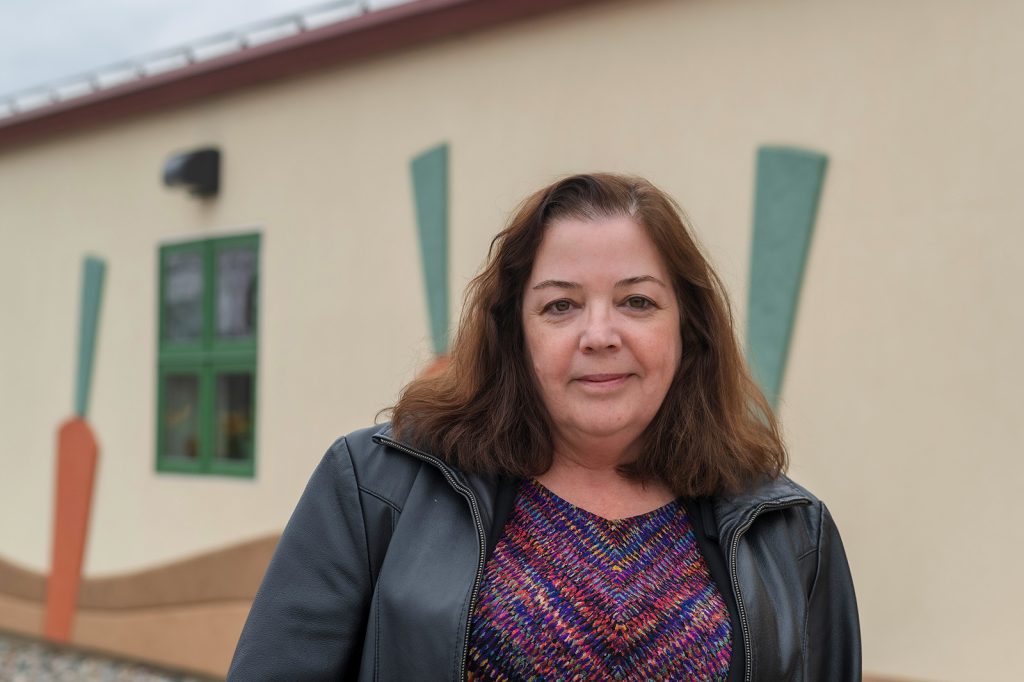
Markell Miller, Food Gatherers’ director of community food programs, underscores that structural changes and cuts to SNAP will put more pressure on the charitable system that Food Gatherers represents.
“For every meal that a food bank provides, like Food Gatherers, SNAP is providing nine meals to that community. So even a small cut to SNAP benefits has a huge impact locally,” she says. “People are still going to need food, and if they lose that benefit, or it’s reduced, they’re going to have to turn to the network of food pantries supported by the local food bank.”
She explains that there are still a lot of unanswered questions about OBBBA. In the short term, Food Gatherers is looking out for information about the time limit attached to SNAP. Since the mid-’90s, people were limited to three months of SNAP benefits in a 36-month period – unless they meet a work requirement or are exempt from it. Upcoming changes would see older adults aged 55-64, and parents of school-aged children 14 and older, subject to stricter requirements.
“For the first time ever, older adults from age 55-64 are going to be subject to that three-month time limit. Their age is no longer an exemption,” Miller says. “If someone is a single parent and they have a 15-year-old, they’re subject to the time limit.”
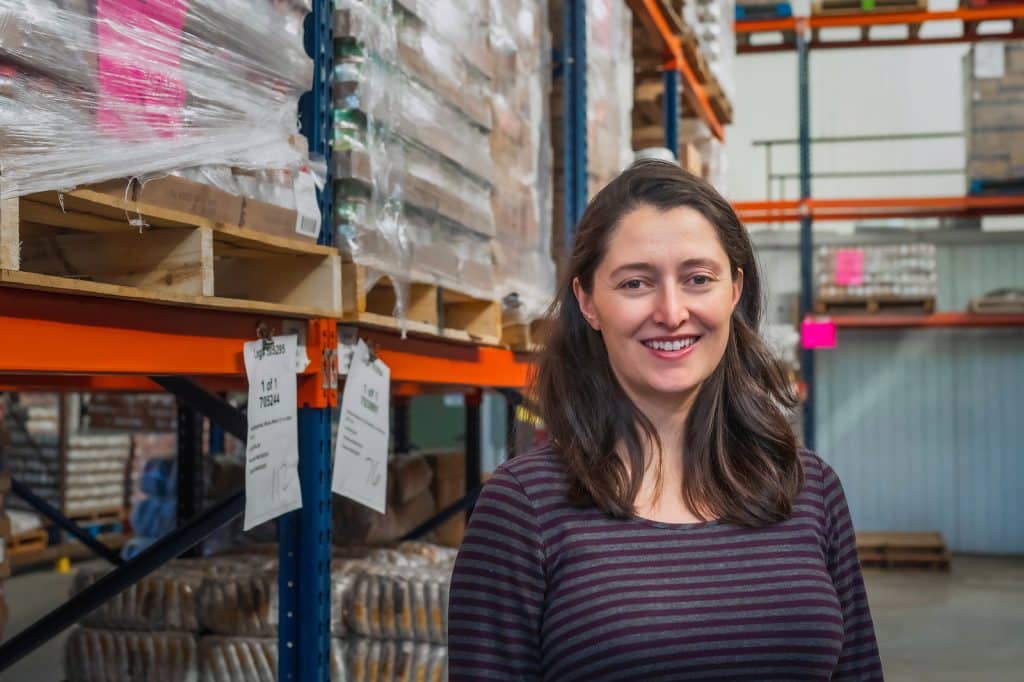
She expects to see people lose benefits because they’re no longer eligible due to the time limit. Administrative errors, complications with submitting paperwork, and the burden of submitting proof of work also could contribute to loss of benefits.
Miller is also concerned about the ripple effect of financial changes coming up at the state level. Up until OBBBA passed, SNAP was 100% funded by the federal government. However, states will now have to contribute to the benefits – another historical first.
“People are projecting that this will result in a loss of benefits, because many, if not all, states won’t be in a position to contribute to funding the benefits,” she says. “But we’re waiting to see what that looks like.”
The “other big thing” that Miller is anxious about is that OBBBA limits future updates to the Thrifty Food Plan (TFP). Developed by the USDA Food and Nutrition Service, TFP outlines nutrient-dense foods and their costs for a healthy diet on a limited budget. It’s how SNAP benefits are calculated, and cost-of-living adjustments are made annually. TFP was last updated in 2021 to reflect consumer purchasing changes and cooking in the home, but now updates will stop altogether.
Both Miller and Spring are urging the community to get informed and explore ways to help as the impact of SNAP cuts becomes clearer in the months ahead.
“I often end many meetings crying lately. Hopefully, they’re not too public of meetings, but it’s stressful thinking about the uncertainty,” Spring says. “Local communities are going to have to really come up with sources of resiliency to do the best we can.”
She adds that Food Gatherers is grateful for its local partners. Recently, the Washtenaw County Board of Commissioners passed a resolution to release $500,000 to help Food Gatherers maintain service levels for older adults. The organization, she says, is committed to distributing another 10 million pounds of food this year.
“We fed people when we had a crisis during the pandemic because of the strength and commitment of people who are generous and engaged,” Spring says. “And our community is just going to have to do it again.”
Preparing to persevere
At Eastern Michigan University (EMU), Swoop’s Food Pantry is important to many, including graduate assistant and employee Colton Ray. He says the rising cost of higher education and cuts to financial aid are making food insecurity “an increasingly urgent issue.” As one of Food Gatherers’ community partners, Swoop’s staff are also concerned about SNAP cuts.
“Roughly one in eight EMU students do already access the pantry. So cuts have a ripple-out effect all across campus,” Ray says. “We do anticipate there will be an increase in students seeking to shop the pantry to try to balance their financial situation.”
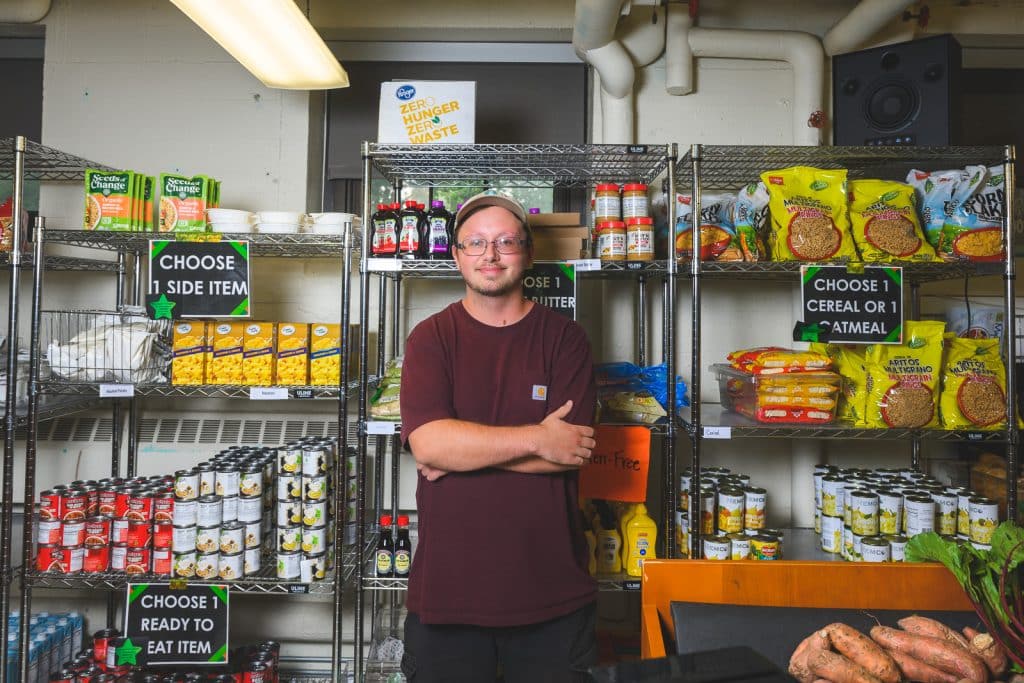
He explains that recent federal proposals include significant slashes to financial aid programs that many EMU students rely on, such as the Pell Grant (which roughly 40% of EMU students receive). The lack of student loan forgiveness, caps being placed on loans, and a proposed elimination of subsidized loans also weigh heavy in the equation.
“Federal work-study pays for many student positions at Swoop’s Food Pantry and across campus,” Ray says. “The proposed cut – 80% starting in the 2026-2027 academic year – means work-study will be significantly less funded compared to what it has been historically.”
This means fewer students will be able to access work-study jobs, which not only provide income but also help students meet SNAP work requirements. Currently, college students who are working part-time must clock in 20 hours a week to be eligible for SNAP. However, participation in a federal or state work-study program allows them to work less and still meet the work requirement.
“With the overall financial insecurity that people are, and will be, experiencing, I think we’ll see more students having to work more hours to fund their education,” Ray says. “It really hampers the desire – and the ability, even – to learn when you are stressed about when your next meal will be. Then your academics definitely suffer.”
As Ray and his team wait to see how the proposed federal cuts play out, they’re preparing to celebrate their pantry’s 10th anniversary. Ray reports that 71% of Swoop’s clients have said shopping at the pantry helped them save more money to pay rent and housing costs. 52% said they had more money to pay off, or avoid incurring, debt.
“There’s been so much growth in the decade that even with these significant obstacles, I feel hopeful,” Ray says. “With continued student leadership and support from the EMU community and partners like Food Gatherers, Swoop’s will persevere.”
Taking a stand for the most vulnerable
Amid the federal cuts, Bonnie Billups Jr., executive director of Ann Arbor’s Peace Neighborhood Center, is promising to stand firm. His nonprofit provides programs for children, families, and individuals who are affected by social and economic challenges.
“We don’t plan on going anywhere,” he says. “We will continue to provide services that support entire families and help people move towards sustainability and out of poverty.”

For over 10 years, Peace Neighborhood Center has operated a single-day food pantry at 1111 N. Maple Rd. in Ann Arbor. In February, the organization opened a facility called the HUB Community Center.
Located at 1515 S. Harris Rd. in Ypsilanti Township, the HUB houses a twice-weekly food pantry. It aims to address significant food insecurity in the area, which is considered a food desert.
“In Ypsilanti, we’re already serving 110 families over the two days,” Billups says. “We’re expecting that more people will be using the pantry in Ann Arbor, and that things will get worse before they get better.”
Billups explains that the people his organization serves depend on local food assistance as a critical “bridge” to survival. He says SNAP benefits, even prior to the new cuts, “were already not enough.” Losing these benefits for even just one month can have a negative domino effect in many recipients’ lives.
“People receiving SNAP benefits are already struggling. It’s scary to think what November and December might look like,” he says. “Nonprofits have all been in a constant state of getting prepared and making decisions that will help us manage the next level.”
“The time to act is now”
Kate Bauer, an associate professor of nutritional sciences at the University of Michigan School of Public Health, says that “the time to act is now.”
“I’m really, really worried,” she says. “We know that SNAP is one of the most effective strategies to reduce poverty and to make sure that kids have food.”
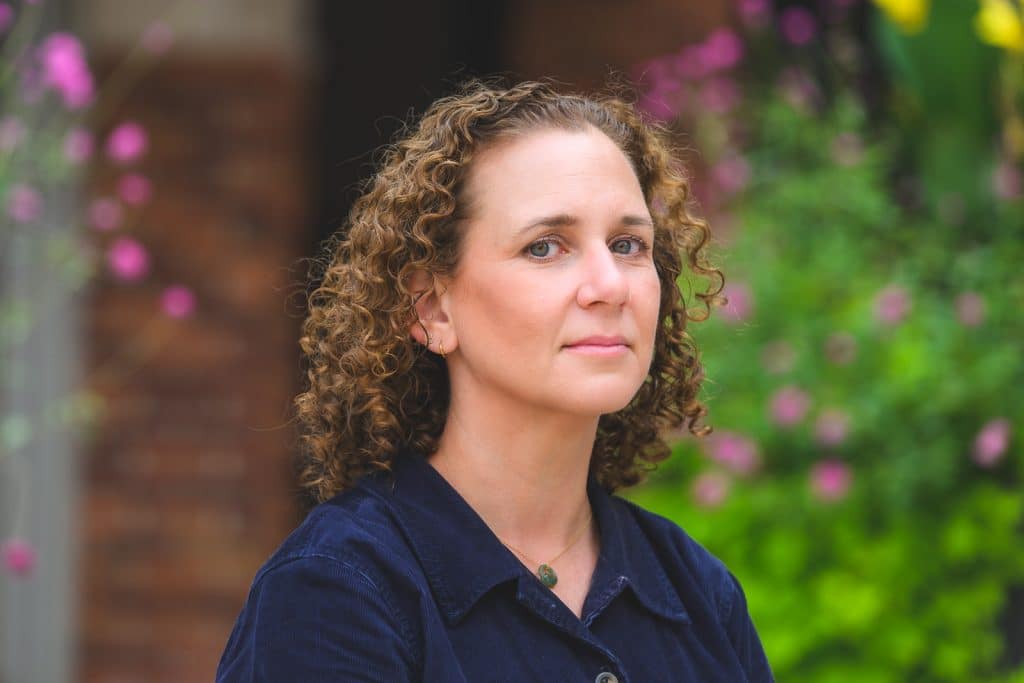
Bauer, who has researched the impacts of SNAP, stresses that the consequences of benefit cuts are dire, especially for families already struggling. In turn, the economic effect on the whole community will be significant.
“This is going to hurt. Every dollar of SNAP brings in $1.50 of economic activity in our county,” she says. “When you spend SNAP dollars at grocery stores, it helps grocery stores. It helps farmers. It helps food producers. We’re losing massive investments in our communities.”
She adds that the state’s Double Up Food Bucks program, through which SNAP recipients can essentially double the amount of produce they purchase, is also at risk. It supports local farmers in an important way.
For Bauer, who works with many SNAP recipients, the changes are not just about numbers. They’re also about misconceptions of those who rely on SNAP.
“Even if you are a family that is fortunate enough to not have to rely on food stamps, I think pointing out that this is going to change our communities is really important,” she says. “There are so many people who are one medical expense away from being in the same situation.”
Bauer adds that new work requirements “will make things a lot worse,” as there is no evidence that they will increase the amount of people in the workforce, or the amount of beneficiaries working. She explains that the vast majority of SNAP recipients are already working, or are unable to work due to family caregiving responsibilities, disability, or lack of available jobs. Some can’t afford day care, or they might be pursuing higher education opportunities.
“The only outcome of these work requirements is that it makes people lose benefits, which then spirals them downward. And then we have more families in poverty,” she says.
Bauer says she’s frustrated because the SNAP recipients she supports “are some of the hardest-working people” she’s ever met. An example is Melissa (last name withheld to protect her privacy), a single mother who studies at Eastern Michigan University.
“Melissa may not meet the new SNAP work requirements that are coming into place because she’s trying to finish her bachelor’s degree,” Bauer says. “Her family will lose SNAP benefits, but this is exactly who we want to support in getting a college degree.”
Bauer is hoping that, as the cuts unfold, there will be a local awareness campaign, more corporate investments, and increased donations to food banks and pantries.
“I’m really terrified about the impacts we’ll see,” she says. “But we’re really fortunate that we have a generous community here.”
Author

Related Articles
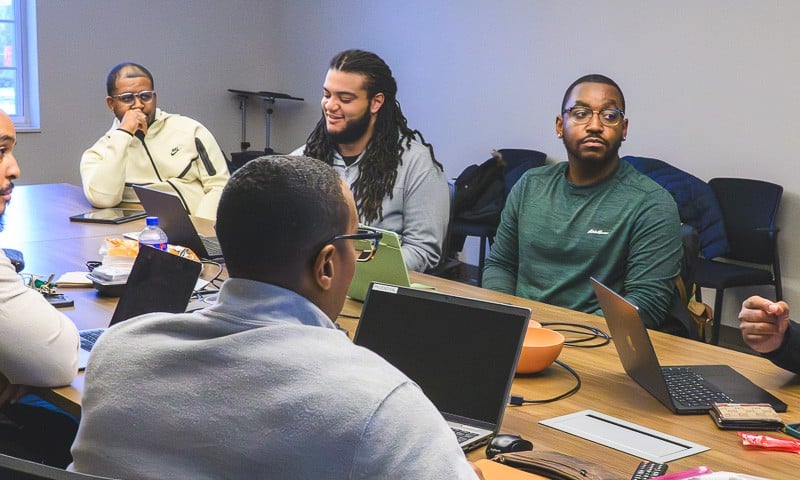
“It’s okay to get help”: New program offers mental health support for Black men and boys in Ypsi and Ann Arbor
Packard Health’s new Healing Brothers United program will soon launch a variety of mental health services aimed at local Black men and boys.

Ypsi event to celebrate women and girls in sports with youth sports clinic, panels, and more
The event will feature an educational panel, a youth sports clinic, and the opportunity to cheer on the Eastern Michigan University Eagles at a basketball game, followed by post-game autographs and photos.
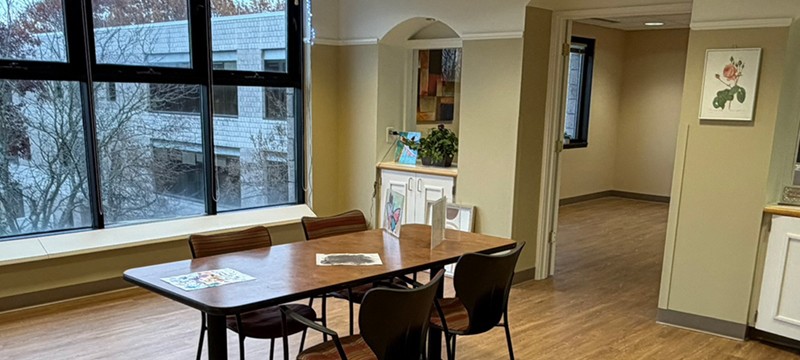
“It all feels miraculous”: New family shelter in Ypsi addresses growing need for emergency housing
Alpha House East offers 30 individual housing units where families can stabilize, regroup, and begin the process of moving toward permanent housing.


