
Federal policy poses new threats to Washtenaw County residents experiencing homelessness
Forthcoming Medicaid cuts have direct implications on not just health, but housing, for many of Washtenaw County’s poorest residents.
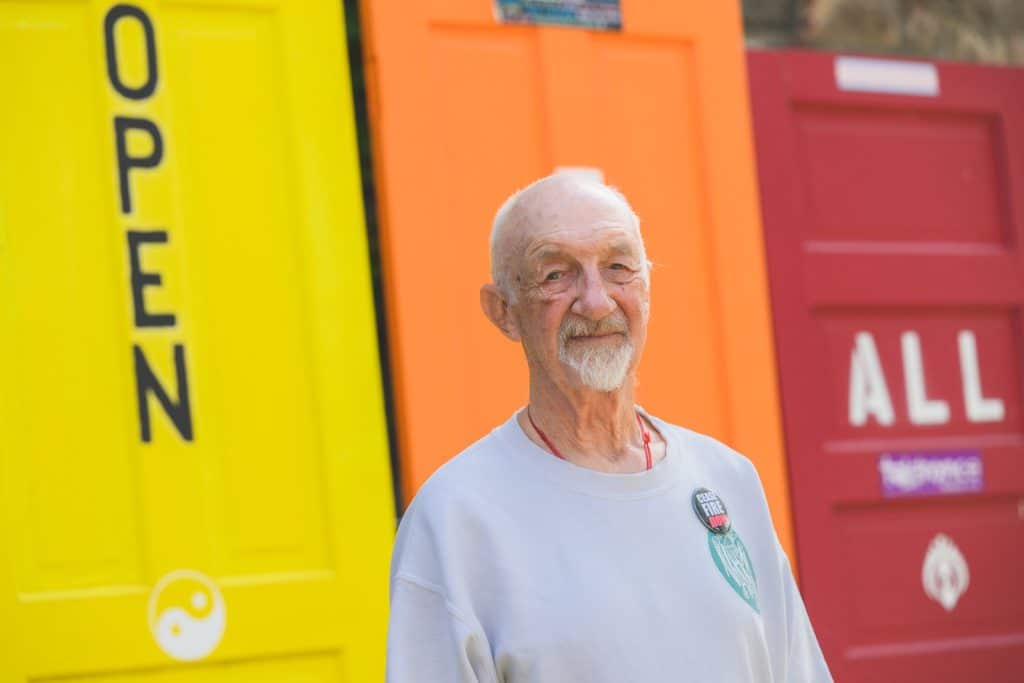
How do you know that you are homeless? The answer might seem self-explanatory, but 82-year-old Ken Parks has had to navigate the technical definition since he moved to Ann Arbor from Detroit in 2018. And that was back before the One Big Beautiful Bill Act, which President Donald Trump signed into law in July, established provisions that will result in an estimated $793 billion cut to federal Medicaid spending between now and 2034.
“You can’t tell them you live in a garage because they consider that housed,” Parks says of his experience with the housing system. He did live in someone’s garage for a while, and is now in an efficiency apartment.
“I’m housed, but I wouldn’t consider it a home,” he says.
OBBBA’s Medicaid cuts have direct implications on not just health for Parks and thousands more of Washtenaw County’s poorest residents. An analysis by Michigan Gov. Gretchen Whitmer’s office found that nearly 39% of eligible adult Medicaid beneficiaries in the state could lose their coverage due to work requirements.
Congress created Medicaid in the ’60s to provide health insurance for the working poor who don’t get coverage from an employer. Each state runs its own Medicaid system, with funding mostly coming from the federal budget. Medicaid costs will now shift to the states under OBBBA.
Washtenaw County might be one of the wealthier parts of Michigan, but it still has a 14.6% poverty rate according to the St. Louis Federal Reserve, compared to Michigan’s overall 13.5% poverty rate. Another 11% of county residents are what the United Way describes as “asset limited, income constrained, and employed,” meaning that they could be knocked into poverty by an unexpected bill. If any of these people have health insurance, it is usually Medicaid. For them, uninsured medical bills could also mean the loss of housing.
Most of OBBBA’s changes to Medicaid and other safety net programs will not take place until after the 2026 midterm elections. This has created a degree of uncertainty in Washtenaw County’s frontline social safety net providers about what funding loss “will look like operationally,” according to Daniel Kelly, executive director of the Shelter Association of Washtenaw County, which runs the Robert J. Delonis Center homeless shelter in downtown Ann Arbor.
Work requirements and homelessness
OBBBA requires able-bodied Medicaid recipients ages 19-64 to work or perform community service at least 80 hours per month. Republicans generally emphasize that OBBBA’s Medicaid work requirements are meant to stop able-bodied adults from mooching off of the system. But they also add paperwork for people already facing a pile-up of life challenges.
“It’ll make it harder for people because they’re going to use up more of your time to be in compliance,” Parks says. “… Even if you do do all of that paperwork, you’re going to find that the paperwork shows that you’re not in compliance because you made a dollar or two too much here or there, or you’re not updated on something. It’s hard to keep updated.”
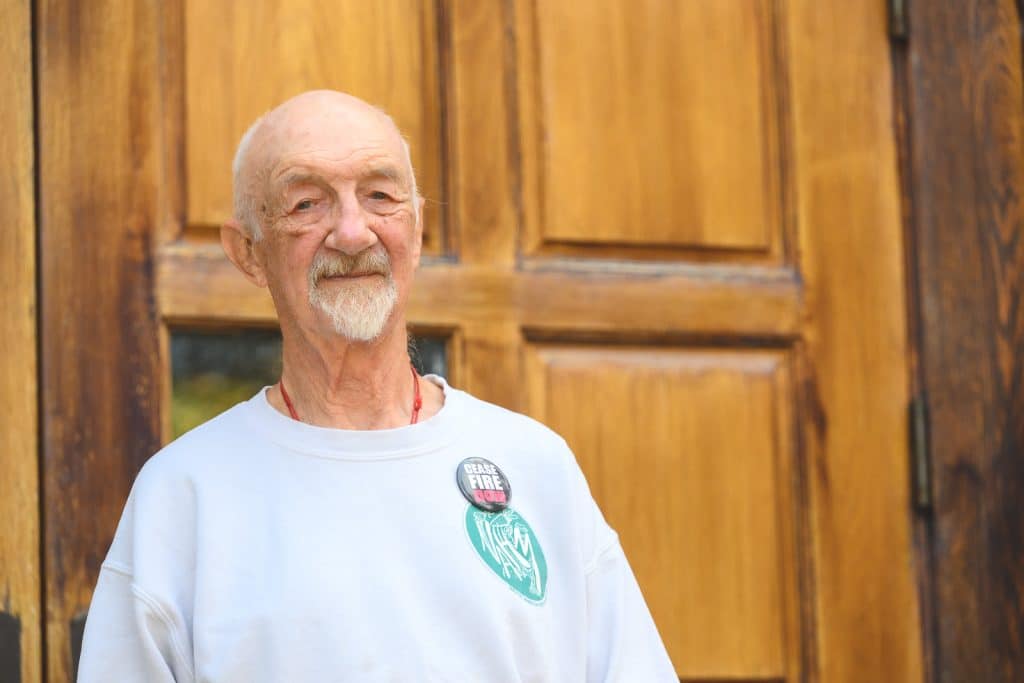
Kelly says work requirements create an additional challenge for people experiencing homelessness, noting that about half of the Delonis Center’s guests at any given time are already seeking employment.
“One of the things with the homeless population that is particularly [affected] by the bill is the paperwork. There’s eligibility checks, requirements to establish an address and citizenship – things that require paperwork,” says Melissa Riba, director of research and evaluation at the Center for Health and Research Transformation, a nonprofit health policy think tank at the University of Michigan (U-M). “And one of the things we know is that the unhoused population has a lot of issues with having the ‘right paperwork’ because many of them don’t even have an ID that they need to do all of the things that they need to do. These barriers will be exponentially worse for individuals who have a disability or very severe health condition.”
Jeremy Lapedis, executive director of the Washtenaw Health Project and Washtenaw Health Plan, says Medicaid paperwork can also be challenging for people who currently don’t have a fixed address.
“If you don’t have a place to receive mail, you’re not going to receive those letters in a timely manner, or at all, and you might not be able to fulfill the work requirements, which will happen more frequently,” Lapedis says. “Relatedly, the MiBridges system that you use to apply for Medicaid is an online system that can be challenging for folks to use if you don’t have regular internet access.”

Lapedis notes that OBBBA establishes a work requirement exception for those who are medically frail. But he adds that “what it means to be medically frail hasn’t been very well defined.”
“There are some other programs that have used homelessness as an exemption for a work requirement or could be used to say that this is a potential condition which could make folks medically frail,” Lapedis says. “That’s a possibility which could be helpful for people to get an exemption from work requirements. But we really don’t know how that is going to be defined or implemented.”
Affordability crisis and medical debt drive homelessness
According to the St. Louis Fed’s House Price Index, which measures single-family home values across the country, housing prices have increased in Ann Arbor by 96.82% since 2000. The average home in Ann Arbor was worth around $337,000 in 2020 according to real estate company Redfin, and it is $470,000 now. In the same time period, Ypsilanti home values have gone from $206,550 to $310,000, and Washtenaw County home values overall have risen from $295,000 to $440,000 now.
To put that into context, Washtenaw County’s median yearly income reached a new high of $84,707 in 2023, according to the St. Louis Fed. That means you’d need over a year’s income to put 20% down on the average Washtenaw County house even if you’re making the median income. But if you are making Michigan’s $12.48 minimum hourly wage, working 40 hours per week, a down payment on the same home requires over 3 years of your income.
“If you’re struggling to keep a roof over your head and you lose your Medicaid or [housing] voucher, you don’t get that time to spend in recovery,” says Kristen Cuhran Fuller, executive director of the Fair Housing Center for Southeast and Mid-Michigan. “Instead of dealing with evictions, homelessness, whatever health crisis that you were already going through, it becomes this tradeoff: Do I pay my rent or pay my medical bill?”
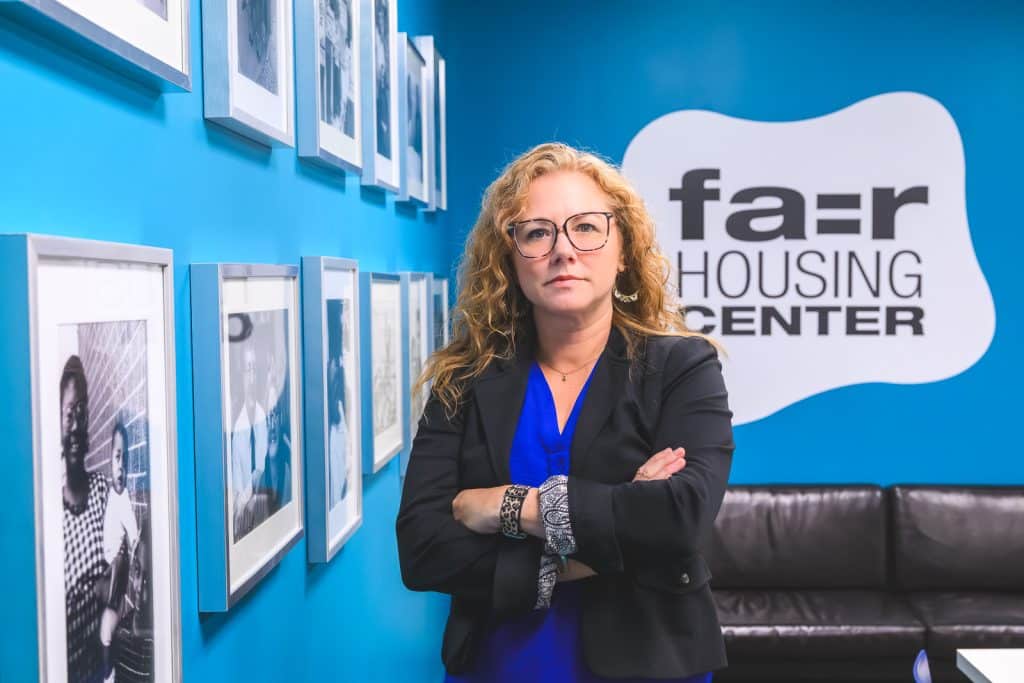
Fuller adds that medical bills are a major driver of debt. Around 100 million Americans already collectively owe around $220 billion in medical debt as of last year, according to the Consumer Financial Protection Bureau.
“That leads to your evictions,” she says. “And once you have a missed payment in your evictions, that does start the eviction process with your landlord, if you don’t have a smaller landlord with some understanding. So it’s just this continuous spiral whose end could potentially be homelessness, with your medical conditions worsening. It’s all connected and will all just spiral if we don’t have health care and housing. They’re kind of an inseparable team.”
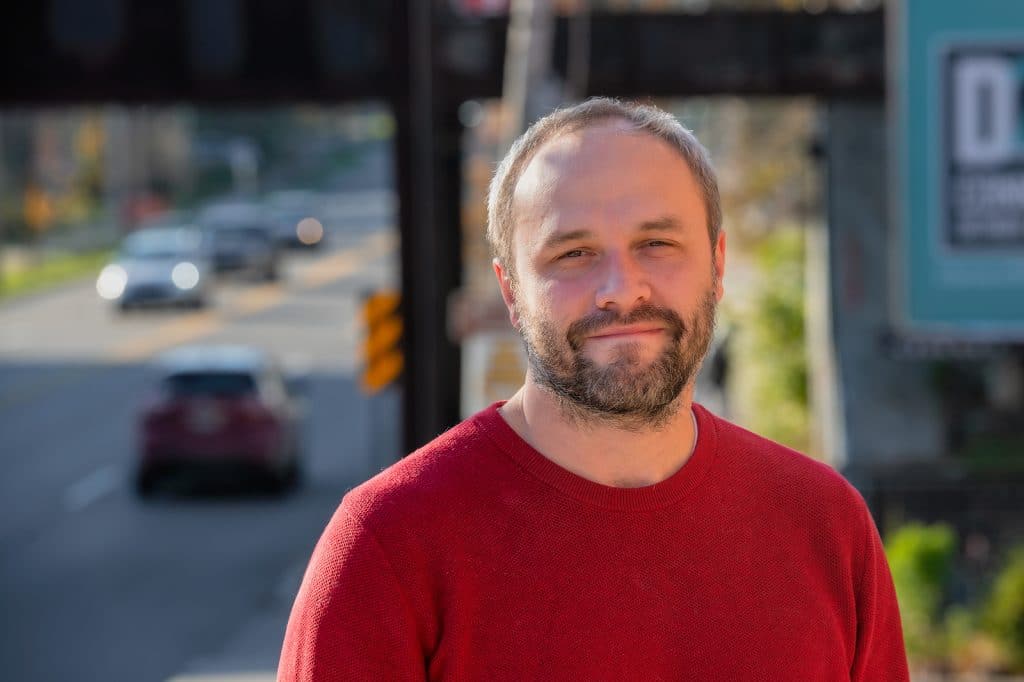
Kelly says medical debt can become an issue when he and his colleagues are trying to get clients rehoused.
“The debt comes up in the credit check at times, depending on the type of debt,” he says. “The debt can get in the way of housing opportunities.”
What to do now if you’re housing insecure
Assistance for people at risk of losing housing and/or Medicaid is available, but Lapedis says it’s important for those people to stay actively engaged with local service organizations.
“If you lose Medicaid, we need to figure out if you’re eligible still,” he says. “A lot of people lose Medicaid because they’re still eligible, but have just lost it because they failed to finish the paperwork. So they need to see if they can reapply, online or through the mail, or if they need to reapply.”
The Washtenaw Health Project and Washtenaw Health Plan are the county’s front line in providing the least fortunate with access to health care options. The plan is specifically designed for people who aren’t eligible for Medicaid or Medicare. Hope Clinic in Ypsilanti is another resource for people who can’t get insurance. Packard Health takes uninsured patients at its four locations under some circumstances. The Corner Health Center in Ypsilanti focuses on providing health care access for teenagers and young adults.
Housing assistance can be found via the Ann Arbor Housing Commission and the Ypsilanti Housing Commission. Poverty Solutions at U-M also occasionally shares stories about how to help get into programs designed to help people get out of poverty, and holds publicly accessible talks.
Lapedis says many county residents whose Medicaid coverage is now at risk may be able to stay on Medicaid with the right paperwork. But when asked if the Washtenaw County Health Plan could restore coverage for all county residents who may lose Medicaid coverage under OBBBA, he says, “definitely not.”
“We are not going to be able to absorb the loss of how many people are ineligible for Medicare or [Health Insurance] Marketplace coverage because of this,” he says. “… No matter [how many people lose coverage], we’re not going to be able to absorb it without additional funding and resources.”
Author

Related Articles
“It’s okay to get help”: New program offers mental health support for Black men and boys in Ypsi and Ann Arbor
Packard Health’s new Healing Brothers United program will soon launch a variety of mental health services aimed at local Black men and boys.

Ypsi event to celebrate women and girls in sports with youth sports clinic, panels, and more
The event will feature an educational panel, a youth sports clinic, and the opportunity to cheer on the Eastern Michigan University Eagles at a basketball game, followed by post-game autographs and photos.
“It all feels miraculous”: New family shelter in Ypsi addresses growing need for emergency housing
Alpha House East offers 30 individual housing units where families can stabilize, regroup, and begin the process of moving toward permanent housing.


