
From drone farming to table: Washtenaw County culinary students use innovative tech
Culinary students are using drones to learn about modern farming methods and where their ingredients come from, while also providing useful skills for future jobs.
This article is part of Concentrate’s Voices of Youth series, which features stories written by Washtenaw County youth with guidance from Concentrate staff mentors, as well as adult-written stories spotlighting local youth perspective. In this installment, student writer Anna Birchok looks into how Washtenaw County high school culinary students are using drone technology to learn more about the food they prepare.
Imagine this: You’re in a kitchen surrounded by the chaos of cooking and plating meals for a 220-person wedding party. You feel pressure as you work alongside others, matching their speed so waiters can bring the dishes out hot. Although it’s stressful, you will look back on it as a night to remember, as you had so much fun. That’s how Saline High School senior Dakota Ford describes an event he had the opportunity to be a part of through Washtenaw County career technical education (CTE) programs.
Administered by the Washtenaw Intermediate School District (WISD), Washtenaw County schools offer more than 70 hands-on CTE programs for high school students. These include classes in fields such as auto design, cybersecurity, culinary arts, architecture, cosmetology, and more. Students participate in these high school programs during their junior and senior years.
CTE follows an approach of “learn by doing.” This can range from designing and building robots to visiting experts in the aviation industry. The approach can allow students to discover new interests they may not have thought about before.
“It’s really powerful,” says Eric Jackson, coordinator of CTE work-based learning at WISD. “The students have coaching. The teachers have coaching. They’re pulling each other forward.”
Drones on the farm
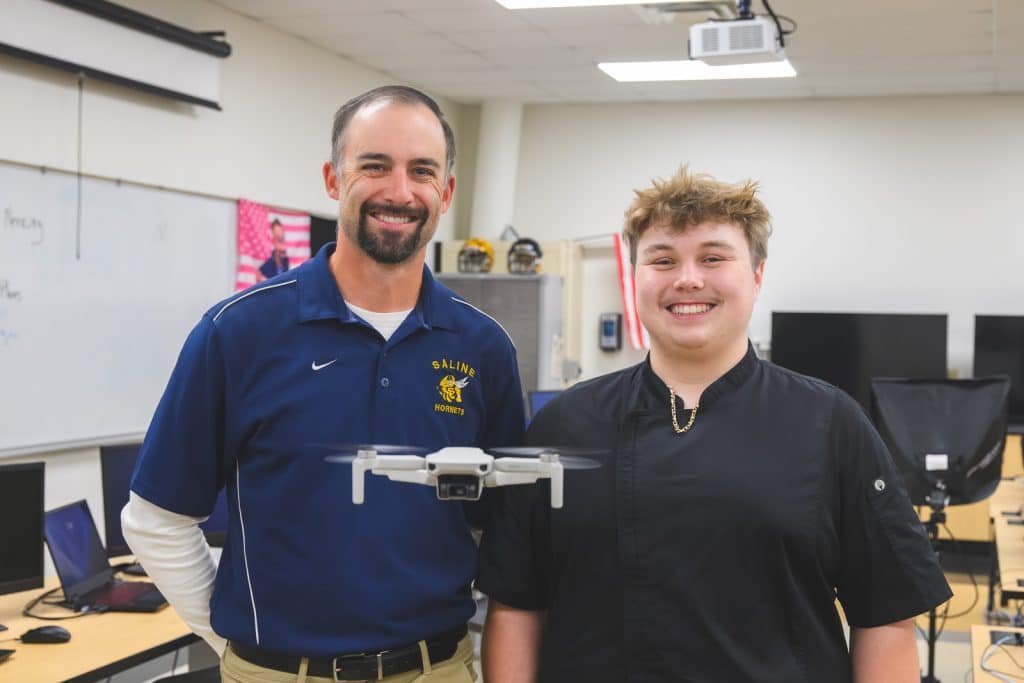
Another way CTE programs are pulling students and teachers forward is by offering the latest technology to enhance learning and prepare them for today’s workforce. This fall, the culinary arts program, which is available in Ann Arbor, Ypsilanti, and Saline schools, piloted the use of aerial drones. It’s a way to get students more familiar with modern farming methods and where their ingredients come from, while also providing useful skills for future jobs.
During high schoolers’ 2025 spring break, Washtenaw County CTE staff held a two-day drone program in Ypsilanti. They had a packed house for both days, and staff noticed the interest and excitement that many had for this innovative technology.
With recent state funding, school administrators have been able to provide drone technology for use within their culinary arts programs. This initiative started in Lincoln High School and Ypsilanti Community High School this past August.
Students learned where the food they are cooking comes from in a classroom setting, before having the chance to use drones in action. Instructors hope that giving students an aerial view of how their food is grown will help them feel a sense of connection in the kitchen.
“It allows for more precise and hands-on evaluation of your overall health,” says Corbin Brown, CTE teacher at Saline High School. “Long term, you’re going to have cleaner and healthier food coming across your plate. You’re going to be more in tune with your crops.”
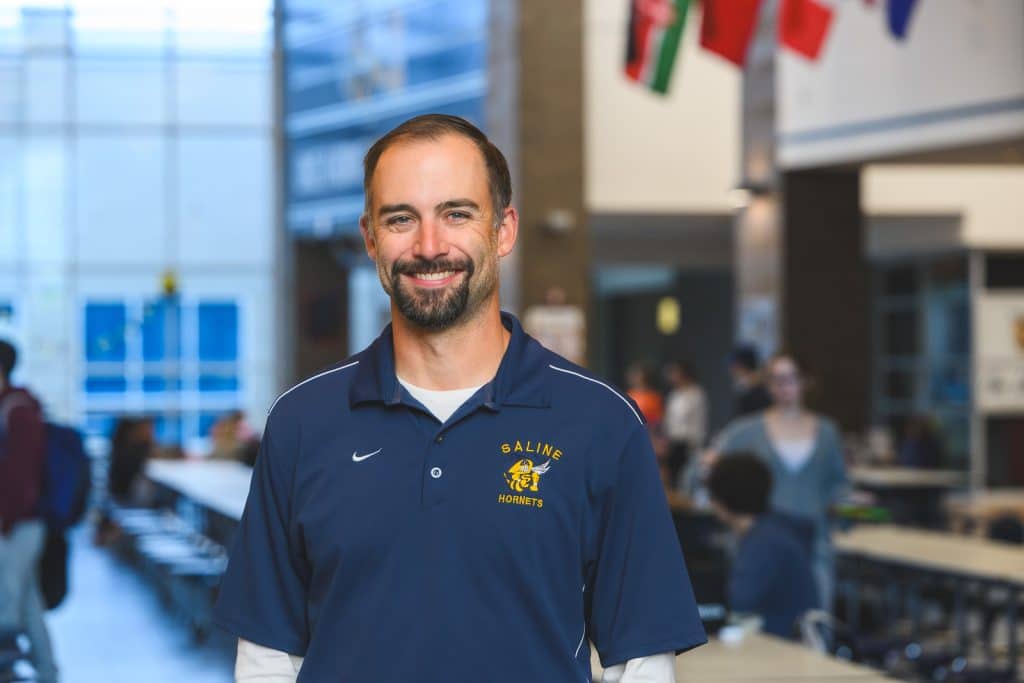
Brown teaches an introduction to drones class. If a Washtenaw County CTE millage is approved this fall, he will be able to run a year-long drone program at Saline High School.
However, in order to fly higher-tech agricultural drones, students would have to achieve their FAA 107 licensure. Achieving this license would give them the chance to not only see farms in an aerial view, but also apply fertilizer and use thermal imaging on certain areas to see what might help crops thrive.
Brown hopes students will be able to achieve their commercial license in their first year of the course before taking it to the next level in year two.
Jackson notes how the program teaches students the skills they need to succeed across many fields as their interests grow and change. For example, a welding class isn’t just about welding.
“It’d be great if you’re a welder, but you can also be an architect or an engineer, because everything has to be welded together,” Jackson says. “It makes your aspiration tangible.”
“There’s just so many opportunities”
Aspiring bakers and restaurant owners receive a variety of other hands-on experiences through Washtenaw County’s CTE culinary arts programs. Before students step foot in the kitchen, they learn culinary safety. In order to work in the industry, students have to understand how to handle and operate tools such as knives and blenders. They must be hyper-aware while working.
Teachers then take students through cooking practices. These lessons include every aspect of working in a kitchen. from mixing food to presentation and serving.
During their senior year, culinary students have the chance to gain experience by working in a kitchen. Last summer, Ford started working at Travis Point Country Club. There, he got to learn alongside others in an industry setting.
“We have two kitchens: a fast-paced [kitchen] just for the golfers and the pool kids, and upstairs you get this more fine-dining understanding of a true kitchen,” Ford says. “There’s just so many opportunities to learn different styles of this industry I like to be in.”

Ford is interested in continuing his culinary education. He has been visiting culinary schools, such as Culinary Institute of America and Schoolcraft Community College, to get an idea of where he may want to go in the coming years.
“That understanding [of knowing] where the food I’m cooking is coming from is really cool,” he says.
For Jackson, offering the latest technology and innovative approaches helps make Washtenaw County CTE programs more impactful for all students.
“Everything’s CTE,” Jackson says. “You’re on your computer; you can keep your computer safe. That’s cybersecurity. You make a poster; that’s design. All those programs are creatives. All the students and teachers are creatives. And they’re very innovative.”
Concentrate staffer Eric Gallippo served as Anna’s mentor on this story.
Click here to read more from the Voices of Youth series.
Related Articles
Ann Arbor PTO Council fundraiser aims to close equity gap for schools serving low-income families
The Ann Arbor PTO Council is seeking donations of $30 or more for a fundraiser benefiting Ann Arbor’s Title I schools, or those that receive federal funding to support low-income students.
Since Great Depression, Ann Arbor preschool has offered low-cost child care and supportive services
For over 90 years, Foundations Preschool of Washtenaw County has not only provided high-quality, affordable, and accessible child care, but also served as a community resource for enrolled families.
Ypsi schools’ Resiliency Center expands significantly over five years serving families in need
Since 2020, Ypsilanti Community Schools’ Resiliency Center has been quietly serving hundreds of families who are experiencing housing insecurity and other challenges.


