
Jewish Family Services adds psychiatric, transportation, and translation services with millage grant
Jewish Family Services of Washtenaw County (JFS) is using a grant from Washtenaw County’s Public Safety and Mental Health Preservation Millage to expand JFS’ Thrive Counseling and Support program.
This article is part of a series about mental health in Washtenaw County. It is made possible with funding from Washtenaw County’s Public Safety and Mental Health Preservation Millage.
Jewish Family Services of Washtenaw County (JFS) is using a grant from Washtenaw County’s Public Safety and Mental Health Preservation Millage to expand JFS’ Thrive Counseling and Support program, adding psychiatric care alongside transportation and translation services. For a three-year grant period that began in January 2025, JFS will receive $385,642 per year to support the service expansions.
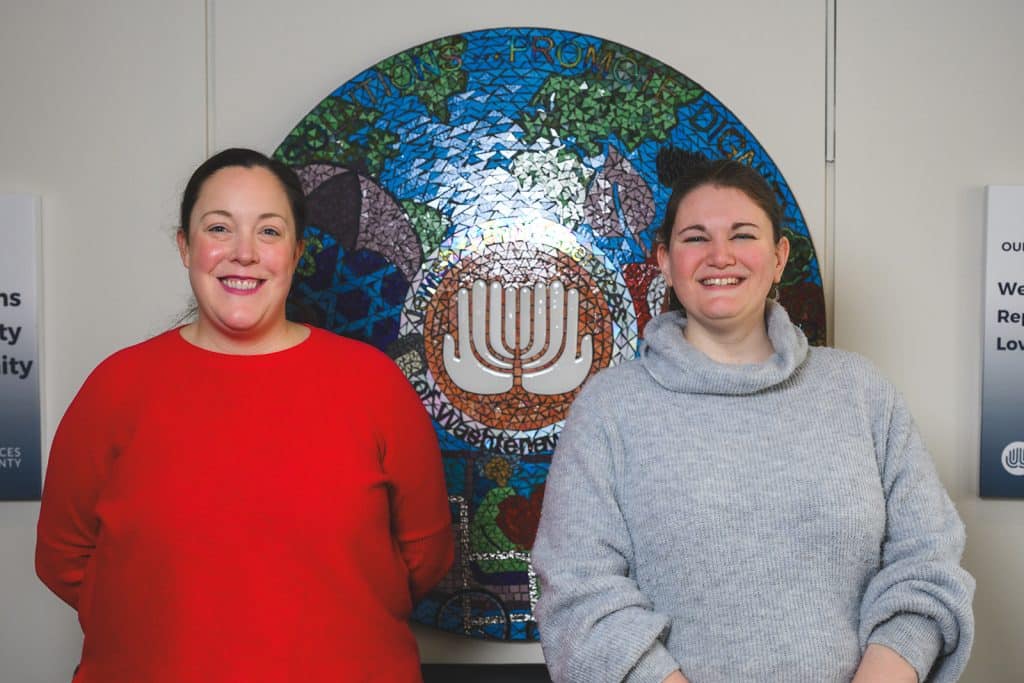
“It’s been a really exciting opportunity for us,” says Caroline Butler, senior director of behavioral health at JFS. “It has really allowed us to provide services that are really needed in this community, but also address a lot of the barriers that people have in accessing counseling services.”

The addition of psychiatric care is a particularly significant expansion for JFS. JFS has provided counseling services since its inception in 1993, focusing on making mental health care accessible to all county residents regardless of ability to pay. The Thrive program accepts most major insurance plans, but also offers a sliding fee scale for the uninsured.
“We believe fully in mental health parity and access for all,” says Sarah Hong, chief program officer at JFS. “… A lot of private practices in the community don’t take Medicaid. They don’t take Medicare. They might not even take any health insurance. It might be $150 or $200 out of pocket for a session. The clients we serve are overwhelmingly living with low income, and so those sort of options are not options for them.”
Until recently, the Thrive team included only social workers and licensed professional counselors, who could provide talk therapy but not prescriptions. Hong notes that the “gold standard of care” for some mental health diagnoses is a mix of counseling and medication, so psychiatric support was needed.
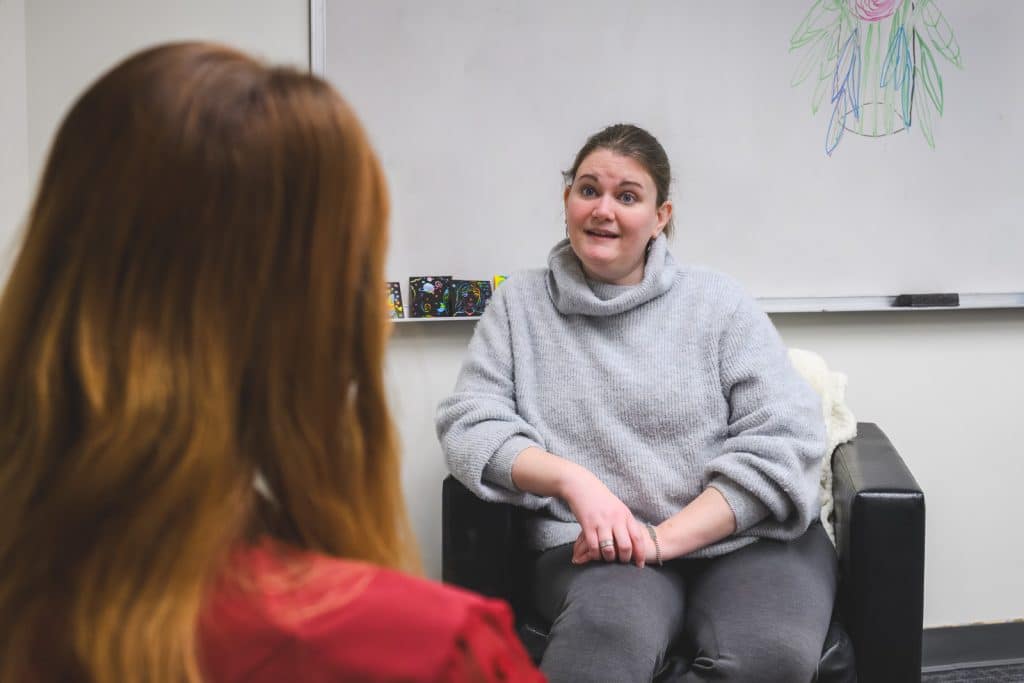
“Our therapist would discuss the merits of medication evaluation and considering a medication with their therapy client,” Hong says, but adds that it was “often really hard” for those patients to figure out how to get that medication prescribed.
“Maybe they called one of the major health systems and were told that it would be six months before they could be seen, or they didn’t qualify to go to community mental health at that point,” she says.
JFS will use grant funds to pay a Washtenaw County Community Mental Health (WCCMH) psychiatrist to dedicate a percentage of his work hours to Thrive patients. Hong describes that arrangement as a “completely radical new concept” that builds upon a long-running partnership between JFS and WCCMH.
Hong says the psychiatry portion of the grant-funded project has been the most complex to get started, so no patients have received psychiatric care yet, but psychiatric sessions will be available in January 2026. The transportation and translation components of the project are already well underway, however.
JFS has hired a community health worker to help coordinate transportation to Thrive sessions for patients who need it. Hong says that service is crucial for low-income clients who might otherwise have to take lengthy bus journeys to get to an in-person therapy appointment. JFS has also been able to hire additional interpreters, expanding existing translation services in Spanish and Russian.
“We were able to really immediately implement the transportation, the [community health worker] services, and the interpretation,” Hong says. “A client, an end user, could immediately feel that impact in year one.”
From January to September 2025, 157 clients for whom English is a second language received behavioral health services; 93 clients received support from a community health worker; 1,435 clients received a Social Determinants of Health screening and were connected to appropriate services based on results; and 663 clients received rides to appointments.
JFS has been expanding its mental health care services in other ways. JFS recently completed its first year of funding from a five-year federal Substance Abuse and Mental Health Services Administration award, which supports trauma-informed care for low-income Washtenaw County youth. Hong says expanding access to health care is particularly crucial right now, as federal policy has cut services like Medicaid and eliminated health insurance subsidies.
“[The] terrible reality is that folks would have to not get the care that is helping them work through their trauma, not get the care that helps them manage their anxiety so they can reliably go to work every day, [or] not get the care that has been helping them manage their depression so they can be present to those they may caregive for, whether that’s a child or an older adult,” she says. “These are pretty impossible choices for people to make.”
Hong envisions multiple funding options to make these service expansions sustainable beyond the grants that are currently funding them. However, she says any continuation of services will be predicated upon need for those services.
“We’re not interested, nor are the community or the taxpayers who fund this millage interested, in building things that aren’t needed,” she says. “So I think the next two years will really demonstrate: What is demand like for this service? Is it filling important gaps? And if it’s not, no, the community shouldn’t sustain it. If it is, if the findings are that this has enhanced access for folks in need in a low-barrier way, then absolutely, this is something that will need to be sustained.”
Author
Related Articles
Ann Arbor Y opens low-cost Ypsi wellness center in former preschool collaborative
Ypsilanti’s YMCA preschool collaborative closed its doors in March, but the facility reopened in June as something else entirely — a neighborhood center offering affordable wellness and community programs.
Trinity Health and Michigan community groups will make fresh, local food a Medicaid benefit
A new Trinity Health initiative will allow people in the Ann Arbor, Detroit, and Grand Rapids areas to access fresh, affordable produce from local organizations through their Medicaid health plans.

Washtenaw County seeks organizations’ input on senior millage before dollars begin to flow
A new request for information, aimed at local organizations that serve seniors, is designed to help Washtenaw County shape its spending of millage funds.


