
Ann Arbor

Backyard Brains turns $450K grant, sales into new jobs

Backyard Brains has been busy over the last year, scoring its first sale, two new hires and a $450,000 federal grant.The educational materials provider has now sold nearly 500 teaching kits that shows how the brain works. Its customers range from a few dozen high schools to universities to countries."We're pretty proud that we have real sales and real customers," says Tim Marzullo, executive director of Backyard Brains. Marzullo and his partner Greg Gage, both neuroscientists, started the company as a way to provide a cost-effective product that teaches grade-school students the workings of neurons in the brain. Its Robo Roach allows them to control insects via antennas. Backyard Brains plans to upgrade its educational materials to include software and data analysis. Other plans include a marketing upgrade so it can score sales in the 13 states where it doesn't yet have a presence. Marzullo also plans to expand staffing from four to six people this summer.Source: Tim Marzullo, executive director of Backyard BrainsWriter: Jon ZemkeRead more about Metro Detroit's growing entrepreneurial ecosystem at SEMichiganStartup.com.

Ann Arbor builder a national leader in environmental design

Ann Arbor's Doug Selby is a finalist for a national award that heralds architects who show business acumen, financial strength, community and industry involvement, and entrepreneurial spirit. The Fred Case Remodeling Entrepreneur of the Year Award comes with a cash prize and brings prestige. Selby, who's made a name for himself by building homes that fit in with their environment architecturally with minimal energy or materials waste and with regard for historic preservation, is president of Meadowlark Builders. He was chosen as a finalist by a panel of judges from Case Design/Remodeling Inc., Harvard University's Center for Joint Housing Studies and Hanley Wood, a media company covering construction.Case founder, CEO and co-chairman, Fred Case, says “Doug Selby represents not only entrepreneurial thinking but action on that thinking which is especially enviable in these more uncertain times.  Doug’s entrepreneurial spirit continually sets a higher bar not only for his business but for the remodeling industry as a whole.”Case is credited with pioneering the design/build concept in remodeling in the 1970s and with developing the first certification system for remodelers.Source: Greening of Detroit and Doug Selby, Meadowlark BuildersWriter: Kim North Shine

Lycera’s growth spurs move to bigger space in U-M’s NCRC

Ann Arbor SPARK likes to call Lycera's move from the Michigan Life Science Innovation Center in Plymouth to the University of Michigan's North Campus Research Complex a graduation. What's really driving this newly dubbed "graduation" is really old-fashioned growth. The U-M spin-out is moving on up to 14,000 square feet of office and wet lab space in the old Pfizer campus in northeast Ann Arbor after bursting at the seams at the practically full Michigan Life Science Innovation Center, which is managed by Ann Arbor SPARK."The only space really available with the appropriate lab facilities is at the North Campus Research Complex," says Gary Glick, founder and chief scientific officer of Lycera. "It's really second to none as far as lab facilities."Lycera's scientists are developing oral medicines for treating autoimmune diseases like rheumatoid arthritis and lupus. The firm now employs 19 people after adding five jobs over the last year. It plans to add another 8-10 positions over the next year.Lycera is also looking to broker more partnerships similar to the one it recently formed with pharmaceutical giant Merck. "There will be additional partnerships," Glick says, declining to name any potential collaborators beyond a closer working relationship with U-M.Source: Gary Glick, founder and chief scientific officer of LyceraWriter: Jon ZemkeRead more about Metro Detroit's growing entrepreneurial ecosystem at SEMichiganStartup.com.
North Campus Research Complex undergoes $13.7 million renovation

The opening of the Institute for Healthcare Policy and Innovation is leading to $13.7 million in renovations at the North Campus Research Complex at the University of Michigan.The renovations, including taking down walls, creating more collaborative working space, and other changes, will create a workplace for hundreds of researchers.The health care policy institute's mission is to use innovative and interdisciplinary research to enhance the health and well-being of local, national and global populations.The institute is expected to become one of the largest of its kind in the nation, according to the university. It is one of several projects at the North Campus Research Complex, which opened in January on the site of the former Pfizer pharmaceutical campus. There are 600 employees working at the 30-building, 174-acre property. The overall goal of the complex is to pair U-M scientists and faculty with private industry, government and non-profits to solve problems in the fields of human health, energy and advanced technology.The institute is expected to open in coming weeks with 100 researchers, some of whom are already working at the NCRC. Eventually 500 researchers from a wide array of specialties will work there.Source: Mary Masson, senior writer, University of Michigan public relationsWriter: Kim North Shine

Barracuda Networks Ann Arbor office hits 100-person mark

The Ann Arbor office of Barracuda Networks has hit the 100-person mark, filling up its available office space on Depot Street and prompting the California-based e-security firm to begin the process of looking for its own building."We've been consistently hiring technical engineers and support staff over the last year," says Sean Heiney, director of new product initiatives for Barracuda Networks. The office stood at about 90 people last summer. Heiney says the company is working to set up an intern program later this year.Barracuda Networks creates e-mail and Internet security applications, and it conducts the research and development of those products in its Ann Arbor office. The company choose Ann Arbor for its proximity to fresh graduates with computer science degrees and other professionals in the web software development, quality assurance engineers, IT staff, and tech support and sales staff.The company struck a $1.4 million tax credit deal with the Michigan Economic Development Corp. in 2008. It plans to create 200 new jobs in Ann Arbor by 2013. Source: Sean Heiney, director of new product initiatives for Barracuda NetworksWriter: Jon ZemkeRead more about Metro Detroit's growing entrepreneurial ecosystem at SEMichiganStartup.com.

CytoPherx raises $5 million, moves toward commercialization

CytoPherx is starting to see the light at the end of the tunnel, and is throttling ahead.The Ann Arbor-based start-up raised $5 million last year to further the development of its Selective Cytopheretic Device, a medical device to help treat kidney failure. The 4-year-old start-up completed its pilot trial version of the device over the last year and is preparing for the pivotal FDA trial. Commercialization is 2-3 years away. The company added one person last year, rounding out its team to 13 employees and an independent contractor. "That will consume all of our time, energy and resources," says Mark Morsfield, CFO of CytoPherx. "We expect to add at least seven clinical support specialists."The University of Michigan spin-off is developing new therapies for patients who suffer from acute and chronic kidney disease. It hopes to flip the current survival rates so 70 percent or more of patients with kidney disease can go on to live fulfilling lives. Source: Mark Morsfield, CFO of CytoPherxWriter: Jon ZemkeRead more about Metro Detroit's growing entrepreneurial ecosystem at SEMichiganStartup.com.

Michigan’s Innovation Factory?

Can state, local, and U-M efforts actively help start-ups "graduate" into successful, full-fledged companies? The combined efforts of SPARK's Michigan Life Science & Innovation Center and U-M's NCRC may be creating a factory pipeline. Excerpt: "Now here’s where it gets interesting. Lycera, a promising U-M drug spinout, will move from the innovation center to the NCRC, where it will occupy 14,000 square feet. Actually, Ann Arbor SPARK used the term “graduate”. Why is this important? The NCRC and MLSIC are not mere acronyms or buildings but rather key components in an emerging system that previously didn’t exist in the state. Think about it. The U-M develops technology and spins out a company. The innovation center nurtures the startup to point where it gets big enough to move into the NCRC. There, the company further develops, attracts more venture capital and collaborates on projects with the university." Read the rest of the story here.

Where The Bison Roam

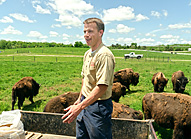
The University of Michigan. Zingerman's. Buffalo (or more specifically, bison). One of these things is a lot different than the others, yet all three are trademark characteristics of Ann Arbor. Anyone traveling along Highway M-14 is bound to wonder how this herd of half-ton ruminants became an indelible part of our landscape.

Ann Arbor’s oldest sibling comes for a visit

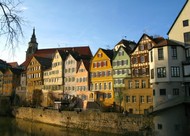
It's a week-long visit from our older, wiser urban sibling. Germany's Tübingen looks, listens, and presents its ideas about urban development and sustainability. Excerpt: "Today Tübingen is Ann Arbor’s most committed sister city. Student exchanges happen regularly year and talented artists from Ann Arbor occasionally have opportunities to take their talents to Tübingen, or vice-versa, for showcases. The purpose of this visit is for the Tübingen delegation to study sustainable development in urban settings like Ann Arbor and Detroit and to compare it to what they see in Germany. The delegation’s five-day itinerary, running from Sunday to Thursday, is packed with activities." Read the rest of the story here.

Learning From Ann Arbor’s Big Sister

Authentic German pretzels—and some ideas on high-density land use and sustainability to boot. Forget the symbolic cultural exchanges, there's much more Ann Arbor can learn from her sister city, Tübingen.

Our Partners

30044
30045
30046
30047
30049
Washtenaw ISD logo
Eastern Michigan University
Ann Arbor Art Center
UMS
U of M Arts Initiative
Engage EMU

Common Ground Is Brewing

Support local stories and receive our signature roast straight to your door when you join at the Standard level (or above).

Drink Better, Read Local

Close the CTA

Don't miss out!

Everything Ann Arbor and Ypsilanti, in your inbox every week.

Close the CTA

Already a subscriber? Enter your email to hide this popup in the future.