Biotechnology

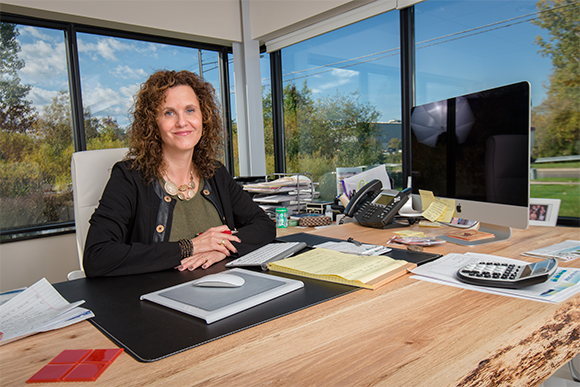
Sassa Akervall in her office

The 21st century body is being built in Washtenaw County

With advances in the medical device industry, Ann Arbor is proving to be more than just a place for entrepreneurial innovation and growth, it's producing startups that are helping to shape the future of the human body. 

Latest in Biotechnology
EXO Dynamics gears up to test back-brace prototypes

EXO Dynamics is in the process of finishing the first commercially viable prototypes of its mechatronic back brace and begin testing on its first subjects this fall. The Ann Arbor-based startup, it calls the Venture Accelerator in the University of Michigan's North Campus Research Complex, received a $50,000 state grant to create four commercially viably prototypes. EXO Dynamics is at the end of that process. "We will have that finished by next month," says Mushir Khwaja, chief commercial officers of EXO Dynamics. "We will do the final assembly here to put some finishing touches on it." EXO Dynamics and its team of four employees and one summer intern is developing an electro-mechanical back brace for medical professionals. The brace will be able to be worn by physicians under their lead vests in operating rooms. "We will field test them with physicians in the fall," Khwaja says. EXO Dynamics has received a notice of allowance from the U.S. Patent & Trademark Office, which means the startup expects to receive its patent for the back brace later this fall. The company also recently took second in the New Business Idea category of the Great Lakes Entrepreneur Quest business plan competition. Khwaja plans to begin fundraising a seed capital round for EXO Dynamics later this year while field testing is going on. The company hopes to raise about $1 million in seed capital to commercialize its technology. Source: Mushir Khwaja, chief commercial officers of EXO Dynamics Writer Jon Zemke Read more about Metro Detroit's growing entrepreneurial ecosystem at SEMichiganStartup.com.

DavaRay leans on Ann Arbor SPARK as it scales up

DavaRay is getting more than a little bit of help from its friends these days as the medical device startup taps into local entrepreneurial resources to grow. "We have been focusing on utilizing the MEDC groups, like Ann Arbor SPARK," says David Arndt, co-founder of DavaRay. DavaRay has an office at Ann Arbor SPARK’s Central Incubator in downtown Ann Arbor. The 7-year-old company also graduated from Ann Arbor SPARK's Entrepreneur Boot Camp and is leveraging the coaching resources at the business accelerator. That has allowed DavaRay to nearly triple is sales over the last year and add two people to its current team of 25. It's also looking to export its products overseas in earnest later this year. DavaRay's principal product is the Nanobeam 940, a proprietary heat dissipation technology that uses light to stimulate the healing process. Specifically its monochromatic LED ray helps soothe chronic pain. Arndt and his co-founder, David Anderson, launched the business not long after Arndt created a new way to help him cope with chronic back pay. He found relieve in infrared therapy and started making his own products after the company he was using went out of business. Nanobeam 940 is being used in home healthcare and professional sports team, including by the Detroit Tigers. Check out a video of the Tigers Athletic Trainer talking about the Nanobeam 940 here. Source: David Arndt, co-founder of DavaRay Writer: Jon Zemke Read more about Metro Detroit's growing entrepreneurial ecosystem at SEMichiganStartup.com.

MyoAlert develops tech for early detection of cardiac problems

Tragedy inspired Kabir Maiga to launch MyoAlert, a startup that produces technology that helps people self-diagnose potential cardiac arrest. A close friend of Maiga's died of a heart attack last year while at work. The friend had felt symptoms but didn’t seek medical help for a few hours, missing a crucial window to help save his life. "He delayed three hours before calling for help," Maiga says. "That was the difference between life or death for him." This February, Maiga (a masters of entrepreneurship student at the University of Michigan’s Ross School of Business) formed a team of four people to create MyoAlert. The TechArb-based startup is creating an undershirt with built-in sensors that can help people at risk of cardiac problems determine whether they are experiencing symptoms of a heart attack or just everyday annoyances like heartburn. "It gives people at high risk of a heart attack a tool they can use for detection," Maiga says. MyoAlert has developed a pre-Alpha prototype of the technolog and is currently working on alpha prototypes. It has already raised a few thousand dollars from U-M's Center for Entrepreneurship and Ann Arbor SPARK to fund the initial development. "Our hope is this July we will begin a clinical study," Maiga says. Source: Kabir Maiga, founder of MyoAlert Writer: Jon Zemke Read more about Metro Detroit's growing entrepreneurial ecosystem at SEMichiganStartup.com.

Ocunelis invents better way to apply eye drops

David Lorch and Marius Tijunelis were working through an entrepreneurial apprenticeship out of the Medical Innovation Center at the University of Michigan's Kellogg Eye Center, and they knew they wanted to start a business. They just didn’t know what kind. The pair made a list of potential business that would fill unmet needs and began eliminating the weakest, one by one. At the end of the day they came up with Ocunelis and its eye-drop assist technology called DROPin. "It's designed to help people aim their eye drops safely and accurately," Lorch says. "It helps you line up the bottle tip with your eyes so it gets the drop in the right part of your eye." Lorch and Tijunelis launched Ocunelis last July and filed for a patent on their innovation shortly after. The two-person team is now working to ramp up sales starting in their own backyard. "It can be bought at a few pharmacies in Ann Arbor and on Amazon," Lorch says. "We would like to see it out there helping as many people as we can reach." Source: David Lorch, CTO of Ocunelis Writer: Jon Zemke Read more about Metro Detroit's growing entrepreneurial ecosystem at SEMichiganStartup.com.

Akervall Technologies adds 4, moves to bigger space in Saline

Akervall Technologies is becoming a Saline-based company this week, making the move from Ann Arbor to a bigger space that should allow the mouthguard maker to do more of its own production. "First, we're going to do packaging," says Sassa Akervall, president & COO of Akervall Technologies. "Eventually we will do manufacturing, which we currently outsource." The 7-year-old company makes a thin-yet-tough mouthguard made of non-compressible, perforated material, and is 30 percent stronger than conventional mouthguards. The SISU Mouth Guard is the creation of Dr. Jan Akervall, a local ear, nose and throat specialist and Sassa Akervall's husband. Akervall Technologies has grown its sales by 45 percent last year and is projecting another revenue spike of 50 percent in 2014. It as also hired four people over the last year, expanding its staff to eight employees. "We're hoping to be at least 15 people by the end of the year," Akervall says. Akervall Technology’s new facility measures out to 15,000 square feet, but the firm will only occupy 9,000 square feet to start. "We're looking for tenants right now," Akervall says. "Our plan is to fill that space within two years." Source: Sassa Akervall, president & COO of Akervall Technologies Writer: Jon Zemke Read more about Metro Detroit's growing entrepreneurial ecosystem at SEMichiganStartup.com.

IROA Technologies takes first test kits to market

IROA Technologies, formerly known as NextGen Metabolics, has sent its first test kits to market this year as the Ann Arbor-based firm hits few early milestones in 2014. The life sciences startup released its first two testing kits for yeast and bacteria and is getting ready to release another testing kit this quarter. IROA Technologies testing kits help identify key metabolites that can be used to diagnose diseases, such as cancer in samples including blood and urine. The technology cuts through the clutter of information from the analysis of blood or other bodily fluids and tissues to find the critical metabolites that relate to disease and illness, making for shorter diagnosis times. "Folks can use them to study any sort of mammalian system," says Felice de Jonge, CEO of IROA Technologies. "You can use them to diagnose disease so you can see if a disease is metabolically different from a control sample." IROA Technologies landed a Series A worth more than $1 million last year. Its core team of two people have used that seed capital to finish development of the test kits and plans to market them aggressively throughout this year. IROA Technologies has also brought on Nicolas Barthelemy as a member of the startup's board of directors. Barthelemy held various executive positions at Life Technologies for nine years, including serving as President of the $850 million Cell Systems Division and finally Chief Commercial Officer. "He has a lot of commercial expertise on cell manufacturing and life sciences in general," de Jonge says. "He knows how to grow life sciences companies." Source: Felice de Jonge, CEO of IROA Technologies Writer: Jon Zemke Read more about Metro Detroit's growing entrepreneurial ecosystem at SEMichiganStartup.com.

Backyard Brains continues global expansion, adds staff

Backyard Brains has come a long way since its inception in 2010. Back then it was a side project of a couple of neuroscientists looking to sell a few insect neuroscience kits to teach grade-school students how the brain works. Today it is a multi-national corporation selling those kits on three continents. The Ann Arbor-based company expanded into South America last year focusing on the Chilean education market. It has since cemented its presence there and is now expanding into Africa, making sales in Nigeria, Uganda, Morocco and Ethiopia, among other nations. "We're now in 60 countries," says Tim Marzullo, co-founder of Backyard Brains. "That's pretty exciting." Marzullo and Greg Gage launched Backyard Brains with its RoboRoach product. The testing kit enables students to control insects via antennas. Its flagship product is SpiderBox, a bioamplifier that allows users to hear and see spikes of neurons in invertebrates. Backyard Brains sales of these products have increased an average of 5 percent a month over the last year. Revenue spiked to $70,000 last November (the business’ busy season and when it struck a partnership with Harvard) and reached $40,000 in February, which was still up considerably from a year. International sales, especially in Chile, are helping drive the company's growth. "It (the Chilean market) is where Backyard Brains was three years ago," Marzullo says. "We're making sales there every month now." The growth has allowed Backyard Brains to add staff. It has hired three people (an engineer, an accountant and a designer) in the U.S. over the last year, expanding its staff to six full-time employees and six part-timers. It also employs one full-time person and three part-timers in Chile. Source: Tim Marzullo, co-founder of Backyard Brains Writer: Jon Zemke Read more about Metro Detroit's growing entrepreneurial ecosystem at SEMichiganStartup.com.

Swift Biosciences leverages VC for multiple hires

Venture capital and hiring helped make for a big year at Swift Biosciences. When we last checked in at the life sciences startup in early 2013, it had just secured a $750,000 investment in its Series A. Since then it secured $7 million more in a Series B round of venture capital and hired seven people. "We just hired three people this month," says David Olson, CEO of Swift Biosciences. The hires over the last year have been in the Ann Arbor-based startup’s R&D and commercial groups. Olson adds, "That funding (the Series B) is directly related to the three hires we made this month. We’re looking to expand, specifically in our commercial group." The 4-year-old company is developing molecular biology reagents for research and diagnostic applications that provide new ways to examine disease-related genes. This genomic sequencing technology is expected to help researchers analyze samples faster, at a higher volume, and at a lower price per sample. It has raised $13.15 million to further the development of this technology platform. Swift Biosciences launched its first two products last year and is set to launch its third product next week. The new product is a sample prep test kit that can work with damaged and small samples. "It can do everything," Olson says. "It has a lot of capabilities." Source: David Olson, CEO of Swift Biosciences Writer: Jon Zemke Read more about Metro Detroit's growing entrepreneurial ecosystem at SEMichiganStartup.com.

Kalyspo aims to commercialize technology by year-end

Kalyspo, the bio-tech startup and University of Michigan spin out, is well on its way to commercializing its surgical instrument tracking technology. The Ann Arbor-based company’s technology helps prevent medical professionals from leaving foreign objects (think surgical tools like sponges) in patients during an operation. It accomplishes this by inserting a micro-machined tag that shows up clearly on x-rays and computer software. The technology is so advanced that it scores highly on both the sensitivity and specificity scales for finding these sorts of items. "This is one of the best (detection rates) I have ever seen," says Dr. Theodore Marentis, co-founder of Kalyspo. The 1-year-old startup employs a team of four employees, two interns and two independent contractors. It also won the Best of Boot Camp award at the Ann Arbor SPARK Entrepreneur Boot Camp. Dr. Marentis expects to commercialize this technology before the end of the year. He says the company is in discussion with a couple of hospitals which could become potential customers, and it is looking to create other types of revenue streams. "We're talking to a number of manufacturers about adding them to their product line," he says. Source: Dr. Theodore Marentis, co-founder of Kalyspo Writer: Jon Zemke Read more about Metro Detroit's growing entrepreneurial ecosystem at SEMichiganStartup.com.

Our Partners

30044
30045
30046
30047
30049
Washtenaw ISD logo
Eastern Michigan University
Ann Arbor Art Center
UMS

Common Ground Is Brewing

Support local stories and receive our signature roast straight to your door when you join at the Standard level (or above).

Drink Better, Read Local

Close the CTA

Don't miss out!

Everything Ann Arbor and Ypsilanti, in your inbox every week.

Close the CTA

Already a subscriber? Enter your email to hide this popup in the future.