
This story is part of a series about arts and culture in Washtenaw County. It is made possible by the Ann Arbor Art Center, the Ann Arbor Summer Festival, Destination Ann Arbor, Larry and Lucie Nisson, and the University Musical Society.
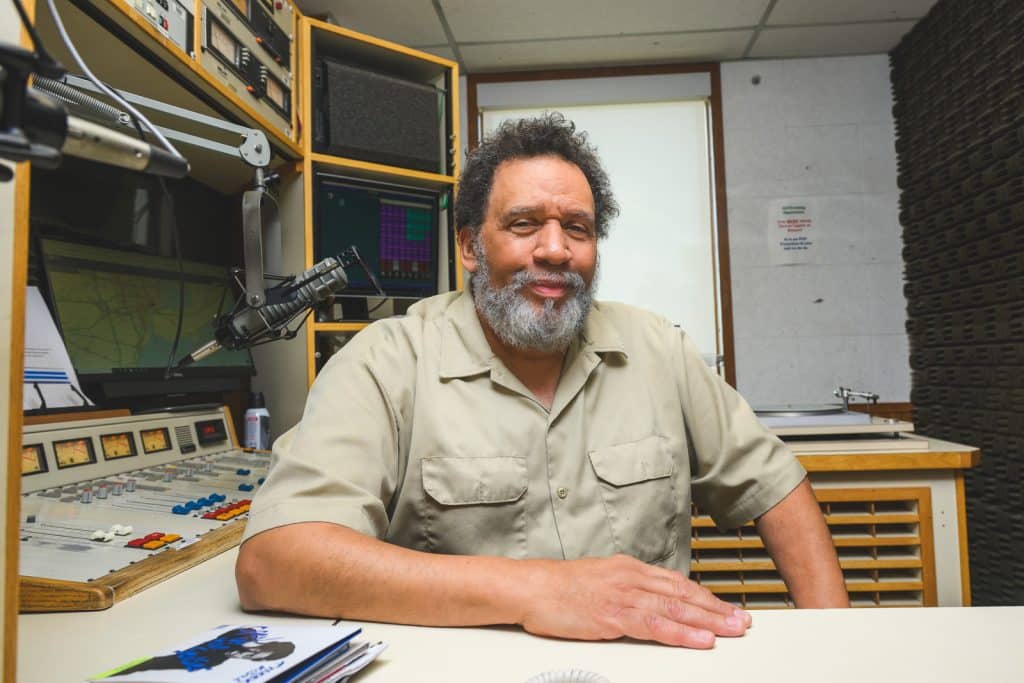
“No one in their right mind would ever go into public broadcasting or jazz radio, because it’s insane — it’s an insane way of life,” says Michael Jewett, WEMU-FM‘s operations manager and host of “89.1 Jazz.”
“I’m surprised we’re still here, fighting the good fight, but you know what?” he adds. “This is the fight we have. We’re just going to keep on doing it – because we don’t have anything else to do.”
This year marks a major milestone for Ypsilanti’s beloved community National Public Radio (NPR) station: 60 years of award-winning broadcasting. That’s an impressive anniversary by any standard, but it’s especially significant in a year when President Donald Trump’s cuts to federal funding for public broadcasting have begun to transform local public media outlets nationwide. At the beginning of August, the Corporation for Public Broadcasting (CPB), which distributes federal funding to NPR- and PBS-affiliate stations, announced that it would shut down entirely.
But these are hardly the first major threats WEMU has faced: it has survived economic ups and downs, a pandemic, and existential threats from satellite radio, podcasts, and TikTok. In Washtenaw County and beyond, WEMU occupies rare territory as not only a community-oriented radio station, but a cultural institution presenting over 75 hours of jazz and blues programming alongside local and national news every week.
Within the last decade alone, WEMU won Station of the Year in 2015, 2017, 2022, 2023, and 2024 from the Michigan Association of Broadcasters, as well as dozens of Broadcast Excellence Awards over the same period.
Current and former station staff credit former General Manager (GM) Art Timko with establishing the station’s vision and, in 1977, its jazz format. While current GM Molly Motherwell refers to herself as “the flame-keeper,” she says Timko “laid the foundation for all of this.”
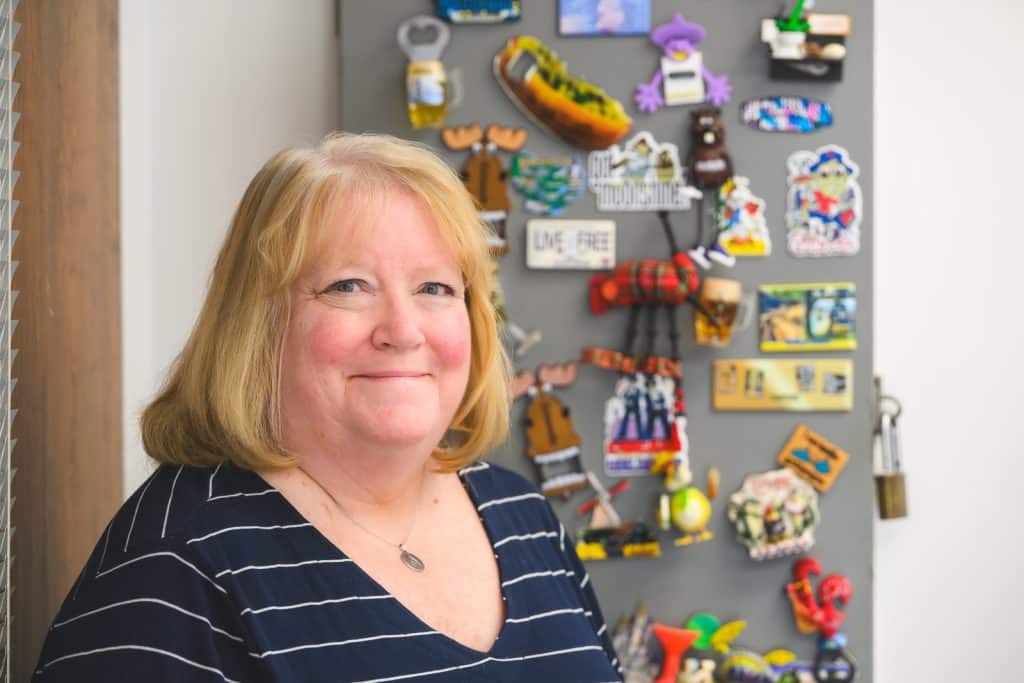
“He was the visionary who saw the possibilities of what our small station could do,” she says. “And he stuck to his guns.”
A service for the soul
WEMU staff describe Timko in reverential tones. Jewett calls him both “our founding father” and “our original captain on the ship.” Former WEMU Music Director Linda Yohn describes Timko as “visionary” and “essential,” adding, “there would be no WEMU as it is today if it were not for his consistent leadership in the ’80s, ’90s, and [early ’00s].”
Still, asked directly about the legacy he hopes to leave behind – or whether he even thinks in terms of legacy – Timko, who retired to Florida, begins, “I came to realize that other people thought I was more important than I…” before trailing off.
“I’m humbled by that,” he begins again.
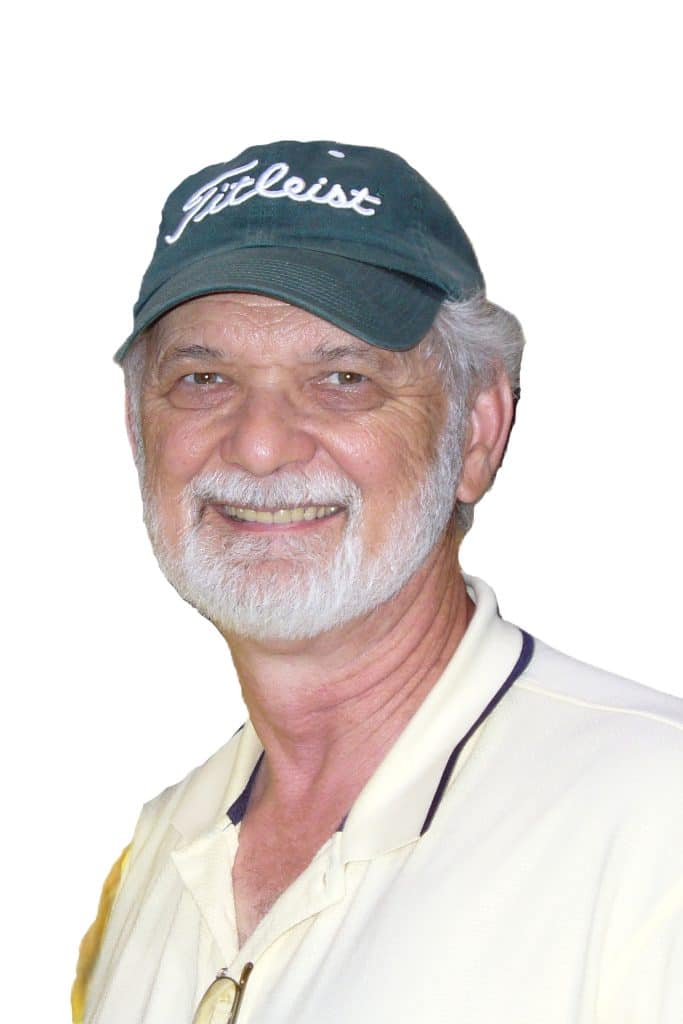
When he transferred to EMU in the fall of 1967 to begin undergraduate studies, Timko found a college station broadcasting classical music on weekday afternoons from the school’s dorms, which had been outfitted with transmitters and faced strict noise policies.
The “big challenge,” insists Timko, who was quickly hired as a classical music announcer, had to do with pronunciation: many of the student employees struggled to say composers’ names on-air.
“You’ve got to … act like you know what you’re talking about,” he insists.
In 1968, Timko graduated. He was drafted not long after that. In 1971, Timko was re-hired by WEMU, this time as a producer; within a decade, he’d be GM. Timko describes the period between his graduation and promotion to GM as a “time of growth,” both for himself and for the station.
During that time, WEMU moved its headquarters from Quirk Building to King Hall. Even more crucially, the station expanded both its hours of programming (gradually reaching 24 per day) and its broadcasting power (from 10 watts to 16,000).
Then, as Timko tells it, station leadership surveyed the landscape of southeast Michigan radio: half a dozen other classical music stations and a few devoted to rock, folk, and easy listening. They concluded that jazz was the only thing missing, so jazz it would be.
Plus, Timko figured students could handle names like “Freddie Hubbard” or “Dizzy Gillespie,” which he insists “was a big factor.”
At various points in time, Timko also found himself under significant pressure to shift the station to a single format: either news or music, but not both. But as Timko notes over email, “there is an inherent conflict there. Choose one and you alien[ate] those who want the other.”
All along, Timko had been conscious of his role providing a service to the community — a service listeners wouldn’t be able to get anywhere else. As a result, he felt responsible both to listeners who came in search of local news and to those who were after music.
He emails, “So we tried to serve two masters: one service for the mind, the other for the soul. I believe we need both.”
Developing the WEMU sound
Before Jim Dulzo joined WEMU as music director in 1980, his experience in radio had mostly been limited to the commercial realm, where “there were salespeople running around, and wild-eyed disc jockeys, fast talkers — [and] that really wasn’t me,” he says.
From the beginning, Dulzo could see that WEMU staff and student employees were “very serious” about their work. But he could also tell “that they needed a lot of work in their approach, and that their idea of jazz was not focused and was just all over the map.”

“You might tune in and hear something completely bombastic and explosive at 2:00 in the afternoon and/or 9:00 in the morning,” Dulzo says, “and something really, really sleepy” at a time when a more experienced DJ might be thinking about how to keep listeners awake.
“They didn’t have any sense of formatting or programming,” he adds.
Dulzo’s initial changes, therefore, were relatively basic ones: DJs needed to regularly repeat the name of the station on-air, they needed to break every 15-20 minutes to let listeners know what they’d been hearing, and so on. But Dulzo’s larger changes had to do with establishing a more unified, cohesive, station-wide sound. He also had a secondary goal: educating the student employees, many of whom might not have known as much about jazz as they might have liked to believe. Dulzo says they were “playing music they liked, that they thought was jazz — and that [approach] was never going to work.”
So Dulzo combed through the station’s broadcast library and chose about 200 of what he describes as “essential jazz records.” He says he moved a rack into the control room, stacked the records on it, “and told everybody, ‘Those are the only records you can play right now.'”
Dulzo doesn’t even remember precisely which records he put on the rack. He recalls including some Duke Ellington, Count Basie, Miles Davis, Charlie Parker, Art Blakey, John Coltrane — “anything that wasn’t too edgy,” plus some swing, “just to round out the whole sound.”
If Dulzo’s “essentials rack” simplified and streamlined what WEMU DJs played on-air — at least temporarily — it also did something more elemental. In Yohn’s words, “it became the sound of WEMU.”
“When you’ve got a sound,” she adds, “then you’re going to collect the recordings that will resonate … and build on the depth of that sound.”
That means not only collecting recordings by artists like Coltrane, Louis Armstrong, Billie Holiday, or Ella Fitzgerald, but also the artists who followed and were influenced by those icons — “because that’s what you’ve got to do,” Yohn says. “You have to love 1954 and 2025 at the same time.”
“Jazz had really bitten me”
As a young girl, Yohn recalls having “a big, beautiful, plastic tube radio” she’d listen to at night to see what frequencies might come in. At the time, Yohn’s family lived in Buffalo, N.Y., where Yohn was assigned the bedroom above the garage (“the coldest bedroom in the damn house,” she says). She developed a habit of taking the radio – which warmed and hummed with use – and pulling it into bed with her.
“I heard all these guys on the radio — and it never occurred to me that they were only guys,” she says.
As a student, Yohn worked for her college radio station, where she says she was treated like “chattel”: “The guys didn’t like me. They didn’t think girls belonged there.”
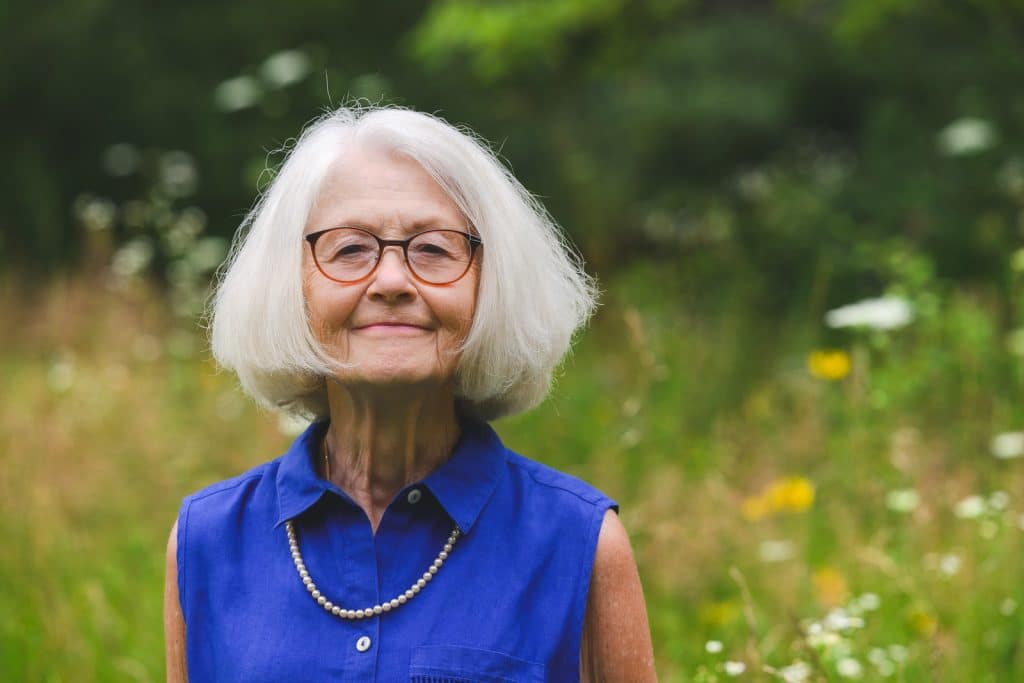
Their assumption, she adds, was that she couldn’t possibly know a thing about music.
“All they wanted me to do was come in and read the news and the weather – and so that’s what I did, and I was good at it,” Yohn says.
But she took no real interest in it. Her break, such as it was, came later: by 1977, Yohn was waiting tables at a jazz club in Columbus, Ohio. At that point, she says, “jazz had really bitten me.” She’d come to know the program director of WBBY-FM in Westerville, Ohio, who invited her to submit a demo tape. Yohn spent about five years with that station and did brief stints at a few others before inheriting Dulzo’s role as WEMU music director in 1987. Around that time, Yohn recalls driving to Detroit for jazz pianist Chuck Robinette’s funeral.
At the funeral home, “one of Robinette’s buddies comes up to me,” Yohn remembers. “He says, ‘So I understand you’re the new WEMU person.’ … And he asked me — and I’m standing there in a funeral home — could I enumerate 10 baritone saxophone players for him right then and there? I did pretty [well], but he said, ‘You missed one. … You missed Nick Brignola.’ … Then he just read me the riot act on how I wasn’t going to make it.”
Afterward, Yohn tracked down a Brignola record to study. Her attitude, she says, lay along these lines: “Okay, I missed Nick Brignola. I’ll never miss him again.”
It was an attitude she’d been encouraged to develop growing up. In her family, Yohn says, “you were expected to do something right the first time, or … you’d be corrected — and you’d get it right the second time.”
Yohn remembers a phone interview with Timko before she was offered the music director position. She says he told her that, among other things, “We need someone who can ride herd on a bunch of student employees.” At the time, Jewett says, the station was “a bit of a rabble.” Yohn describes it as “kind of wild and wooly” when she arrived.
“I remember clearly saying this to [Timko]: ‘I think I’m your girl,'” Yohn says. “… I figured that, being a big sister — because I’m the eldest of five — I could do it.”
Until her 2017 retirement, Yohn served as the public face of WEMU’s jazz programming, a beloved figure often seen outside the walls of the station. Timko says her impact on the station was immense.
“Linda did so much to connect the station with the community by going out to events …, being the MC and talking with people, [and] getting involved in jazz organizations,” he says.
Jewett also credits Yohn for her “nurturing” leadership style, which brought WEMU staff to resemble something more like a team, or even “a beautiful, … occasionally dysfunctional family, like any other family.”
“I’m not programming a show for me”
As the main face of WEMU’s jazz programming post-Yohn, Jewett says the most difficult part of his job is deciding what not to play.
For one thing, he says, “I don’t want to play stuff that’s too terribly old too often.”
In practical terms, that might mean a lot of classic ’50s and ’60s jazz, “up through the fusion era” – but, Jewett adds, “I don’t want to be so devoted to people of the past. Miles Davis is not putting any kids through college.”
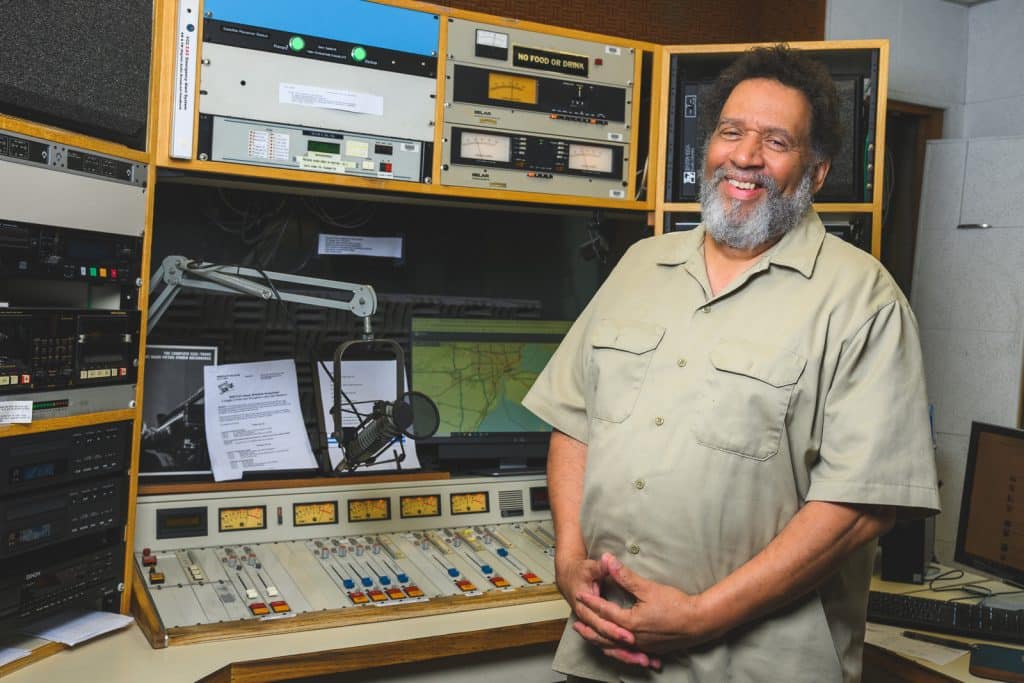
Then, too, Jewett says, “I don’t want to play stuff that’s too terribly abstract during the day. People are driving or they’re working; they’re performing a task, right? They’re not sitting around with their feet up, listening to the radio. … They’re listening to the radio while they’re performing any other number of things — while they’re cooking [or] whatever.”
In that sense, Jewett’s shows seem to be programmed specifically for our own hectic, harried, multitasking times.
“I want people to be able to chop vegetables … and not cut themselves while they’re listening to the radio,” Jewett says.
Still, he wants the music to serve as more than just what Dulzo refers to as “wallpaper.” Jewett says it should be “engaging,” “entertaining,” and, more than anything, something “you can make an emotional connection to.”
Jeremy Baldwin, host of “The Roots Music Project” on WEMU, insists, “Songs can change people’s lives. A lot of these songs changed my life.”
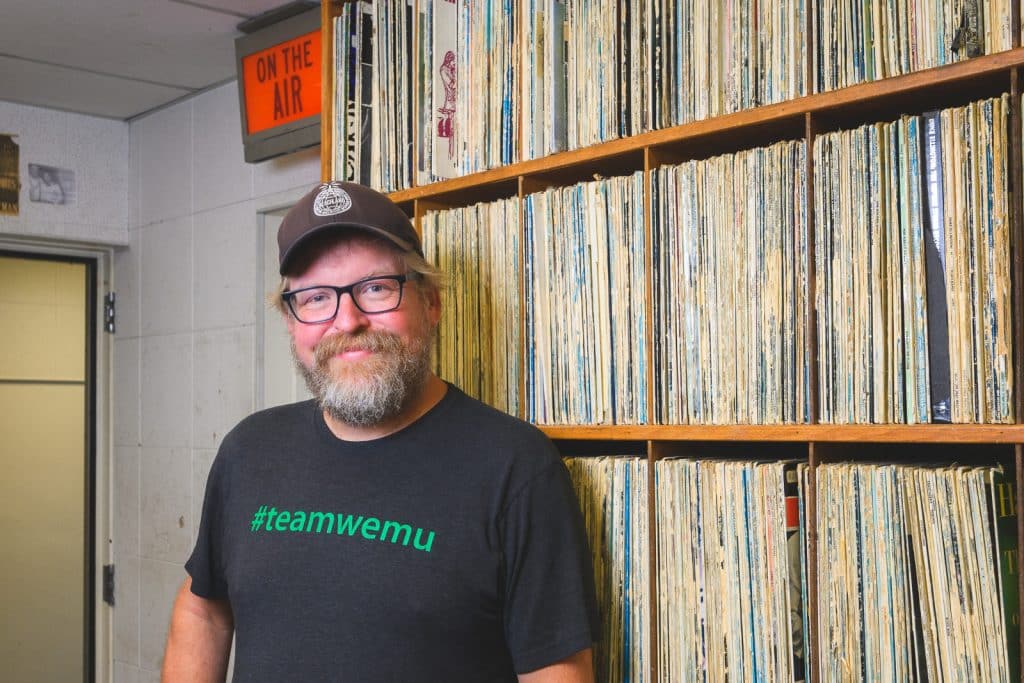
“Music means something. It’s powerful — [that’s] why people listen,” Baldwin adds, echoing Jewett’s (and Dulzo’s) dismissal of music as wallpaper. “It’s not just for driving somewhere and not falling asleep, or whatever.”
There’s one other small but critical detail that not only determines the programming of Baldwin’s and Jewett’s shows but also speaks to both hosts’ commitment to community.
“I’m not programming a show for me,” Jewett says. “I’m programming a show that will hopefully reach a wide, varied, and diverse audience.”
“Demystifying radio” and building a community
According to Dulzo, when most radio stations claim to be “out in the community,” “they’re in this little trailer and they’re pushing some auto dealership or shopping center,” the whole event little more than an extended advertisement.
Meanwhile, he says, there’s a “guy back at the studio” who’s actually playing records – which is about as far as things go, community-involvement-wise.
“That’s pretty shallow,” Dulzo says. “[It] doesn’t really create any community.”
On the other hand, one of the things that had attracted Dulzo to WEMU in the first place was the station’s “great commitment to live music” – both when it came to broadcasting live shows, and also staging those shows in the first place.
By the early ’80s, WEMU had begun sponsoring (or co-sponsoring) live jazz and blues shows in Ypsilanti, Ann Arbor, and Detroit, including performances at the Ypsilanti Freighthouse, the Ann Arbor Art Fair, the Frog Island Jazz Festival, and what is now known as the Detroit Jazz Festival (but was known until 2000 as the Montreux-Detroit Jazz Festival).
Taken together, the events “made us a real cultural center for that kind of music,” Dulzo says.
“What we did was real,” he adds. “It was real people making real music in real time with real audiences right there, all relating to each other and to the music. … It felt like a great big block party.”
This sentiment is echoed by Yohn, who insists that “radio can be a catalyst for community,” and adds that WEMU “built [community] with loving music.”
Yohn also praises Timko’s willingness to “go boots on the ground and take radio out to the people.”
“When you do that, you’re demystifying radio,” she says — a process that, by her description, sounds like pulling back the curtain from the Wizard of Oz: “Look at that guy behind the microphone: he’s just a normal guy like me.”
Timko himself describes WEMU’s events as “very popular” but also “very exhausting” and “resource-laden.”
“It got to the point where we just couldn’t do it anymore,” he says.
But WEMU has continued to find unique ways to build community with listeners — even during the COVID-19 pandemic, when most radio stations, both public and commercial, faced a sharp decline, largely because commuters were working from home.
In fact, shortly after NPR reported a steep ratings drop for nearly all its own radio shows, WEMU’s audience increased by 32%.
Motherwell, who oversaw that growth, ascribes it to a number of different factors. For one thing, she says, local listeners “couldn’t go out and hear live music, so they tuned into our music programs [instead].”
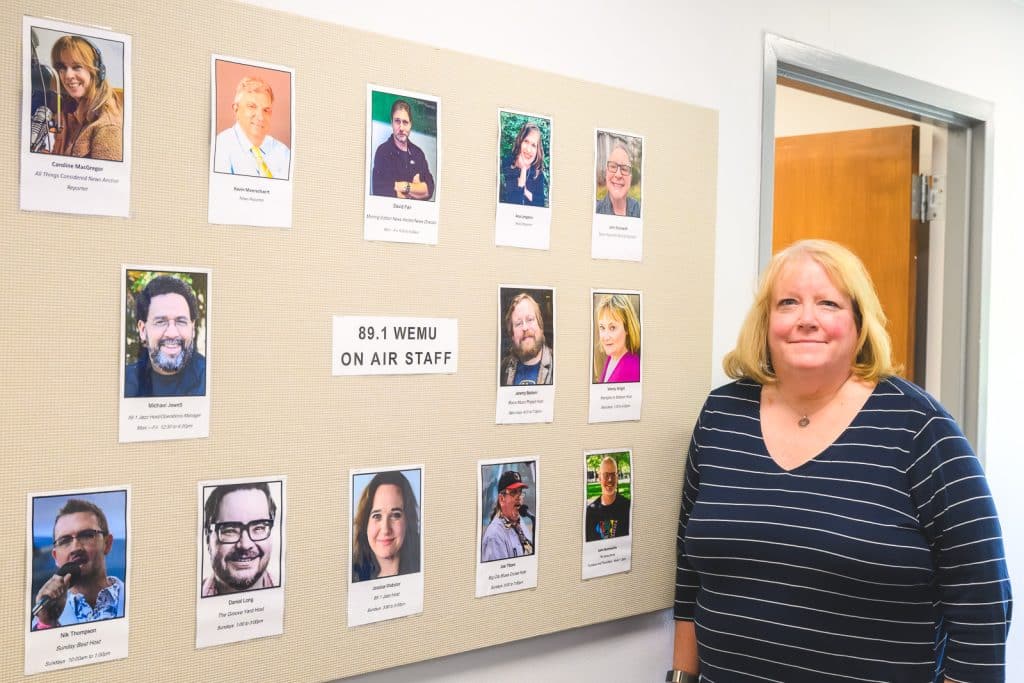
Baldwin says he “became very aware of all these people out there,” beyond the control room, beyond the empty roads, who – especially if they lived alone – were “suddenly … really isolated.”
“I think [radio] really became a lifeline for more people – something they could tune into, something that was local,” he says.
During that time, Baldwin says he also became acutely aware of how the music he played might affect listeners in tangible, material ways. For any regular, everyday show, he doesn’t have an issue playing the “darker stuff,” but during the pandemic, he says he wanted to keep the tone “a little more positive, a little more uplifting – and not play all depressing murder ballads.”
Meanwhile, “in the deepest days of COVID,” Jewett says he was contacted by a friend who told him that WEMU was his “new normal.”
“We were reminding him of what normal was,” Jewett says. “And I said, ‘Well, you know what? I think that’s what we’re aiming for. … We want to be something that gives people a sense of connection.'”
WEMU’s next steps aren’t clear just yet, as public radio as a whole faces a reckoning. According to Motherwell, federal funding has accounted for 8% of the station’s budget, though her team has also worked to build up reserve funds for such an emergency. Of most concern, Motherwell adds, is that the CPB has been responsible for negotiating and paying for music broadcasting rights on behalf of all public media stations for decades. Those contracts remain in effect through the end of December.
“What will happen after that?” Motherwell says. “We don’t know.”
In the meantime, Jewett acknowledges that public radio’s “footprint will definitely decrease unless there’s a way to figure out how to get this funding restored or changed — and that’s going to be a real challenge.”
But Yohn is confident that WEMU’s leadership is up to the task.
“I have no doubt that Molly Motherwell will weather this crisis for federal funding for public broadcasting,” she says. “… She’s to be respected and commended for her part in keeping a national legacy and treasure moving forward.”
Want even more on WEMU? Check out our 2017 video tour of the station’s music library, led by Michael Jewett.
Author

Related Articles
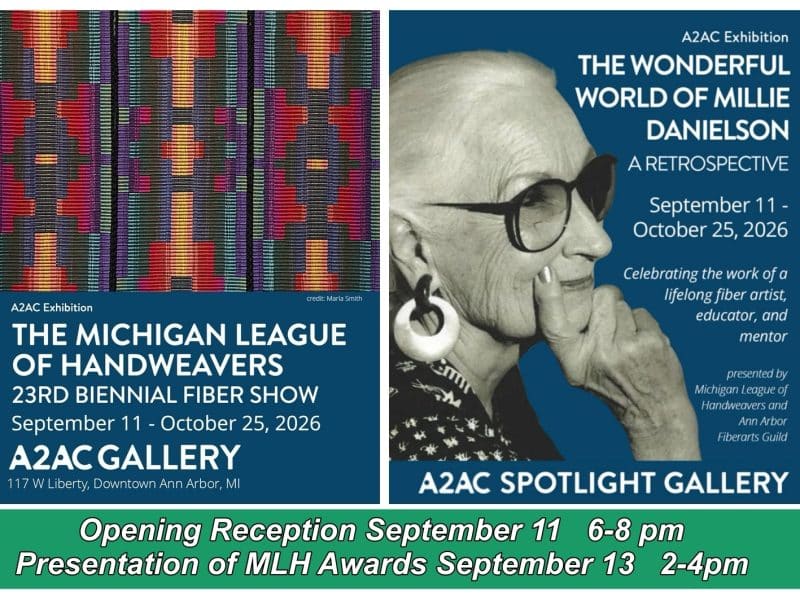
Michigan League of Handweavers’ biennial show in Ann Arbor will feature myriad disciplines
From weaving to doll-making, a broad range of craftsmanship will be featured in both exhibitions and public demonstrations at the Michigan League of Handweavers’ 23rd Biennial Fiber Show.
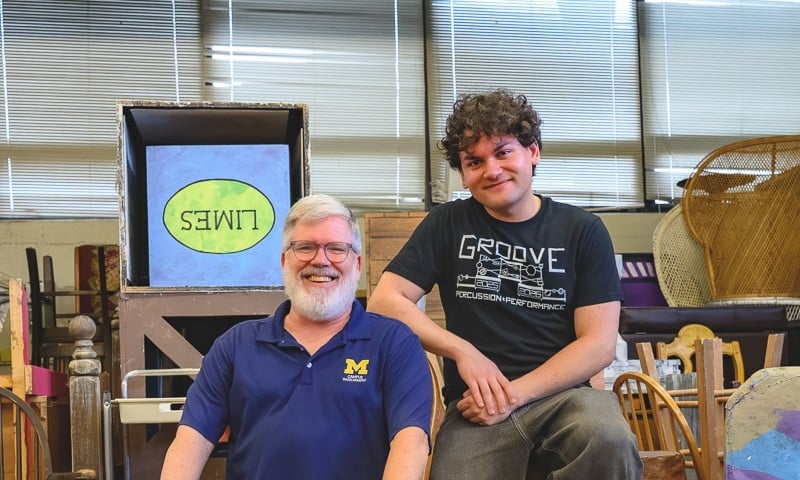
From building a train to hosting an alpaca, this U-M facility serves student performers’ needs
For about 50 years, the University of Michigan’s Student Theatre Arts Complex has been quietly providing crucial pre-production support to student-run theater and other performance groups.
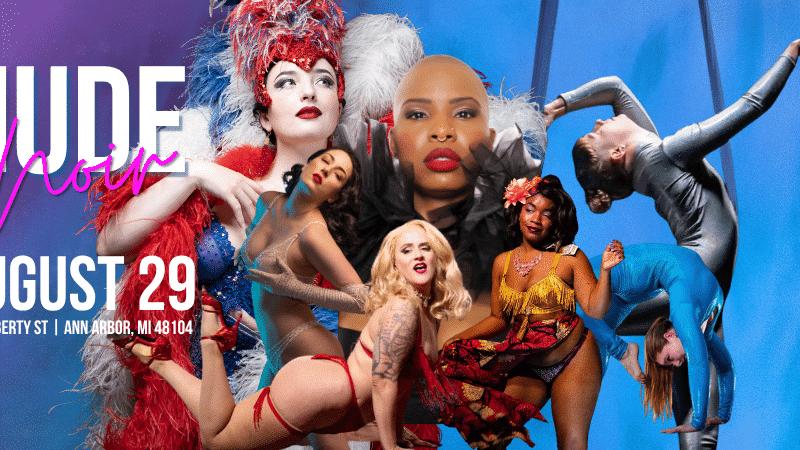
Nude Noir brings “celebration of the human form” to Ann Arbor’s Michigan Theater
Nude Noir attendees are invited to roam the Michigan Theater as performances — from burlesque and drag to aerialists and contortionists — unfold around them.


