
Ypsi schools’ new agriscience/botany program has students developing green thumbs
From planting an orchard to using photographs of plants for a postcard charity project, students in Ypsilanti Community Schools’ new career and technical education program are getting their hands dirty.
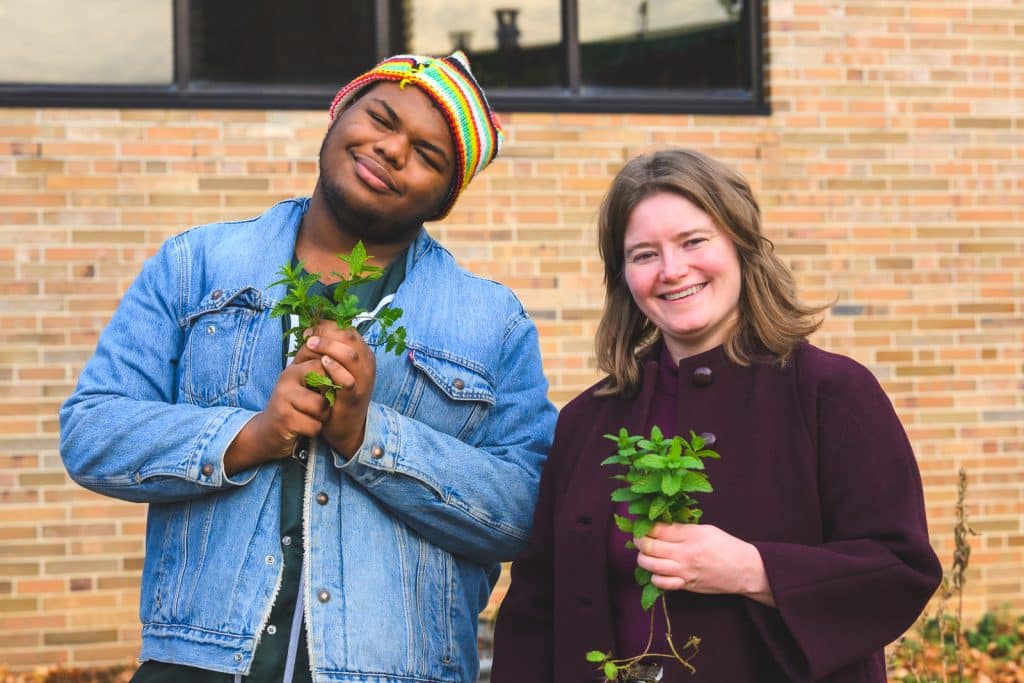
From planting an orchard to using photographs of plants for a postcard charity project, students in Ypsilanti Community Schools’ (YCS) new agriscience/botany career and technical education (CTE) program are getting their hands dirty.
The agriscience/botany program is just one of the school district’s expanding list of CTE offerings, which also include YCS’ culinary and manufacturing programs, as well as a planned drone aviation program. These offerings are part of a CTE push that resulted in voters approving a new 10-year millage last month to fund countywide CTE programming.
Ypsilanti Community High School (YCHS) Principal Chelsea Harris-Hugan says botany and agricultural science are potentially lucrative career pathways for students. Plus, she says, the subjects appeal to students who might do best outside a traditional classroom.
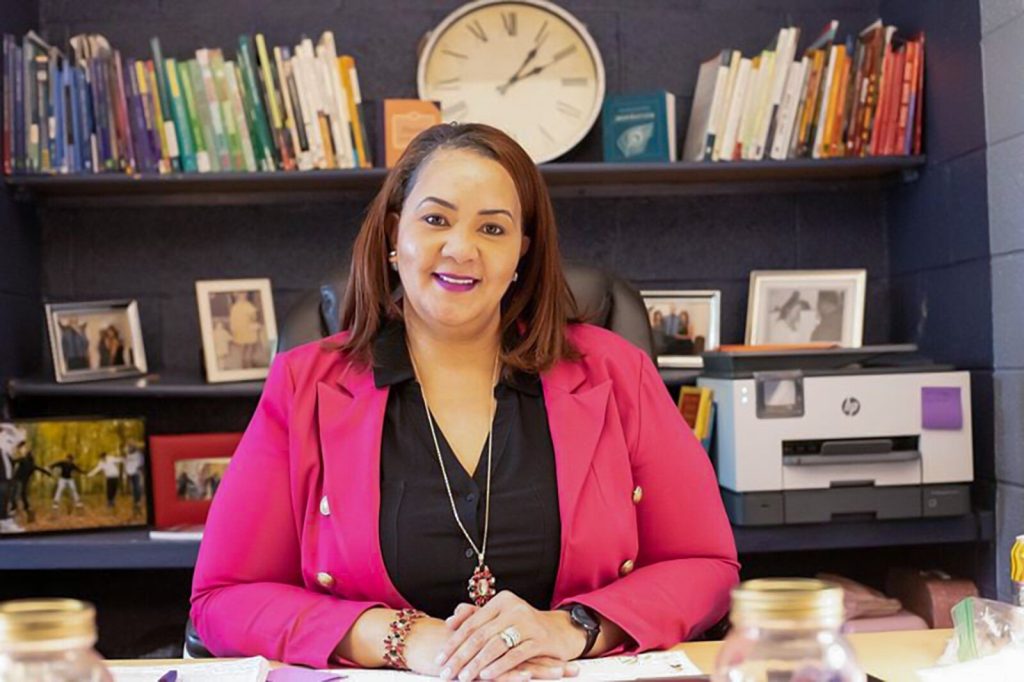
“We value student agency and choice, and so, in this program, just watch what they’re doing. They’re outdoors, growing things, seeing the fruits of their labor in real time,” Harris-Hugan says. She praises the planting and weeding that agriscience/botany students have done around YCHS and the YCS administration building, where students planted an orchard.
Biology teacher Laurel Wiinikka-Buesser says she was excited to learn that YCS was developing the program when she interviewed for her job with the district. Wiinikka-Buesser started out running YCS’ garden club and then working on a botany elective class.
“And through that botany elective, we started developing resources we’re now using to expand our CTE offering,” Wiinikka-Buesser says.
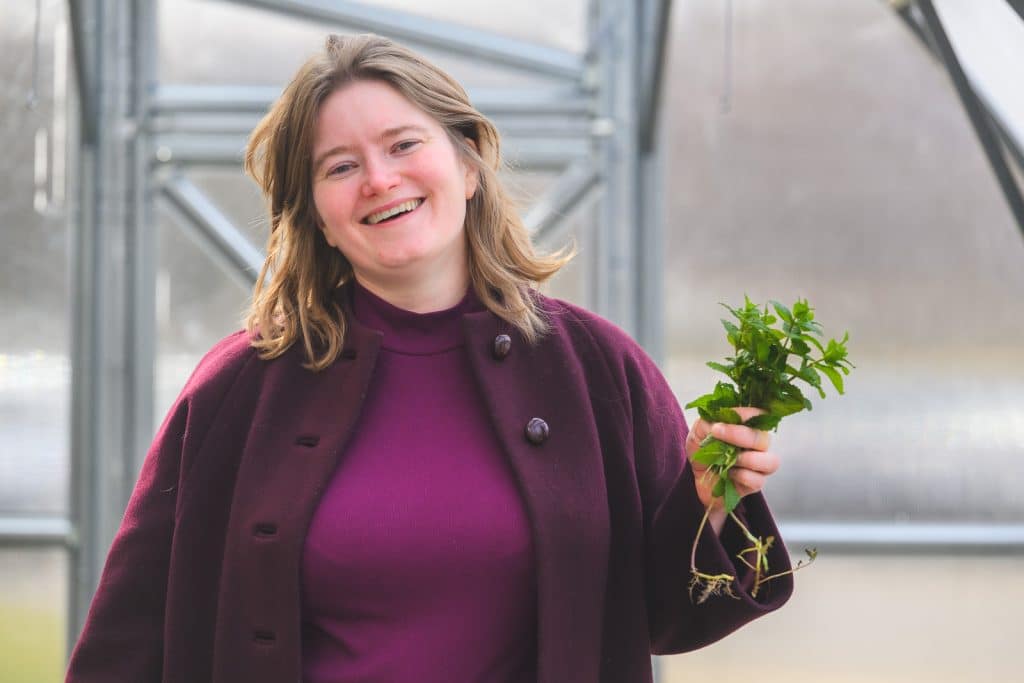
She says her plans for the program include “building a green jobs pipeline.”
“Climate impact is only going to grow with climate change, so we need to prepare for jobs that are emerging and will be needed in the future, and soon,” she says.
In the program, students look at plants under microscopes and water indoor plants in the classroom. But part of each week is usually spent outdoors in the garden, orchard, or a currently empty greenhouse, which students and Wiinikka-Buesser hope to fill soon.
“It warms my heart to see them planting and growing in an outdoor garden,” Harris-Hugan says. “And this program speaks to some of our students that are more quiet and reserved. They’re finding their voice, doing something they love.”
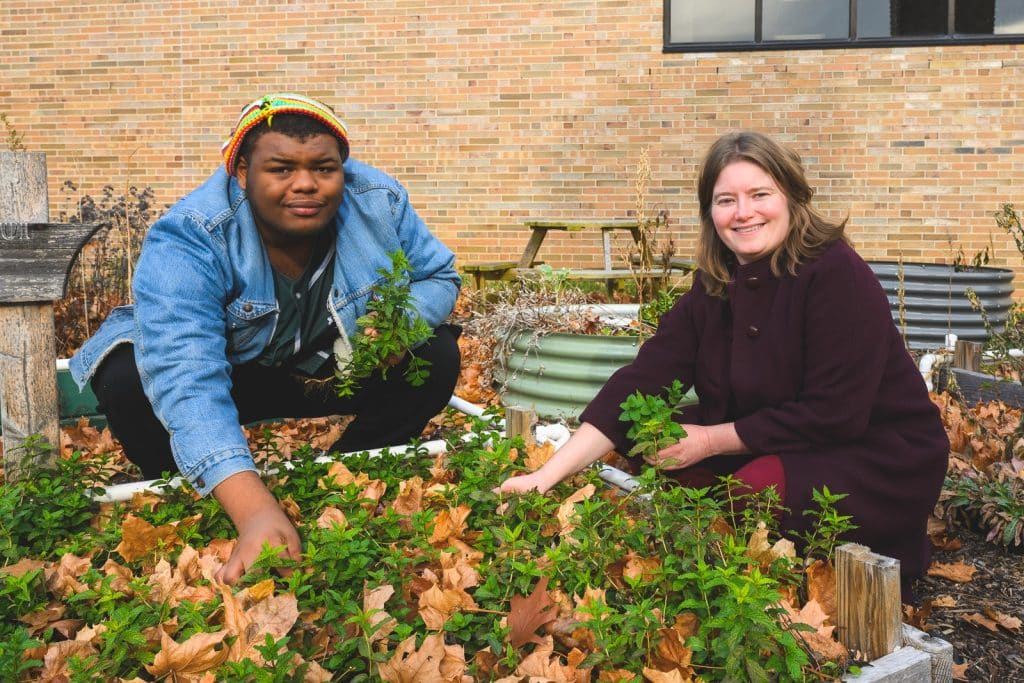
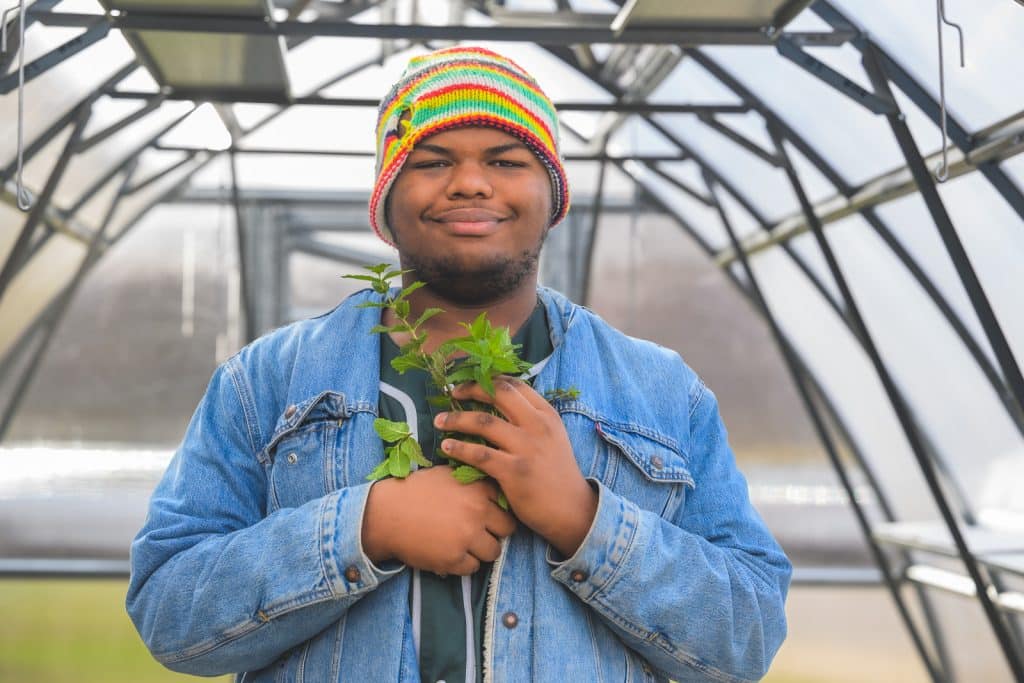
Botany student Elijah Acheampong says the class uses all the available nearby resources, including taking samples of forest or prairie plants from areas right next to the high school.
“We plant seeds and look at plants through a microscope to get a good view of them,” Acheampong says. Sometimes, they even get to eat some of the things they grow in the garden. Acheampong mentions sweet potatoes and squash as memorable plants he was able to sample.
The class is currently printing closeup images of plants, created with a microscope, on postcards as part of a fundraiser. That assignment is part of the project-based learning emphasized in the CTE curriculum.
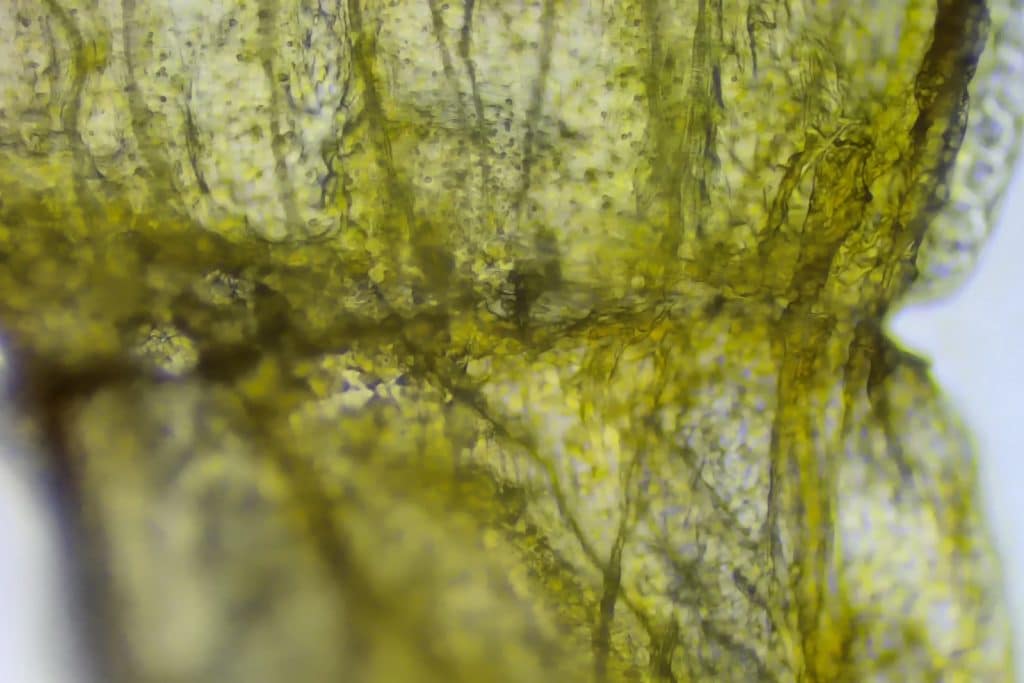
Project-based learning is also emphasized in the many partnerships the agriscience/botany program has with local organizations, including Ypsi’s Southeast Michigan Stewardship Coalition, Growing Hope, and TK’s Gardening and Tree Service and Ann Arbor’s Matthaei Botanical Gardens. Wiinikka-Buesser says she’d like to further develop the program’s relationship with Matthaei Botanical Gardens in particular.
“One of my long-term goals would be to have our students engage in research with them, maybe do a cool little citizens’ research project with them, or even have students co-publish with them,” Wiinikka-Buesser says.
Wiinikka-Buesser already has students doing some unprecedented projects. She sought student input on what to plant on campus, and fruit was high on their list. She listened, and the result was the orchard at the administration building. But Wiinikka-Buesser says she never wants to plant 17 trees in a season again, especially not when the digging is harder than expected.
“But you learn as you do, and we learned that the grounds are solid clay when you go about a foot deep,” she says. “It was tough, but you have to have a sense of humor about it.”
The project required students to research what growing zone Ypsilanti is in and decide what trees would thrive near the administration building.
“We also focused on biodiversity and native plants, so we planted pawpaws, American plum trees, and native cherries,” among others, she says. Unfortunately, the cherries were almost entirely taken out by deer.
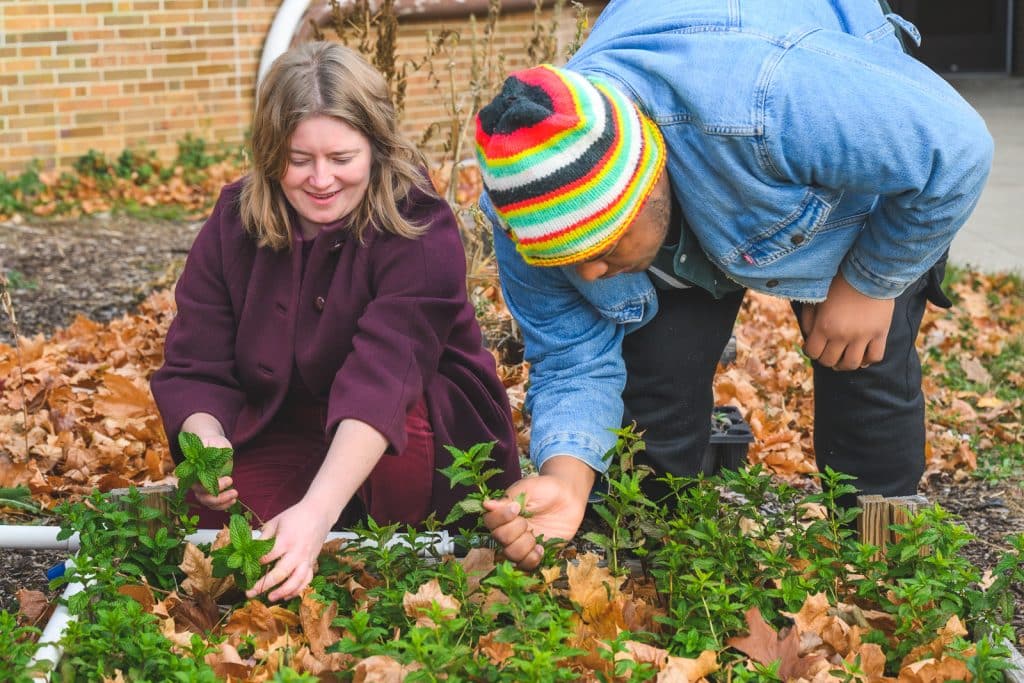
“That was just another learning opportunity. We’re learning to propagate trees, so we took some clippings [of destroyed trees] to try to propagate in the back of the classroom,” she says.
Harris-Hugan says YCHS staff will plan a ribbon-cutting ceremony when the greenhouse planting is finished. The public will be invited on a date to be determined in the near future.
On the Ground Ypsilanti is an “embedded journalism” program covering the city and township of Ypsilanti. It is supported by Ann Arbor SPARK, the Center for Health and Research Transformation, Destination Ann Arbor, Eastern Michigan University, Engage @ EMU, Washtenaw Community College, Washtenaw County Parks and Recreation Commission, and Washtenaw ISD.
Author

Related Articles

Q&A: New EMU President Brendan Kelly on enrollment, parking, AI, student service, and more
Five weeks into his new job, we sat down with Eastern Michigan University (EMU) President Brendan Kelly to discuss his plans for the future of EMU, his alma mater.
Making sports and fitness accessible to Ypsi-area kids is this nonprofit’s focus
The grassroots nonprofit Ypsilanti Community – The Village was created by Ypsilanti Community High School alumni who wanted to reduce young people’s barriers to participating in sports.

After decades of partnership, U-M studies what makes Berlin Philharmonic Orchestra great
Since 2023, University of Michigan researchers have been studying how the Berlin Philharmonic Orchestra is structured, how it operates, and what it brings to audiences in Ann Arbor and around the world.


