
Ypsi Township church has fed hundreds in twice-monthly food distributions for nearly 20 years
The food pantry at the Community Family Life Center, 1375 S. Harris Rd. in Ypsilanti Township, has been a family-feeding machine, distributing groceries twice a month to an average 300-400 families.
On the Ground Ypsilanti is an “embedded journalism” program covering the city and township of Ypsilanti. It is supported by Ann Arbor SPARK, the Center for Health and Research Transformation, Destination Ann Arbor, Eastern Michigan University, Engage @ EMU, Washtenaw Community College, Washtenaw County Parks and Recreation Commission, and Washtenaw ISD.
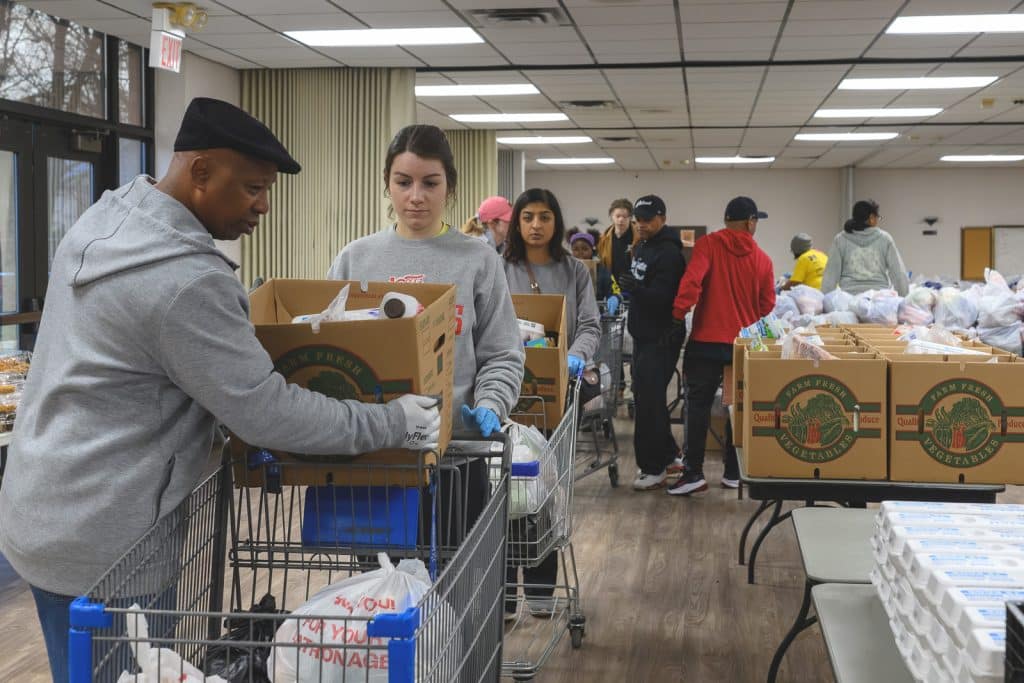
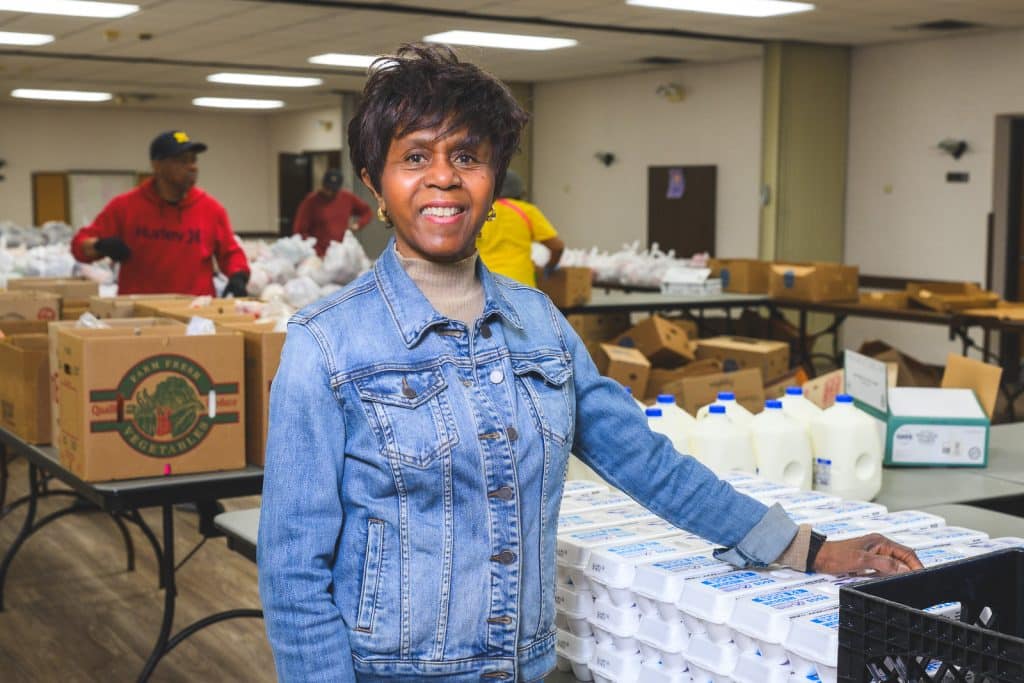
The food pantry at the Community Family Life Center (CFLC), 1375 S. Harris Rd. in Ypsilanti Township, has been a family-feeding machine, distributing groceries twice a month to an average 300-400 families, and as many as 500 families during the SNAP food benefits shutdown in fall 2025. For nearly 20 years, each family has received not a bag or a box, but an entire shopping cart, of groceries at drive-in distribution events on the first and second Saturday of each month.
The CFLC is a nonprofit affiliated with the Grace Fellowship Church House of Solutions, led by Pastor Willie Powell. His wife, Geraldine “Lady P” Powell, heads up the CFLC’s food distribution efforts.
On the Friday before each distribution, she says Food Gatherers brings the CFLC a “huge” truck with vegetables, fruit, bread, desserts, eggs, dairy, and more. A crew of volunteers, including teens from the CFLC’s youth enrichment program, arrive at 1 p.m. and work until 5 p.m. or 6 p.m. unloading the truck and getting food ready for distribution the next day.
There’s no need for families to pre-register for the distributions, and there isn’t much advertising for the offering. Community members in the surrounding Sugarbrook neighborhood pass the word, or passersby see the signs church members put up facing Harris Road during distribution days.
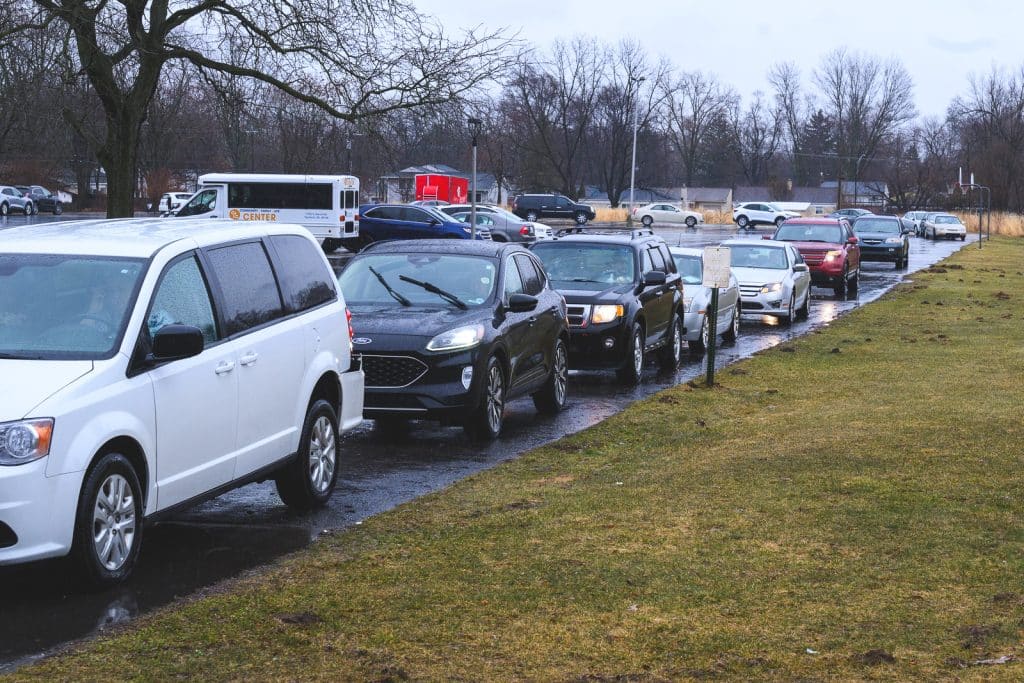
On the morning of each distribution, cars begin to line up in the CFLC’s parking lot as early as 8 a.m. They drive up to a door at the center, where they check in. Powell emphasizes this check-in is only to provide numbers to Food Gatherers, which has to report the number of clients it serves to the U.S. Department of Agriculture. She adds that no personally identifiable information is kept.
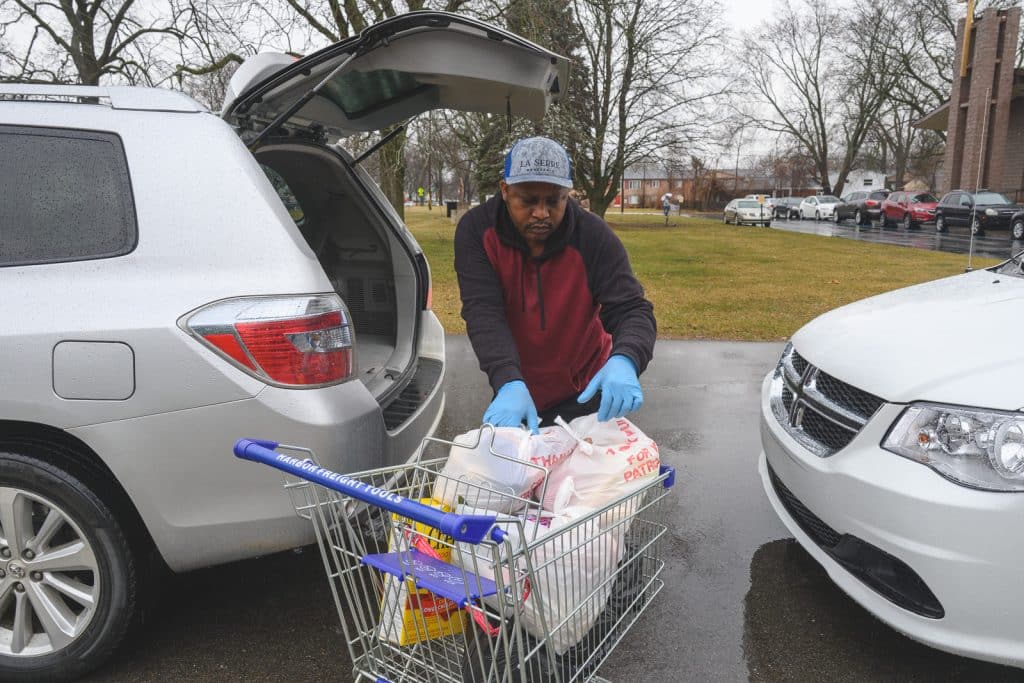
Once a visitor is checked in, they move down the line to a bay door where volunteers roll a shopping cart out to each car and load food into the back of the vehicle. Participants sometimes carpool, so if a car’s occupants represent two families, they’ll get two carts of groceries.
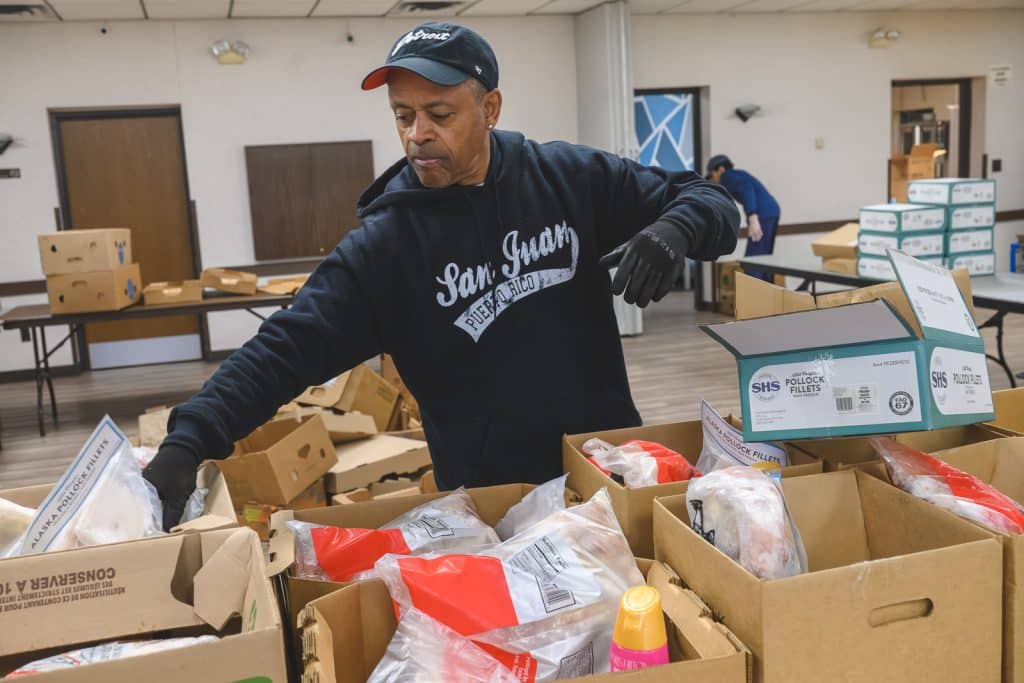
Powell says CFLC volunteers are generous on purpose, sometimes giving families as many as four or five pieces of meat, for instance – “enough to share,” she says.
She says that in some ways, the COVID-19 pandemic was a blessing because it forced the CFLC to shift to the drive-through model still in use today.
“They used to sit in [the lobby], like in the emergency room, and we’d tell them, ‘We’ll call your number.’ And sometimes people would be upset that it would take too long,” she says. “But when we went to the drive-through, you know you’re in the comfort of your own car.”
If someone needs groceries during a week when the pantry isn’t operating, Powell says they can contact her and she’ll feed them from the CFLC’s pantry. That will involve less fresh options – cans, boxes, and frozen food – but the family won’t go hungry until the next distribution day. Powell also provides families with a list of other community resources.
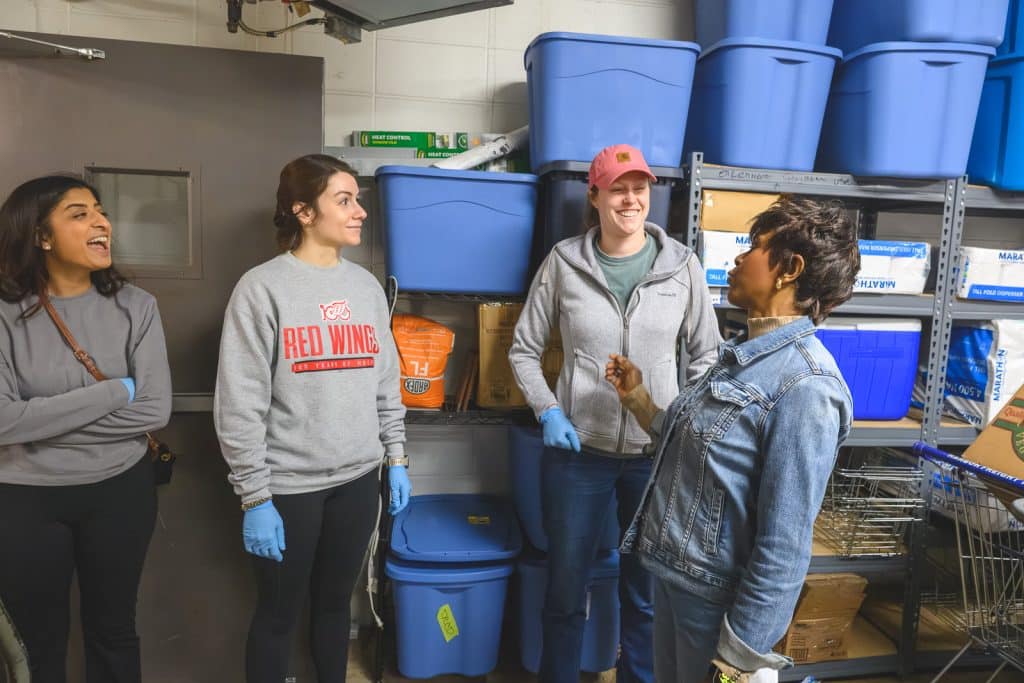
She says the program is driven by “faithful volunteers” that come every week, ranging from church members to youth from the enrichment program to those gaining professional work experience through a group like Earn & Learn. Her grandkids, ages 10 and 11, volunteer at the CFLC in the summer as well.
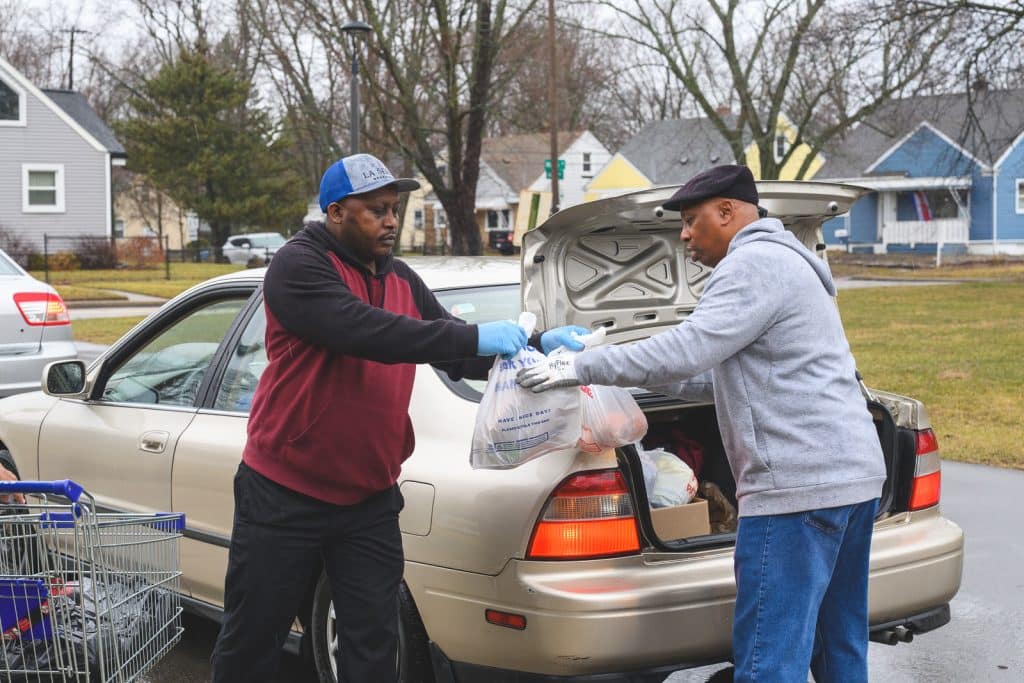
Pantry coordinators Angie and Keith Jackson started volunteering with a different food pantry about 21 years ago and began volunteering at the CFLC a couple years after that.
“We just enjoy helping out in the community, helping people in need,” Angie Jackson says.
She says volunteering regularly means she builds relationships with regulars as well.
“I enjoy meeting the people that pull up. I met this family and watched all the mother’s kids grow up, and then I saw her the other day and she told me, ‘My last kid is in high school,'” Angie Jackson says.
Keith Jackson says he initially was “told” by his wife that they were going to start volunteering. He says he kept coming back as a volunteer partly because of his own “difficult” childhood in the late ’50s and early ’60s.
“We had a tough upbringing and I know what it’s like to go without food, so this is something that’s on my heart to do,” Keith Jackson says. “And luckily, I have a wife who has the same heart, so this is something we’ve done together.”
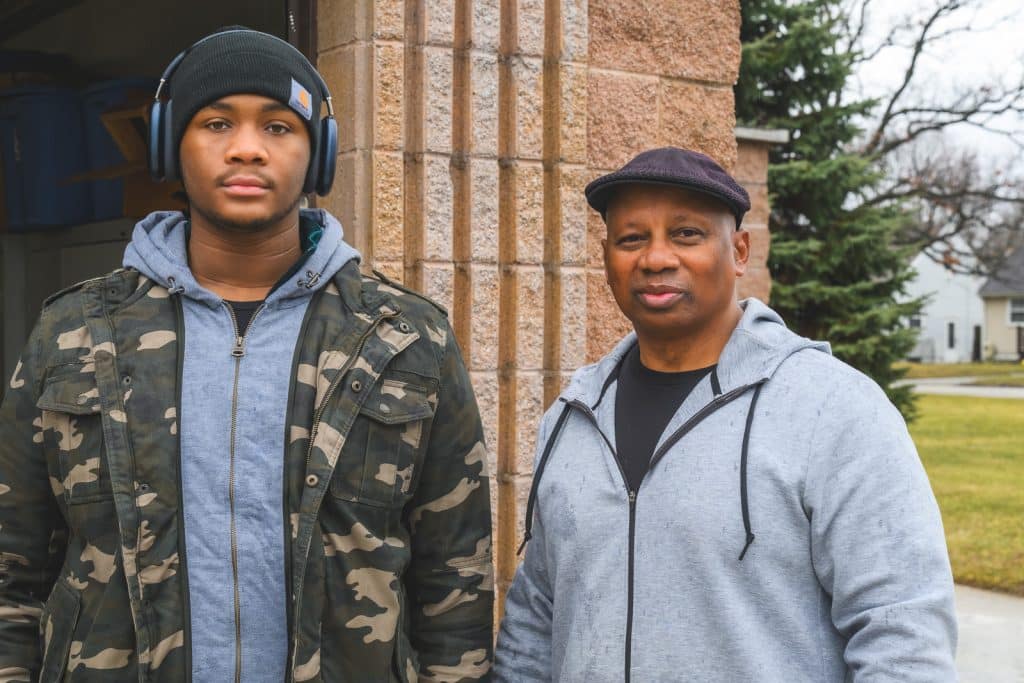
The Jacksons have also been bringing their grandson, Jacob, to volunteer with them since he was a kindergartener. He still volunteers with them today as a young man.
Powell emphasizes that food distributions will continue to happen on first and second Saturdays, rain or shine, even on major holidays. If there’s really dangerous weather, volunteers will take a break, wait it out, and resume, she says. Angie Jackson emphasizes that repeat and new customers are both welcome at the food distributions.
“I don’t care what kind of car you drive up in. I don’t know your situation, so if you say you need food, I’m going to give you food,” she says.
Read more about the CLFC’s mission and programs here.
Author

Related Articles

Washtenaw County seeks organizations’ input on senior millage before dollars begin to flow
A new request for information, aimed at local organizations that serve seniors, is designed to help Washtenaw County shape its spending of millage funds.
Ypsi community center offers senior cafe, weekly dinner, free space for nonprofits
Programming has grown swiftly in the last year and a half at Ypsilanti Township nonprofit Peace Neighborhood Center’s HUB Community Center, which serves the West Willow, Gault Village, and Sugarbrook neighborhoods.

School mental health mini-grants have big impacts in Washtenaw County
Over the last seven years, many Washtenaw County students and their teachers have been empowered to lead mental health-related projects through a series of mini-grants.


