
Ypsilanti using state grant to improve city’s tree canopy
Ypsilanti is using a state grant to improve the city’s tree canopy by working on a public inventory of community trees and organizing other tree-related projects.
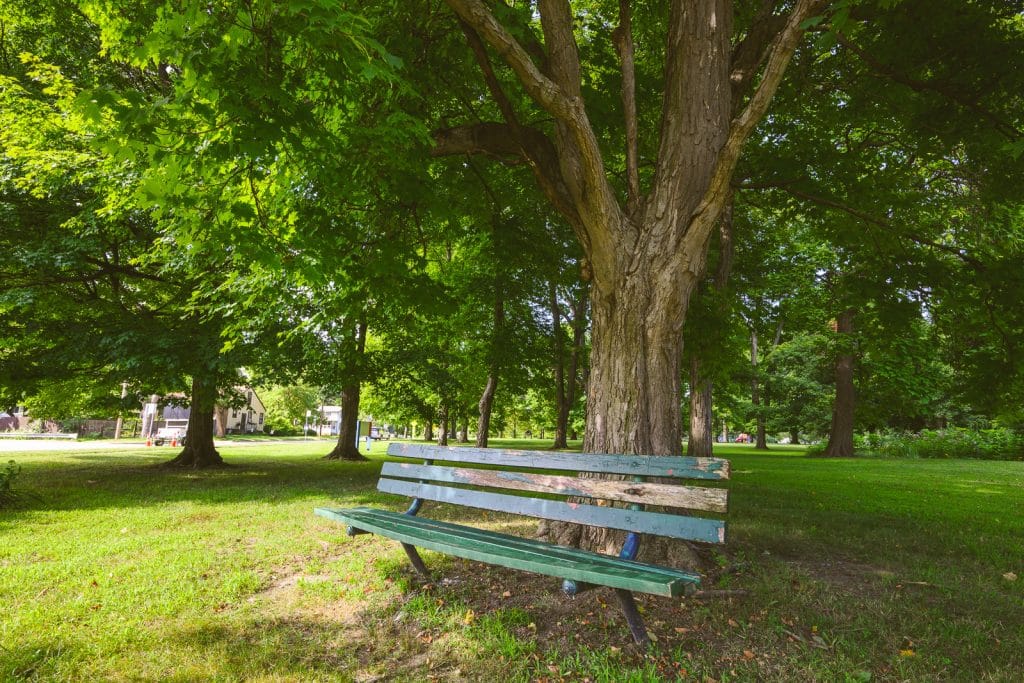
The city of Ypsilanti is using a state grant to improve the city’s tree canopy by working on a public inventory of community trees and organizing other tree-related projects, including a tree giveaway next spring. In June, the Michigan Department of Natural Resources’ (DNR) urban forestry program announced $1 million in grants to help 15 Michigan communities inventory their tree canopies. Ypsilanti was the only recipient in Washtenaw County, receiving $143,703 to complete the inventory, develop an urban forest management plan, plant street trees, and train staff and volunteers.
The tree inventory project’s roots date back to a Community Trees program created by the Washtenaw County Conservation District (WCCD) in 2022. Trees were identified as the number two priority, right after land use, in a survey the WCCD conducted the year before.
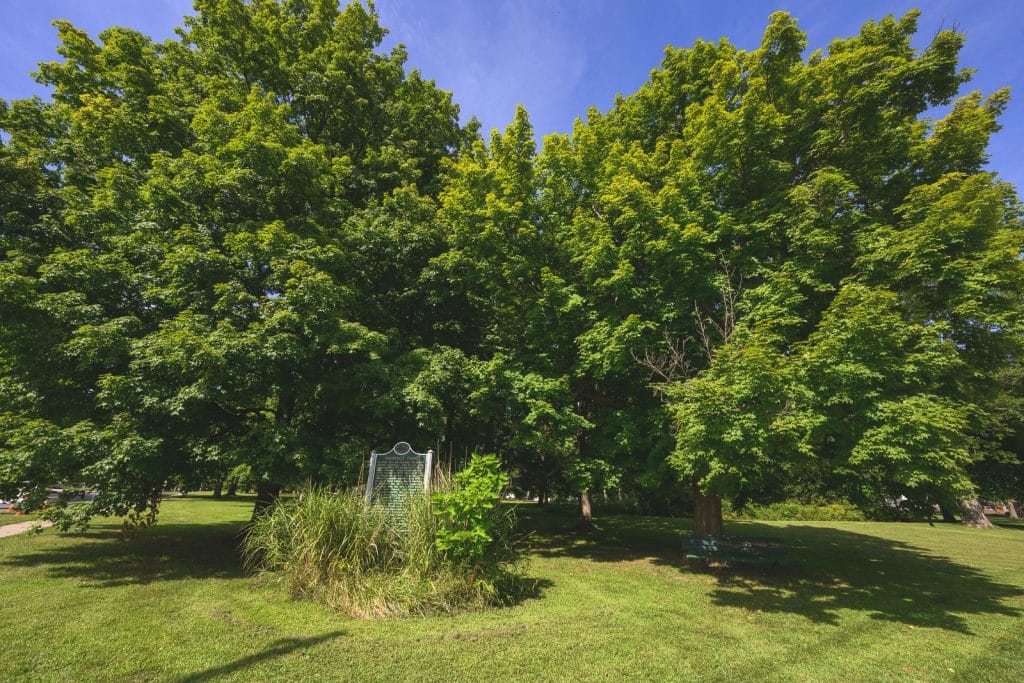
Bonnie Wessler, the city of Ypsilanti’s public works director, says data obtained through the Community Trees program was part of what won the city the DNR grant.
“The Conservation District’s survey was asking, ‘What does our community want?’ Turns out, our community likes trees and thinks we could use more,” Wessler says. “That helped us make the case for this grant, showing that our community recognized the benefit of trees.”
Wessler says those include hard-to-quantify benefits, like improved mental health from exposure to green spaces, as well as well-documented ones, like better control of stormwater runoff or the way planting trees offsets the “urban heat island” effect.
Right tree, right place
The inventory is already underway, and more tree-related outreach is planned for early in 2026. The inventory will focus on trees on public land, like trees on streets, in parks, or in city-owned parking lots.
Wessler says the goal is to generate recommendations for how to improve the city’s canopy over the next five to 10 years. That will include budgeting for staffing and maintenance, and planning ahead for equipment that can handle the large, aging canopy in the city.
Wessler says she hopes a tree giveaway planned for next spring will help educate the public about the principle of the “right tree for the right place.” That’s a lesson government officials in many cities have to learn when they plant trees that grow into power lines or drop fruit all over a busy sidewalk. The survey should help the city avoid those types of pitfalls.
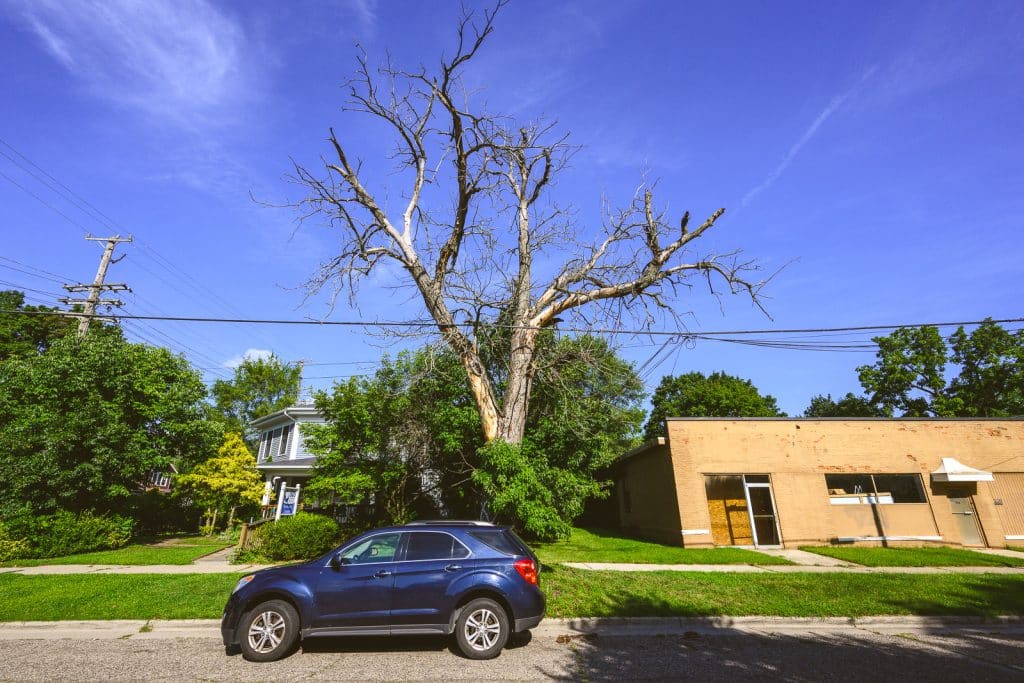
“We’ve all seen pictures of those Frankenstein trees that utility companies leave behind when the trimmers come through,” says Matt DeJonge, a community forester with the WCCD. “The ‘right tree, right place’ principle is to avoid that kind of situation. We need to think about how a species will grow over the next 50-75 years, maybe even beyond that, and be really intentional about what trees we’re planting.”
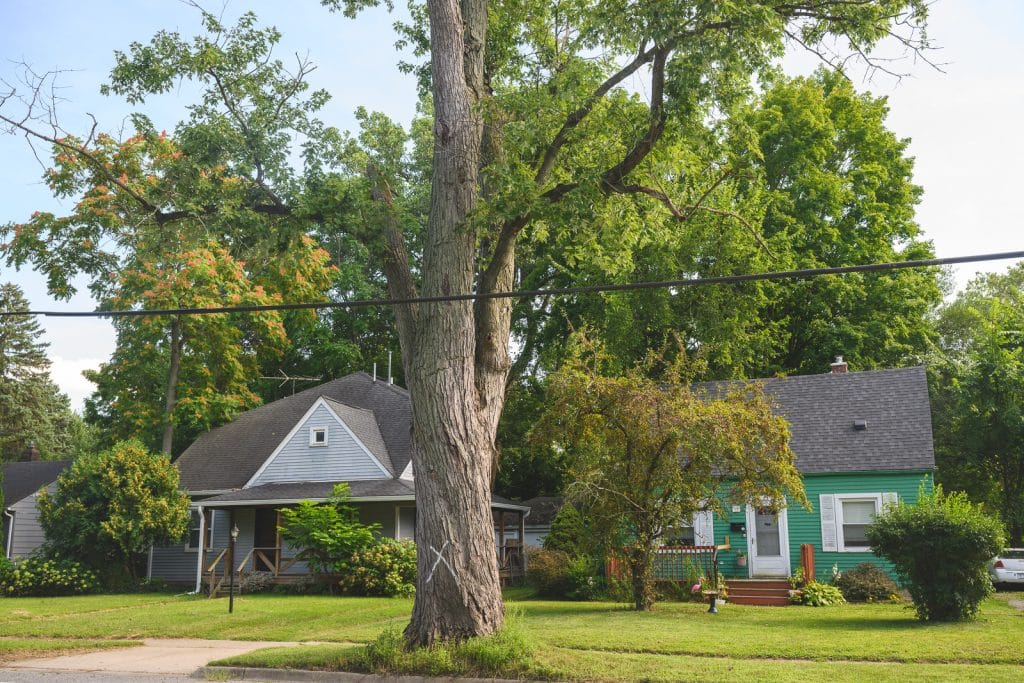
Rachel Blistein is an Ypsilanti resident, business owner, and former landscape architect. She was one of several local residents who wrote a grant and organized volunteers to restore a native plant garden in Ypsilanti’s Prospect Park. She and her neighbors tried very hard to apply the “right tree, right place” principle. The two river birches in Prospect Park are a good example of the right tree for the right place, she says.
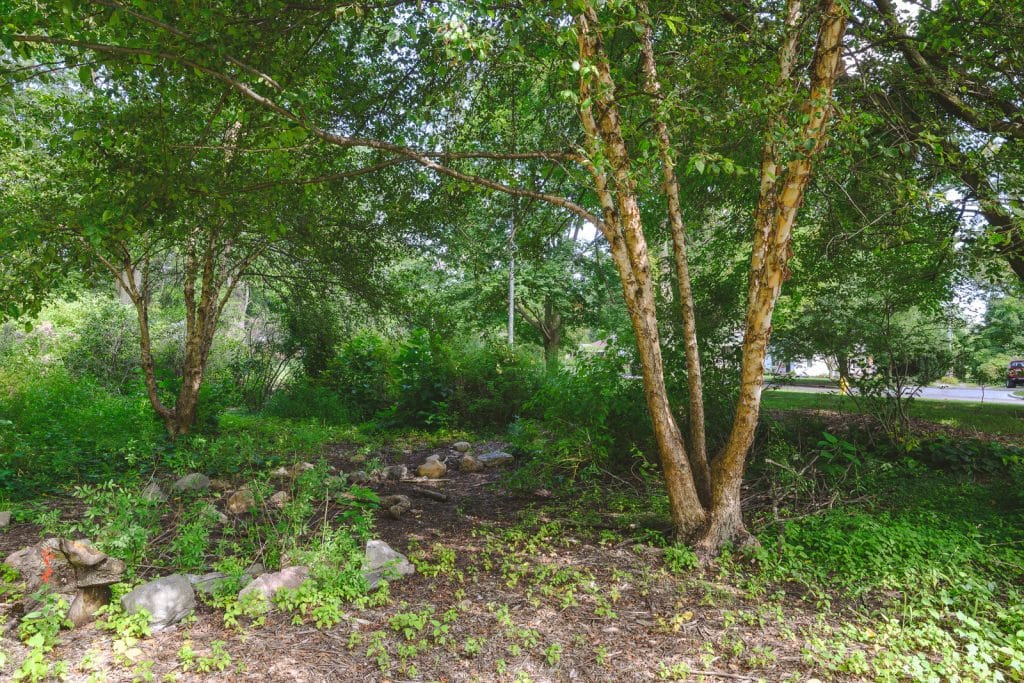
On the other hand, she says the nearby catalpa tree in the park is an example of a tree whose planters didn’t think 50 years ahead. Blistein says catalpas were popular in the ’50s, but they’re no longer commonly planted in public places because they drop pods seen by some as “messy.”
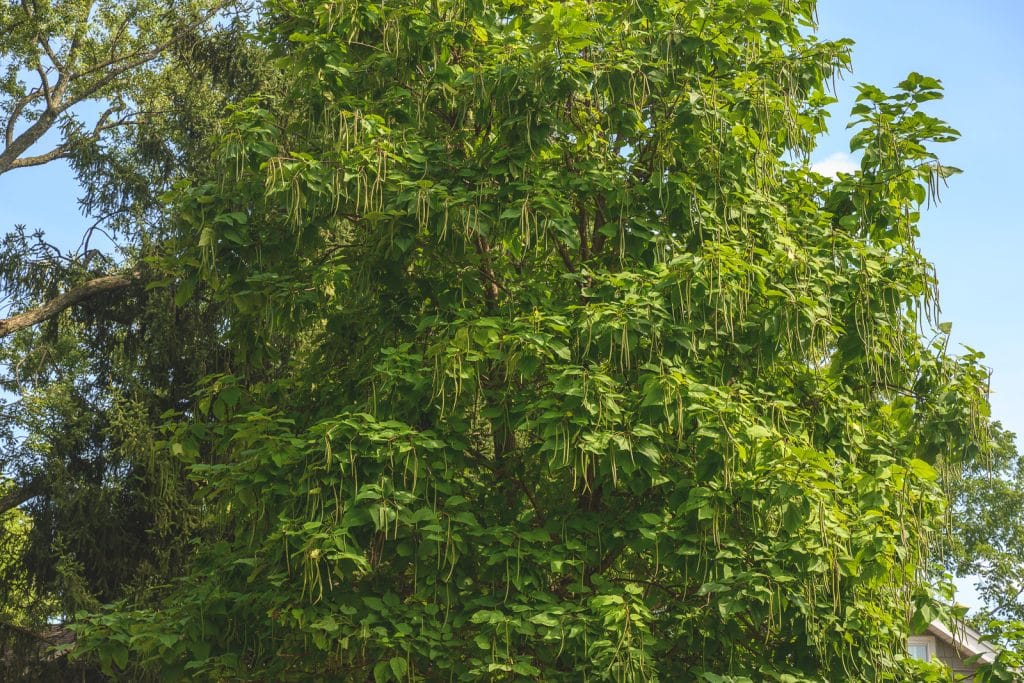
“They offer a lot of shade and habitat for wildlife and they’re nice to look at, but they’re difficult to manage in a public setting,” she says.
A more resilient canopy
Diversity in the canopy is also an issue. Wessler says a 2011 survey found that maples were over-planted on city-owned properties. That’s a problem, because concentrations of one type of plant make those plants vulnerable to infestations or diseases like the emerald ash borer or Dutch elm disease.
“We want to make sure we’re planting a more disease-resistant mix of strains for our next generation of trees,” Wessler says.
The survey project is also helping the city identify dangerous trees to be removed. Wessler says there are a “couple hundred trees” on that list, most of them already known to the city before the survey.
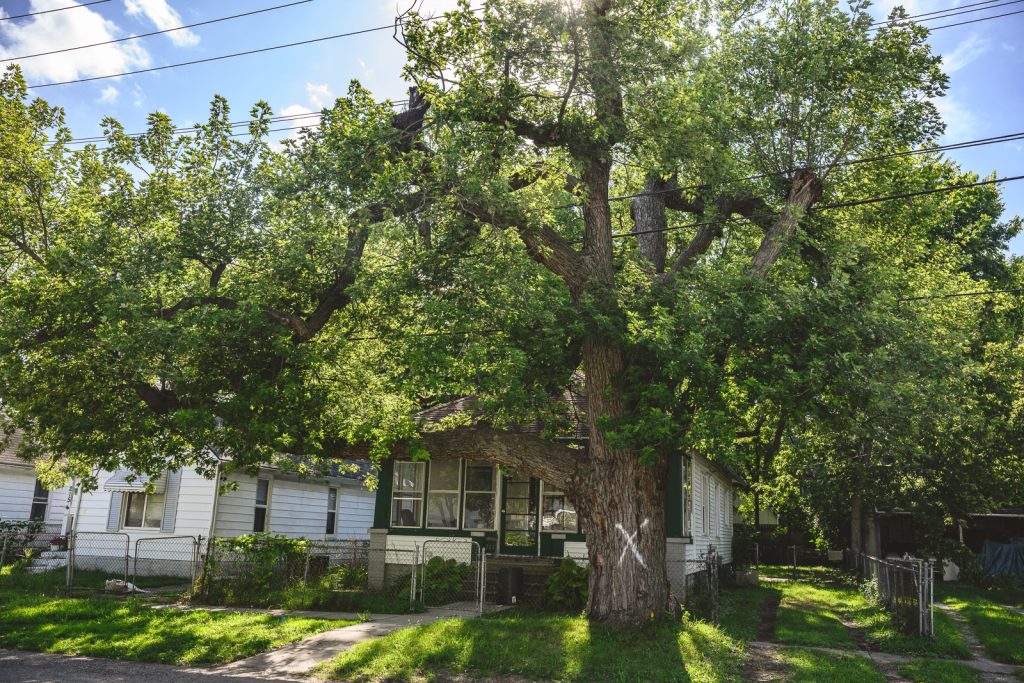
She says if a tree risks creating a cavity under a road or toppling onto a playground, it becomes too big a risk.
“Trees are fantastic but complicated,” Wessler says. “We have to manage risks fairly aggressively.”
Wessler says the grant also includes funds for planting about 100 trees in 2026. Information gathered from the Community Trees project will help city staff identify a few neighborhoods that should receive first dibs on those trees.
DeJonge says his organization will help with the effort to engage landowners.
“We want to tell them that, ‘Hey, we have these grant dollars available and want your buy-in for the potential to receive one of these trees,'” DeJonge says. “We want that buy-in early so residents feel ownership over that tree.”
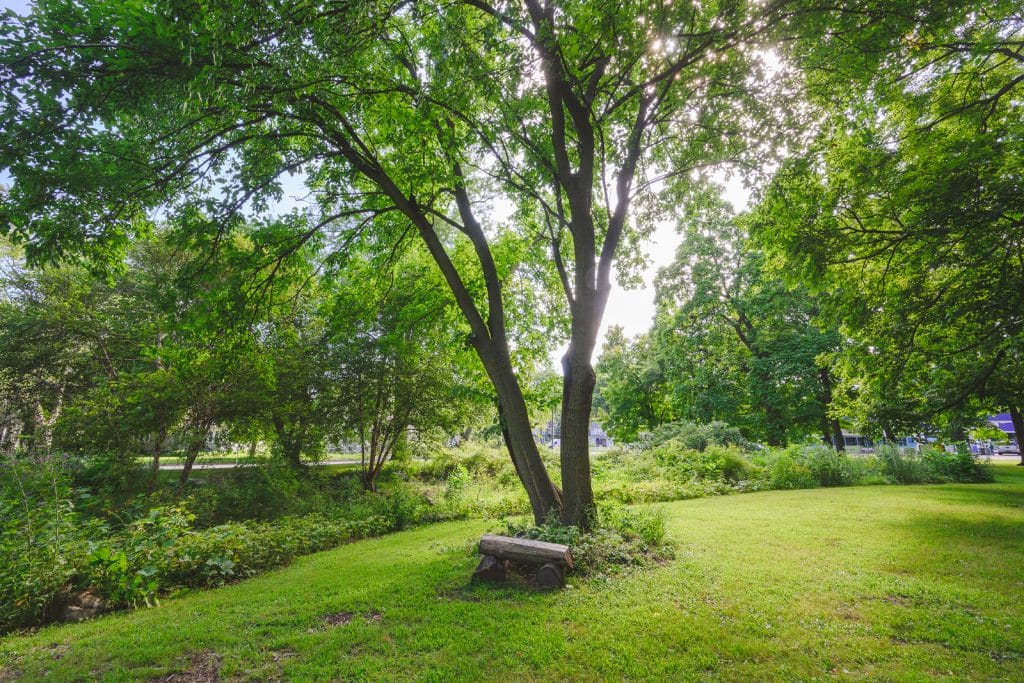
He says he hopes that these efforts will help community members feel a sense of ownership even over community trees technically managed by the city. Residents are encouraged to proactively manage street trees by fertilizing or trimming them as appropriate.
In the meantime, Wessler has other recommendations for Ypsilanti tree enthusiasts. The first is to visit the city’s webpage about trees, which notes that the city encourages residents to plant street trees as long as they follow pertinent city regulations. Wessler also notes that Releaf Michigan is hosting a statewide “big tree hunt.” Anyone in the U.S. can submit a photo of themselves hugging their favorite big tree through Aug. 22.
Author

Related Articles

New Ypsi farmers and gardeners added to library’s oral history project
The newest expansion of the Ypsi Farmers & Gardeners Oral History Project adds 12 narrators’ reflections on growing food, family, culture, and community in Ypsi.
Ann Arbor Local Food Festival to feature nearly 60 local food vendors and organizations
The event will bring together nearly 60 local businesses, farmers, food vendors, and community organizations for an evening designed to help attendees taste, learn, and connect.
Ann Arbor resident trains “Michigan Conservation Dogs” to sniff out invasive species
Ann Arbor dog trainer Hannah Ashmore is building a network of dogs and handlers trained to sniff out environmental threats that human eyes can miss.


