
Ypsi’s Student Advocacy Center marks 50 years of supporting student success and educational equity
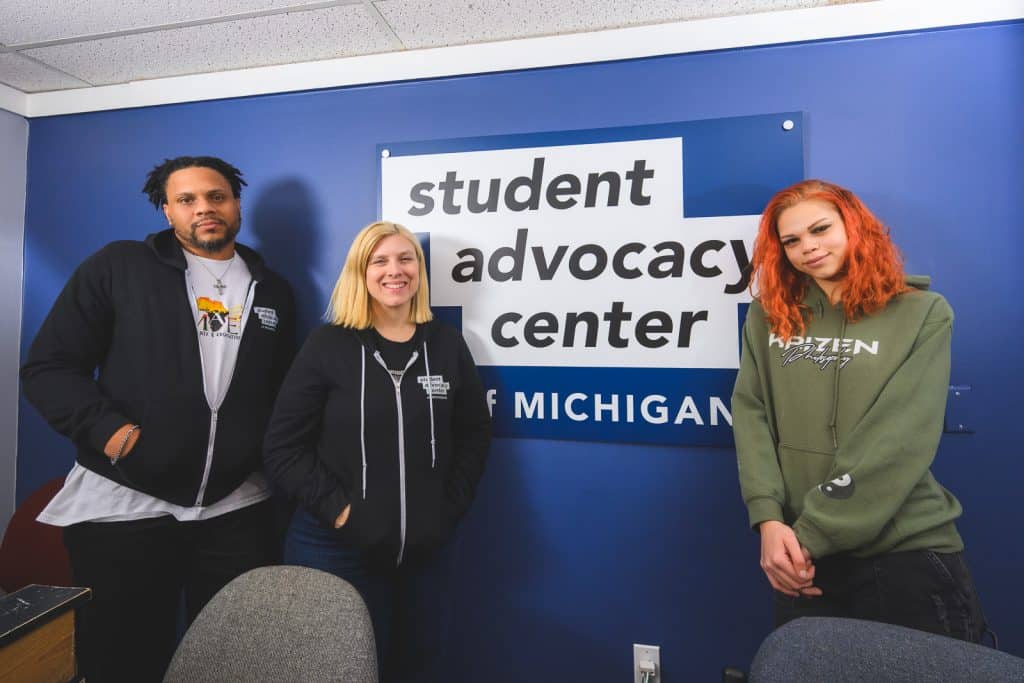
The Student Advocacy Center of Michigan is celebrating its 50th anniversary of working to ensure that every student is heard, supported, and treated equitably.
On the Ground Ypsilanti is an “embedded journalism” program covering the city and township of Ypsilanti. It is supported by Ann Arbor SPARK, the Center for Health and Research Transformation, Destination Ann Arbor, Eastern Michigan University, Engage @ EMU, Washtenaw Community College, Washtenaw County Parks and Recreation Commission, and Washtenaw ISD.
For Diamond Marie, middle and high school were a daily struggle marked by bullying, expulsions, and little support – until her mother connected her with the Ypsilanti-based nonprofit Student Advocacy Center of Michigan (SAC).
“When I first got involved with the Student Advocacy Center, I wasn’t interested in school at all,” says Marie, who went to Ann Arbor’s Forsythe Middle School and Augusta Township’s Lincoln Middle School and Lincoln High School. “I was feeling completely lost about my future. High school was not an environment where I could thrive on my own.”
Through one-on-one advocacy, mentoring, and a focus on addressing the root causes of her struggles, Marie says SAC helped her rebuild her confidence and reengage with learning. The support she received went beyond academics, teaching her how to navigate challenges and envision a future she once considered out of reach.
“SAC opened my mind to the importance of education, and not just academically,” says Marie, who is now an SAC board member. “Without their support, I don’t think I would be in school now getting my associate degree in criminal justice, or even be on the path I’m on today. They changed my entire trajectory.”

This year SAC celebrated its 50th anniversary of working to ensure that every student is heard, supported, and treated equitably; challenging discriminatory discipline practices; and advocating for systemic change. Founded by Ruth Zweifler in 1975, SAC originally emerged from a small group of Ypsilanti-area community members alarmed by excessive suspensions and expulsions and their disproportionate impact on poor children and children of color.
SAC has consistently fought for educational justice while supporting students and families. The organization has been involved in landmark efforts like a 1977 case that resulted in a judge ordering an Ann Arbor school to provide improved support to students who spoke “Black English” at home. Another key effort involved advocating against Michigan’s zero-tolerance policies, which mandated expulsion for students who committed serious misdeeds until they were overturned in 2017.
“So many programs work with kids after school, but we bridge that divide,” says SAC Co-Executive Director Peri Stone-Palmquist. “We’re in the school or classroom, and we’re also meeting with the family in the community. It’s long-term support instead of only being there for a short time.”

While SAC is based in Ypsi, its work stretches across Michigan. The organization offers a free help-line, which allows for students and families to access “no-cost support and education advocacy advice,” according to SAC’s website. A variety of other SAC programs are currently available to students in Washtenaw, Wayne and Jackson counties. For example, students can access free or low-cost individualized education advocacy and support. SAC’s evidence-based Check & Connect mentorship referral program partners with Washtenaw Community Mental Health and the Washtenaw County Trial Court. And SAC’s collaborations with The Michigan Education Justice Coalition and the national Dignity In Schools Campaign encourage students, families, and community members to advocate for long-lasting change in their schools and communities.
These programs, as well as the direct support provided by SAC staff, are what made a true difference in Marie’s life. They also ultimately led to her current position as an SAC board member, and her belief that SAC’s work is deeply important and needed in communities like Ypsi.
“As a student, opportunities like interviewing new SAC staff and speaking to legislators in Lansing showed me that young people’s voices matter, and that shaped everything about the work I do now,” Marie says. “I went from a kid who didn’t want anyone looking at me to someone who now speaks to legislators, mentors other youth, and proudly serves on their board.”
In recent years, SAC has increasingly focused on the rise of virtual schooling, a shift that accelerated during the COVID-19 pandemic and continues to reshape how districts respond to student needs. SAC staff say families frequently turn to them for help navigating unclear policies, limited data, and the long-term consequences of online placements, especially when students are moved out of traditional classrooms without adequate support.
“Our biggest struggle in this season of SAC’s history is the administrative transferring of Michigan’s students into full virtual learning options,” explains SAC Co-Executive Director Anell Eccleston. “The administrative transfers of this nature typically have no path back to in-person learning, which strips the students of the learning through socialization that could occur, and combats any relational workforce development that could also take place.”
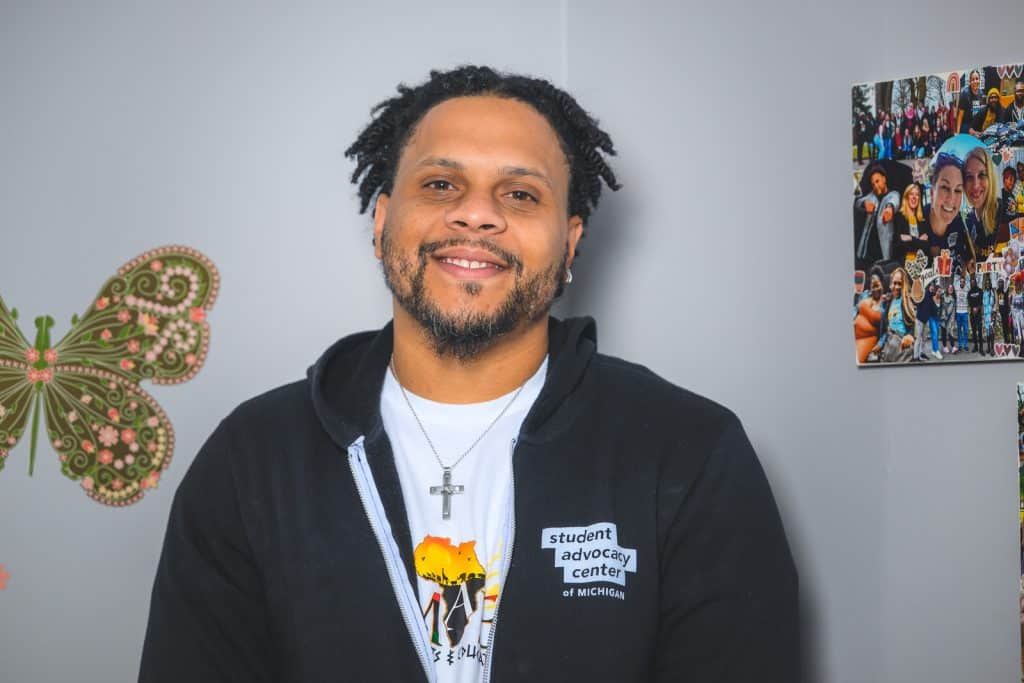
Eccleston adds that some schools have opted to place students in virtual learning environments in lieu of suspension, as opposed to allowing families to choose the best learning environment for their student’s academic needs. Stone-Palmquist says this practice is particularly harmful to students in special education, who traditionally are placed in a specific environment according to their individualized education plan, which can lead to parents feeling there is no other choice to get their student a high-quality education.
“The lack of data around virtual schooling has made it incredibly challenging. That might be by design, or it might be that the laws just haven’t caught up yet,” Stone-Palmquist says. “Even for general education students, we should be making intentional decisions about the best placement, not just what’s most convenient.”
The state of Michigan still sees extremely high expulsion rates despite the end of zero-tolerance policies, particularly for students of color and students with disabilities. But Stone-Palmquist recognizes that the overall attitude towards expulsion has improved. More schools are exploring alternative approaches to discipline, and more families are trying to take a more present, supportive role in students’ education.
“When I came on, Michigan had some of the harshest discipline codes in the country,” Stone-Palmquist says. “If I take the long view, that really has changed. People now understand that harsh discipline is harmful and that we should be doing things differently to keep kids in school.”
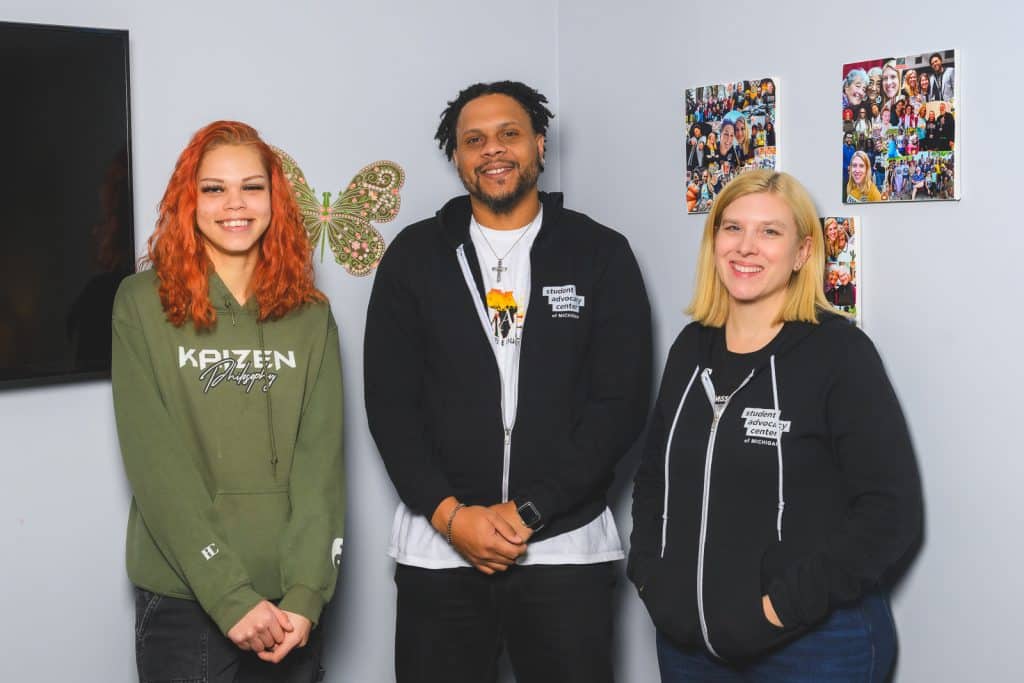
SAC is also exploring how new tools, such as mobile apps and artificial intelligence, might help families access support more easily and allow staff to respond more efficiently. Eccleston says SAC is assessing how technology can remove barriers without replacing the human connection that keeps students engaged in their schools. Even as SAC experiments with new systems, Eccleston emphasizes that strong, caring relationships among educators, students, and families must remain at the heart of any effort to improve attendance and academic success.
“We have worked hard to keep up with the times,” Eccleston says. “In this age of booming technology, we’re pushing for school staff to continue to focus on building community and relationships throughout schools, as well as keeping families included in the inner workings of their child’s education.”
Stone-Palmquist hopes that SAC will develop a stronger presence in foster care homes and facilities. She notes that students living in these environments often “get overlooked” when it comes to disciplinary issues and staying in school. She feels that strengthening relationships between foster homes, school districts, and SAC staff can ultimately lead to lower expulsion rates and help students feel more supported and secure in their education.
“We have dreams of offering more than just advocacy to our foster care students,” Stone-Palmquist says. “Many people on our team have experienced foster care themselves or have been foster parents, and they’re extremely passionate about how we can do more to support those young people in our community.”
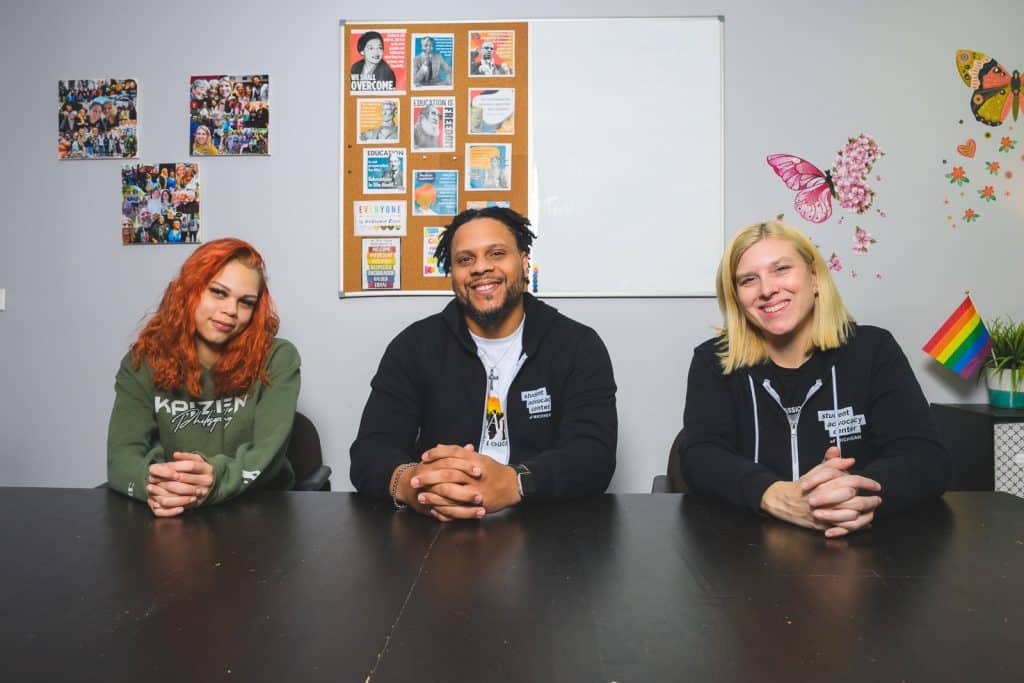
Eccleston stresses that collaboration across multiple levels, from individual schools to state policymakers, will be integral to addressing educational inequities and ensuring student success. He highlights the importance of bringing diverse voices together to not only identify challenges but also implement meaningful strategies that support students’ long-term growth.
“We have great partners in this fight for education justice, and we need even more schools, legislators, and communities to be talking about these issues in schools,” Eccleston says. “And not just talking about them, but also uplifting solutions for creating schools that focus on cultivating lasting relationships with young people and push for success in and out of the schooling environment.”
Former students like Marie highlight how SAC’s work extends beyond academics, shaping lives and fostering stronger, more resilient communities.
“In communities where families may be struggling financially or schools are overwhelmed, SAC becomes a safe place and often a lifeline for students,” Marie says. “Their presence does not just help individual students. It strengthens the whole community.”
Author

Related Articles

Washtenaw County school to host new free pre-kindergarten program
A new free pre-kindergarten program will be available to 15 3- and 4-year-olds in the Washtenaw Intermediate School District (WISD) this school year.
Why early childhood belongs on every Michigan voter’s ballot
Why Michigan voters should pay attention candidates’ stands on childcare and early learning.
WCC rolls out new Mobile Classroom for offsite learning
Washtenaw Community College is taking its classes beyond traditional campus borders this summer with a new project: a 48-foot-long mobile unit called the Mobile Classroom.


