
15 years after Borders’ end, Ann Arbor and Ypsi independent bookstores succeed by playing to their strengths
Despite the collapse of the big-box bookstore, local independent stores have successfully emphasized community, tactile experience, curation, and collaboration.
This story is part of a series about arts and culture in Washtenaw County. It is made possible by the Ann Arbor Art Center, Destination Ann Arbor, Larry and Lucie Nisson, the University of Michigan Arts Initiative, and the University Musical Society.
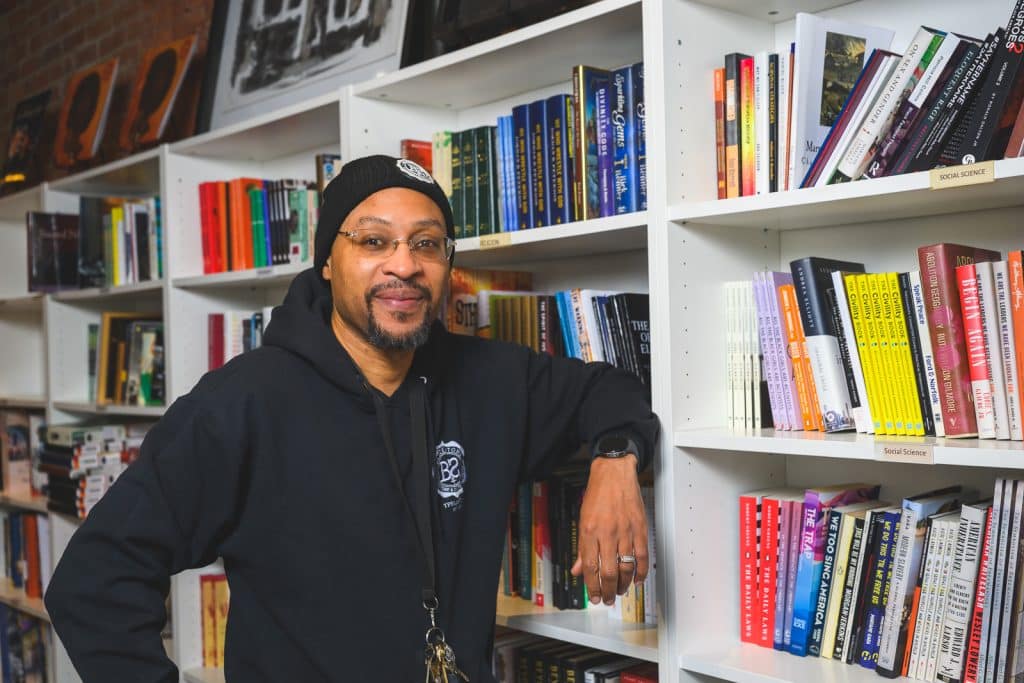
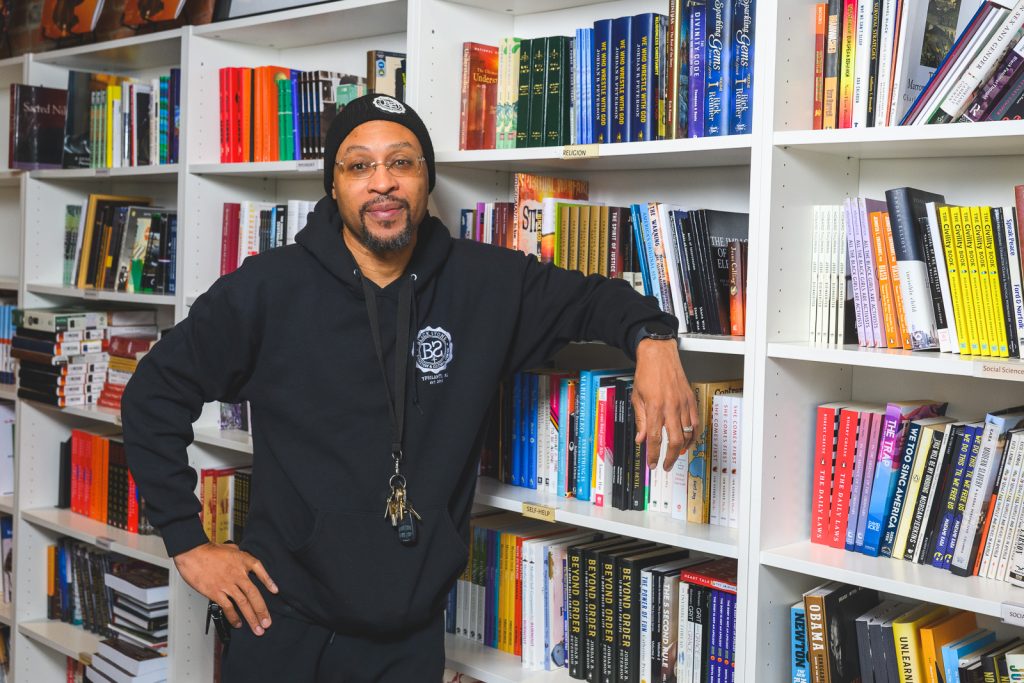
Carlos Franklin, co-founder and co-owner of Black Stone Bookstore & Cultural Center in Ypsilanti, says he’s often asked why he opened a bookstore. He says people seem to expect an “honorable” response — some profoundly idealistic, purpose-driven message about changing the world, say.
But the truth, he says, is simpler: “Because I love reading.”
“The sky didn’t open up,” Franklin says. “Moses didn’t come out and [say,] ‘My son, this is your destiny.’ I just did it because I love reading — and then I wanted to share those books.”
Black Stone opened in 2013, two years after Ann Arbor-based Borders — one of two big-box retailers dominating the national bookselling industry — shuttered its doors. In the 15 years since then, independent bookstores in Ann Arbor and Ypsilanti have stubbornly hung on, adapting to a constantly evolving media landscape and withstanding major challenges posed by Amazon, the COVID-19 pandemic, and rising rent, among other issues.
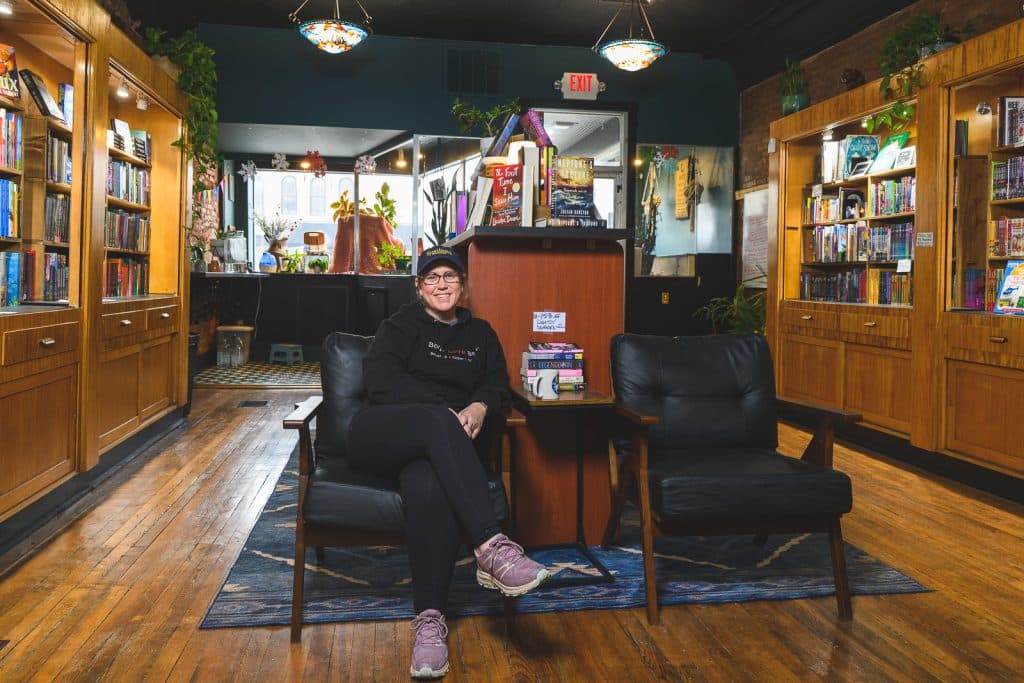
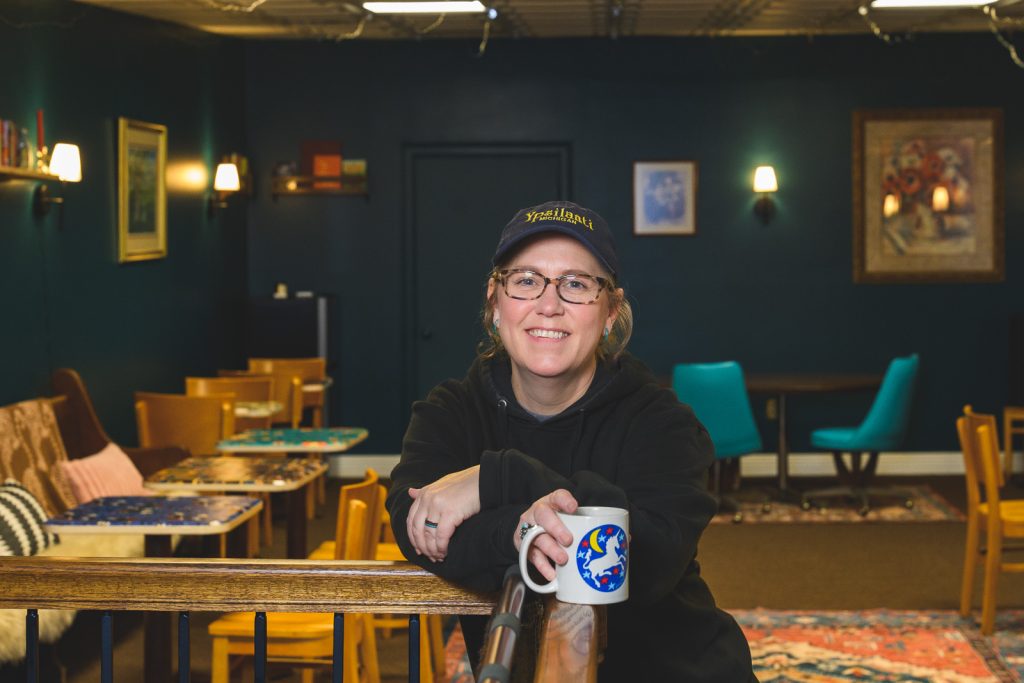
“We’re surviving, not thriving,” says Jessica Tharp, who opened Book Love Bar in Ypsilanti almost a year ago.
“I don’t like the word ‘hustle,’ but it is a hustle,” Tharp says. “Small businesses — those who own and run them — are magicians.”
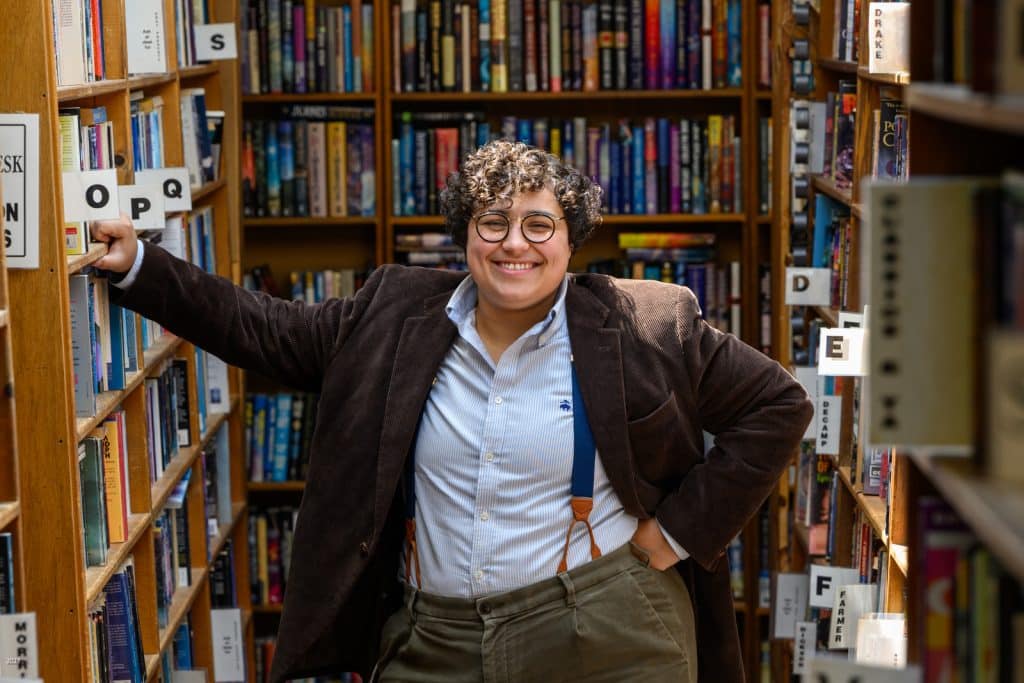
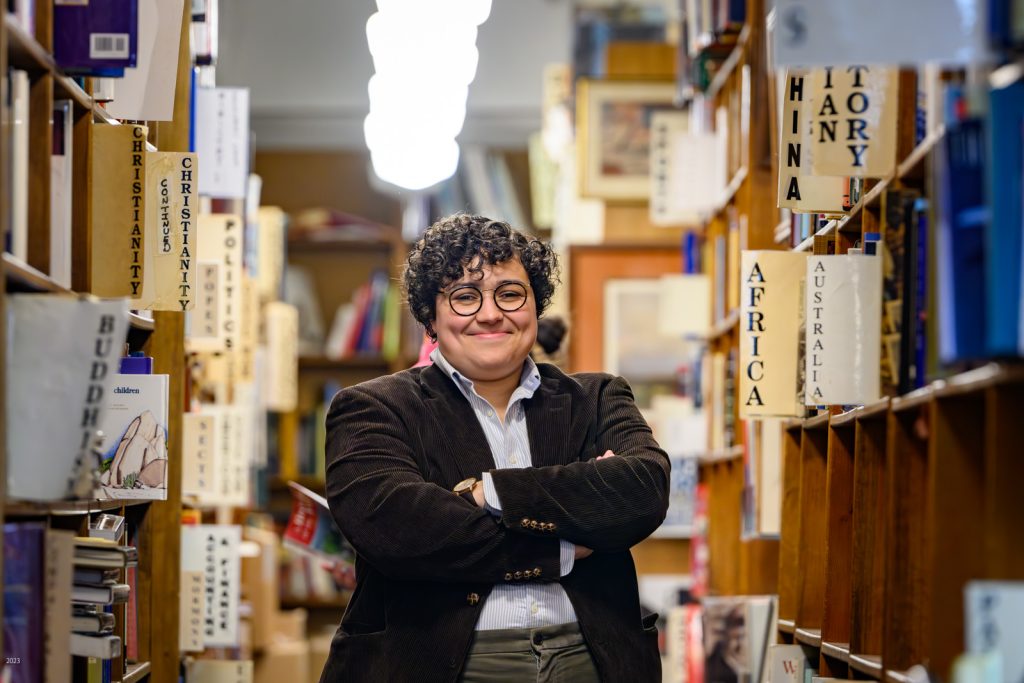
For Africa Schaumann, who acquired Ann Arbor’s Dawn Treader Book Shop in 2022 (after managing it since 2018), bookselling is “[one of] those professions you don’t go into for the money. You go into it for the love of the game.”
“It’s not Amazon,” she adds. “I don’t have a yacht.”
Hilary Gustafson co-founded Literati in Ann Arbor with her husband, Michael, in 2013. When it comes to industry-level challenges, she considers the rising cost of books and the “existential threat” presented by ongoing consolidation among major publishing houses as among the most major.
More locally, she says, “I worry about rising rents and the landscape of downtown” — especially when she sees small, locally owned businesses pushed out by major chains (like Dunkin’, which recently opened a storefront nearby), a pattern that she says “guts the personality of Ann Arbor.”
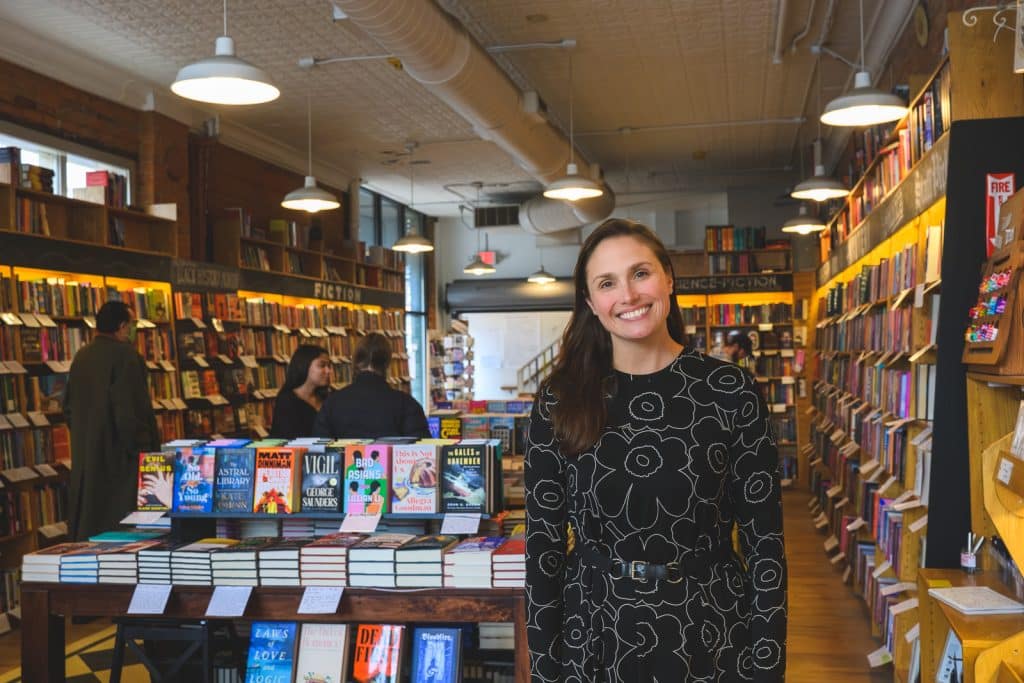
“The more bookstores there are, the better the town is,” Gustafson says — and across Ann Arbor and Ypsilanti, a vibrant community of independent booksellers has emerged to support her claim.
Bookstores as community spaces
Local bookstore owners all see their businesses as community spaces for them to share their love for literature with their neighbors. Franklin began his bookselling business with a single book: Tracy Brown’s novel “Black,” which he’d given his wife while they were still dating.
“When I decided to open a bookstore, I took the book back,” he says. “I took one book and turned that to two books, turned two books to four books, and four books to more books.”
Since its opening, Black Stone has centered the voices, experiences, and stories of Black writers and readers, a community long underrepresented in publishing.
“I felt like more people needed access to stories like that,” Franklin says.
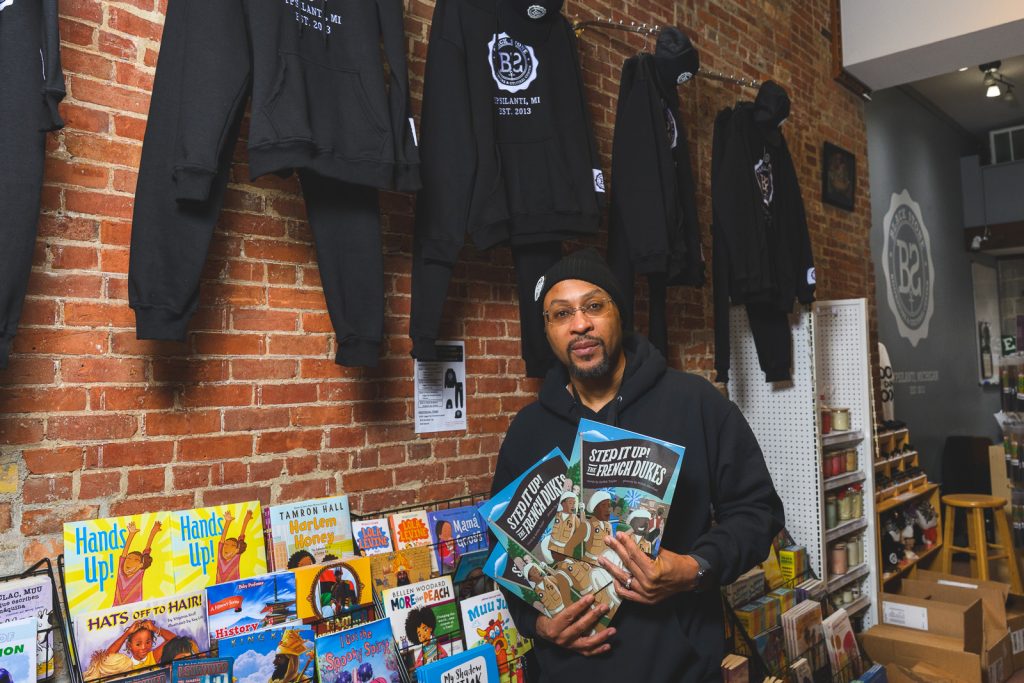
He was partly driven by a tendency he’d noticed every February where “the [same] 10 top Black people” might be loosely celebrated on mainstream media for Black History Month. But by March each year, he says, “everything is gone” — Black history tucked back into hibernation until the next February rolls around.
“I don’t really subscribe to that too much,” Franklin says, “because I’m Black 12 months of the year.”
Tharp, who describes Black Stone as “a staple to the community” — and who opened Book Love Bar just down the street — thinks of Franklin as a mentor.
“He has a lot of knowledge and I will eat up every bit of it,” she says.
Neither Franklin nor Tharp think Ypsilanti bookstores were much impacted by Borders’ closing.
Franklin describes Ypsi’s bookstore scene as “a separate entity” from Ann Arbor’s, and Tharp says she frequently comes across customers who seem “really excited about calling that [scene] Ypsi’s.”
“They feel like they have something that is walkable, local, and they can call their own, instead of having to” make the trek to Ann Arbor, she points out.
At Book Love Bar, Tharp offers free coffee and hot tea, with plans to add a cocktail bar when she gets a liquor license. She also offers writers’ workshops, open mic nights, and book clubs for the public.
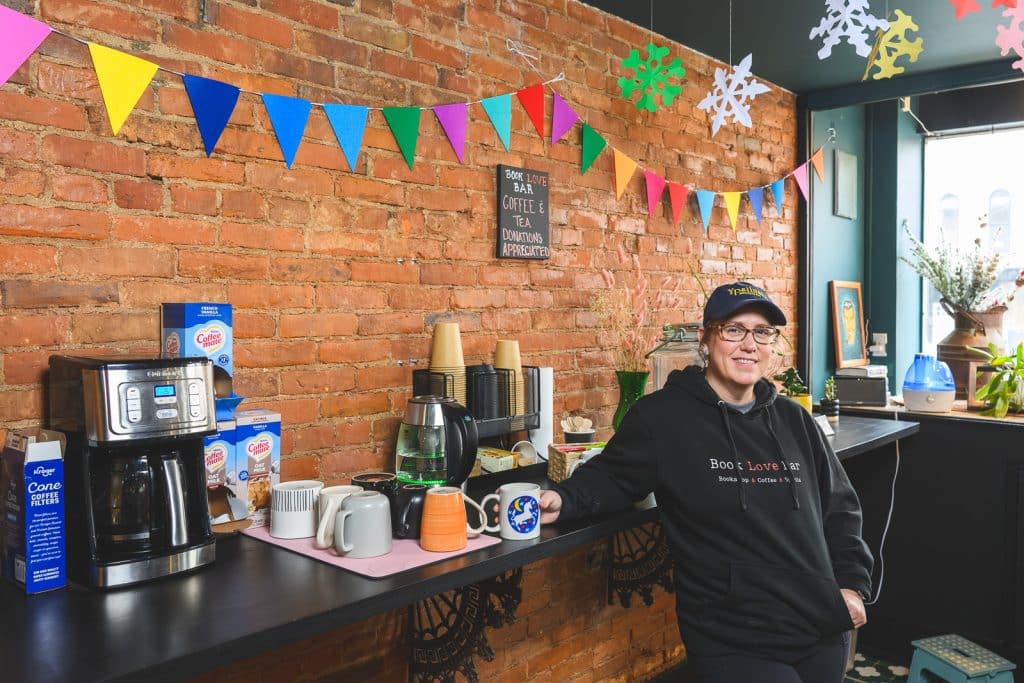
Readers are looking for conversation and community, she says: “They want to be able to talk to somebody who wants to talk about books — and you can’t do that through Amazon.”
(She says Amazon’s reading recommendations, which are generated via algorithm, are “something completely different” that doesn’t satiate a reader’s desire for genuine connection.)
Literati takes the same approach: Gustafson goes as far as describing the shop as “a community space” rather than a retail space. It offers book clubs, open mics, author events (Gustafson estimates 200 per year, some co-hosted with the Ann Arbor District Library), and other occasions for readers to gather and talk about books — many of them free.
“We see [that] as the antithesis of Amazon,” Gustafson says.
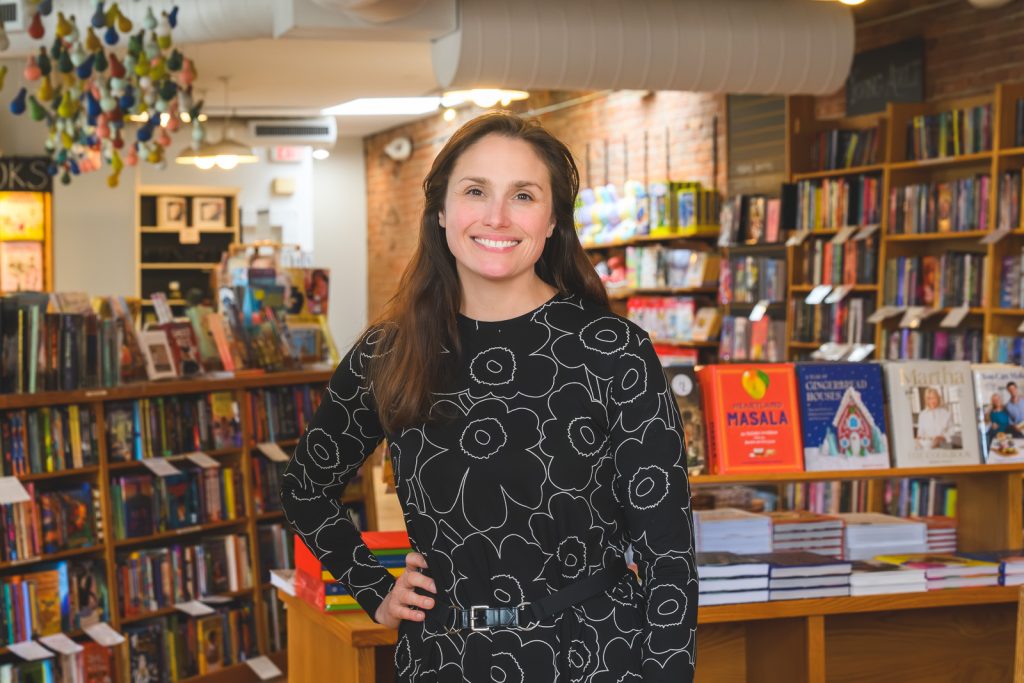
Plus, as Schaumann points out, bookstores are “one of the few retail spaces where there is not so much burden to purchase.”
While other retail spaces might discourage potential customers from lingering without buying anything, bookstores maintain a slightly different set of expectations.
At Dawn Treader, “our bookmarks say ‘Ann Arbor’s Best Browse,’” Schaumann says. “We’re not even saying [we’re] the best place to buy books. We’re the best place to come look at books.”
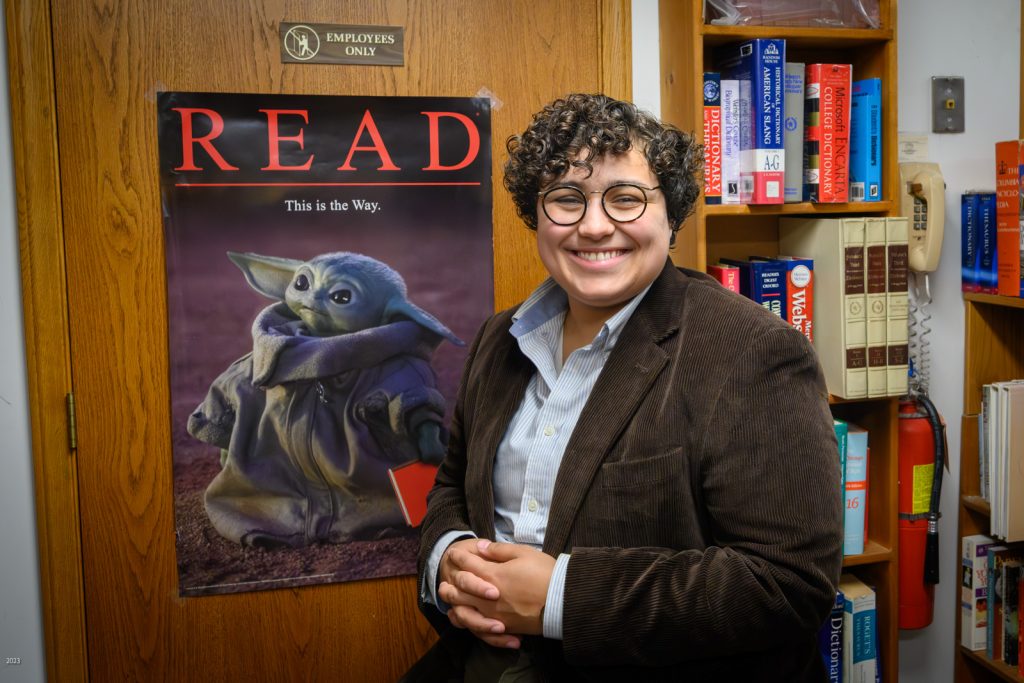
“Are you going to walk into Narnia?”: The tactile and the in-person
When Borders closed in 2011, e-readers — like Amazon’s Kindle and Barnes & Noble’s Nook — were rapidly growing in popularity. Apple iPads, which launched in 2010, provided readers with yet another easy way to access, store, and travel with books.
Schaumann acknowledges that e-readers are “still really popular.” But she also thinks readers have largely gotten over their initial flush of excitement for the technology and have been “going back to paper medium” in droves.
(Nationwide, the numbers are slightly more complicated: according to the Pew Research Center, as of 2022, three in 10 Americans had read an e-book within the last year. But the widespread expectation that e-books would entirely eclipse print books has not been borne out, and many readers appear to buy books in both formats.)
Still, Tharp, too, has noticed a preference among her customers for “something tactile.”
“They want to be able to hold a book in their hands,” she says.
The emphasis on the tactile also seems to extend to physical storefronts and in-person shopping.
“I really can’t overstate how much people value the physical, sensory, tactile experience of a brick-and-mortar bookstore,” Schaumann says.
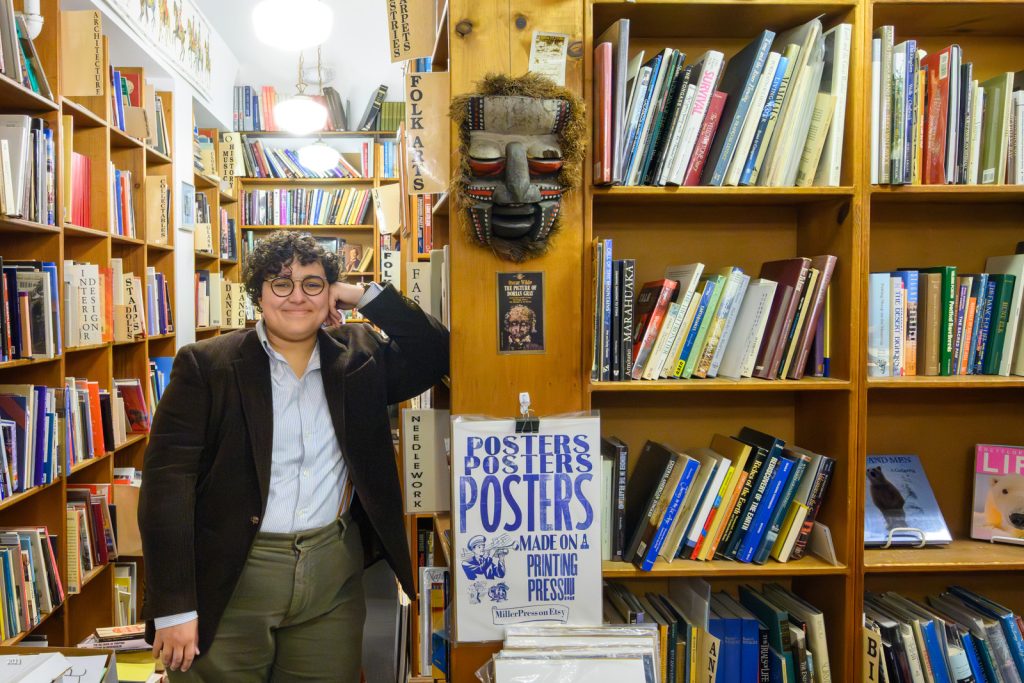
At Dawn Treader, she says, the overstocked shelves, winding aisles, and unending stacks of books all “create a sense of magic and mystery and whimsy.”
“If you turn a corner, are you going to walk into Narnia?” she says.
Schaumann says readers are attracted not only by a sense of mystery and whimsy, but also by “nostalgia” and “honest, lived memories.” She says “people return to places that are comforting, where they feel safe, where they feel seen” — and for many, as it turns out, those memories tend to coalesce in bookstores.
At the height of the pandemic, Schaumann organized a GoFundMe campaign to support Dawn Treader, which, like many other storefronts, had closed for in-person shopping. Without online sales, the shop’s profits dwindled to nothing.
The GoFundMe gave Schaumann enough breathing room to keep the store from shutting down entirely. But she says she was struck less by the outpouring of financial support, as tremendous as that was, than by the personalized comments many people included alongside their donations. According to Schaumann, many of the comments recounted major life events that centered, in one way or another, on the store itself.
“They said things like “‘I went on my first date here,’ ‘I got engaged to my partner here,’ ‘I broke up there,’ or ‘Someone passed away and I didn’t know what to do, so I just walked around the Dawn Treader for a couple hours,’” Schaumann says.
Literati also shut its doors for 14 months during the pandemic. During that time, the store offered curbside shopping and a ship-to-home option for customers who ordered off its website.
Literati’s online sales have grown from 1% of the store’s business pre-pandemic to 5-10% now, according to Gustafson. She sees that trend as a sign of loyalty from formerly local customers who’ve since moved away. They might not live near enough to visit in-person anymore but still want to support the store — and Literati has responded by further expanding online sales.
“We’ve made a concerted effort to be a local bookstore that can still serve your needs wherever you are,” Gustafson says.
Still, “the core of our business is a physical space where people can come in and browse titles we put on our shelves,” she adds.
When it comes to “creating displays” and “choosing what titles we feature,” Gustafson says Literati has been “very deliberate” in making its selections. Reading recommendations, for example, are hand-selected — not based on algorithms.
“We’re not feeding our titles to customers based on what they click through,” she says. “We are sitting down as a team and saying, ‘These are books that we think are important. These are writers that are underrepresented. These are voices that we think should be heard’ — and making sure that those books are on our shelves.”
That thoughtfulness has proven influential with customers. Literati’s bestselling books tend to be titles included in its “Staff Picks” section, where books are accompanied by handwritten staff recommendations.
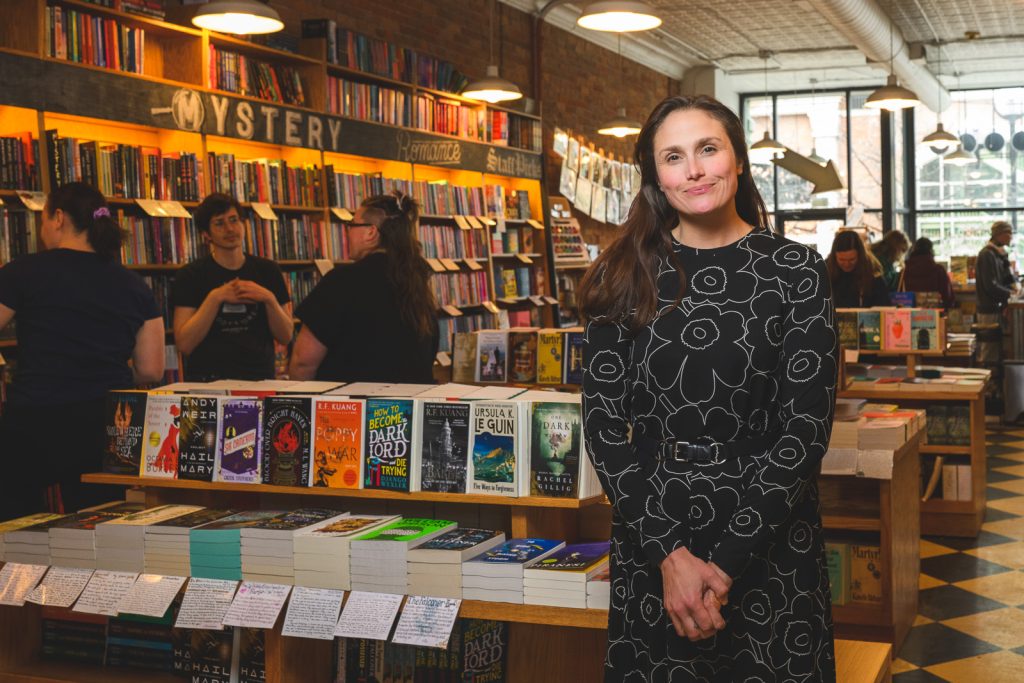
Gustafson understands that trend both as a sign of customers’ trust in Literati staff and an indication that, as Tharp observes, readers seek connection.
“They want to know what other people are reading in their community — and be in conversation with it,” Gustafson says.
“It’s a two-way street,” she adds. “People recommend books to us all the time, and we’re recommending back.”
“We’re not there to be the ‘everything store’”
Ann Arbor and Ypsilanti bookstore owners say they’ve also found success by leaning into the comparatively small size of their inventories.
“Amazon is a behemoth that sells everything, right?” Gustafson says. Literati, she says plainly, is “not there to be the ‘everything store.’”
With limited space, most independent bookstores can’t offer infinite stock.
As Gustafson says, “We can’t carry every single title like the big chain stores of yore used to — nor do we want to. That’s not our goal. Our goal is to create experience where people can discover new authors and new writing.”
Like other independent bookstores, Literati curates its book selection based on what the surrounding community seems to want. Gustafson says figuring that out entails ongoing conversation and frequent mid-stream adjustments.
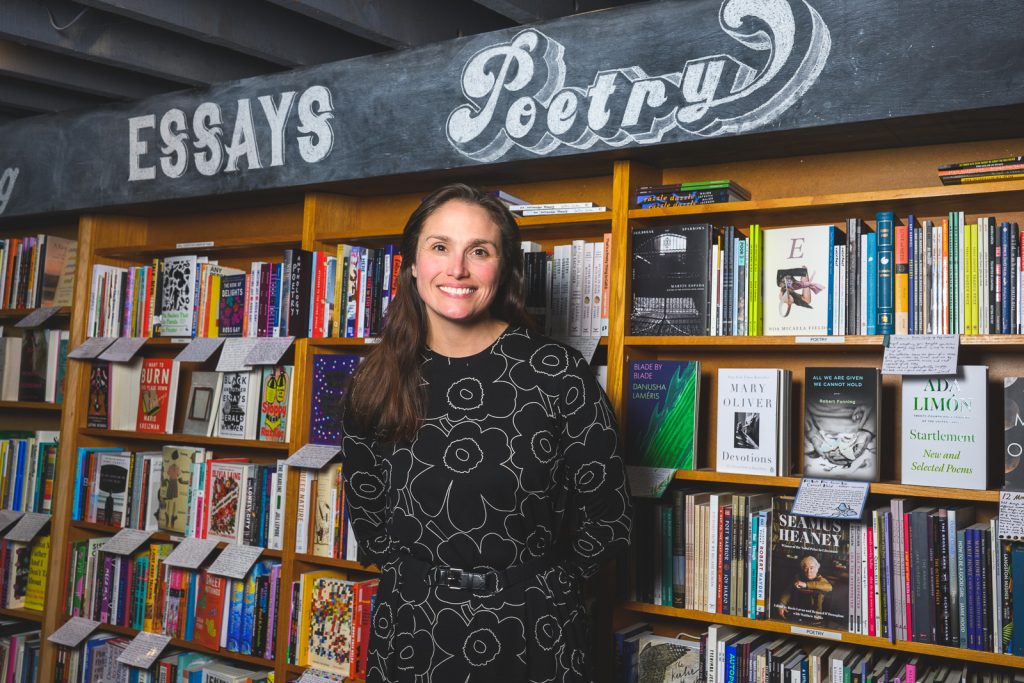
Since opening, for example, Literati has expanded its science fiction and fantasy sections and has opened a new romance section — all as a result of customer feedback. And poetry, which tends not to sell many titles nationwide, has exceeded all expectations at Literati, where it’s become the store’s second-bestselling section. The store has adjusted accordingly: poetry now occupies three or four entire bookcases, Gustafson says, where most stores might devote a single shelf to the genre.
At Book Love Bar, Tharp takes a similar approach, listening to suggestions from Facebook and Instagram followers, as well as from customers who “come in and they say, ‘Oh, my God, I’ve read this book. Have you read this book?’ And I’ll say, ‘No, I haven’t read that one yet. Tell me more about it.’”
Over time, she’s gotten a better sense of “what the people coming into the store are leaning towards, and I have no problem asking them — and I’ll tell you, they have no problem telling me,” Tharp says.
“Competition becomes irrelevant”: Bookselling in the age of Amazon
“I don’t cuss a person out because they like Amazon,” Franklin says.
He knows customers often find lower prices for books on Amazon. He also understands that it might be convenient to place an order for other items as part of the same Amazon purchase. And he knows that other independent booksellers are enraged by the retail giant, whose control of the online market “is getting to monopoly levels,” in Schaumann’s words.
(In fact, in 2023 the Federal Trade Commission (FTC) initiated a lawsuit against Amazon, alleging not only that Amazon is a monopolist but that it has engaged in “punitive and coercive tactics to unlawfully maintain its monopolies,” in the words of FTC Chair Lina M. Khan.)
Franklin says he’s not troubled by any of this.
“That’s just the price of doing business,” he says.
Franklin adds that if customers “want to buy a book from me, that’s cool. If they want to go to Amazon, that’s cool. If they want to go to Book Love Bar, that’s cool. The whole idea is: I want to see you read — and I believe everything else is going to take care of itself.”
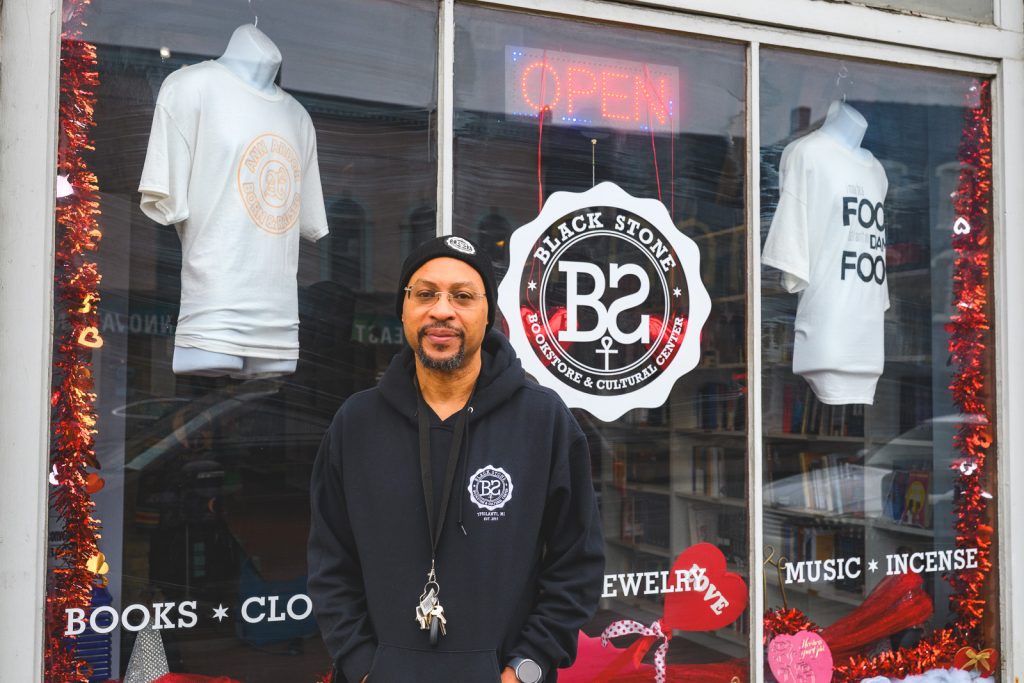
And while Franklin’s no-worries approach might lean more towards the laissez-faire than other booksellers’, one part of his mindset does — somewhat surprisingly, perhaps — remain consistent among other area bookstore owners.
Tharp says plainly, “I do not consider Amazon a competitor.”
For Schaumann, Amazon exists less as a competitor and more as an “existential” threat that occasionally rears its head. As a result, Ann Arbor and Ypsi booksellers have “kind of created our own ecosystem,” she says — one in which many booksellers and customers alike proceed as if Amazon existed in another dimension.
In one way, Amazon is in another dimension — or at least another league. The House Judiciary Committee reported in 2020 that Amazon controlled more than half of the print book market as a whole (both online and offline), and more than 80% of the market for e-books.
“When there’s that kind of discrepancy [among competitors], it becomes a non-issue,” Schaumann says. “Competition almost becomes irrelevant.”
So while Amazon does whatever it will do, she says, independent booksellers focus “on keeping our ecosystem thriving and alive.”
“I’ll come work for her”: The local ecosystem
Behind the register, Gustafson says Literati maintains a list of phone numbers for local bookstores “so that we can send people the right way.”
“If we don’t have a title at hand and a customer really wants it, we’ll call over to Schuler Books or we’ll send them down the street” to West Side Book Shop, Gustafson says.
Schaumann thinks the “general consensus” among local booksellers “is that everyone just wants to help the person find the book they want. … I don’t think any of us are really in it for the money.”
(Even on the buying side, she adds, it’s not unusual for a bookseller to visit an estate sale, check out a book collection there, and, after buying what they need or think they can sell, recommend another used bookseller who might be able to take the remaining stock.)
Franklin and Tharp, whose Ypsi stores are within spitting distance, also refer customers to one another.
“I want to see [Tharp] succeed,” Franklin says, adding, “I told her, even if she outdo me, put me out of business — then she owes me a job. So I’ll come work for her.”
Perhaps unusually among retailers, independent booksellers in Ann Arbor and Ypsi view their industry not as a zero-sum game, but as a mutually beneficial community. Or, as Schaumann puts it, area bookstores are “symbiotic with each other.”
Tharp’s shop doesn’t carry used books, for example — and that’s despite the fact that customers have frequently asked her to.
“I say, ‘Not at this time — because there’s a used bookstore next door,’” she says. Then she points them toward Black Stone.
Looking ahead: The bookseller and the boat
Among her own bookshelves, Schaumann frequently comes across books that were originally bought new from Literati or Schuler Books, or bought used from West Side Book Shop or even the Salvation Army, before being re-sold to Dawn Treader.
Some books have a way of “going around and around and around, circulating to the used shops,” she says.
Schaumann even finds herself with stock first sold at her shop decades ago — long before her own tenure there.
“I get books that have Dawn Treader prices in [them] from 20 years ago,” she says.
She doesn’t see that habit changing.
“Bookshops are community hubs, are community spaces,” she says. “… I think they’ll continue to be that.”
Franklin invokes an old parable about a businessman who asks a fisherman why he doesn’t get a bigger boat to catch more fish and thereby make more money so he can retire and get a smaller boat.
“I’m like that guy in the boat,” Franklin says. “I don’t need to go all the way through that to get to where I’m already at.”
Author

Related Articles
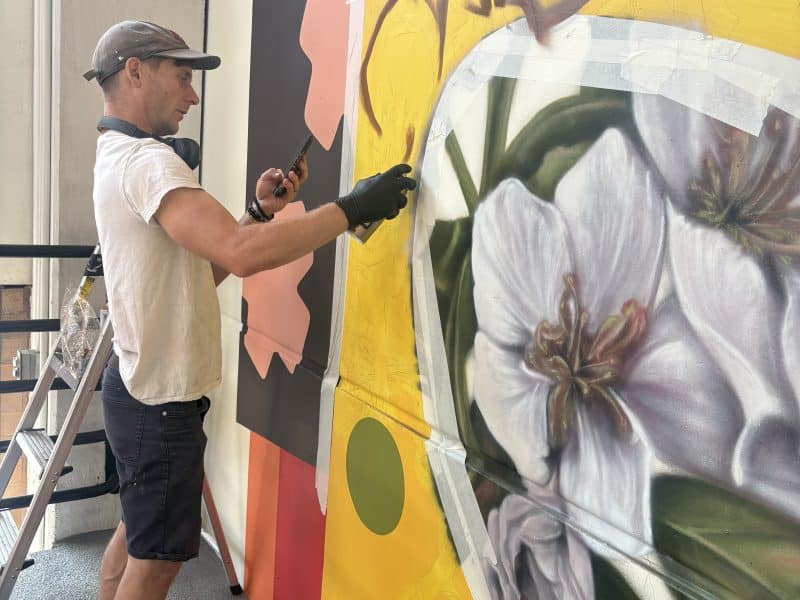
New Ann Arbor public art will guide visitors from parking to farmers market
A new public art installation in downtown Ann Arbor aims to guide pedestrians between the Ann Ashley parking structure and the Ann Arbor Farmers Market.
Ypsi Pride returns with July date, longer hours, expanded programming
Ypsi Pride will move from its longtime Friday evening June time slot to a longer Saturday schedule on July 18.
After 30 years, Michigan Celtic festival is bigger than ever
For three decades, the Michigan Celtic festival has celebrated the traditions, music, and heritage of Celtic cultures while strengthening the ties between Saline and its Welsh sister city.


