
Pub sing brings British tradition of communal a cappella song to Ann Arbor
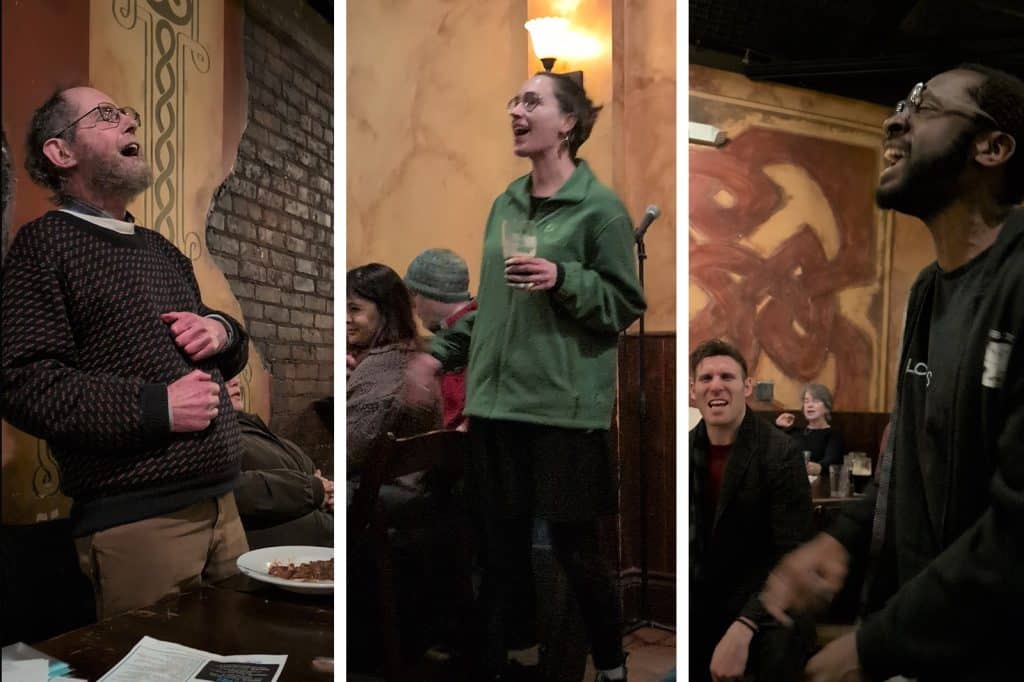
On March 2, the public is invited to join in singing Irish drinking songs, sea shanties, and other traditional tunes as Conor O’Neill’s offers its second pub sing from 7 to 9 p.m. in the Celtic Room.
This story is part of a series about arts and culture in Washtenaw County. It is made possible by the Ann Arbor Art Center, Destination Ann Arbor, Larry and Lucie Nisson, the University of Michigan Arts Initiative, and the University Musical Society.
On March 2, the public is invited to join in singing Irish drinking songs, sea shanties, and other traditional tunes as Conor O’Neill’s, 318 S. Main St. in Ann Arbor, offers its second pub sing from 7 to 9 p.m. in the Celtic Room.
Event organizers Forrest Hejkal and Laura Crouch say pub sings, in which participants collectively sing along to a variety of a cappella songs, might be a more common occurrence in the British Isles, where the tradition originated. However, they hope to see the trend catch on here. The events are free and informal, Hejkal and Crouch say: there are no assigned seats, no need to RSVP, and no sign-up sheets.
Participants take turns starting the group off with a song — often, Irish drinking songs and sea shanties, though Hejkal and Crouch have also been working in folk songs of other traditions, as well as the occasional original by local songwriters.
“Anyone can stand up and start singing something,” Crouch says.
Sometimes the leader of a song might take a moment to teach the crowd the chorus; other times, Crouch says, “They’ll just launch in and people will catch on.”
The atmosphere is not intended to be contained within “a hushed room,” Crouch says. “It can get rowdy. People are chatting and also singing and ordering food and drinking, so it’s a very social atmosphere.”
“The goal of it is never to be concert-like,” Hejkal adds. “The goal is a community event.”
Without instruments, participants rely on their voices alone, which makes the event “really universal and accessible,” Hejkal says: joining in doesn’t depend on prior knowledge of an instrument.
The communal aspect is “really important,” Crouch adds. “It’s all about the joy of singing together as this huge room.”
Hejkal says singing together “feels like an intrinsic part of being human.”
“In most of our human history, song was a communal thing, not a performance type of art form,” he says. “We sang as we worked. We sang as we played.”
Sea shanties, for example, were originally sung by sailors at sea, the song “coordinating [their] movements,” Hejkal says, to create a sense of “that togetherness, that joyfulness.”
Hejkal goes a step further, connecting this history to ongoing resistance movements that rely on collective action for strength and longevity.
“The thing that makes those resistance movements effective is people knowing their community and having strong relational bonds,” he says.
It’s essential, Hejkal adds, that “that we are regularly spending time together, that we know each other, we trust each other, we trust our community, we trust our neighbors.”
“Being in a room, singing together communally,” he says — rather than simply watching a professional perform — “is absolutely a part of that.”
“I will unabashedly say I’m doing this to fight fascism,” he says.
For Crouch, pub sings can offer an added benefit, one that dips into the therapeutic: she calls the event “a feel-good release for people to be processing things right now.”
Hejkal and Crouch are hoping to schedule a pub sing on the first Monday of every month, though that scheduling will depend on turnout for the second event.
Turnout for the first pub sing was “phenomenal,” Hejkal says: “We filled every chair.”
The first pub sing featured songs like “Rattlin’ Bog,” sea shanties like “General Taylor,” classic drinking songs like “Wild Rover” and “Black Velvet Band,” and more modern classics like “Barrett’s Privateers.” They ended with the traditional “Parting Glass,” which Hejkal hopes to make into a ritual. The “lovely farewell song,” he says, is “a great way to end the night.”
Author

Related Articles
Ann Arbor artist hosts annual outdoor sale to benefit public art program
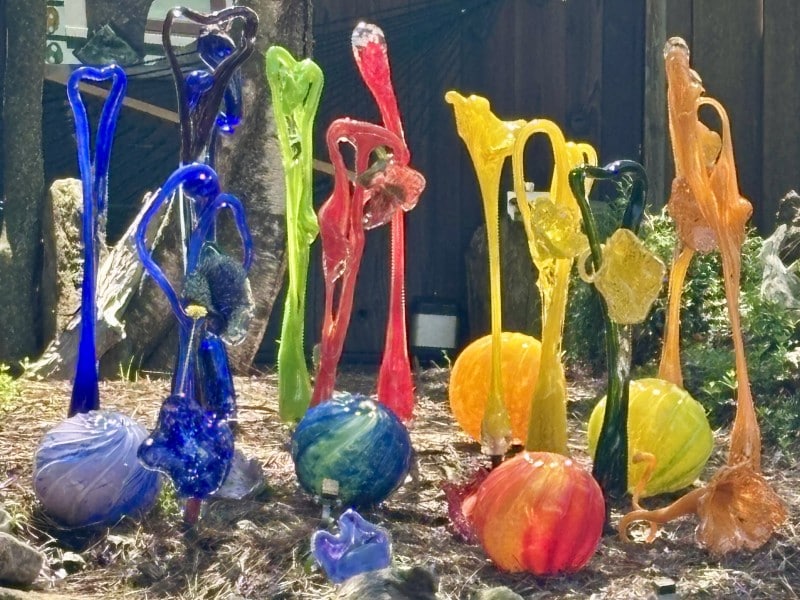
Glass artist Larry Nisson hosts an annual sale of his work from noon to 5 p.m. on Sept. 27 at his Ann Arbor home.
The Ann Arbor Symphony Orchestra brings its concert series to Ypsi for the first time
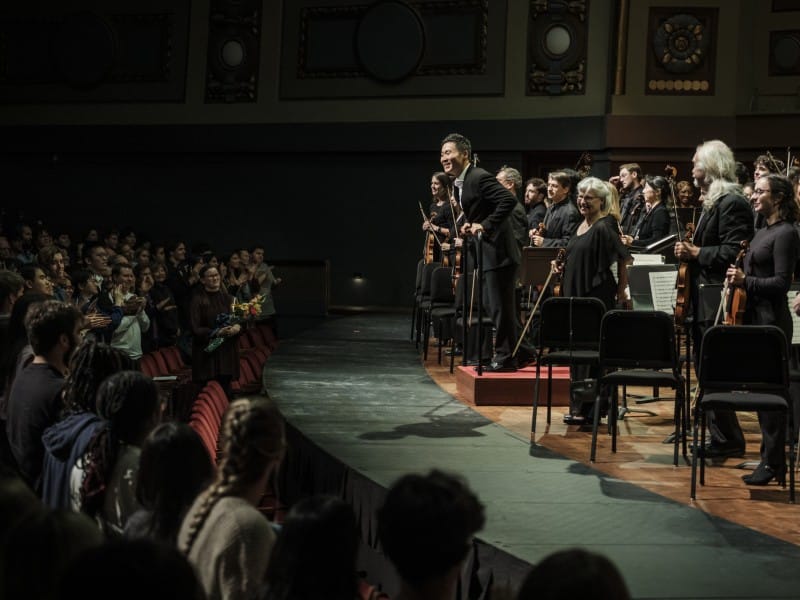
The 2026-27 season offers many firsts for the Ann Arbor Symphony Orchestra, from an Ypsilanti footprint to a live accompaniment of Disney’s ‘Frozen.’

Michigan League of Handweavers’ biennial show in Ann Arbor will feature myriad disciplines
From weaving to doll-making, a broad range of craftsmanship will be featured in both exhibitions and public demonstrations at the Michigan League of Handweavers’ 23rd Biennial Fiber Show.


