“Black Birth Joy” puts Black childbirth and motherhood in the spotlight at University of Michigan
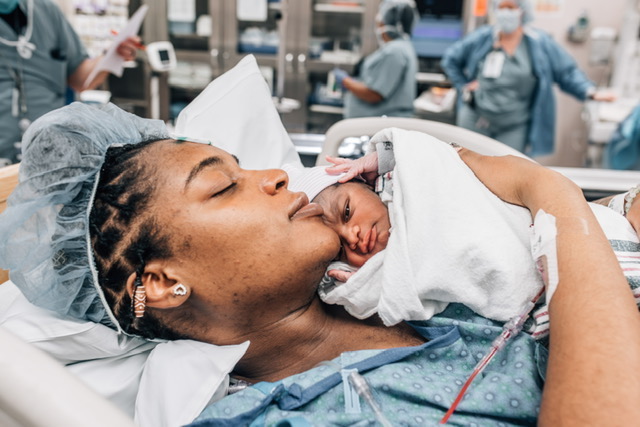
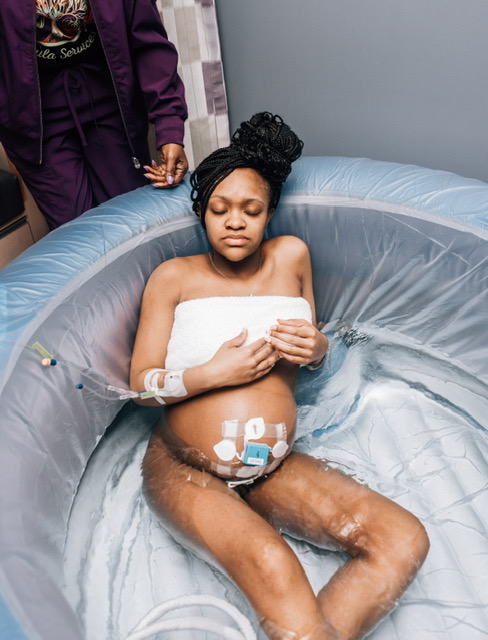
More than 30 photographs by award-winning photographer Tiana Lashae challenge traditional narratives about Black childbirth and celebrate the families behind each birth.
This story is part of a series about arts and culture in Washtenaw County. It is made possible by the Ann Arbor Art Center, Destination Ann Arbor, the University of Michigan Arts Initiative, and the University Musical Society.
Black childbirth is often discussed through statistics, health disparities, and stories of trauma. award-winning photographer Tiana Lashae wants people to see another side of the experience: the joy, strength, connection, and humanity of Black motherhood. Her photography exhibition, “Black Birth Joy: Motherhood Portraits by Tiana Lashae,” brings more than 30 photographs to the University of Michigan’s Lane Hall Exhibit Space, offering viewers an opportunity to view childbirth through the eyes of the mothers and families who lived it.
For Lashae, the project is about more than capturing beautiful moments. It is about changing how Black birth stories are told and ensuring that positive, empowering experiences are not overlooked.
Inspiration for the exhibit came in 2023, when Lashae was hired to photograph the birth of a Black mother expecting twins. One of the babies was breech, and the mother was determined to avoid a cesarean section. She trusted her body and believed Baby B would turn after the first baby, Baby A, was born. The mother ultimately delivered both babies vaginally, with Baby B arriving less than 10 minutes after Baby A.
“It was incredible to witness the collective energy of everyone working together to assure her and affirm her desires,” Lashae says.
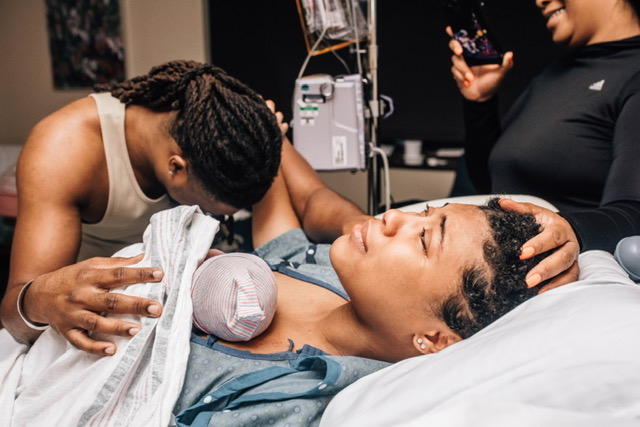
The experience changed Lashae’s perspective and inspired her to document more positive birth experiences, particularly as conversations surrounding Black maternal health continue to highlight disparities and challenges facing Black families.
“I felt the need to help shift how our birth stories are told in order to combat the troubling statistics and maternal health care crisis that exists for Black families,” she says.
Lashae believes the conversation about Black maternal health should include the difficult realities, but that those experiences should not be the only stories people hear.
“I believe that our voice is missing, the joy is missing, and the whole truth about Black childbirth is missing,” she says. “These stories that induce fear are real and should not be omitted from the truth, but…should not be the sole narrative.”
Through her photographs, Lashae captures moments of tenderness, family support, faith, and the connections that surround childbirth. She wants expecting Black families to see what an affirming birth experience can look like while encouraging birthworkers and health care professionals to consider how they support mothers.The photographs also highlight the important role family members, doulas, midwives, and other forms of support can play in helping women navigate childbirth.
“Birth isn’t meant to be experienced making all the hard choices alone,” Lashae says.
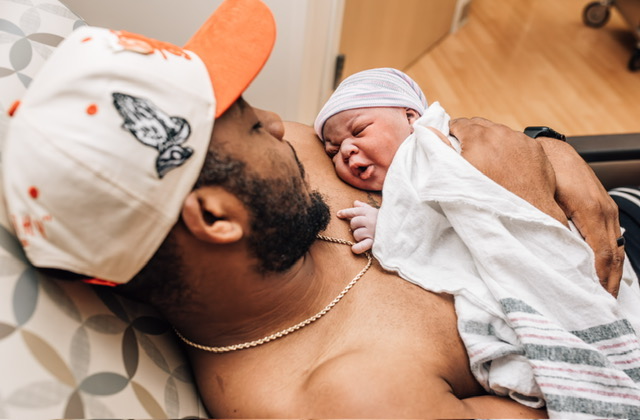
One photograph, titled “Rooted in Gratitude,” holds particular meaning for Lashae. The image captures a moment involving Brianna, her first client as a doula. Lashae photographed the birth while simultaneously providing doula support. The photograph depicts Brianna’s partner praying over and praising her as she expresses tears of joy and gratitude. The moment is especially meaningful because the family’s baby, Jahro, lived only four hours after the photograph was taken.
“Every time I view it, I feel the energy that existed,” Lashae says. “Knowing that baby Jahro lived only four hours from this moment will sit with me forever.”
For Lashae, representation also means allowing Black mothers and young girls to see themselves reflected with dignity during childbirth. She recalls seeing a young Black woman and her toddler-age daughter looking at the photographs during the exhibition’s opening night. The moment reinforced why the work matters.
“They belonged there, and it was something about knowing that although the little girl doesn’t understand, she’s being shown her power,” Lashae says.
Lashae brought her own 10-year-old daughter to the opening. Asked what she thought about the experience, Lashae’s daughter expressed gratitude for knowing she would be in control of her own childbirth when that time comes.
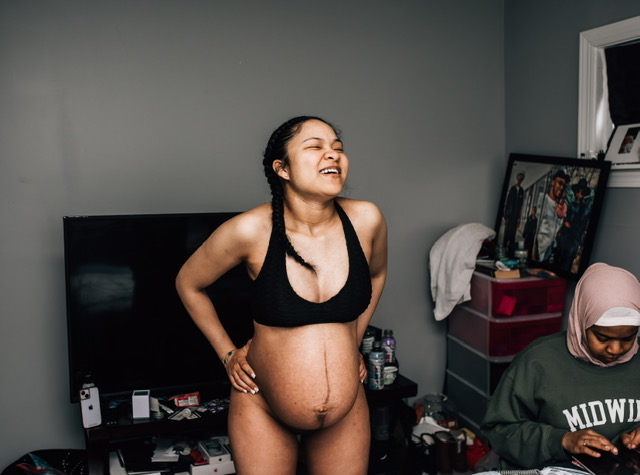
That generational connection is part of what Lashae hopes the project leaves behind. She wants the children featured in the photographs to eventually understand the importance of their voices and the role their stories played in bringing art, health, and advocacy together.
The exhibition also marks the beginning of the University of Michigan’s 2026-2027 academic year of exhibitions centered on maternal health and reproductive justice. It is presented through a collaboration between U-M’s Institute for Research on Women and Gender and the Women’s and Gender Studies Department.
Lashae sees the opportunity to display her work at U-M as confirmation of her responsibility as an artist and birth photographer.
“Honestly, it’s become more vivid that this is exactly where I’m supposed to be,” she says. “My work lives at the intersection of photography, storytelling, and advocacy.”
“Black Birth Joy: Motherhood Portraits by Tiana Lashae” is on display through Jan. 15 at the Lane Hall Exhibit Space, 204 S. State St. in Ann Arbor. The exhibition is free and open to the public Monday through Friday, 9 a.m. to 4 p.m. Tours and class visits can be scheduled by emailing LaneHallExhibits@umich.edu.
Related Articles
Riverside Arts Center hosts fourth annual Holiday Art Fair
The event brings together more than 60 local artisans for a fair on Nov. 21 and Nov. 22.

AADL celebrates books and authors with annual Printmaking Festival and A2 Community Bookfest
The free events will feature talks, hands-on activities, and dozens of vendors on Saturday, Nov. 14 and Sunday, Nov. 15.

“Where steel sharpens steel”: Inside Ypsilanti’s decade-long hip-hop haven
As hip-hop artist Diont’e Visible prepares to release his new album, Ypsi’s long-standing open mic series, The Dojo, founded by Harlin Duke Newcomb and housed by the Regal Beagle, celebrates 10 years.