
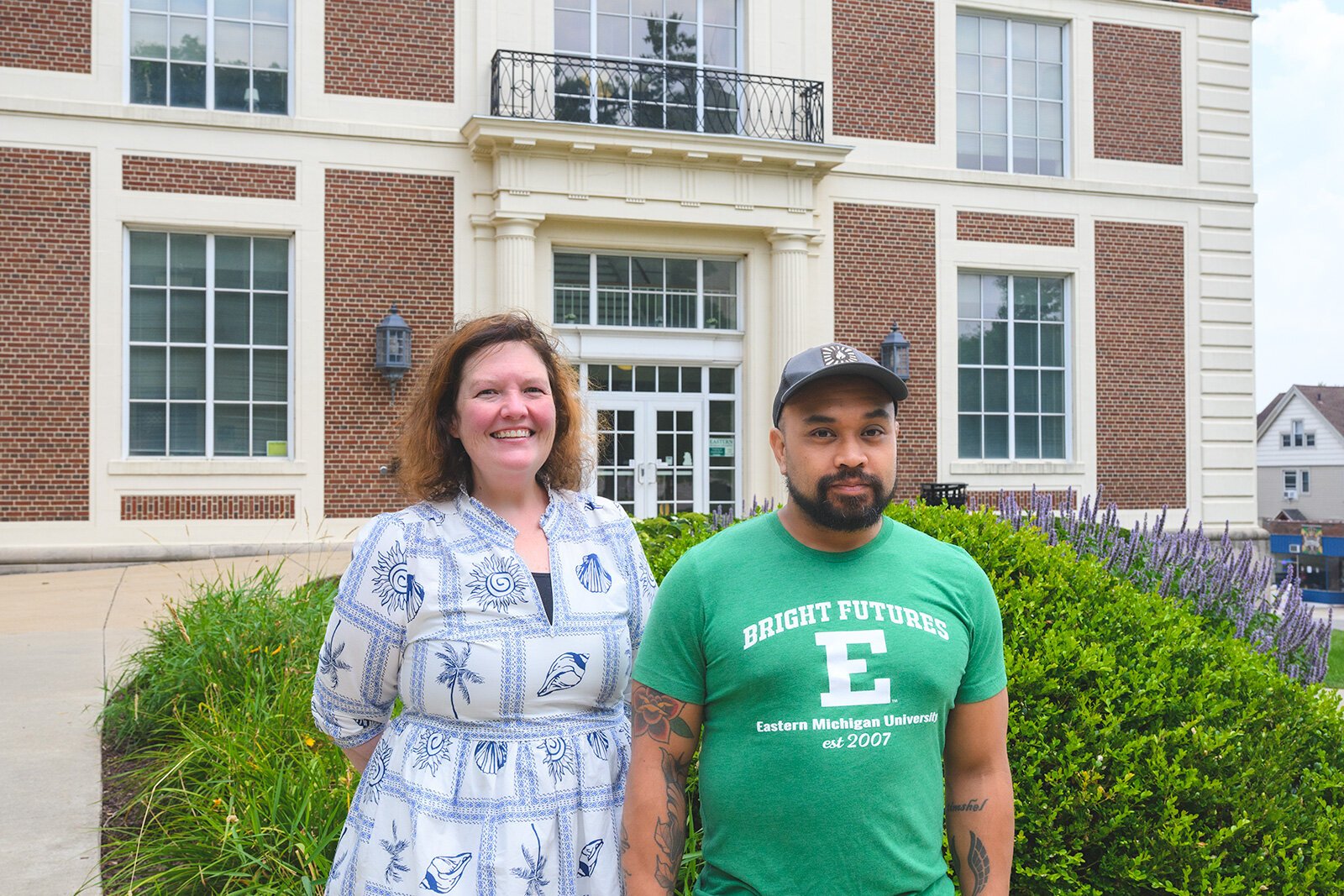
The program, which supports more than 5,000 students in 22 schools, has had its funding temporarily restored through summer 2026, following a national hold on nearly $7 billion in federal funding.
Despite facing federal funding uncertainty, the staff of Eastern Michigan University (EMU) Bright Futures remain fiercely committed to the students and families they serve across southeast Michigan. The after-school program, which supports more than 5,000 low-income and at-risk students in 22 schools, has had its funding temporarily restored through summer 2026, following a national hold of nearly $7 billion in federal funding for after-school and summer programming at the beginning of July. Despite uncertain funding for next summer, Bright Futures continues to provide essential services that many communities rely on for stability, nourishment, and academic support.
“The way our funding works, we either can run all of our programs or none of them,” says Bright Futures Project Director Suzie Staley. “The communities we’re in are already drastically underserved and need resources, and the pause essentially forced families to choose between working or having child care for their kids.”
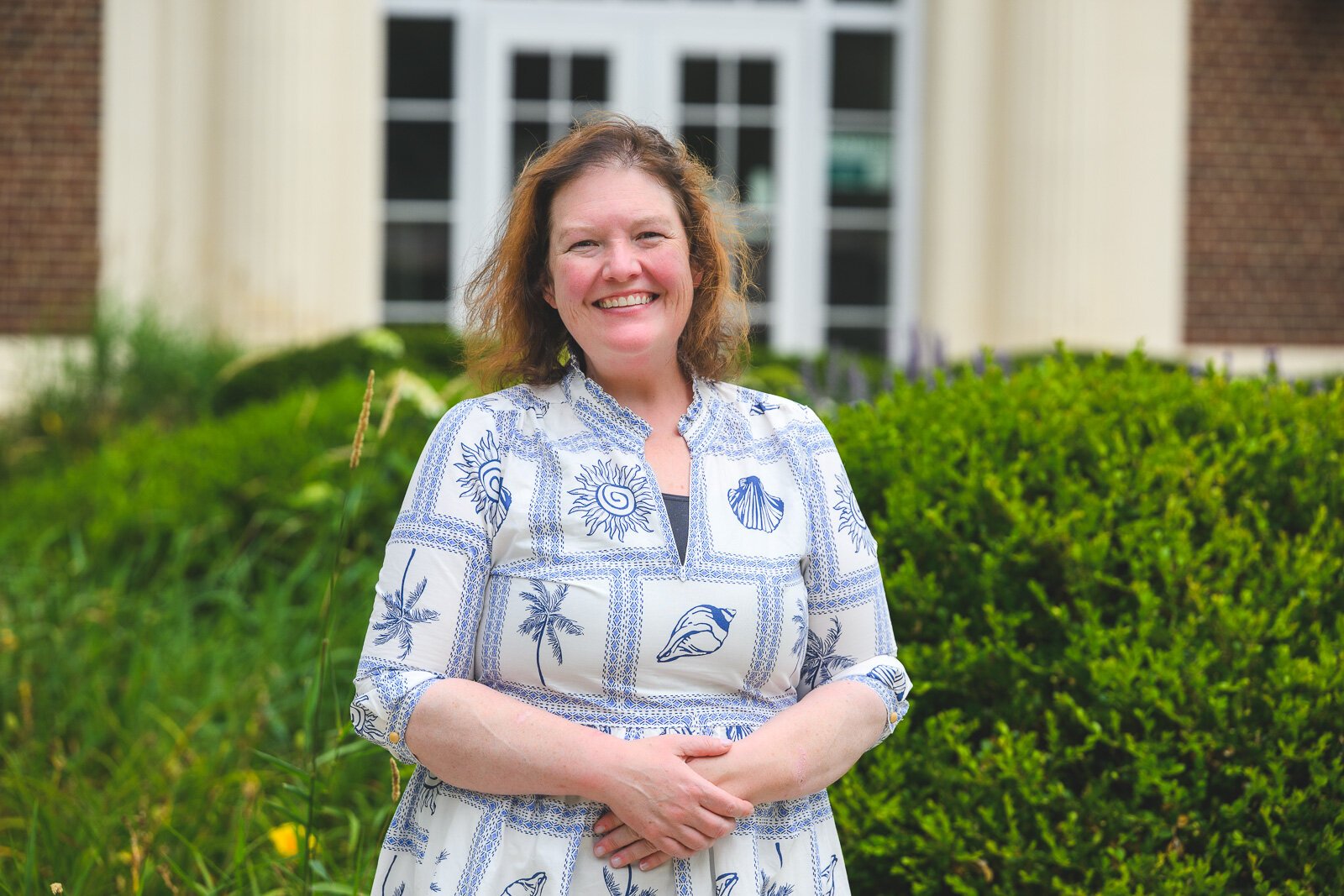
Suzie Staley.
Jessica “Decky” Alexander is the director of Engage@EMU, which houses Bright Futures. She explains that as a state-certified 21st Century Community Learning Center (CCLC), Bright Futures’ funding had already been awarded, but not disbursed, prior to the hold announced on June 30. At the time of the announcement, Alexander, Staley, and educators across the country were given no timeline as to when the funding would be re-established, if at all. Alexander says the decision to hold the funding “lacks substance,” and that it doesn’t make sense for an administration to limit opportunities for adults to contribute to their communities due to lack of child care.

Jessica “Decky” Alexander.
“The program was created to help parents work and to give their children somewhere to go, and that’s why it still exists today,” Alexander says. “The families we serve are people who may not have the same resources or access but want to contribute either way. Really, programs like Bright Futures are an investment into the economy.”
While funding has since been released, Staley explains that the pause led to a number of issues throughout the current summer camps Bright Futures operates. She describes the effects of the funding pause as “dominoes,” with students losing more than just educational opportunities. Contracts with educational vendors and other guests were up in the air, field trips were canceled, and camp supplies were extremely limited due to a lack of funds.
“We provide the best-quality data-driven model, and we do it for under $1,000 per student,” Staley says. “We want people to be able to contribute to their communities in the workforce, and not force their hand to choose between isolating themselves and their families or being able to work and provide their students with high-quality education and care.”
Bright Futures does more than offer after-school homework help, enrichment activities, and educational field trips. It also serves as a critical lifeline for students who might otherwise go without. Staley says that at most program sites, students receive at least one meal and a snack, helping to close the nutrition gap for food-insecure families. The program also regularly brings in community members and mentors, building strong local connections and expanding students’ understanding of the world around them. Because Bright Futures is housed on Eastern Michigan University’s campus, staff have a unique opportunity to introduce students to college life early, making higher education feel tangible and within reach.
“Oftentimes, underserved and vulnerable communities have the least access to opportunity,” says Bright Futures Assistant Director RJ Quiambao. “We want to provide that opportunity by taking away the monetary cost of after-school activities and child care, and expose our students to what life as a college student might look like.”
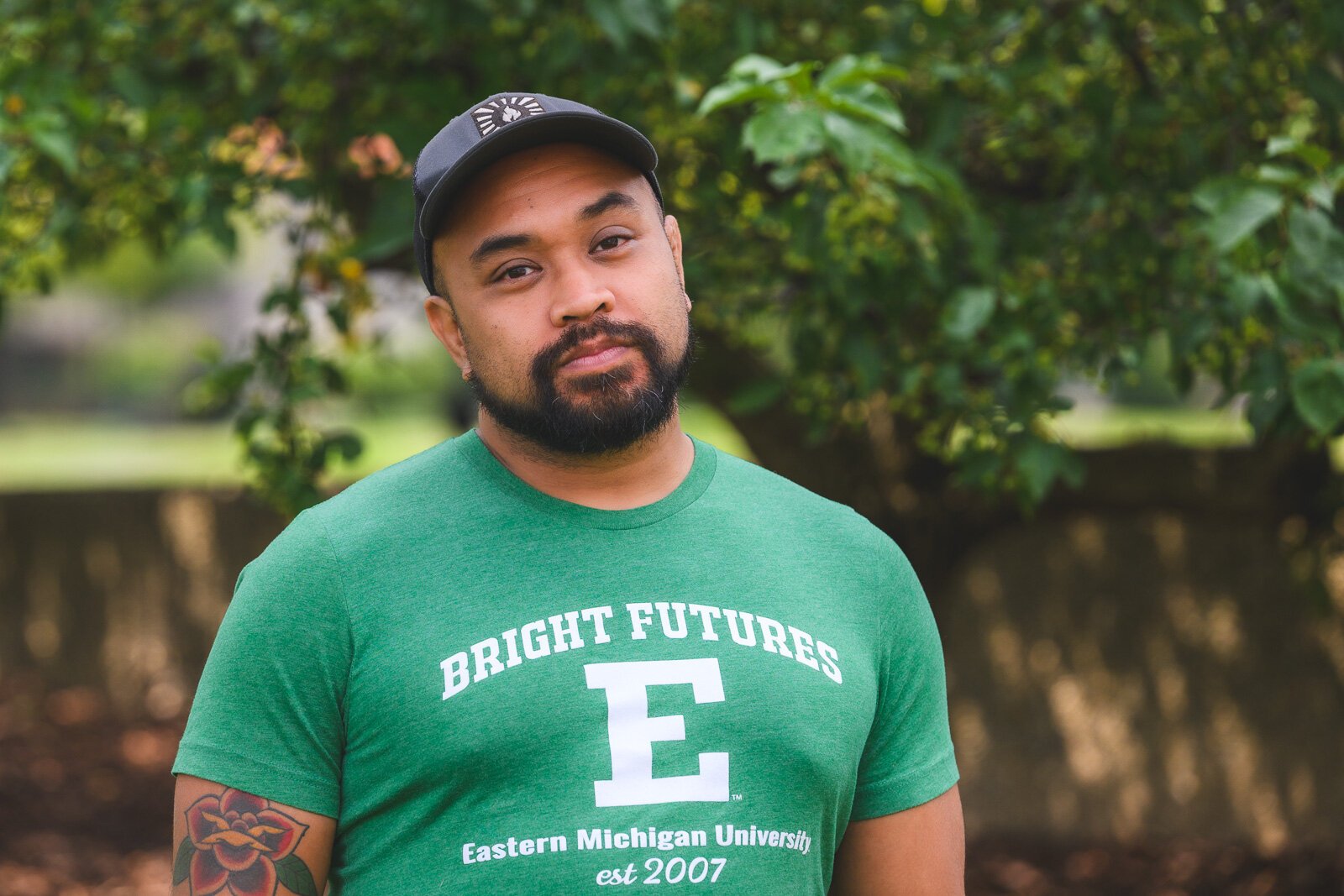
RJ Quiambao.
Many Bright Futures staff members are also alumni of the program, a testament to its long-lasting impact on students’ lives. This unique student-to-staff pipeline reflects not only the deep connections built within the program, but also the drive many former participants feel to give back. Becca Foster and Tiffany Mitchell, both former students turned site coordinators, now strive to offer their students the same transformative experiences they once received.
“You want the kids to have unlimited supplies, help them explore, and see them do amazing things,” Foster says. “Having to tell them we couldn’t do things because we didn’t have the supplies was devastating.”
“As a former Bright Futures student, the different things that were offered in my program opened doors to things like hobbies, skills, and careers,” Mitchell says. “When you lack what you need to inspire a student, it limits what they feel like they can be, and that becomes a cycle.”
As uncertainty looms over the future of Bright Futures, program leaders have been working urgently to explore what it might take to keep the program’s doors open without federal support. They’ve considered difficult possibilities, such as cutting vendor contracts, applying for new federal grants, and even the idea of charging families for formerly free services. These emergency planning efforts underscore just how precarious the situation has become for a program that has long served as a free, reliable resource for thousands of students and families.
“Because this is a federally funded program, we would have to reimagine what the program is for us to operate at any level without this funding,” explains Alexander. “School districts are also having their funding limited, private foundations only have a certain amount of capital, and our budget is well over $3 million. No one has extra dollars to float us.”
While the option of a paid model for Bright Futures programs wasn’t entirely dismissed, staff members like Quiambao took great issue with the possibility. For many families the program serves, even a modest fee could mean going without vital support. Shifting to a paid model, staff argue, would undermine Bright Futures’ mission to make opportunity accessible regardless of income.
“I’m repulsed by the idea of asking communities in need to pay for services that used to be free to them,” Quiambao says. “With our level of staffing and the supplies we have access to, it would just be unaffordable to switch to a paid model if we needed to.”
Because Bright Futures staff work so closely with students every day, they often become trusted adults who can identify challenges that extend beyond the classroom. This consistent presence allows them to connect families with critical resources, including mental health support, food and housing assistance, and crisis intervention. For many students, the program isn’t just about academics. It’s a stable, supportive part of their daily lives.
“We’ve been in these schools for almost 20 years,” Quiambao says. “We might be the one stable thing in a student’s life. Think about that being taken away.”
As former Bright Futures students, Mitchell and Foster credit the program with helping them grow into confident leaders, skilled communicators, and compassionate adults with a broader view of the world. The program didn’t just offer them a safe place after school — it gave them life skills, friendships, and support during difficult times. Now, as staff members, they deeply value the program’s ability to intervene when students or families are struggling, offering resources and stability that traditional classrooms often can’t.
“I’ve learned from my time with Bright Futures and being an educator that students don’t just act out,” Foster says. “I love being an educator, but you’re able to help provide for students much more deeply in Bright Futures because you have more time and resources.”
Although Bright Futures’ funding for this year was restored, program leaders remain anxious about next year’s funding.
“We are hopeful that the Senate appropriations committee put 21st CCLC in their proposed spending bill for 2026-27,” Staley adds. “At this time we need [as much] support and advocacy from the community as possible.”
As Bright Futures faces an uncertain future, its staff and alumni say there’s a lot at stake. Foster, Mitchell, and their colleagues feel that losing the program would deny care, connection, and hope to communities that rely on it most.
“If you take away our program, there will be a gap in identifying dangerous issues that students and families are going through,” Mitchell says. “Staff have such personal relationships with these students, and we’re able to help connect families with local resources in ways that teachers in the schools can’t always do.”
“When we don’t go deep in our investment with our families, it doesn’t last,” Staley says. “They deserve our best, and without the proper tools for our world-class staff, we’re failing our young people.”
Photos by Doug Coombe.
Author

Related Articles
Washtenaw My Brother’s Keeper hosts annual gala on Sunday
The nonprofit’s fourth annual gala will be held Sunday, Oct. 18, at EMU’s Student Center Ballroom, with the theme Keepers & Kicks.

Michigan Folk School holds annual Folk Festival with free demonstrations of traditional skills
The Michigan Folk School holds its free annual Folk Festival on Saturday, Oct. 17, at Staebler Farm County Park.

State of the Arts program brings U-M faculty artists to communities across the state
U-M’s State of the Arts program, launched by the Arts Initiative, aims to bring meaningful experiences in the arts to communities around the state.


