
Ann Arbor

Concentrate Speaker Event: Transit Corridors Of Opportunity

How we get from here to there is important. But so is what's in between. As we take stock of how much of our community has been set aside for cars new ideas are emerging about transit corridors and how they can become more people-focused. This month, Concentrate's Speaker Series invites Anya Dale and Richard Murphy to talk about the importance, challenges, and opportunities of developing the region's transit corridors. It takes place on Thursday, March 31st. Sign up now!

U-M’s $56 million Alice Lloyd dorm revamp underway

The idea that a college dorm is simply a place to bed down has been given the boot. With major renovation projects come the chance to transform the bunkhouses of yore into complete live/learn communities of today, delivering all the mod-cons that students can buy with their housing dollars.  This spring the University of Michigan is starting on a $56 million renovation of the 1949-era Alice Lloyd residence hall, according to documents from the university's Board of Regents. The retooled 176,000-square-foot property, where approximately 560 students live, will include rooms for music and dance practice, an art studio, and gathering areas. The former dining hall and kitchen (students now eat in the communal Hill Dining Center) will be repurposed, and student rooms and bathrooms are set for a makeover. Included in the laundry list of items are new HVAC systems, insulation, plumbing, fire detection and suppression systems, and Wi-Fi. Work should be done in time for the 2012 fall term.Representatives from U-M and from Troy, Mich.-based architectural firm Integrated Design Solutions, which did the schematic design, declined to comment.The planned new face of Alice Lloyd can be likened, albeit on a much smaller scale, to the university's new $175 million North Quadrangle Residential and Academic Complex, which opened in fall 2010. In addition to dorm space for 450 students, it houses academic offices, multi-cultural learning communities, and a TV production studio. North Quad will be hosting a public open house on March 31.Source: University of Michigan Board of RegentsWriter: Tanya Muzumdar

U-M’s Ross School Of Biz gets first female dean

Alison Davis-Blake didn't move from Minnesota to Michigan for the warmer climes. She moved here to become part of a small but growing elite: Women deans of university business schools. Stepping into the top slot at U-M's Ross School of Business, she makes history for the second time (the first was when she became the dean of the University of Minnesota’s Carlson School of Management.Excerpt:"Women deans are becoming an increasingly common sight on business school campuses, as I wrote about two years ago in an article on the topic. Of the 668 deans at AACSB-member schools in the U.S. in 2009, nearly 17 percent were women. At the time, I interviewed Davis-Blake about some of the unique challenges women deans face. Here's an excerpt from my conversation with her:"I don't worry about people actually saying to my face: 'I won't deal with you because you are a woman,' that has never indeed happened," Davis-Blake said. "But there is always that moment, when people say, 'Oh, this person is different from the past five people I've dealt with. I wonder what this will be like.'"Read the rest of the story here.

PWB Marketing hires as it ramps up web-based work

PWB Marketing & Communications had one goal in 2009: stay in business. The Ann Arbor-based firm accomplished that and more, beginning a web-based rebound last year that is carrying through today.The 28-year-old company has watched its definition of integrated marketing evolve and broaden. This has prompted it to find new ways to integrate online and traditional media, such as making sure social media and billboards are on the same page."There are ways to brand your YouTube page so it looks like your website and its brand," says Sean Hickey, COO of PWB Marketing & Communications. "There are a lot of doors to the message now. You have to make sure all of your doors are covered."PWB Marketing & Communications' new philosophy has allowed it to hire one person to focus on social media over the last year as it has added new clients and grown business with existing ones. The agency expects to add a few more staffers this year as it continues to expand its client list and even bring a few dormant accounts back to life.Source: Sean Hickey, COO of PWB Marketing & CommunicationsWriter: Jon ZemkeRead more about Metro Detroit's growing entrepreneurial ecosystem at SEMichiganStartup.com.

Epsilon Imaging adds jobs, preps cardiac imaging software launch

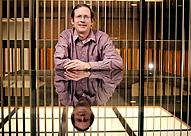
Epsilon Imaging is ramping up its operations as the Ann Arbor-based start-up prepares to launch its principal product, a stress echo exam for cardiologists.The nearly 3-year-old company spun out of Pixel Velocity in 2008 to develop an ultrasound for cardiac imaging that quantitatively measures the strength and weakness of the heart's muscles. A combination of National Institutes of Health and Small Business Innovation Research grants funded software development for the new technology."Over the last year we have had some major breakthroughs," says Eric Sieczka, president & CEO of Epsilon Imaging. "That has allowed us to bring the product to the market later this year." The company has hired two people in the last year, expanding its staff to 10 employees and four consultants. Sieczka expects to add a few more jobs as it finishes fundraising for the product's commercialization and begins sales later this year.Epsilon Imaging, which made it to the semi-finals of the Accelerate Michigan Innovation Competition late last year, is in the latter stages of hammering details for partnerships to complement its product launch. Sieczka expects this will help Epilson Imaging's technology gain traction quickly. "We expect this to become a significant player in a few years," he says.Source: Eric Sieczka, president & CEO of Epsilon ImagingWriter: Jon ZemkeRead more about Metro Detroit's growing entrepreneurial ecosystem at SEMichiganStartup.com.

NextGen Metabolomics develops blood reading tech, to add 8 jobs

If we are what we eat, then the bibliography of our life is in our blood. NextGen Metabolomics is working on new technology that will tell us where the best information is today and what's not worth reading."There has been a real need that isn't being met in the market today," says Felice de Jong, CEO of NextGen Metabolomics. "Metabolomics is the fastest growing sector in life sciences today."NextGen Metabolomics' technology will read the information in the blood to help diagnose diseases like cholesterol and diabetes. De Jong says the product will distinguish itself because it can cut through all of the information clutter in blood to the valuable 20 percent that relates to disease and illness. "Instead of hours to interpret the data, it only takes minutes," de Jong says.The Ann Arbor-based firm got its start last June and has received two patents. The two-person team, which made the semi-finals of the Accelerate Michigan Innovation Competition, is currently fundraising so it can finish developing and licensing the technology and building applications around it. De Jong expects her company to ramp up staffing to 10 employees by next year and 25 within a few years.Source: Felice de Jong, CEO of NextGen metabolomicsWriter: Jon ZemkeRead more about Metro Detroit's growing entrepreneurial ecosystem at SEMichiganStartup.com.

U-M student-run Wello invents a better water carrier for developing countries

Blood, sweat and tears have gone into the development of Wello, an Ann Arbor-based start-up led by University of Michigan students. Well, at least a good bit of sweat.Cynthia Koenig, an MBA student and founder of Wello, has lived in Central America and Southeast Asia and found one common characteristic in all those third world countries -- she had to carry her own water long distances on a daily basis. It didn't take long for inspiration to hit Koenig."It's not easy, it's time consuming (2-4 hours a day) and I'm not very good at it," Koenig says. "It's such a huge burden, especially on girls."Which leads us to the WaterWheel, a 20-gallon drum that easily transports four to five times the amount possible using traditional methods of water collection. The three-person team behind Wello developed the WaterWheel and plans to sell 5,000 of them in India starting this summer, which should help bring water to 40,000 people. "There is a lot of opportunity for social entrepreneurship in India," Koenig says. She points out that even though India is a developing country it still has the infrastructure and entrepreneurial freedom to make Wello successful.Wello also received a $10,000 global health prize and People's Choice Award in the Global Social Entrepreneurship Competition at the University of Washington's Foster School of Business to help further this project. Koenig expects to expand the team to 12 people by this summer as they ramp up production and begin distribution.Source: Cynthia Koenig, founder of WelloWriter: Jon ZemkeRead more about Metro Detroit's growing entrepreneurial ecosystem at SEMichiganStartup.com.

¡Olé! Ann Arbor Tortilla Factory doubles space

In a palpable sign of the public's growing appetite for tortilla chips and burritos made with fresh corn tortillas, the Ann Arbor Tortilla Factory has just moved into a new space at the Oxford Commerce Park that, at 8,000 square feet, is double the size of its former headquarters.Guadalupe Quetglas, who co-owns the company with her sister Andrea, says the new facility will allow for production increases of up to three or four times what the company could produce in its old quarters. The sisters launched the company in 2007 because they couldn't get fresh tortillas, Quetglas explains. The chips and tortillas are chemical and preservative-free and made with 100% corn. Also on offer is salsa (seasonally), and a new gluten-free corn breading in April. "At this point most of the places that make tortillas, they use corn flour. Everything [we do] is with corn," Quetglas says. "We use a traditional method of the tortilla and the flavor is quite different. Good for your bones!" The larger space will allow for the purchase of a second industrial-sized kettle to aid in the time consuming preparation process. The non-GMO corn has to be cooked and steeped for 12-14 hours, Quetglas says. Tortillas are distributed the day they are made. At the end of 2011, the company will apply for a $250,000 Small Business Administration loan for the purchase of a new fryer. Ann Arbor Tortilla Factory foods are available in outlets including all of Michigan's Whole Foods and Plum Market stores, Arbor Farms, Zingerman's, and Ann Arbor Kroger locations. The new capacity will allow its goods to be sold in Whole Foods markets in Chicago and Indiana, plus more Krogers and specialty food stores. One New York City store, the Bklyn Larder, carries the chips, and Quetglas hopes to find a New York-area distributor to reach that market as well. Source: Guadalupe Quetglas, co-owner of Ann Arbor Tortilla FactoryWriter: Tanya Muzumdar

City of Ann Arbor’s IT head named a Premier 100 Leader

In its Class of 2011 Yearbook, the city of Ann Arbor's Director of IT, Dan Rainey, was listed as a ComputerWorld "Honoree" in its list of Premier 100 IT Leaders. Excerpt: Coolest current project: "Getting iPads to work as Windows thin clients. We are using the Wyse PocketCloud remote desktop system." Boldest IT prediction for the next 5 years: The cloud computing environment for government will be provided by state and large local governments, with agencies becoming expert providers of some services and consumers of others. Data centers will be on the way out for most local governments, and interagency collaboration will be the new way of doing business. Read the rest of the story here.

WSJ spotlights Recellular’s rise to top of electronic recycling market

When it comes to refurbishing and reconditioning cellphones, tablets, e-readers, and iPads, Dexter-based Recellular dominates the market. Yeah, old news to Concentrate readers. Nice to see the Wall Street Journal finally catch up. Excerpt: "Until recently, the privately owned company acquired phones only in bulk, getting them from charities that held collection drives and retailers or others with returned merchandise. Now ReCellular advertises on cable TV that it is willing to buy phones one at a time from individuals via the Usell.com Web site. ReCellular projects that its revenue will grow more than 50% in 2011 from $66 million in 2010. It has raised $20 million of capital from private-equity firms over the past two years. Global sales of used phones total a few hundred million units a year, estimates Andy Castonguay, an analyst at consulting firm Yankee Group. That compares with the 1.6 billion new phones sold world-wide last year, he says. Though a few used-cellphone dealers have been around for decades, the business is expanding now because today's most advanced "smart" phones are costlier to begin with and can fetch hundreds of dollars even after a year or more of use. Meanwhile, a weak economy encourages thrift, and some people seek out simpler phones made years ago to avoid having to learn new routines." Read the rest of the story here.

Our Partners

30044
30045
30046
30047
30049
Washtenaw ISD logo
Eastern Michigan University
Ann Arbor Art Center
UMS
U of M Arts Initiative
Engage EMU

We want to know what's on your mind.

Close the CTA

Don't miss out!

Everything Ann Arbor and Ypsilanti, in your inbox every week.

Close the CTA

Already a subscriber? Enter your email to hide this popup in the future.