
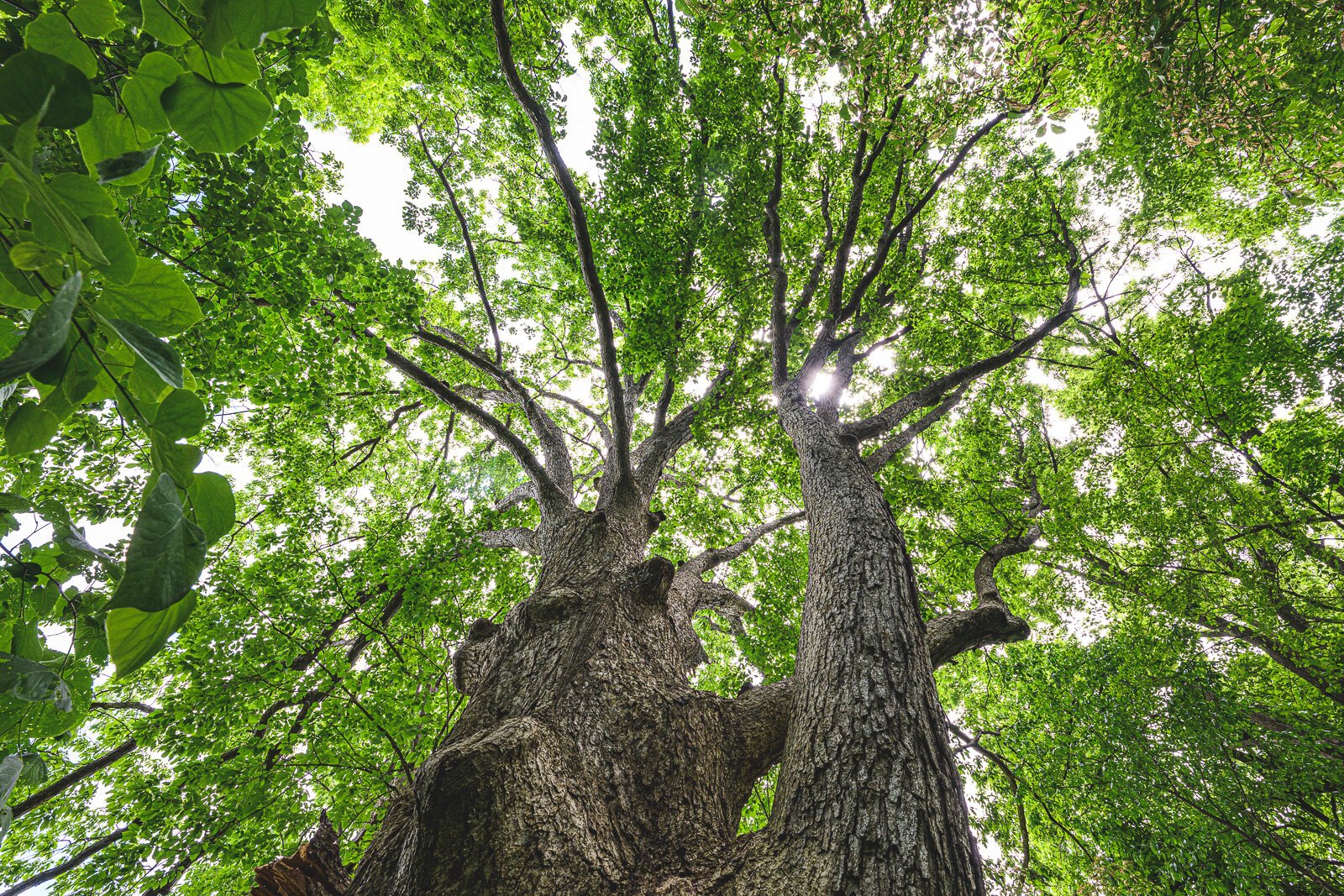
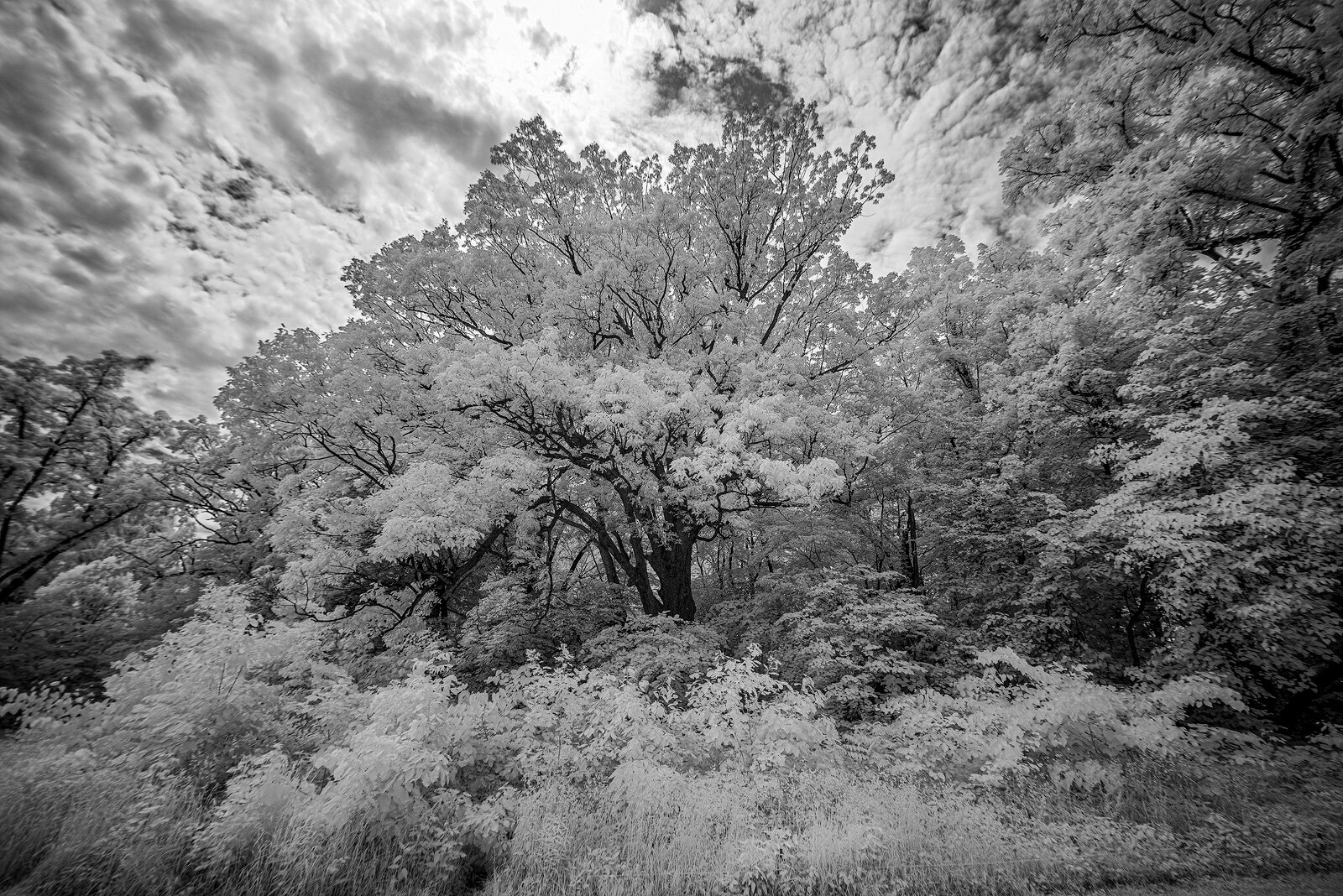
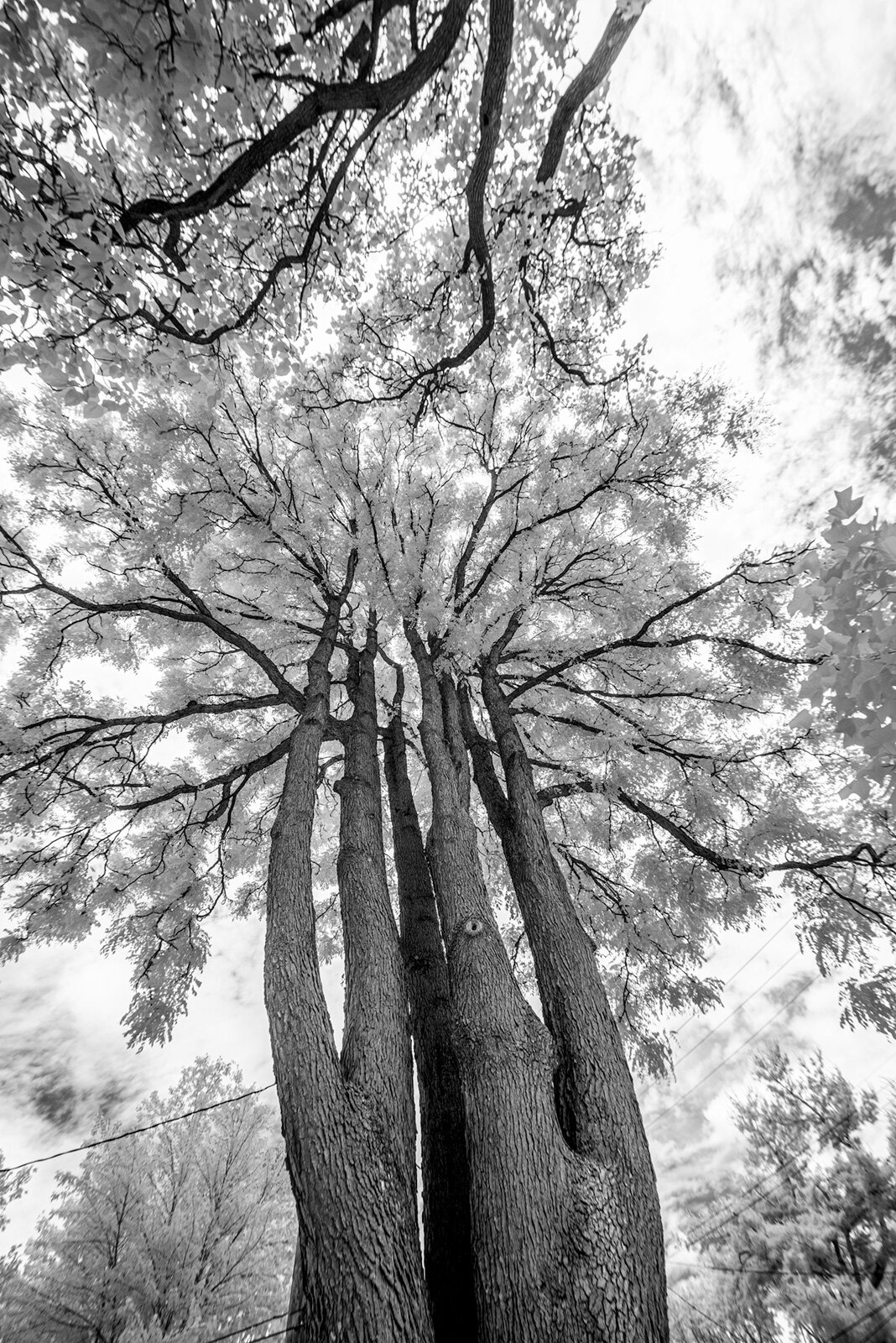
Washtenaw County is home to 20 state champion trees and one national champion tree, known respectively as the largest recorded examples of their species in Michigan and the U.S.
Washtenaw County is home to 20 state champion trees and one national champion tree, known respectively as the largest recorded examples of their species in Michigan and the U.S.
But with heights and girths varying from species to species, how do you determine which trees are the largest? The answer is points, as determined by the following formula laid out in the American Forests Champion Trees Measuring Guidelines Handbook:
Points = Girth (in inches) at 4.5 feet above the ground + Height (in feet) + 1/4 Average crown spread (in feet)
So it’s not just being tall or thick that makes a tree a champion, but rather a combination of factors. Trees that earn 200-250 points are big. Trees that earn 250-300 points are impressively large. Trees that earn more than 300 points are truly remarkable.
Champion trees are tracked at various levels. Ann Arbor has a list, maintained by the city Forestry Department. There is also a state list maintained by the Michigan Botanical Society. At the top level, there is the National Register of Champion Trees.
There is no scientific consensus on what allows a tree to attain champion size. It’s likely a combination of good luck and good genes. Good luck for a tree is to grow in a good patch of soil, to be spared the ax, and to have neighbors close enough to shield the tree from wind, but not so close as to provide competition. Good genes provide enough resistance to diseases and insect pests that pass through the area, as well as the ability to grow quickly, but not too quickly. Whatever the reason, big trees in general, and champion trees in particular, are wondrous to behold.
“There’s just a feeling you get when you’re around them,” says Lindsay Lights Forintos, a forester with ReLeaf Michigan.
Big trees are not just beautiful. They also provide important ecosystem services. For example, Ann Arbor’s champion tree list will tell you the annual value of the stormwater mitigated and carbon dioxide sequestered by each tree.
If you are interested in meeting some champion trees yourself, here are a few of our county’s most spectacular trees.
Ann Arbor’s largest tree
With a girth of 216 inches and a height of 117 feet, this chinkapin oak (Quercus muehlenbergii) in Wurster Park, 525 W. Madison St. in Ann Arbor, has 359 points and is the largest tree in the city. It is truly a sight to behold. Just keep a respectful distance so as not to compact its roots. Chinkapin oaks, sometimes called yellow oaks, have particularly sweet and palatable acorns. The species ranges from northern Mexico to southern Ontario. Washtenaw County is near the northern extent of its range.
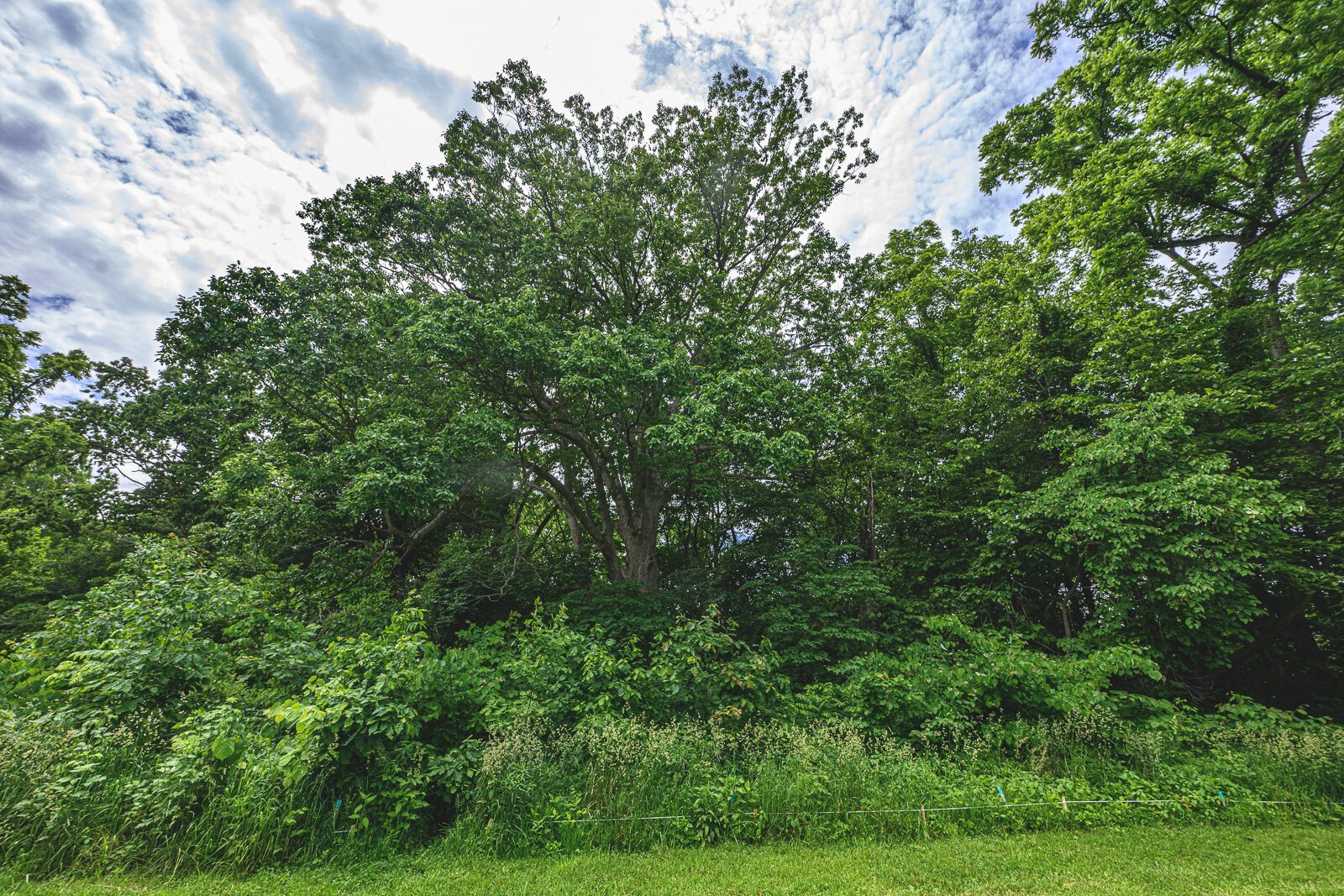
Chinkapin Oak at Wurster Park.
Though it’s about 30 points shy of the national champion, the Wurster Park chinkapin oak is somewhat famous. Its picture is featured on the Wikipedia article for the species.
The national champion
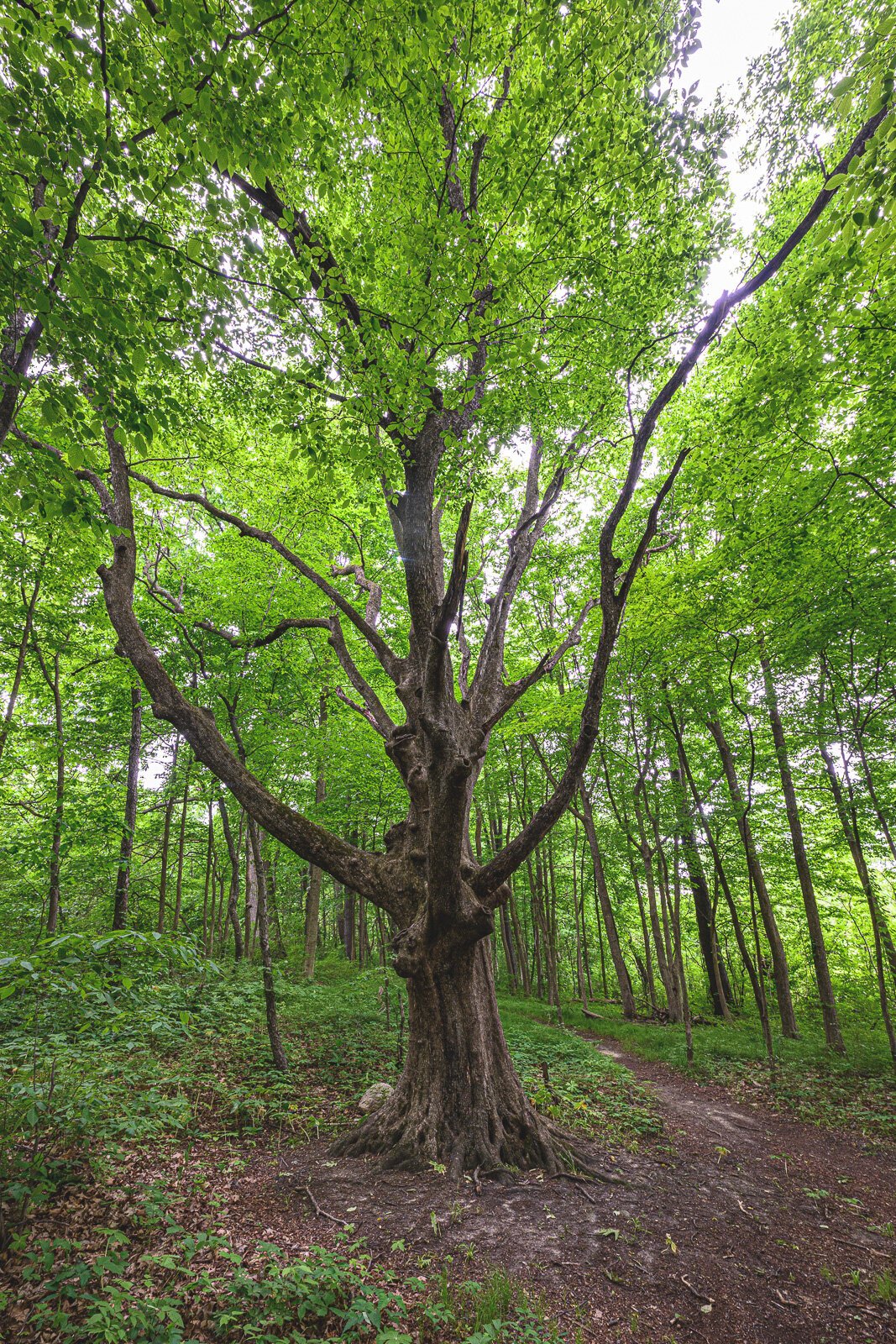
Located on a side trail in Hewen’s Creek Park, 6547 Bemis Rd. in Ypsilanti Township, is the national champion ironwood, or hop-hornbeam (Ostrya virginiana), tree. This tree is not particularly huge, at 112 inches around and 70 feet tall. Indeed, ironwood trees are rarely dominant species in Michigan forests. They are one of Michigan’s few subcanopy species, meaning that they grow below the topmost layer of a forest. Nevertheless, this tree is the national champion of its species. Given that the majority of the ironwood’s range is in the United States, it’s quite possible this is the largest ironwood in the world.
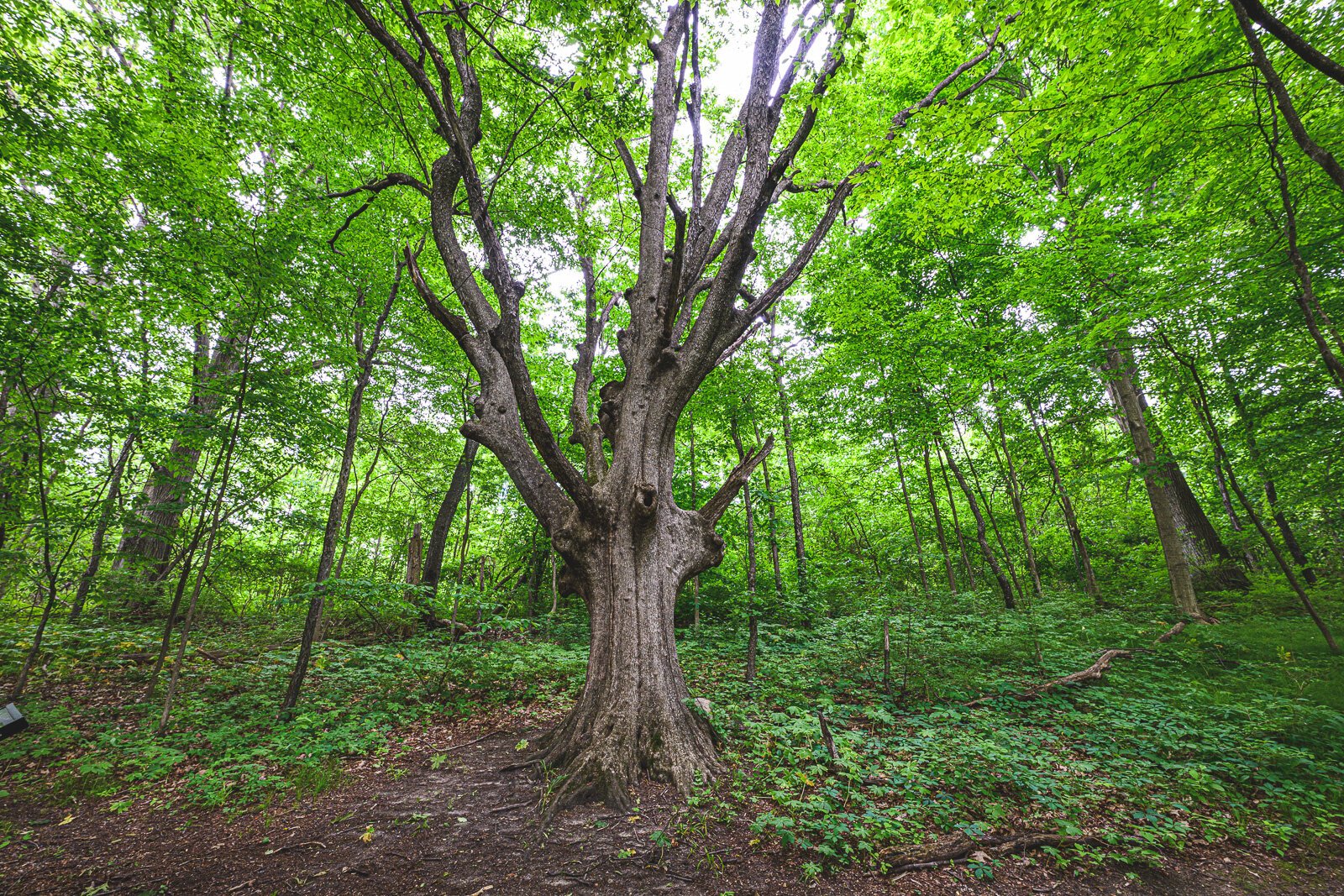
The national champion ironwood at Hewen’s Creek Park.
While much smaller than the other trees on this list, the national champion does stand out from the nearby trees. It looks gnarled and ancient. Ironwood trees are shade-tolerant and slow-growing. The common name comes from the fact that the wood is hard and tough.
Biggest tree in the county
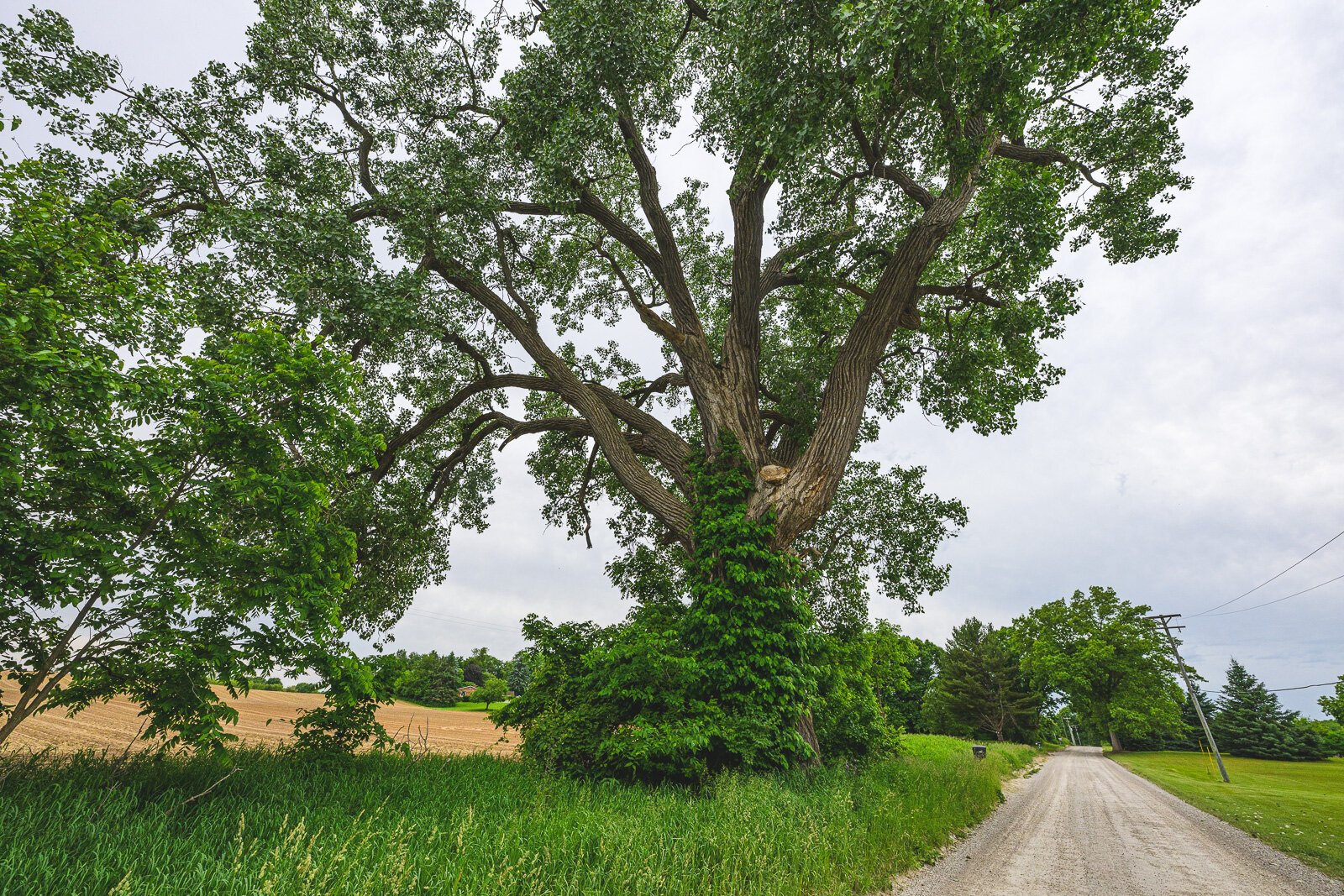
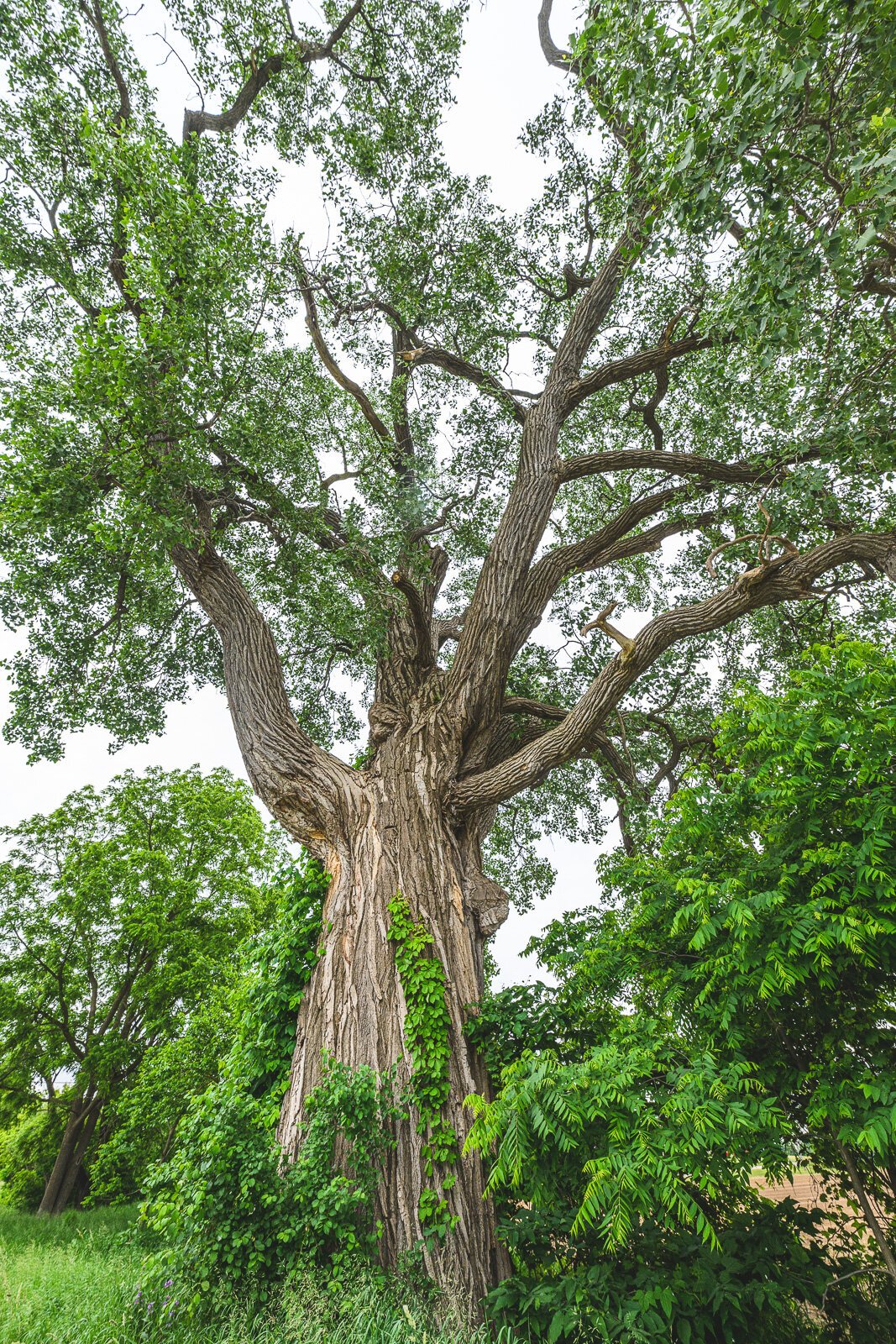
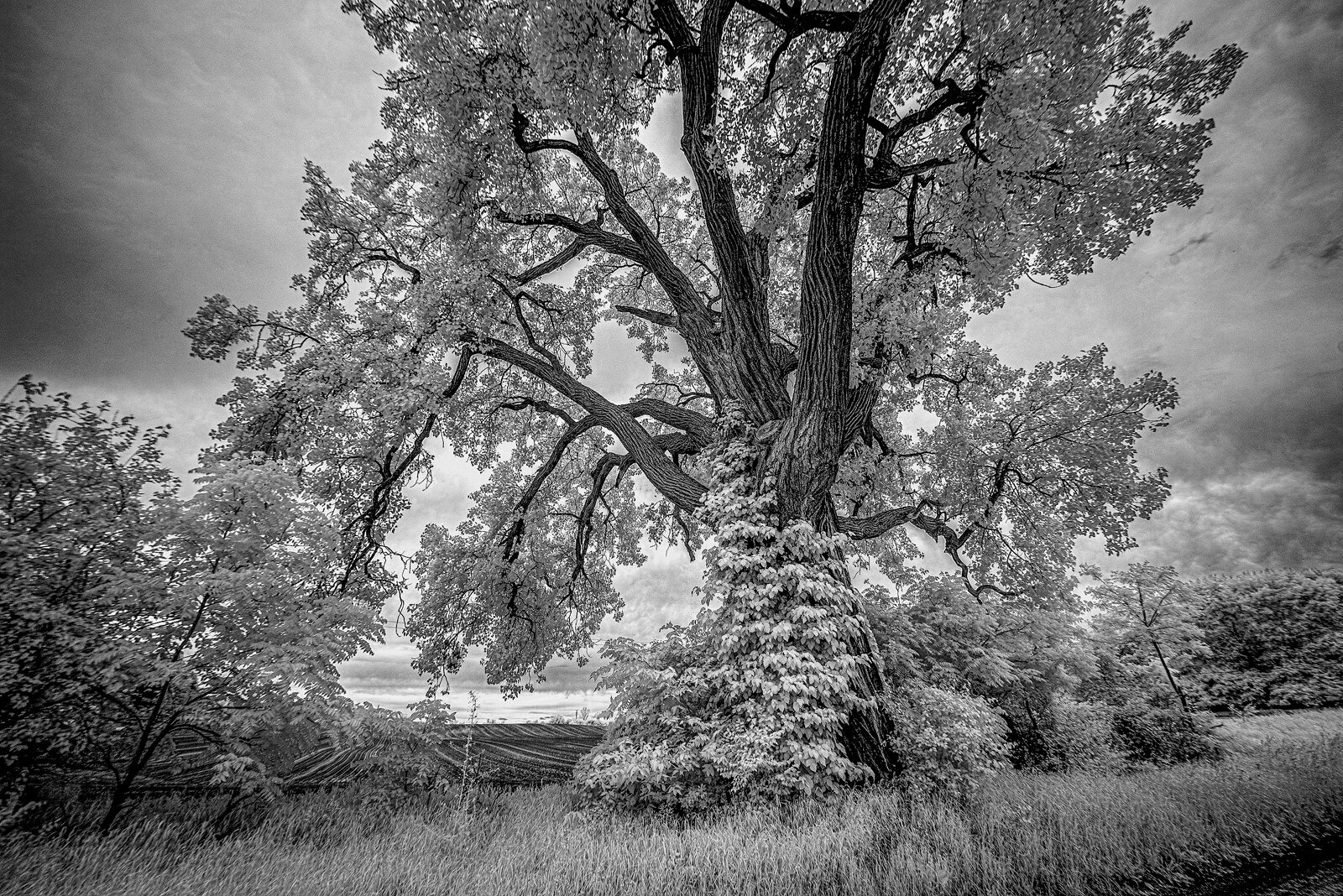
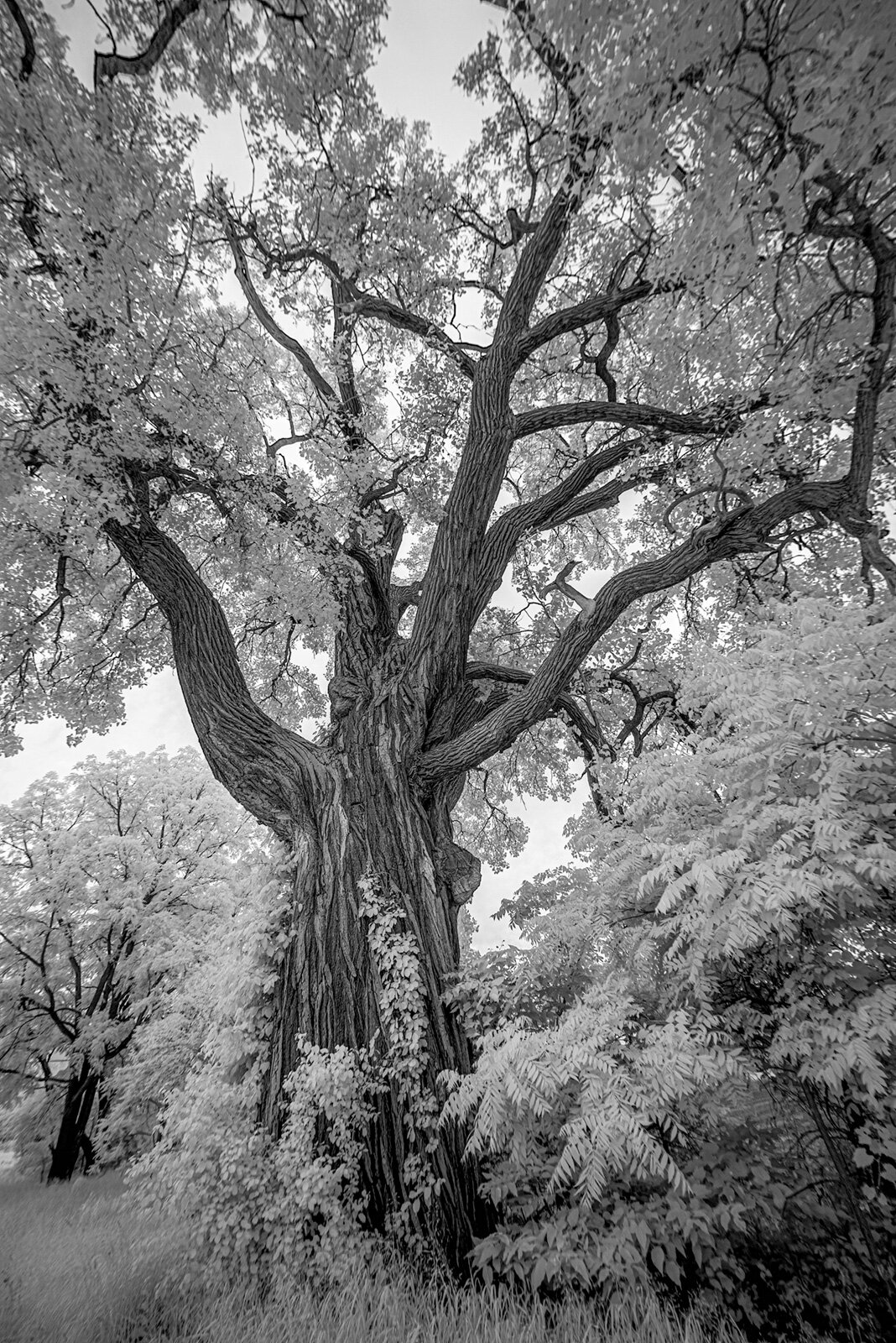
Washtenaw County’s biggest tree is an eastern cottonwood (Populus deltoides). It’s not particularly tall, at just 84 feet. But what it lacks in height it makes up for with 307 inches of girth, earning it a total of 419 points. The tree is at 3180 Braun Rd. in Saline. The trunk is covered in deep, furrowed bark and is thick with aggressive poison ivy vines.
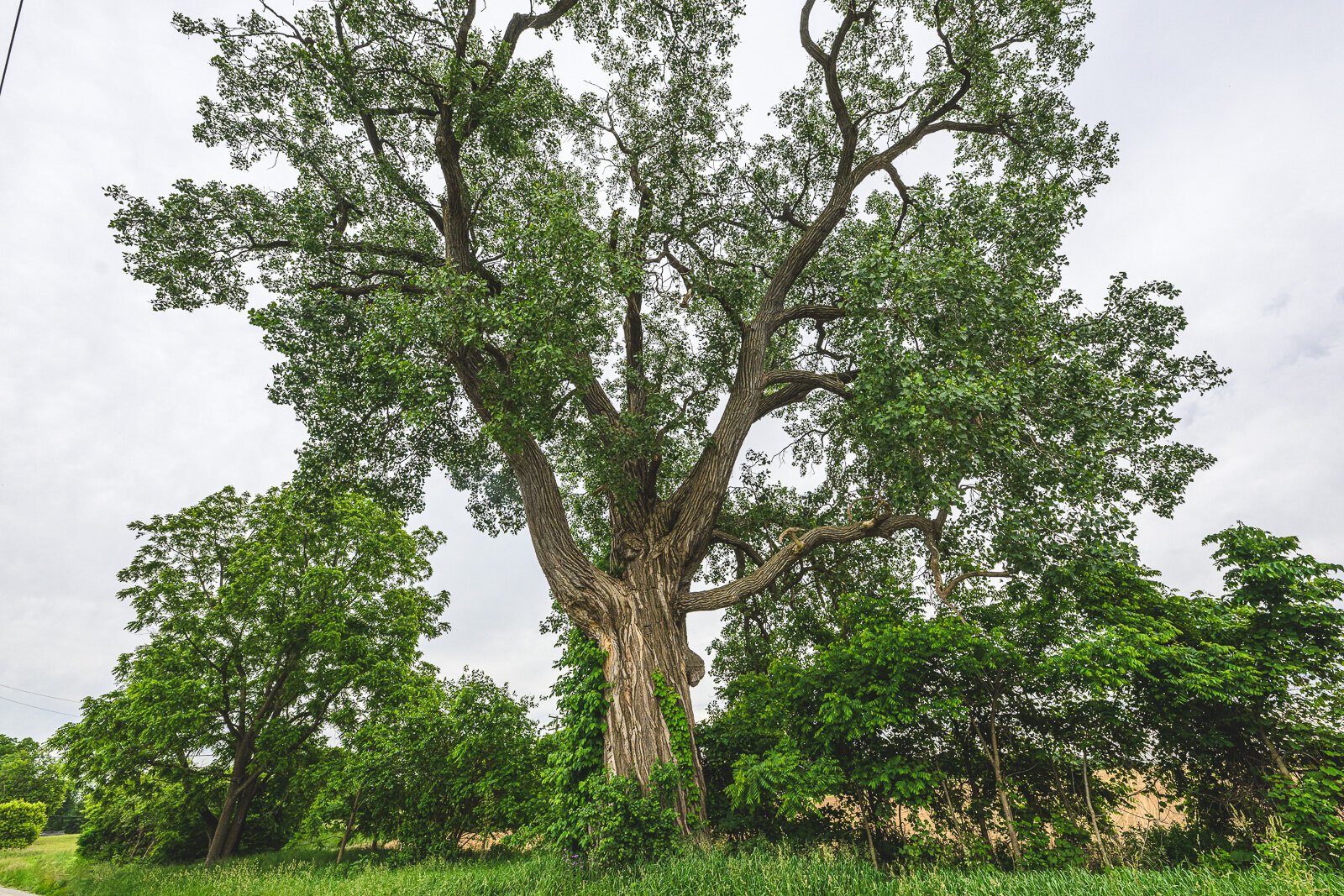
The eastern cottonwood at 3180 Braun Road in Saline.
Eastern cottonwood trees are very shade-intolerant and are our fastest-growing native species. Historically found along rivers and streams, these trees can reproduce through fragmentation (meaning fallen branches will drop new roots when they come to rest) in addition to the numerous cotton-like seeds that give them their common name.
Tall and skinny
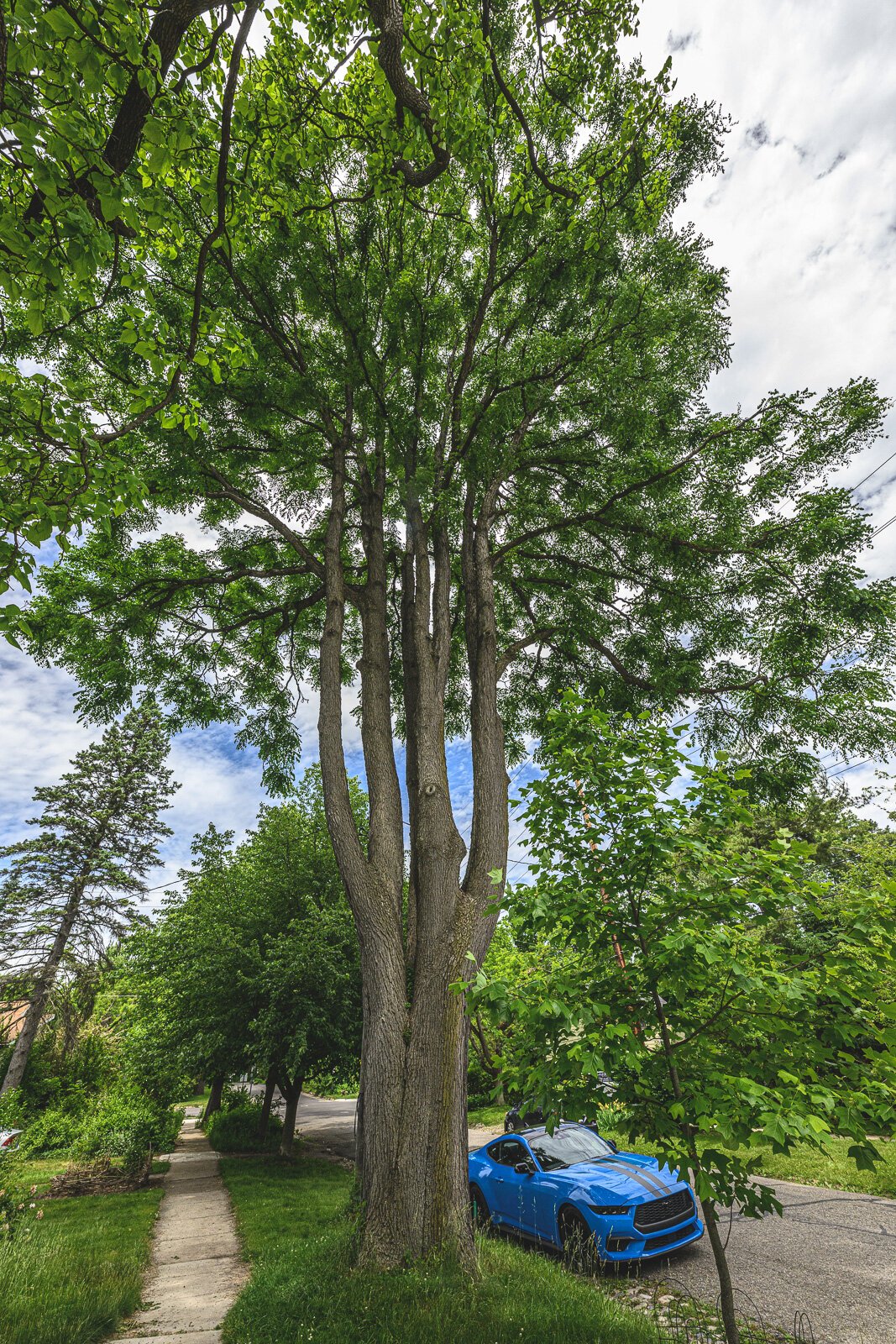
Kentucky coffee tree at 1211 Wright St. in Ann Arbor.
Located in the lawn extension of 1211 Wright St. on Ann Arbor’s north side, the champion Kentucky coffee tree (Gymnocladus dioicus) is not particularly girthy at 146 inches. What it lacks in thickness it makes up for in 106 feet of height, earning it 268 points.
Kentucky coffee trees are members of the bean family. Indeed, the fruit of the species is a gigantic bean pod filled with seeds the size and shape of flattened marbles. The common name comes from the fact that early settlers would roast the seeds and use them as a substitute for coffee in times of scarcity. The seed pods of the Kentucky coffee tree have no known animal dispersers, and ecologists believe they were historically dispersed by mastodons and mammoths. Currently, they are found along riverbanks, where their seed pods can float to new locations. Small, isolated populations exist in Minnesota and Wisconsin at the sites of pre-settlement Indigenous populations. Indigenous people reportedly used the large, tough seeds as game tokens and dice.
First runner-up
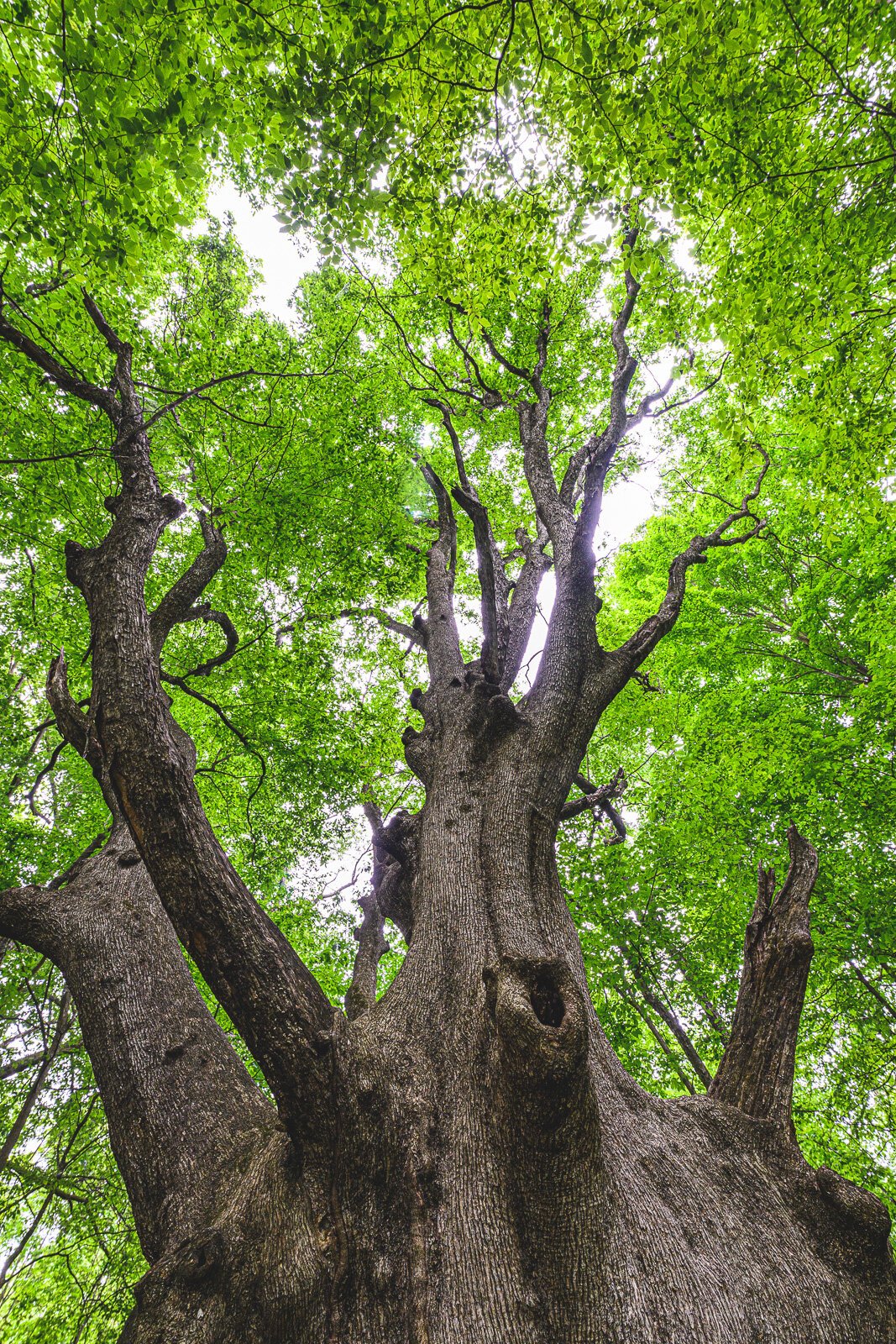
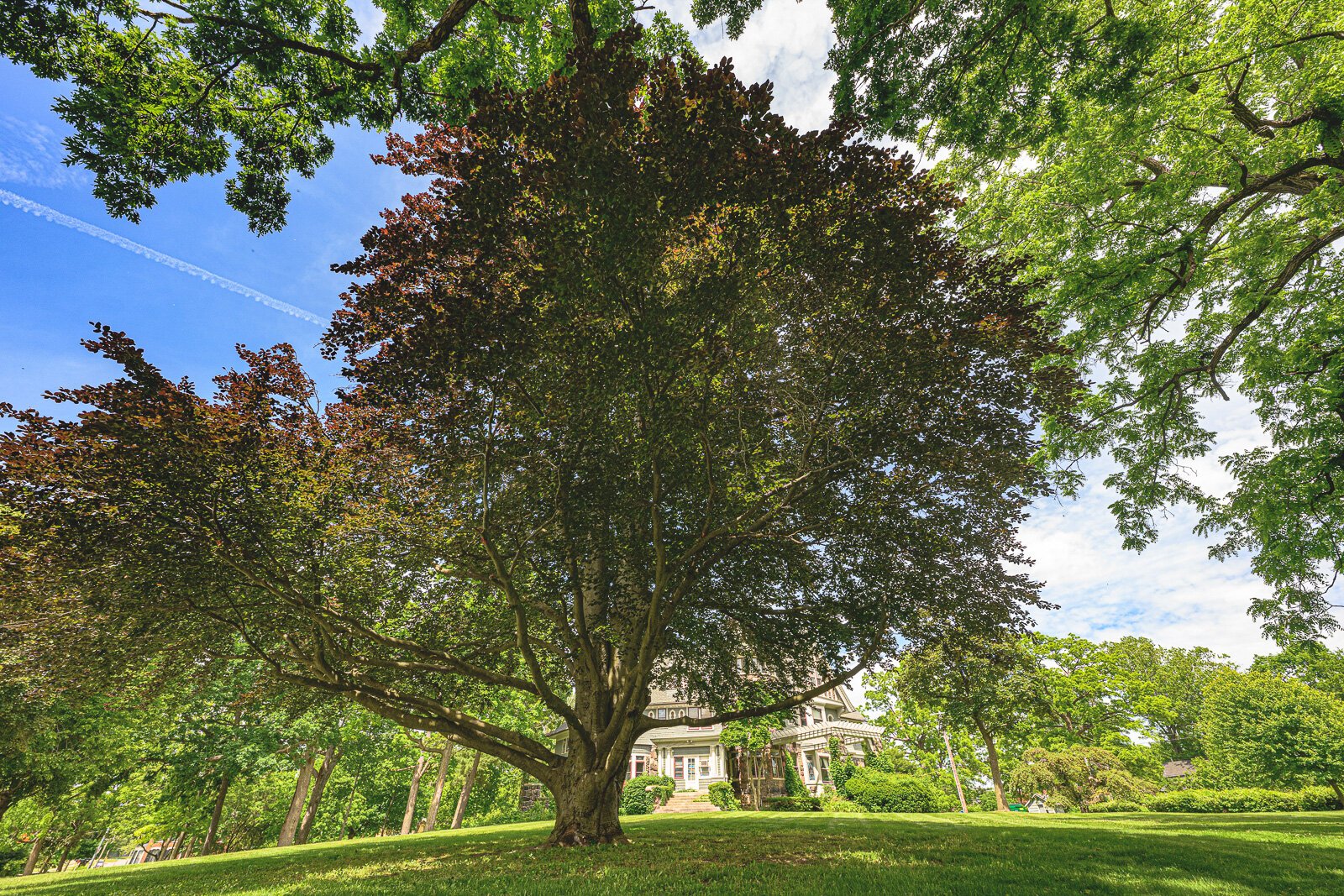
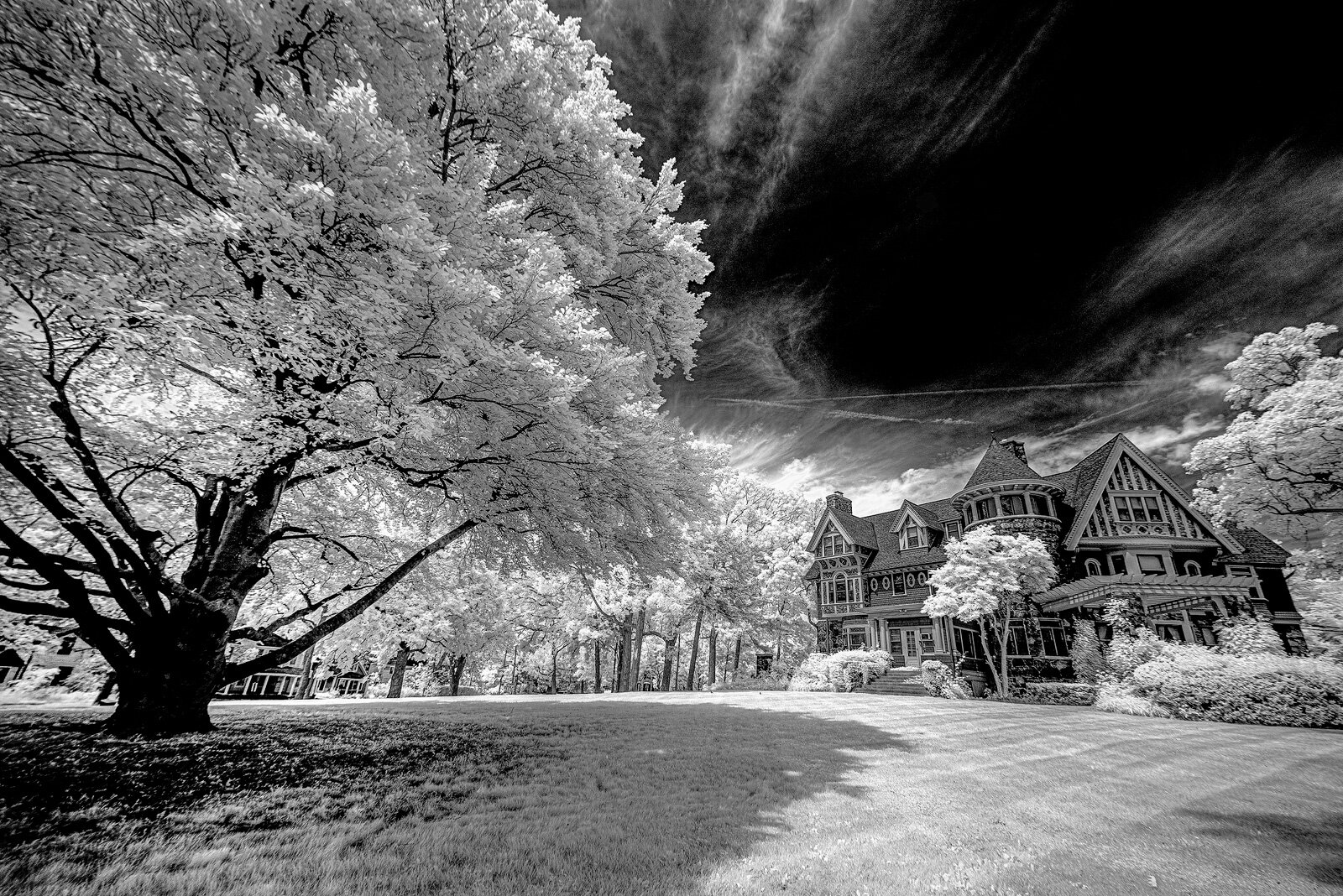
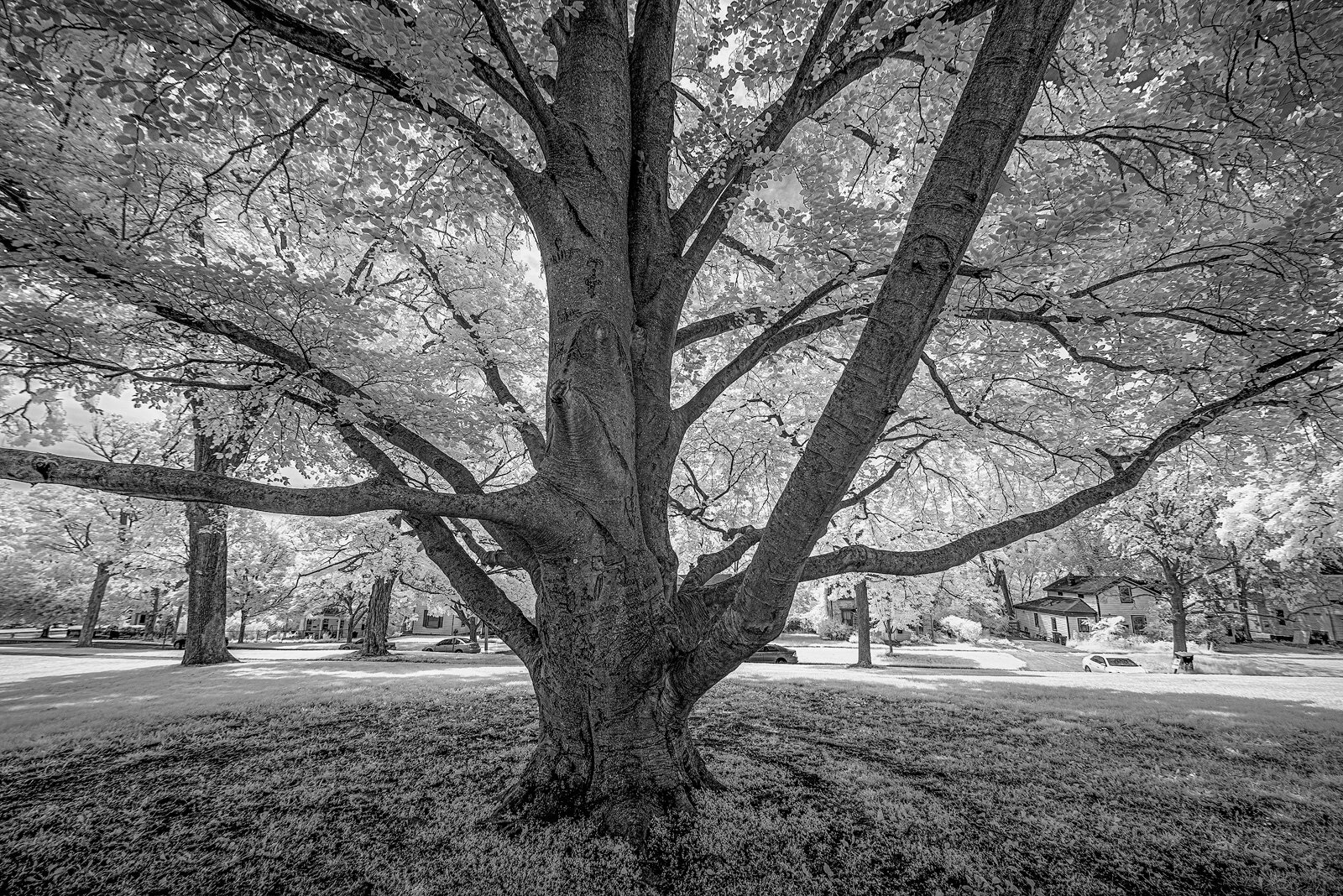
The second largest European beech (Fagus sylvatica) in Michigan is located on the HighScope property, 600 N. River St. in Ypsilanti. With 272 points, this tree is three inches less girthy than the state champion and half a foot shorter. It’s an expansive, stately tree growing in front of Ypsilanti’s historic Hutchinson House mansion. As the common name suggests, this is not a native tree. The Michigan and Ann Arbor champion tree lists do include a few notable exotic species, like the state champion English elm at 3010 Hickory Ln. in Ann Arbor. It also has a few invasive species that have escaped cultivation, like the speckled alders that dot the banks of the Huron River.
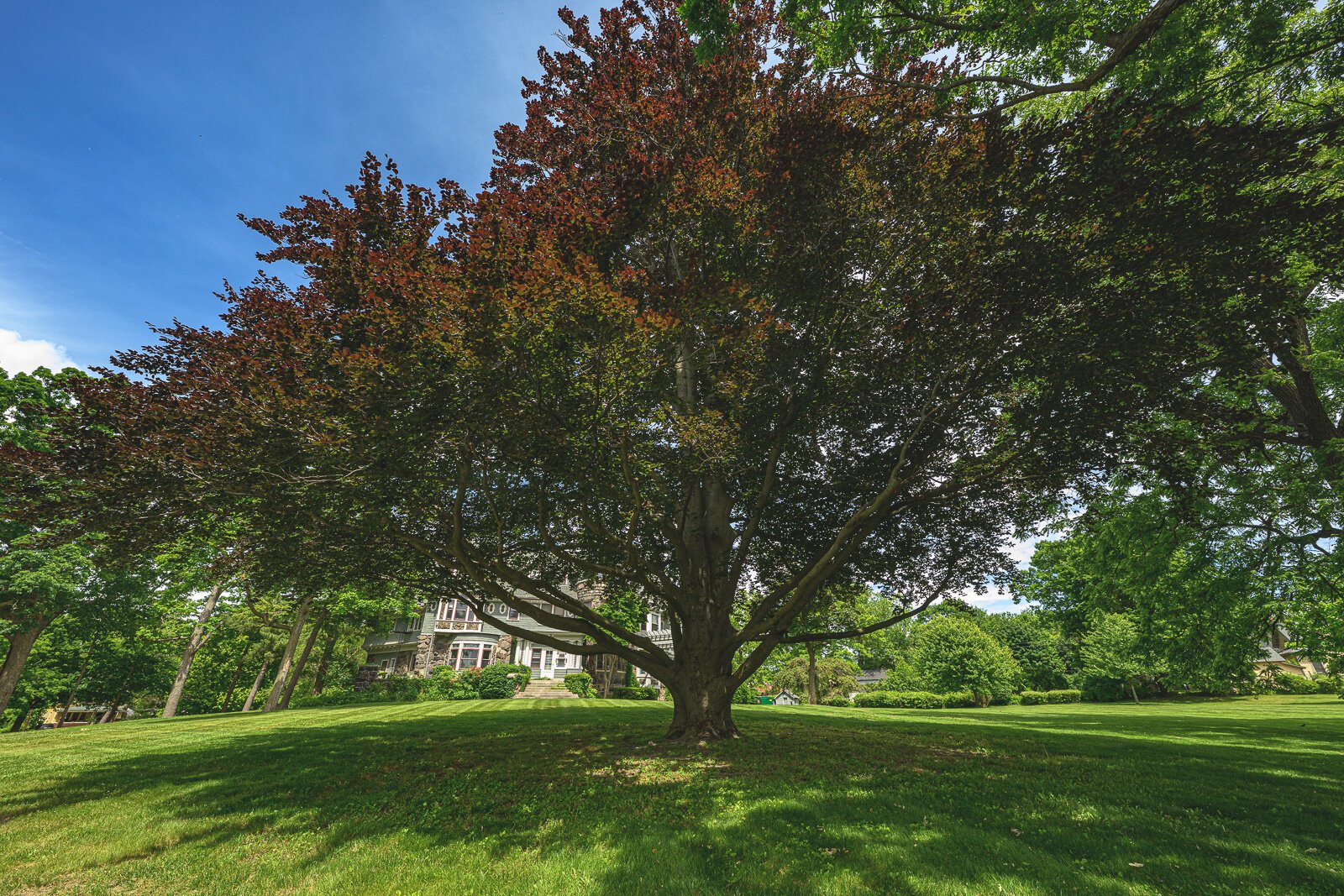
European beech at 600 N. River St. in Ypsilanti.
If you’ve been bitten by the champion tree bug, there are two great ways you can contribute to cataloging local champion trees. Ann Arbor is accepting champion tree nominations through July 31. The Michigan Big Tree Hunt also runs through August 2025 and has hundreds of prizes.
If you wish to nominate a champion tree, Forintos, who coordinates the Michigan Big Tree Hunt for ReLeaf Michigan, has a few suggestions. She recommends bringing a phone or GPS to mark the location of a nominated tree, a way to jot notes down, a soft measuring tape that’s at least 25 feet long, and a camera. For ReLeaf’s competition, you just need to measure the circumference at 4.5 feet above the ground, not the height or the crown spread.
To find more champion trees, check Ann Arbor’s champion tree list, Michigan’s state list, or the National Register of Champion Trees. Happy hunting!
Ben Connor Barrie is an Ypsilanti resident and founder of the blog Damn Arbor. Previously, he was a forest ecologist.
All photos by Doug Coombe.
Related Articles

New Ypsi farmers and gardeners added to library’s oral history project
The newest expansion of the Ypsi Farmers & Gardeners Oral History Project adds 12 narrators’ reflections on growing food, family, culture, and community in Ypsi.

Ann Arbor Local Food Festival to feature nearly 60 local food vendors and organizations
The event will bring together nearly 60 local businesses, farmers, food vendors, and community organizations for an evening designed to help attendees taste, learn, and connect.
Ann Arbor resident trains “Michigan Conservation Dogs” to sniff out invasive species
Ann Arbor dog trainer Hannah Ashmore is building a network of dogs and handlers trained to sniff out environmental threats that human eyes can miss.


