
Ann Arbor resident trains “Michigan Conservation Dogs” to sniff out invasive species
Ann Arbor dog trainer Hannah Ashmore is building a network of dogs and handlers trained to sniff out environmental threats that human eyes can miss.
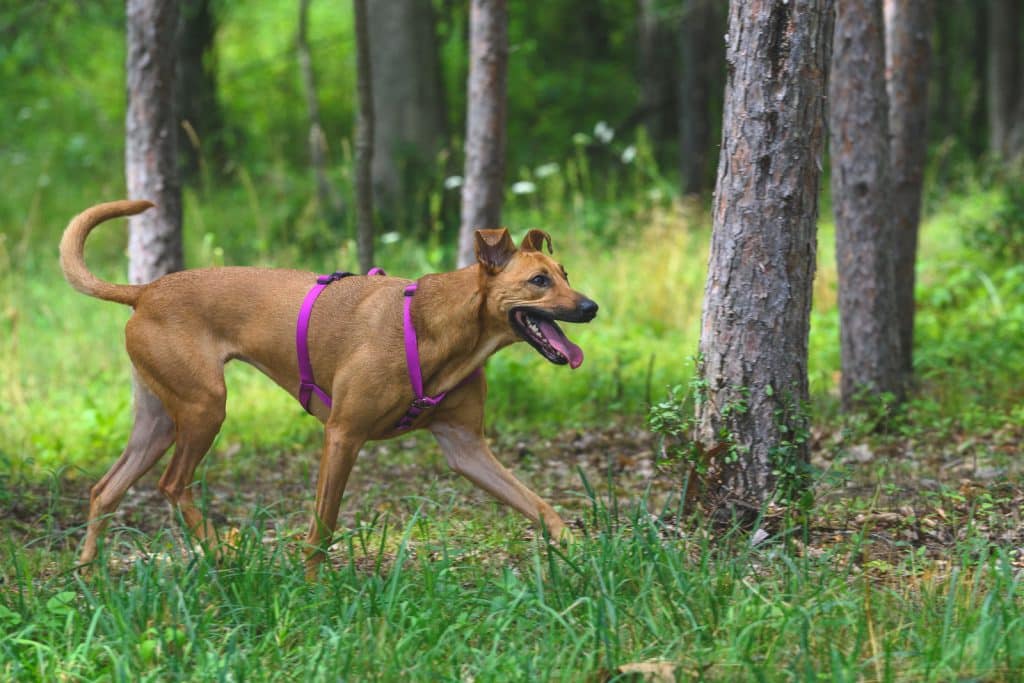
Ann Arbor dog trainer Hannah Ashmore is building a network of dogs and handlers trained to sniff out environmental threats that human eyes can miss.
Ashmore is the founder of Michigan Conservation Dogs, a project of her business, Longsnouts Dog Training. Through a growing network of dogs, handlers, and conservation partners, she hopes canine noses can help Michigan land managers find invasive species earlier, survey land faster, and eventually give ordinary dog owners a way to participate in conservation themselves. Her current target is the spotted lanternfly, an invasive insect with an appetite for plants ranging from grapevines to fruit trees, but Ashmore’s ambitions extend beyond one pest.
Molly, a German shorthaired pointer, spent three years training at the Penn Vet Working Dog Center before coming to Ashmore. During Ashmore and Molly’s first week of transition training together, Molly was tasked with finding four hidden scent sources scattered throughout a 20,000-square-foot warehouse. She found all four in less than 10 minutes.
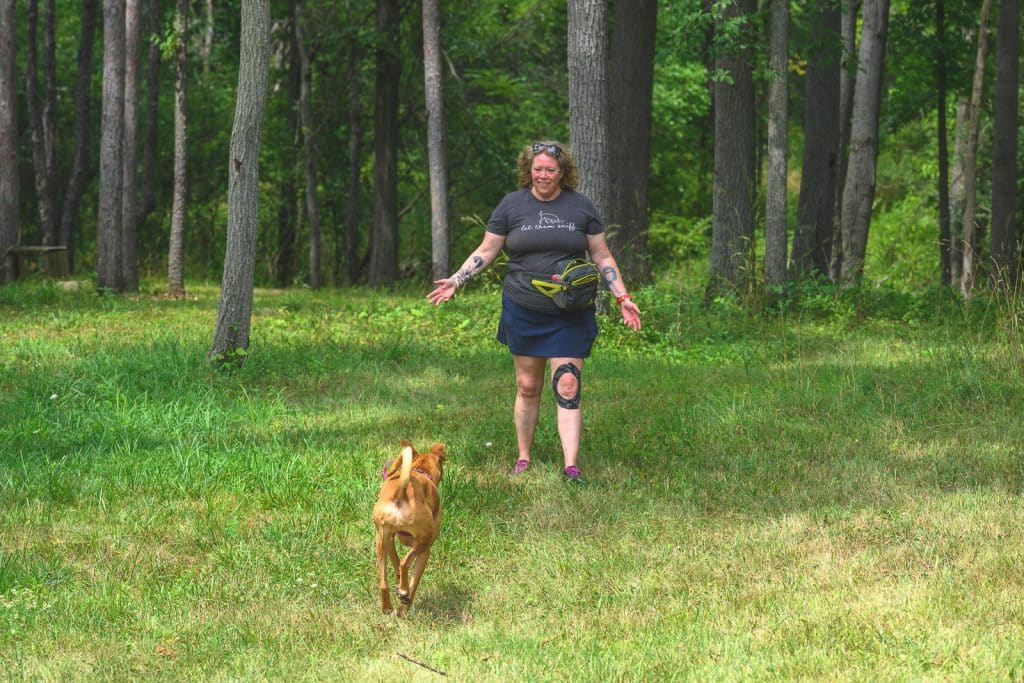
At a recent demonstration in a roughly two-acre vineyard near Dexter, Ashmore estimates Molly could find a small spotted lanternfly scent source in less than a minute.
“[Dogs] are faster. Period,” Ashmore says. “… They see the world through their nose.”
For Ashmore, learning to trust those noses required unlearning some things herself. She began training dogs in New York in 2006. After returning to Michigan during the 2008 financial crisis, she eventually resumed full-time dog training in 2014. Along the way, she says each of the nine dogs she’s owned has forced her to learn something new. A black and tan coonhound introduced her to nose work and changed her approach to training altogether. Previously, Ashmore thought largely like an obedience trainer: tell a dog to sit, stay, or walk politely beside you and teach it to comply. But nose work presented a rather obvious problem.
“How do I tell a dog to go find the thing that I don’t know where it is?” she says.
She couldn’t. Instead, she had to trust the dog.
“What it taught me was to let go of some control – or all control, honestly – and partner with a dog to find the thing,” Ashmore says.
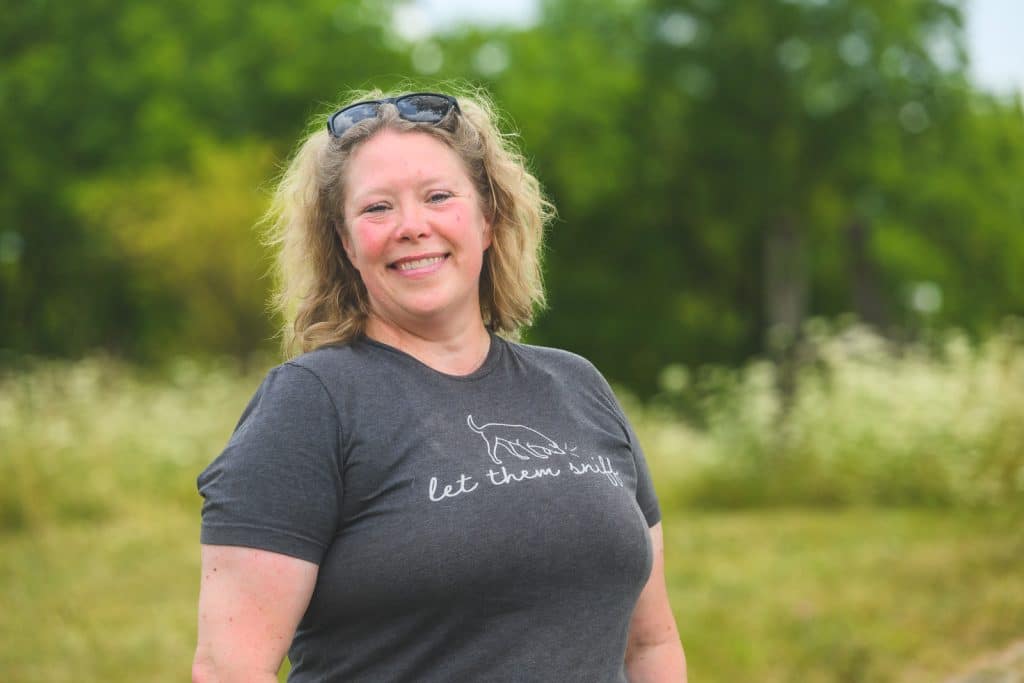
That partnership deepened when she and Dougal, her now-retired search-and-rescue dog, joined a missing-person search-and-rescue team. Dougal could work off-leash across 20 to 60 acres at a time, forcing Ashmore to become comfortable following rather than directing.
“That was when I first truly understood what partnering with a dog meant,” she says. “Letting your dog be the smarter person in the relationship was truly life-changing.”
Conservation detection eventually seemed like a natural next act. Ashmore initially imagined it as a “retirement job” – a chance to work less with people and their pets, and more directly with dogs doing something useful.
“I wanted to work with dogs to do good things,” she says.
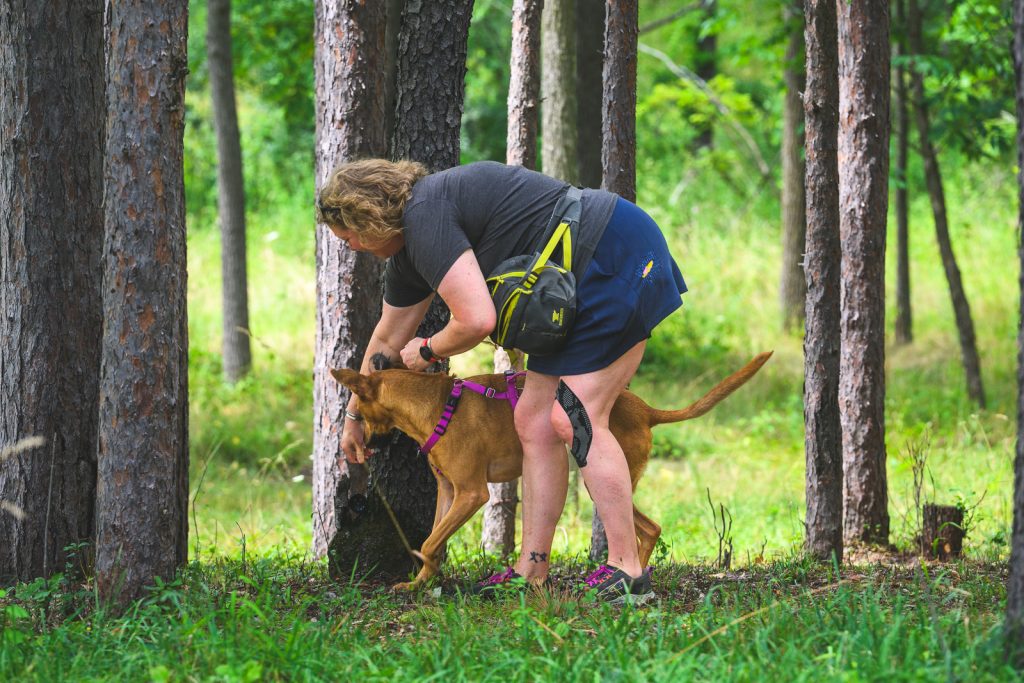
Then came the spotted lanternfly. First detected in the U.S. in 2014, the invasive insect has spread from Pennsylvania across the country and was first detected in Michigan in 2023. Its arrival generated particular concern for agriculture because of the range of plants it feeds on.
After a friend gave Ashmore spotted lanternfly eggs, she connected with scientists at Michigan State University and began learning more about the insect. Its threat to Michigan crops – including grapes, cherries, peaches, and apples – made it a natural first target for her dogs. But there was another advantage: spotted lanternflies stink.
“I have a horrible sense of smell, and even I can smell them,” Ashmore says.. “… And between you, me, and a dog’s nose? They smell like farts.”
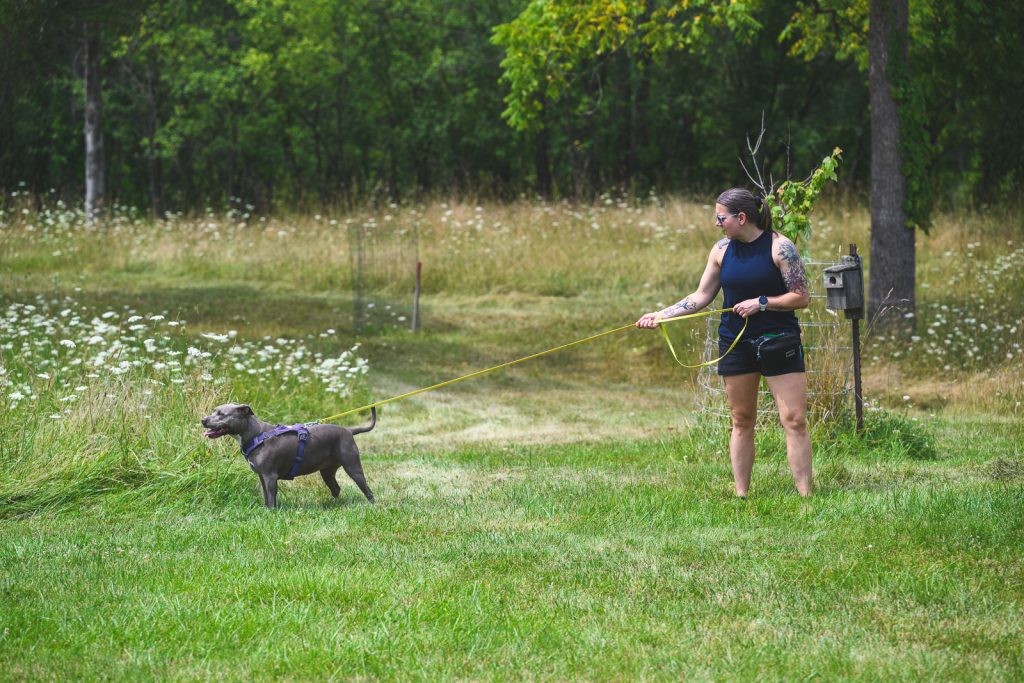
Dogs can be trained to associate that odor with a reward and eventually search increasingly complex environments for it. For a dog already familiar with scent work, Ashmore says imprinting a new odor can take less than two weeks. Building all the skills necessary for reliable field work can take months or, for a dog starting from scratch, closer to a year.
And don’t count out the family pet. Ashmore says breed is less important than finding a dog motivated to work, physically suited to the assignment, and paired with a handler equally interested in the job. She even points to energetic shelter dogs, those bouncing off the walls without enough to do, as potential candidates.
Different dogs also bring different strengths. Molly is fast, athletic, and loves covering ground quickly. Kenna, whom Ashmore has raised since she was seven weeks old, searches differently. And Dougal, approaching 10 and retired from the sprawling searches of his younger years, could still tackle slower, more methodical projects that Ashmore says Molly would be ill-suited for – such as sniffing out turtles.
“[Molly] moves too quickly, and her feet are like thunderclaps,” Ashmore says.
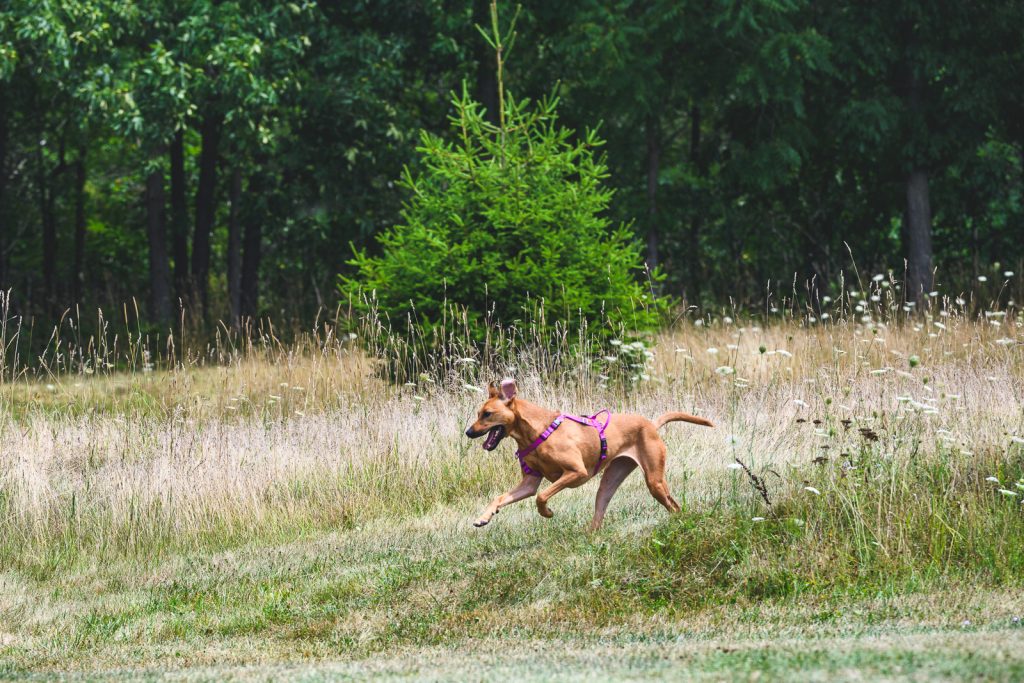
That variation among dogs is central to Ashmore’s vision for Michigan Conservation Dogs. Rather than owning an ever-growing pack herself, she imagines the network resembling a cooperative. Conservation partners would submit projects for which they need dogs, and dogs and handlers would then be matched to the assignment.
A fast dog might survey acres for an invasive plant. A slower, careful dog might search for wildlife. Experienced recreational nose-work teams could eventually join projects, while specialized work could be referred to conservation-detection organizations with more experience.
The model could also solve a practical problem for conservation organizations. A land manager may see the value in canine detection but lack the budget or staff to acquire a dog, hire a handler, and maintain the dog’s training.
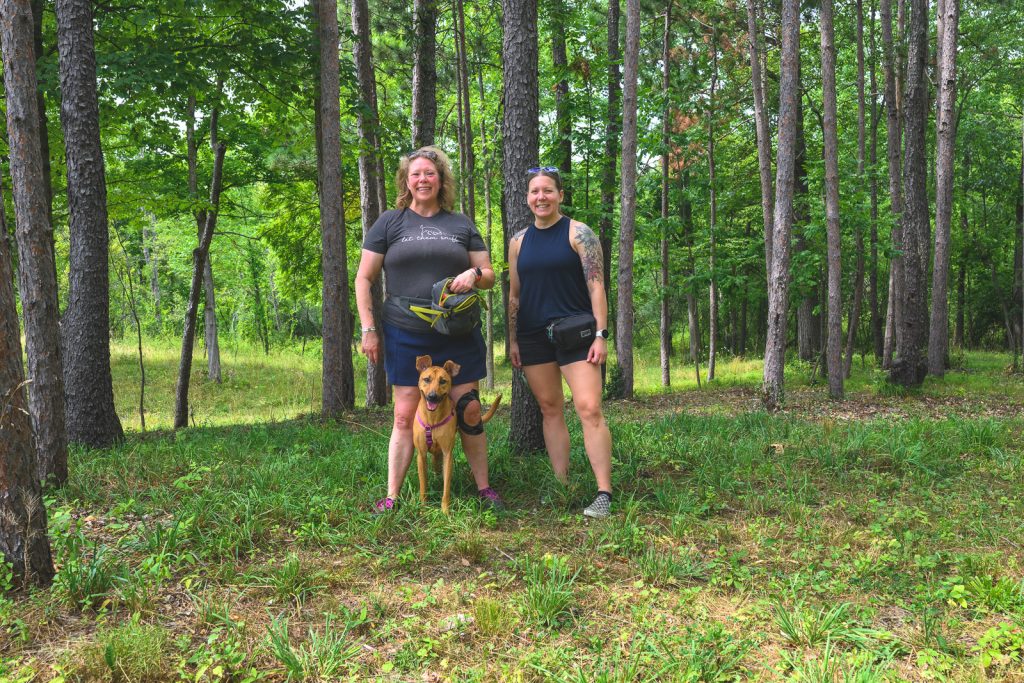
With an outside team, Ashmore says, “all they have to do is plug into the project.” She’s already talking with local parks, conservation districts, and invasive-species managers about where dogs could be useful next. Japanese stiltgrass, an invasive grass that can crowd out native vegetation, is one possibility. Oak wilt is another.
But not every invasive species needs a snout attached to the solution. Some spread too quickly for canine detection to add much value. Others grow in places where sending a dog would be unsafe. Mile-a-minute weed, for example, can grow along transportation corridors.
“I am not interested in working my dogs along the highway,” Ashmore says.
Instead, she wants to work backward from what Michigan’s land managers actually need. And eventually, the network could extend beyond professional conservationists altogether. She is particularly excited by citizen science: people who already walk trails, hike with their dogs, or participate in recreational nose work learning to detect selected invasive species.
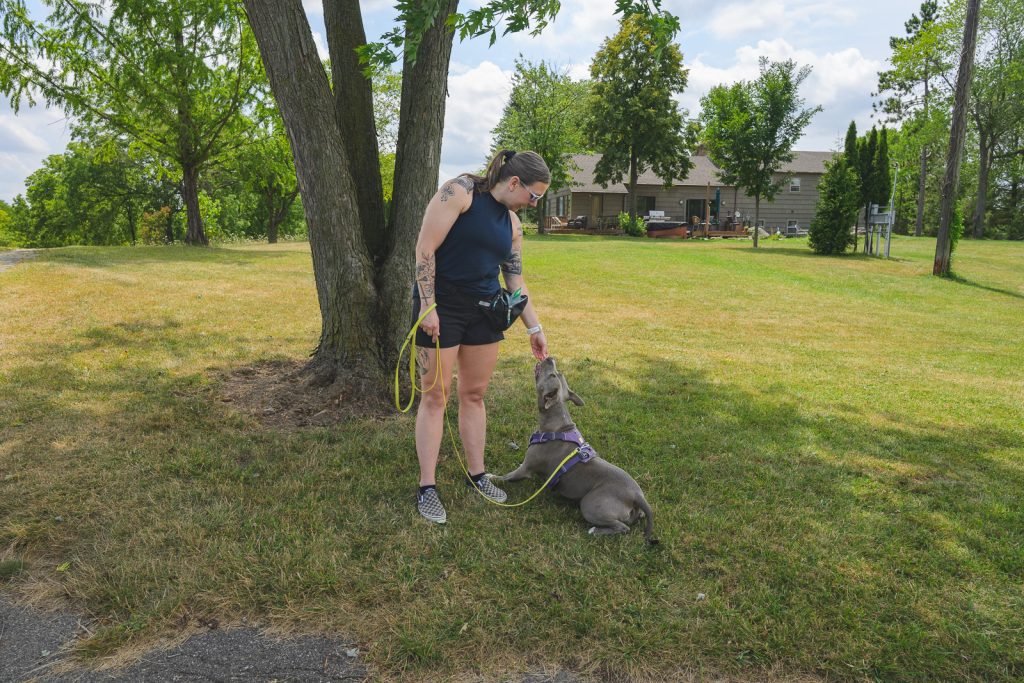
But Ashmore’s vision extends to dogs still waiting for a job, too. One of her long-term goals is to identify suitable shelter dogs, train them in detection, and eventually pair them with other handlers. It’s a fitting ambition for Ashmore, who says animal rescue has always played a major role in her life. Her dog Kenna came to her as a seven-week-old foster after Kenna’s mother and seven siblings arrived at Detroit Animal Care and Control. As Ashmore puts it, Kenna “clearly never left” her care.
“The number one thing I would want people to think about is that everyone can make a difference,” Ashmore says. “Everyone can play a role if you want to do something good for the environment and your community.”
Ashmore and Michigan Conservation Dogs’ work is available for public observation at the following upcoming events:
Aug. 21, 10 a.m.-2 p.m.: “Sniffing Out Invasive Species: Spotted Lanternfly” workshop at Lyndon Township Hall
Sept. 2 and Oct. 20: “Noses for Nature: The Art of the Conservation Dog” workshops at the Michigan Folk School in Superior Township
Sept. 9–10: Michigan Sustainability Conference at the Lansing Center in Lansing
Sept. 19, 10 a.m.-3 p.m.: Michigan Folk School Annual Folk Festival at the Michigan Folk School
Oct. 20–22: Michigan Association of Conservation Districts Annual Conference at the Lansing Center
For more information, contact Michigan Conservation Dogs.
Related Articles

Ypsi officials and activists prepare for climate emergency
As extreme heat, wildfire smoke, and power outages become more and more prevalent in Washtenaw County, a growing network of local officials, health professionals, and community organizers is working to help Ypsilanti residents do more than simply weather the next emergency.

New Ypsi farmers and gardeners added to library’s oral history project
The newest expansion of the Ypsi Farmers & Gardeners Oral History Project adds 12 narrators’ reflections on growing food, family, culture, and community in Ypsi.

Ann Arbor Local Food Festival to feature nearly 60 local food vendors and organizations
The event will bring together nearly 60 local businesses, farmers, food vendors, and community organizations for an evening designed to help attendees taste, learn, and connect.


