
Ann Arbor Local Food Festival to feature nearly 60 local food vendors and organizations
The event will bring together nearly 60 local businesses, farmers, food vendors, and community organizations for an evening designed to help attendees taste, learn, and connect.
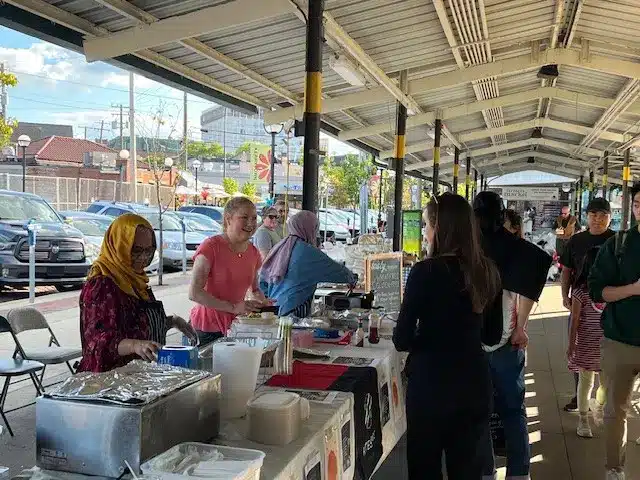
For many Ann Arbor residents, buying local food may begin at the farmers market. But organizers of the Ann Arbor Local Food Festival want residents to see that a stronger local food system can reach far beyond the market to become part of everyday life.
The free, family-friendly festival returns Aug. 27 from 5 to 8 p.m. at the Ann Arbor Farmers Market. The event will bring together nearly 60 local businesses, farmers, food vendors, and community organizations for an evening designed to help attendees taste, learn, and connect. The festival is organized by the Ann Arbor Office of Sustainability and Innovations (OSI), the Ann Arbor Farmers Market, and Argus Farm Stop.
Azella Markgraf, sustainability analyst at OSI, says the festival is intentionally designed to make local food accessible to everyone, regardless of budget, lifestyle, or familiarity with locally grown foods.
“There’s a difference between hearing about local food and actually meeting the people behind it, tasting it, learning about programs that exist to make it more accessible and affordable,” Markgraf said.
Now celebrating its fifth year, the festival has grown to attract more than 1,000 visitors annually. This year’s event will feature live chef demonstrations, local food tastings, recipe exchanges, seed shares, composting demonstrations, DIY art projects, food vendors, and live music.
However, organizers say the bigger goal is what happens after attendees leave. Markgraf says the event is designed to promote a stronger local food system in general.
“A strong local food system means that every resident has the resources and opportunity to find, access, and enjoy food grown close to home, while farmers have stable, reliable markets where they can sell what they grow,” Markgraf says.
The effort also supports Ann Arbor’s A2ZERO carbon-neutrality goals by encouraging a more sustainable, plant-rich food system.
“A strong local food system doesn’t happen by accident. Thriving local food systems are the products of relationships, collaborations, decisions, and initiatives that require investment and community-buy in,” Markgraf says.
Related Articles

Ypsi officials and activists prepare for climate emergency
As extreme heat, wildfire smoke, and power outages become more and more prevalent in Washtenaw County, a growing network of local officials, health professionals, and community organizers is working to help Ypsilanti residents do more than simply weather the next emergency.

New Ypsi farmers and gardeners added to library’s oral history project
The newest expansion of the Ypsi Farmers & Gardeners Oral History Project adds 12 narrators’ reflections on growing food, family, culture, and community in Ypsi.
Ann Arbor resident trains “Michigan Conservation Dogs” to sniff out invasive species
Ann Arbor dog trainer Hannah Ashmore is building a network of dogs and handlers trained to sniff out environmental threats that human eyes can miss.


