
New early childhood center opens in Ann Arbor with Community Foundation support
The nonprofit Apple Playschools opened a new early childhood center in Ann Arbor on Aug. 25, financed by a $775,000 Impact Investment loan from the Ann Arbor Area Community Foundation.

The nonprofit Apple Playschools opened a new early childhood center in Ann Arbor on Aug. 25, financed by a $775,000 Impact Investment loan from the Ann Arbor Area Community Foundation (AAACF).
The center, known as both Green Apple Upper School and Green Apple Garden Playschool, is located at 503 Miller Ave. According to Apple Playschools Executive Director Etta Heisler, the AAACF “is more than just a lender for us. They have served as a partner with us.” That partnership comes at a time when a lack of affordable child care, both in Washtenaw County and the country more broadly, has reached crisis levels.
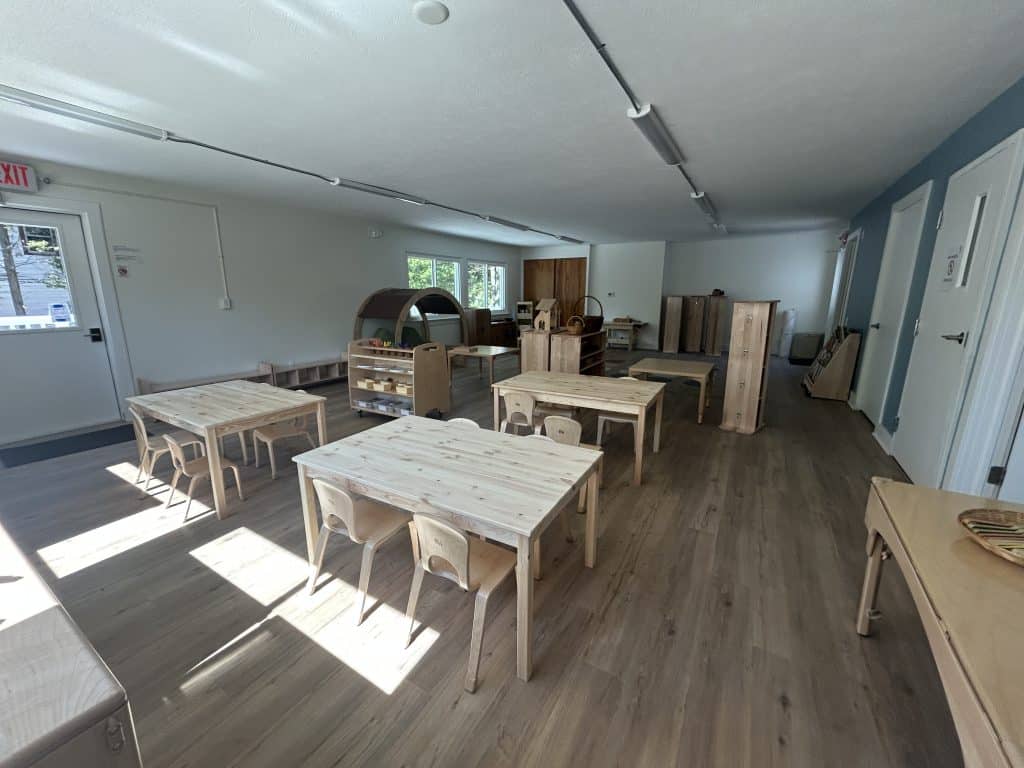
“When families don’t have access to [child] care, they can’t go to work, they’re not paying [taxes], and they’re not spending money in the economy,” Heisler says. “Without child care, the economy stops.”
The bulk of the 10-year loan will support the enrollment of 46 additional children, aged 30 months and older, at Apple Playschools’ new center, which still has open spots available. (Those interested in open spaces can learn more at Apple Playschools’ website.)
Heisler says the AAACF’s Impact Investment fund is intended to channel finances towards areas of “social good,” such as affordable child care or housing, in situations where “a traditional bank wouldn’t necessarily partner on a loan.”
But what’s particularly unique about the AAACF fund is that “the investment in social good happens twice,” Heisler says: once when the AAACF invests in Apple Playschools, and again when Apple Playschools pays off the loan with interest and another beneficiary becomes eligible to receive funds.
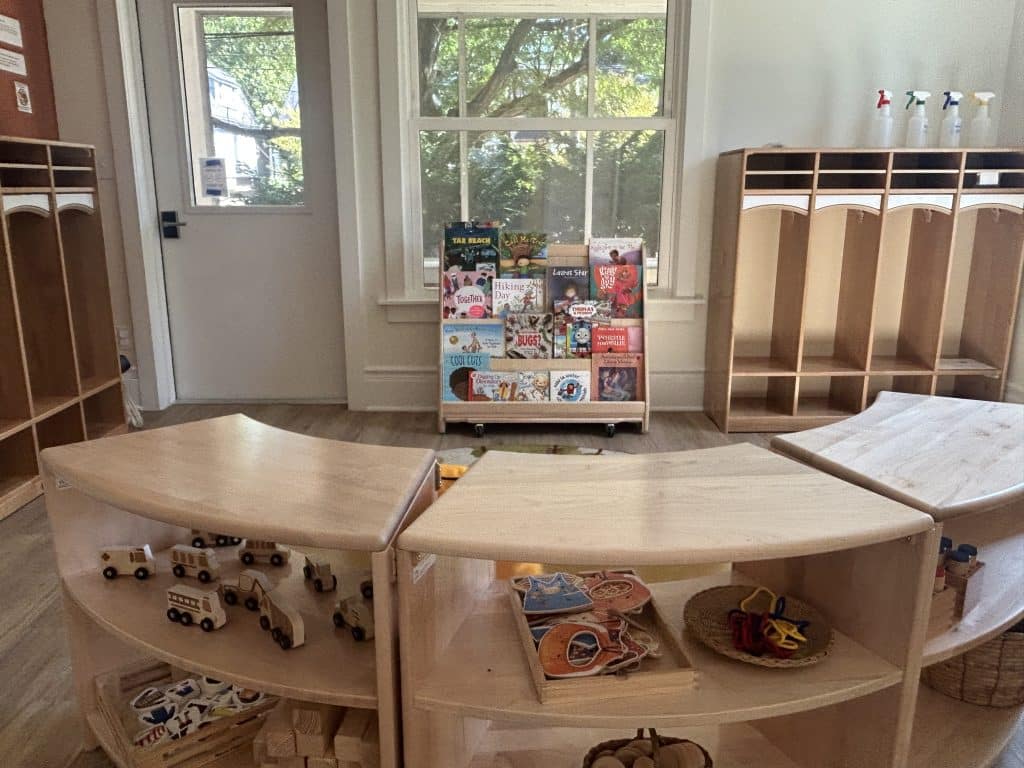
Apple Playschools’ recent expansion “allows us to do the two essential parts of our mission,” Heisler says. “We are a nonprofit that believes in transforming our community through education and entrepreneurship in the way we teach kids and the way we do our business.”
According to Heisler, about three years ago, Apple Playschools leadership realized that “in order to sustain improvements to staff wages and benefits that our teachers deserve, we were going to … make some changes in our revenue model.”
The major change they settled on was increasing the number of spots available for older children. That’s because, for child care providers, infants are generally more expensive to care for than preschool-age children. Infants’ needs are less predictable, so they require a higher teacher-to-student (or staff-to-student) ratio. Michigan state law dictates that there be one staff member for every eight preschoolers aged 30 months to three years old, and two staffers for every eight infants from birth to 30 months old.
According to Heisler, most child care centers either “use the revenue from preschool care to offset the loss of running infant-toddler classes,” or simply don’t offer infant care due to the expense.
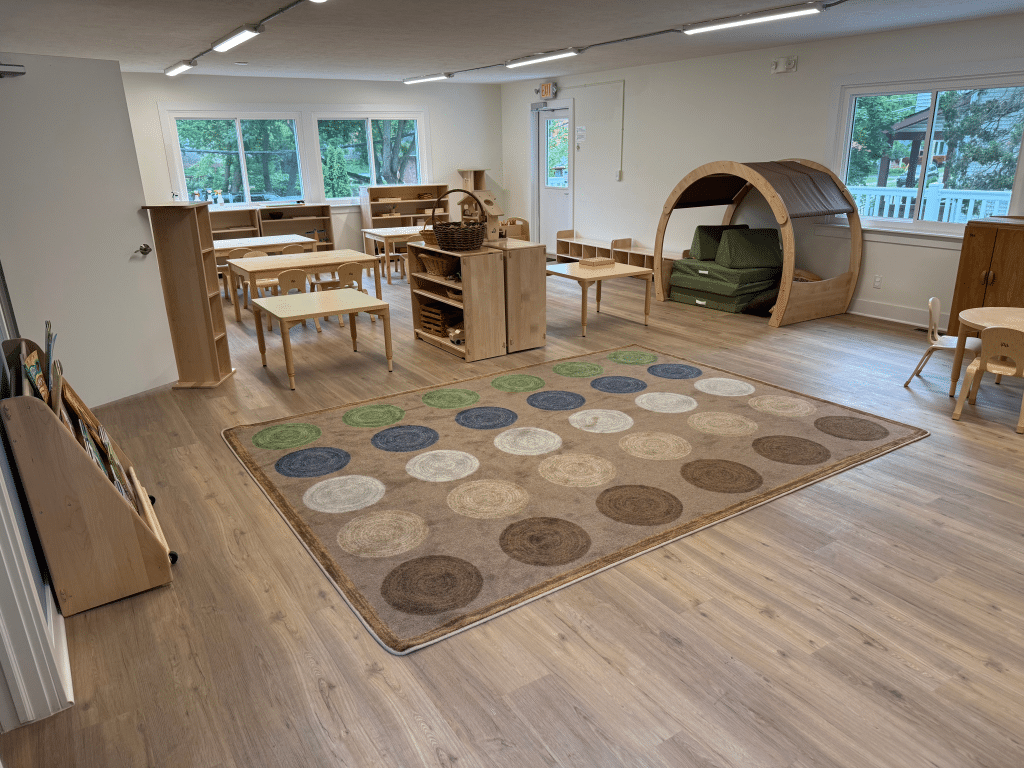
She says Apple Playschools is one of “just a handful” of local providers that do offer infant care. Prior to the recent expansion, infant-toddler care accounted for about half of the nonprofit’s enrollment.
Heisler says that model has become unsustainable. Like other child care providers, she says Apple Playschools has been stuck “between raising tuition prices for families and underpaying staff, who are overwhelmingly under-compensated.”
In fact, over the last four years, Apple Playschools has worked to increase employee wages by 35%, a trend Heisler says she’d like to continue. The nonprofit has also added medical benefits for staff via a cost-share program where 70-80% of benefits are paid for by Apple Playschools. Other staff benefits, including retirement matching and paid time off, have also increased.
Meanwhile, Heisler says she appreciates the AAACF’s investment “in both the current needs of the community and the future needs of the community.”
Author

Related Articles
Washtenaw County school to host new free pre-kindergarten program
A new free pre-kindergarten program will be available to 15 3- and 4-year-olds in the Washtenaw Intermediate School District (WISD) this school year.
Why early childhood belongs on every Michigan voter’s ballot
Why Michigan voters should pay attention candidates’ stands on childcare and early learning.
WCC rolls out new Mobile Classroom for offsite learning
Washtenaw Community College is taking its classes beyond traditional campus borders this summer with a new project: a 48-foot-long mobile unit called the Mobile Classroom.


