
Q&A: New EMU President Brendan Kelly on enrollment, parking, AI, student service, and more
Five weeks into his new job, we sat down with Eastern Michigan University (EMU) President Brendan Kelly to discuss his plans for the future of EMU, his alma mater.
On the Ground Ypsilanti is an “embedded journalism” program covering the city and township of Ypsilanti. It is supported by Ann Arbor SPARK, the Center for Health and Research Transformation, Destination Ann Arbor, Eastern Michigan University, Engage @ EMU, Washtenaw Community College, Washtenaw County Parks and Recreation Commission, and Washtenaw ISD.
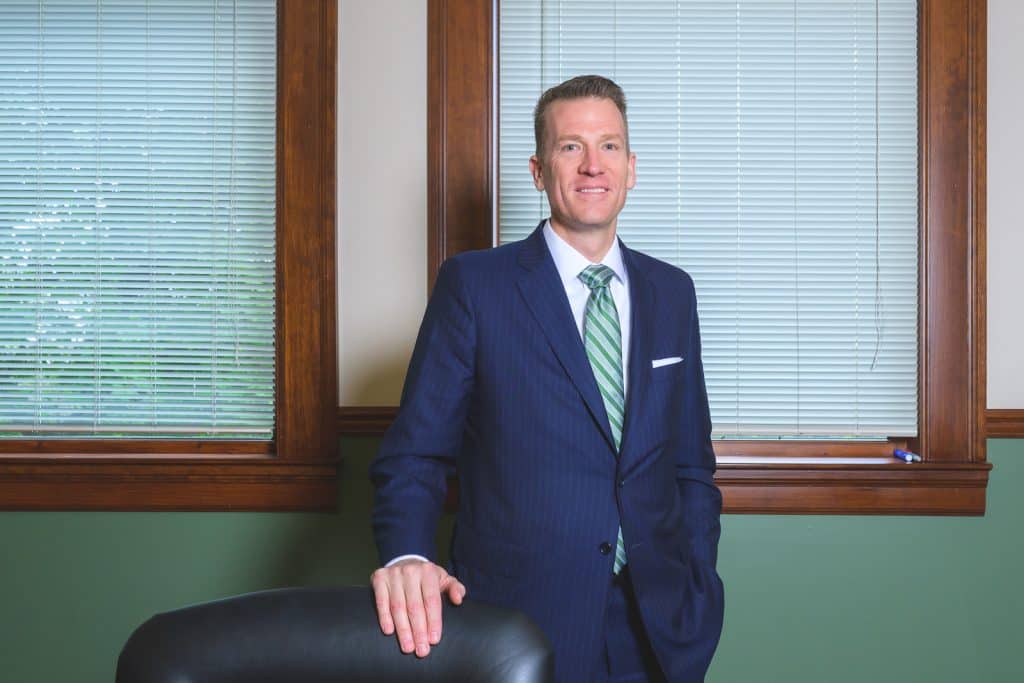
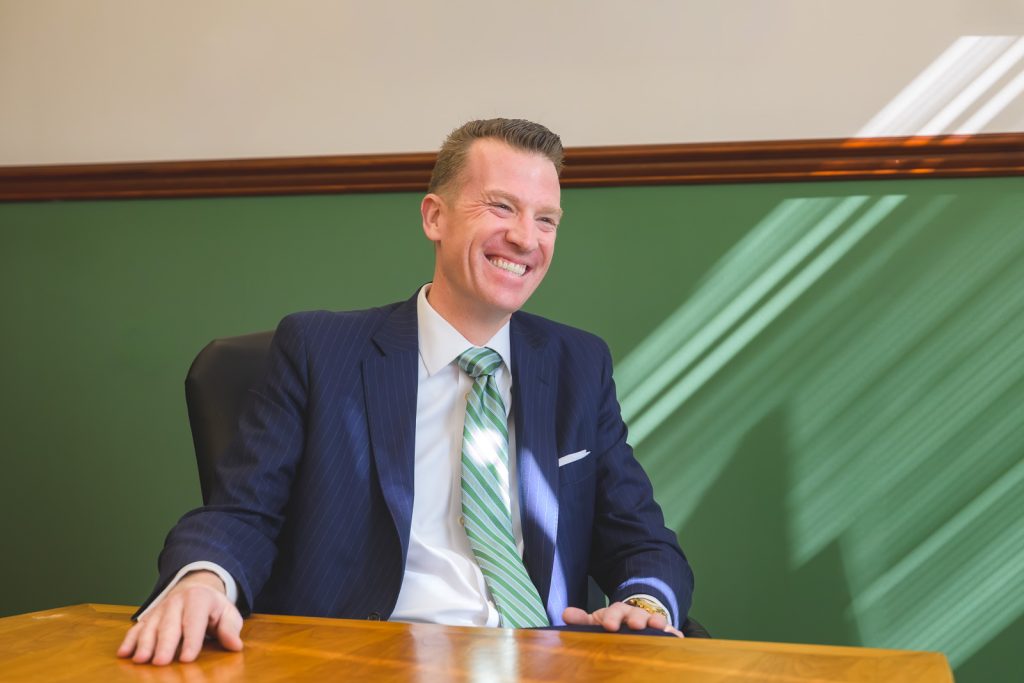
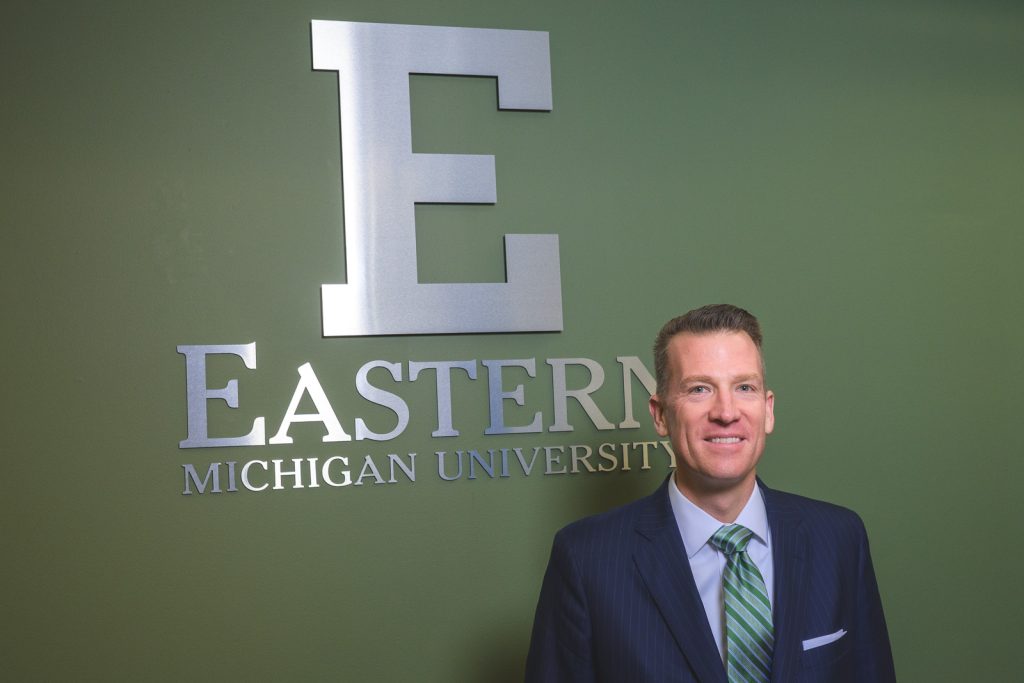
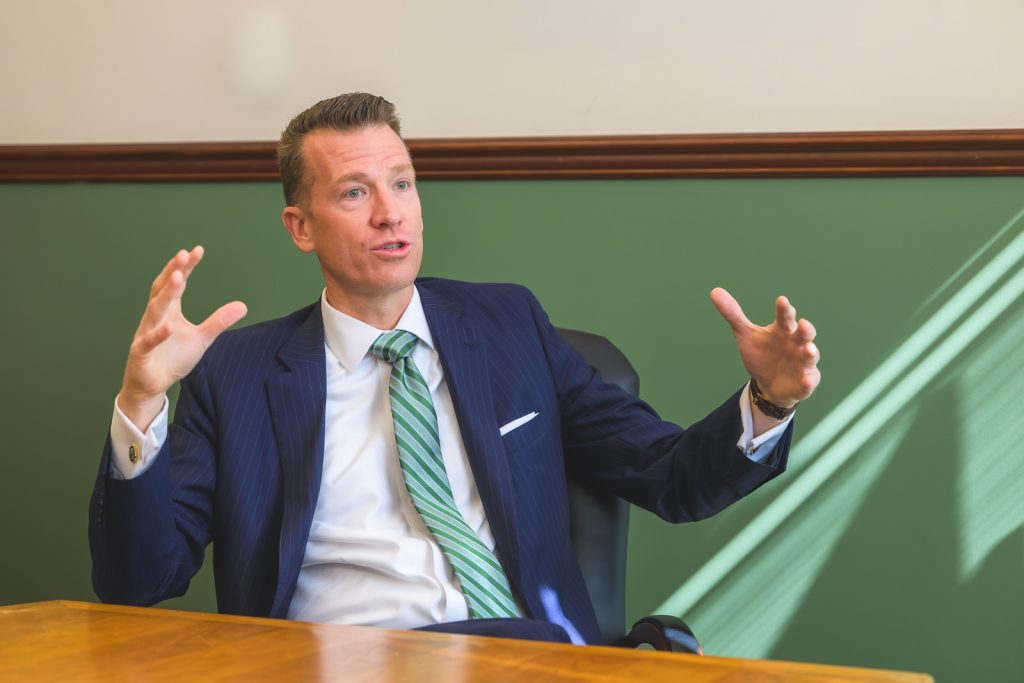
After 10 years under the leadership of James Smith, Eastern Michigan University (EMU) has a new president with deep roots in the institution: Brendan Kelly. Kelly has two degrees from EMU, and his wife, Dr. Tressa Kelly, is also an EMU grad. Kelly returns to Ypsilanti after more than 15 years in leadership positions at universities throughout the country, most recently as president of Arkansas State University. Five weeks into his new job, we sat down with Kelly to discuss how his student experience at EMU will influence his presidency; how he plans to address challenges like enrollment, parking, and the rise of artificial intelligence (AI); and how he views EMU’s role in the community.
This interview has been edited for length and clarity.
Q: Being an alum of EMU, what kind of perspective will that bring to the job?
A: As an alum, as somebody who’s from here, as [Ypsilanti] Mayor [Nicole] Brown would say, I don’t have to teach you how to love Ypsilanti. That being said, it is so good to be back in a community where, this morning, I was having a conversation with a state leader, and somehow my wife’s cousin came up. Or you walk downtown to a restaurant, somebody walks up to [the Kellys], and talks to me about how we were connected 25 years ago. There are people who we are connected to here, who knew us in a different chapter of our life, and we knew them in a different chapter of theirs. I served on the planning committee for the Ypsilanti Heritage Festival years ago, as did Tressa. All of those life experiences converge, and they made the experience of being back here much richer than anything we’ve experienced before.
Q: It seems like there’s a learning curve to a new job as university president that isn’t the same for you.
A: It’s a huge competitive advantage. The DNA of this university is what has fed mine and my wife’s careers since we left, and that’s the focus on the student experience. When I came back, I very unapologetically said it’s all about [students]. It is not about us. We are stewards of this place. We are stewards of their experience. That is how we should be spending our time, effort, and focus. I believe those things to be true, but I believe them to be true because I learned them here.
It’s deeply meaningful to serve this university, to enrich others in the same place with many of the same values that we were enriched with and that fed a great life. It’s a passion project. We chose to come back to Eastern Michigan at this moment, just as much as they chose us.
Q: You’ve got all this experience at all these other schools, mostly throughout the south. I’m sure some things are different, but many things are the same, and you’ve probably seen some patterns. What kind of knowledge have you picked up that you’re going to be bringing to Eastern Michigan University from your previous jobs?
A: Every university thinks they are totally unique in the world, and nobody’s like them, right? And that is just simply not true, and that’s what I bring back [to EMU]. Students have similar needs and expectations. When you live in other states, you see where the roots of communities come from, and there’s some differences there, but our total purpose is not different.
I’m so proud of every place that we have been, because it’s better prepared us to be able to serve this place now. I also have a deep appreciation for a wide variety of different types of communities, and the way people live and where they come from, and how that informs where they’re going. I would suggest I’m probably better equipped to serve a broader range of students just because we’ve seen and learned from thousands and thousands of students in other places.
Q: Enrollment, not just at Eastern, but across the board, is historically low at a lot of colleges. And affordability is kind of a continuing problem. What do you see as some of your top challenges coming into this role?
A: Enrollment and affordability — those have to be on the agenda, right? Enrollment is dynamic right now in our industry. The financial strain across higher education is rather acute right now, and that’s true for every institution. And don’t allow scope of organization to be mistaken for scope of impact, because that’s not how higher education works. It’s just how people think it works. So bigger doesn’t always mean that you have less strength. We’re just going through a time of great change. I can’t find a colleague who tells me that there’s been a time of greater strain for a public university president in America, and I have a network of presidents, many of which have served for decades in different positions across the country.
Enrollment is a key piece – making certain that what we have to offer and the way in which we offer it meets the needs and expectations of students. And maybe even more importantly, because it connects to the aspirations of students, of industry and employers, we have to be an institution that connects with those who are seeking the talent pipelines that we’re creating, so that we can make sure that those two dots connect, which I’m not sure higher education has always specialized in. In fact, I can assure you that’s not the case.
There’s not going to be any lack of challenges moving forward. I’ve been president in good economies and bad economies during crises. It’s always challenging, and universities are always at the nexus point for political tensions in society. That’s part of the role we play. But we can’t lose focus on what is most critically important, and that’s connecting students that are in service to the future they desire.
Q: I want to talk a little bit about how you see Eastern fitting into the general educational ecosystem in Washtenaw County. You have the University of Michigan, you have Washtenaw Community College, you have EMU. So what do you see as being EMU’s special niche? What is drawing students here?
A: U of M is always highly selective, so not everybody is going to have that choice. That’s just the nature of their business model. Washtenaw Community College is great, just like so many other community colleges are great partners to us, because we are interconnected. And I say that because when I was in Arkansas, I had the chance to oversee five community colleges and two four-year universities, so I learned more about that model and how it fuses together and how we serve. We want to honor that with more accelerated partnerships, with ways to create richer opportunities for students to experience both Washtenaw and Eastern Michigan, to create clearer, easier pathways, to invent stuff that doesn’t exist right now. We have, as a four-year university, a much more flexible business model than a flagship would, because we can adapt to the needs of the communities that we’re in service to.
I want to emphasize that we’re not the “University of Washtenaw County” because we don’t just serve Washtenaw County. That’s not how we view Eastern Michigan. We serve the state of Michigan, right? We serve this entire region. This is a cluster of universities in southeastern Michigan, and I’ve served in other clusters of universities, especially in the Atlanta metropolitan area. And when you do that, you have all of the tools that you need with these partner institutions, assuming everybody is talking to each other. There are a lot of great relationships between leaders throughout higher education in this region to meet the needs of industry so that we can help grow the economy and give people a richer quality of life. Eastern Michigan’s role has to be one of partnership. It has to be one of asking, “How do we build opportunities for others? How do we solve problems for others?” And I do believe we’re really well positioned to be able to have those conversations and then adapt to those needs.
Q: EMU just announced a partnership with Ypsilanti Community Schools (YCS) to automatically accept YCS students who have a GPA of at least 2.5. How did that come about and how is it being received?
A: Colleges and universities are kind of designed to be unreasonably complicated. To take a history class, you have to apply. You have to get accepted. You have to go through the registration process. You have to go through, like, nine steps, and then you can go and sit in a class. There are very few other products or services that you experience in your life that take that many steps to access.
So it’s incumbent upon us to look at that as a problem and not a necessity, and say, “How many of those steps can we take out of the way? How can I make it easier for you?” If you’re a student and you have an issue, why don’t I just solve it for you? That partnership is a perfect example of us trying to be proactive. Let’s skip unnecessary steps to make it easier for you, so that when you touch the soil of this campus, you feel like it’s yours and that we’re here for you.
Q: EMU has renewed its student housing stock in the last few years. What kind of feedback are you getting from students on that? Does it seem to be a selling point?
A: I did watch that closely from afar. I’ve been involved in lots and lots of different projects and partnerships like that, and it is a tough problem to solve in higher education in America right now. You have a huge number of universities that were built 50 years ago. EMU is obviously 177 years old, but the infrastructure solutions are real ones. I have met with hundreds and hundreds and hundreds of students. I have real, open conversations with all of them. I take feedback from every direction. I know acutely what’s not working for them. They are not shy in telling me [that] housing is not one of [their complaints]. They really appreciate the brand new housing.
I lived on this campus in the ’90s, and I had some students who I’ve had a chance to interact with who lived in the same places that I did, except in the 2020s. And now those are either gone or they are totally renovated, and their experience is so vastly different from mine. It is modern. It accommodates the tastes that the student body has now. And we get a lot of positive feedback on that front. They just have different needs than we did. I mean, I lived on this campus in what was akin to a prison cell. It was cinder block walls, with an open closet. You were maybe 18 inches from another person who was sleeping across the way from you, and that was great at the time. Now, they’re much more discerning consumers than we were. The housing kind of matches where we’re at at this point in the evolution of the student.
Q: What are your priorities, thoughts, or visions for the next year or two?
A: My priorities and the Board of Regents’ priorities are aligned, because they have to be. And they were really clear on priorities that they set for the new president. First and foremost, it was focusing on enrollment, so that we put ourselves in a position to serve the state of Michigan in the right fashion, moving into the years ahead. The same goes for retention, because retention is what connects to graduation rates and students earning credentials of value, and it’s our responsibility to connect all of those together.
It’s important to make sure that the story of this institution is told in a compelling fashion. That’s something that I think EMU has struggled with for a good, long time, and I think the benefit of coming back as somebody who is a product of this place gives us an advantage in doing that storytelling. I also do it with unapologetic pride in this institution, and it’s one of the most gratifying parts of having the privilege of doing this job.
The final [priority] right now is to build a high-performing and highly accountable team of leaders to serve this institution. That’s a critical part of how any organization is going to be successful. But we’re at a moment where it’s particularly important for EMU. We’re launching a strategic planning process right now that will conclude and be presented to the board at the December meeting.
If you extrapolate down from those priorities I just listed, that means you’re going to have to have academic programs that have adapted to where the world is now and the types of skills and abilities that employers expect of students. That’s important for us to integrate into everything that we’re doing to provide students with the type of professional development, professional network, social networks, that are essential equipment for living a successful career in America right now. We are working really hard, despite the fact it’s only been five weeks, to achieve those things, because everything I just described was already built into the DNA of Eastern Michigan. It’s about taking those roots out, making certain that we package it appropriately, and putting people in the position to be successful and lend that to the world in as aggressive and intentional a fashion as possible.
Q: Speaking of student concerns, what’s going on with parking?
A: Oh, that was a central student complaint. I mean, parking is a complaint everywhere, right? But students were explaining to me what the regulations were, and I was like, “Are you serious?” So on my second day, I talked to the police chief and we changed parking regulations. All we did was change regulations that every student I talked to asked us to change and it was simple stuff. We were going to lift restrictions on overnight parking, making sure if you have a friend on campus that they won’t get a ticket. We opened up some additional lots that were restricted, because you’re watching students drive around a full lot and then there’s 84 empty spots across the street and it has a barricade across it and there’s four spots that are being used. If it’s not useful, usable, and used, I don’t know what we’re doing. So there were really simple changes. We did exactly what people asked us to do to make their experience better.
And with commencement, there was like a scalping industry, because we had limits on tickets. That had been true for years and years and years, and that’s true in many institutions across the country. I have a different philosophy about it. If we’re actually here for students and families, then the only people who are inconvenienced by us having to expand our number of commencements or whatnot is us. We can be inconvenienced for everybody else’s experience. So we just lifted the limit on tickets so that everybody got what they needed, instead of having to go and fight with each other about it. We just relieved students’ anxiety completely. Everybody had a comfortable place to sit and be part of what was really positive energy at commencement. There are many subtle changes that you can make to the way in which we approach the work that we do that makes it better for them. You just have to start with the goal. My number one priority is “I’m going to make it better for them,” as opposed to “I’m going to make it better for me.”
I’m in service to people. If you want to work for a university, I think you should come in with that mindset. And if you don’t, there’s lots of other good opportunities in America where I’m sure your skill sets will be better used, but we are here to serve students.
Q: There’s some concern that AI threatens to devalue white-collar jobs, and traditionally, college is the pipeline to white-collar jobs. What are your thoughts on AI in education?
A: We have to be talking about it now. I think every new technological shift that occurs in society starts with the doomsday [predictions] that this is going to change everything. I appreciate all of the talk of “Everything’s going to be taken over by AI.” That hasn’t occurred with any other technological advancement. I have three adult children, and our greatest worry in 2010 was those kids getting an iPhone into their hands and having access to that amount of computing. And now you have this group of young people, say mid-20s to mid-30s, whose parents can’t put down their phone. They can’t get off of social media apps. And then I’ve got a 26-year-old daughter who’s looking at me going, “Oh, well, let me explain what self-regulation is. I don’t participate in these things.” They’re making sense of all of these tools, and they’re making sense of the world, and so will we.
But AI is going to be part of education. AI is going to make us more capable. AI is going to, I hope, advance our ability to learn, to solve problems, to hasten some things that took a long time, but they needlessly took a long time.
I think the professor of the future — there’s going to be a magic about that person being able to make sense of really complex things and impart them to others in the form of filling their toolbox. AI is just going to help inform that process, but it’s not going to replace it, and it’s not going to replace a lot of jobs. It might lift up what the expectations for those jobs were, but that’s okay, because the previous job probably wasn’t that fulfilling for a person in the first place, right? So it’s just going to ask more of us, because our capabilities go up. I know there are counterarguments to that. I just haven’t seen evidence or movement or historical comparison where we don’t land in a space where we are the ones who are making sense of all of these tools as we move forward. If it was 1910 and somebody wanted to cheat their way through college, there were tools for that. But you always figure out who that person is, because you don’t win in life with shortcuts.
Author

Related Articles

Washtenaw County school to host new free pre-kindergarten program
A new free pre-kindergarten program will be available to 15 3- and 4-year-olds in the Washtenaw Intermediate School District (WISD) this school year.

Why early childhood belongs on every Michigan voter’s ballot
Why Michigan voters should pay attention candidates’ stands on childcare and early learning.
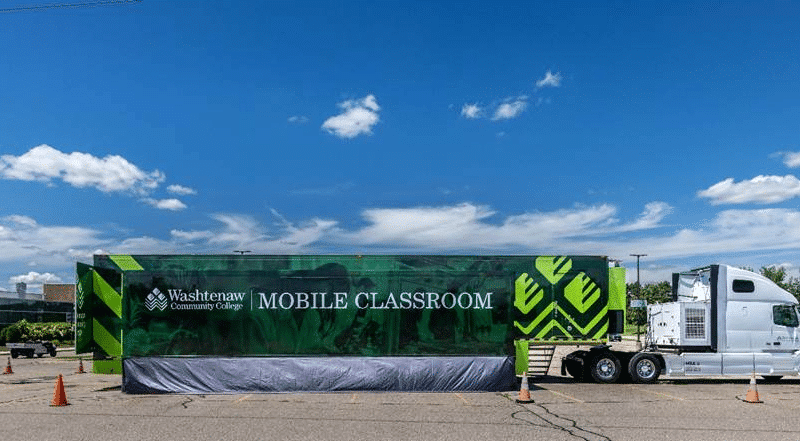
WCC rolls out new Mobile Classroom for offsite learning
Washtenaw Community College is taking its classes beyond traditional campus borders this summer with a new project: a 48-foot-long mobile unit called the Mobile Classroom.


