At Ann Arbor’s Maker Works, a growing community is finding ways to create
Maker Works has spent the past several years expanding its equipment, classes, and membership while learning what it means to operate as a nonprofit.
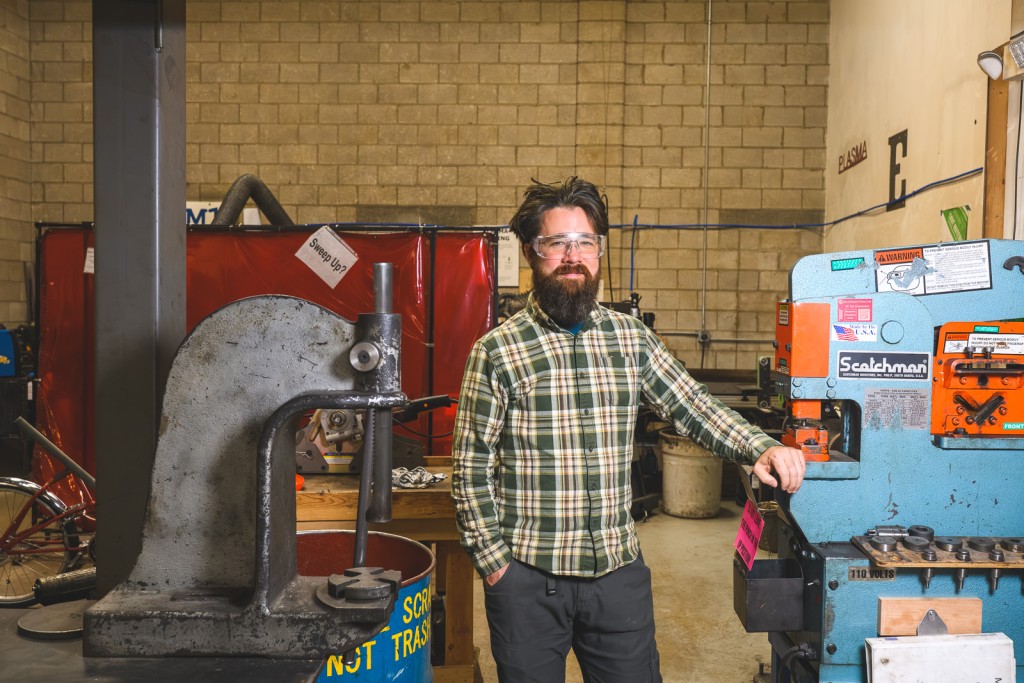
When Gail Winger first walked into Maker Works a few years ago, she was only looking for a better way to organize her embroidery floss. She certainly wasn’t expecting to find herself running a business out of the same Ann Arbor workshop, yet that is precisely where she is today.
An avid stitcher and longtime teacher, Winger had grown frustrated with the cardboard bobbins used to store embroidery thread. She tried making her own alternatives with a small cutting machine at home, but the process was tedious. Producing a few pieces could take hours.
Her husband suggested she visit Maker Works, an Ann Arbor workshop he had known about for years. Perhaps someone there could help.
The staff introduced her to a laser cutter and suggested using acrylic instead of cardboard. Winger tried it, shared her creations with an online stitching group, and discovered that other people had been looking for a solution to the same problem.
“It just went bananas,” she recalls.
What began as a personal project during Covid-19 became GWStitchinDepot, a business selling storage products to embroidery enthusiasts through Etsy. The shop has since recorded more than 7,400 sales and earned a five-star rating from approximately 2,400 customer reviews. Winger eventually purchased her own laser cutter and moved into a small studio at Maker Works, where she continues to work alongside other artists, hobbyists, and entrepreneurs.
“I couldn’t have done this without them,” she says.
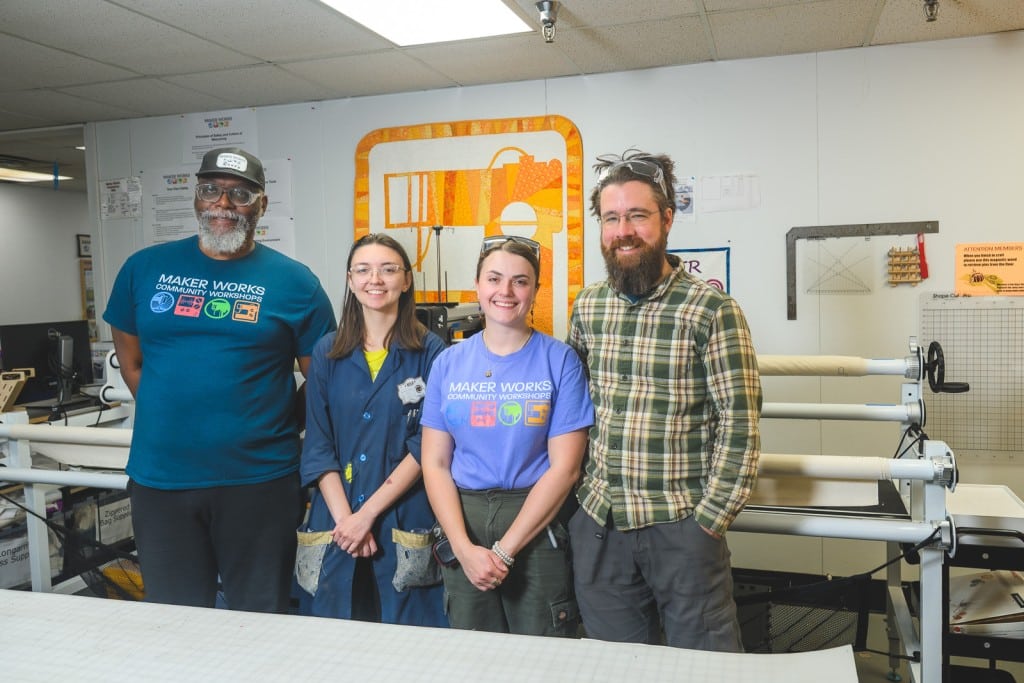
Stories like Winger’s are becoming increasingly common at Maker Works, which has spent the past several years expanding its equipment, classes, and membership while learning what it means to operate as a nonprofit.
Founded in 2011 as a for-profit business by Zingerman’s Mail Order managing partner Tom Root and technology entrepreneur Dale Grover, Maker Works operated for a decade with its founders regularly covering financial shortfalls before transitioning to nonprofit status in 2021.
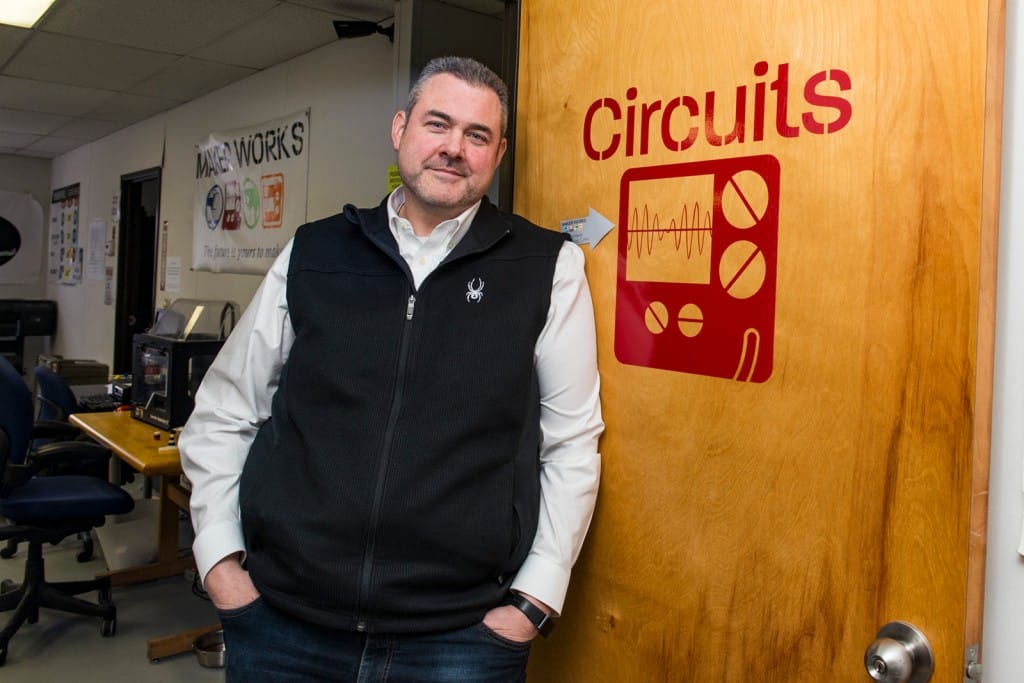
When Concentrate last reported on Maker Works in 2022, its leadership was asking the community to help secure the workshop’s future.
Four years later, that appeal appears to have paid off.
Josh Williams, a longtime member of the Maker Works leadership team, says annual fundraisers now cover between 10% and 20% of the organization’s operating overhead. Membership has grown from roughly 120-130 to approximately 220 people, while the number of classes offered annually has increased from about 600 or 700 to more than 1,000.
“We’ve got a long way to go and a lot to learn,” Williams says, “but we’re in a much healthier spot.”
Since August 2025, Maker Works has acquired more than $100,000 worth of equipment for less than 40% of its retail value, taking advantage of discounted demonstration models and partnerships with manufacturers. One laser cutter, ordinarily priced at approximately $25,000, cost the organization about $8,000.
The arrangements benefit both parties: manufacturers introduce their equipment to potential customers, while Maker Works expands its offerings at a fraction of the usual cost.
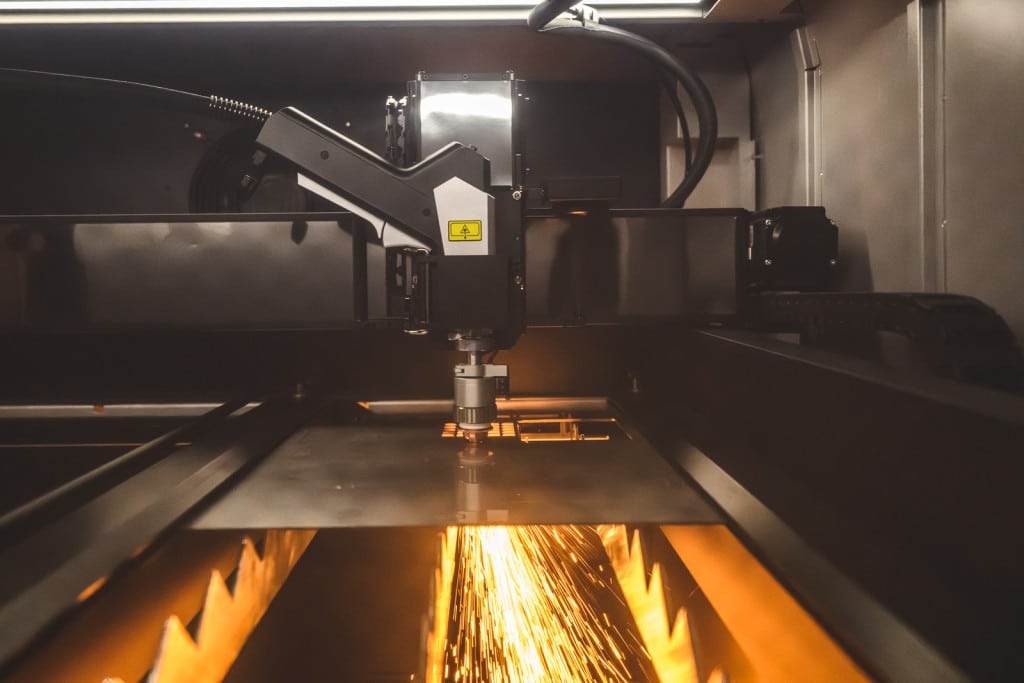
Among the latest additions is a 1,200-watt fiber laser cutter that allows users to turn digital designs into precisely cut metal pieces. Williams hopes the machine will appeal to everyone from robotics students fabricating custom parts to artists designing jewelry.
At approximately $20,000, it’s hardly a practical purchase for someone experimenting with metalworking. Maker Works provides access to the equipment and the training needed to use it safely.
“Tools should be accessible,” Williams says. “It’s how we create the world around us.”
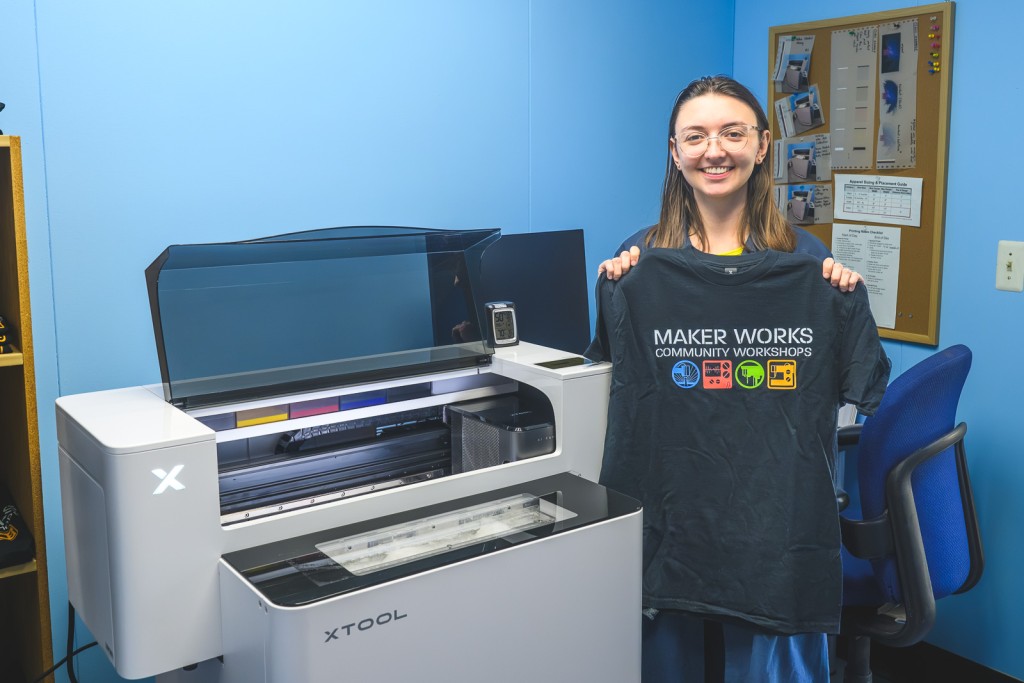
The organization has also invested in apparel-printing equipment, which Williams says could help groups like Girl Scout troops design and produce their own T-shirts. For someone making only a handful of shirts, the equipment offers an alternative to placing a larger order with a commercial printer.
Access to these tools comes at a cost. Most machines require introductory classes, generally priced at about $40 per hour, followed by membership or day-pass fees. To help offset those expenses, Maker Works allows members to earn shop credit by volunteering or helping maintain the workshop.
One opportunity is Fix-It Friday, where volunteers help residents repair broken household items at no cost, thanks to support from the Kiwanis Club of Ann Arbor Foundation. The program also keeps belongings that might otherwise be discarded out of landfills.
Williams recalls a woman who brought in a broken chair, the last surviving piece of furniture from a Chinese restaurant she had operated on Ann Arbor’s Main Street decades earlier. To anyone else, it might have looked like an ordinary chair, but to her, it was a piece of her history.
A volunteer repaired the broken leg, allowing her to take home something that might otherwise have been lost.
Maker Works also operates a community partnership program that allows people to request reduced-cost or free access to its facilities.
Applicants aren’t required to provide detailed financial information or justify why they need assistance. Instead, they indicate what they can afford, with discounts ranging from partial reductions to the full cost.
“We never want somebody to come into the shop and be like, ‘Oh, I’d love to have access to this, but I can’t afford it,’” Williams says.
Making the workshop accessible also means accommodating people’s schedules.
Class enrollment has risen approximately 40% year over year, prompting Maker Works to introduce a quarterly catalog to help people navigate its offerings. Those unable to attend a scheduled class can request another time through the organization’s website, with many sessions now arranged around those requests.
For Williams, the growing interest also speaks to something beyond learning how to use a new machine. He points to a familiar experience: spending far too long scrolling through his phone, only to realize afterward that he has little to show for it.
At Maker Works, the results of an afternoon’s effort are considerably more tangible.
People leave with a cutting board, a repaired household item, a piece of jewelry, or simply the satisfaction of having learned how to do something unfamiliar.
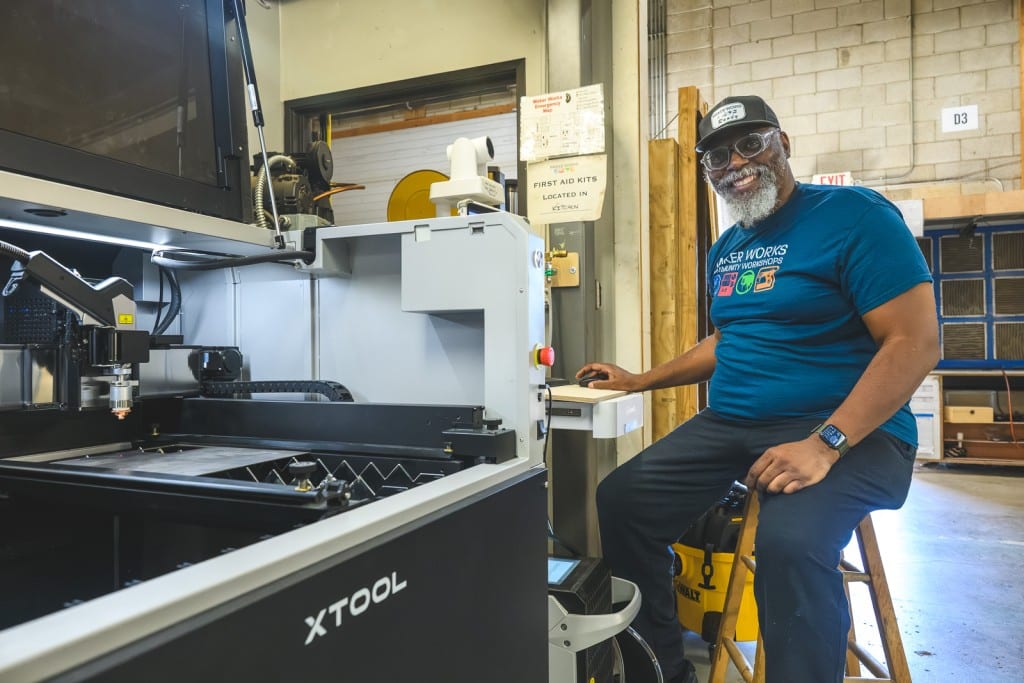
For Winger, Maker Works has become a place to exchange ideas, troubleshoot problems, and learn from other makers. She credits the staff with helping her navigate the technical challenges of running her laser cutter, while the workshop’s equipment continues to inspire new possibilities for her business.
“It’s like another little family,” she says. “I feel like they’re my tribe.”
Winger is already looking forward to learning another craft: refinishing antique furniture.
Despite its growth, Williams says the organization still struggles with a surprisingly basic problem: Many people have no idea it exists.
Visitors regularly tell him they’ve lived in Ann Arbor for years without hearing about the workshop. Some discover it only after purchasing expensive equipment they might otherwise have borrowed or learned to use there.
Williams hopes to change that. Among the organization’s longer-term ambitions is a mobile makerspace that could bring equipment and educational opportunities into surrounding communities by 2030.
For now, he’s focused on making better use of the tools already available and helping more people find their way through the doors.
After 15 years, he says, Maker Works is still discovering what people will do when given the opportunity.
“We always joke that the tools get people here,” Williams says.
But what keeps him interested are the people who arrive with an idea, a problem, or something broken, and the unexpected things that happen once they get to work.
Related Articles
Michigan’s community mental health system: Overcoming stigma to provide needed care
Community mental health has played an important role in shifting the culture to asking for help.
As SNAP cuts take effect, Michigan families and food banks brace for growing need
Consequences will reach far beyond the dinner table, affecting family stability, children’s health, and their ability to learn.
Michigan Folk School holds annual Folk Festival with free demonstrations of traditional skills
The Michigan Folk School holds its free annual Folk Festival on Saturday, Oct. 17, at Staebler Farm County Park.