Author

Newsroom

Newsroom's Latest Articles

Ghostly Records featured in NY Times

We here at Concentrate have long sung the praises of Ghostly Records, which was founded by U-M alum Sam Valenti. Heck, they even provided us with music for our videos. Now, the New York Times' business section is finally noticing this cooler-than-cool company. Excerpt: "A diversified product line can be a smart survival strategy in a struggling business, which the music industry continues to be 16 years after Napster shattered the highly profitable model of selling CDs. But according to Sam Valenti IV, Ghostly’s founder, the nonmusical goods that it sells are not a hedge against declining record sales. Music, he said, is profitable and by far Ghostly’s biggest product." Read the rest here.
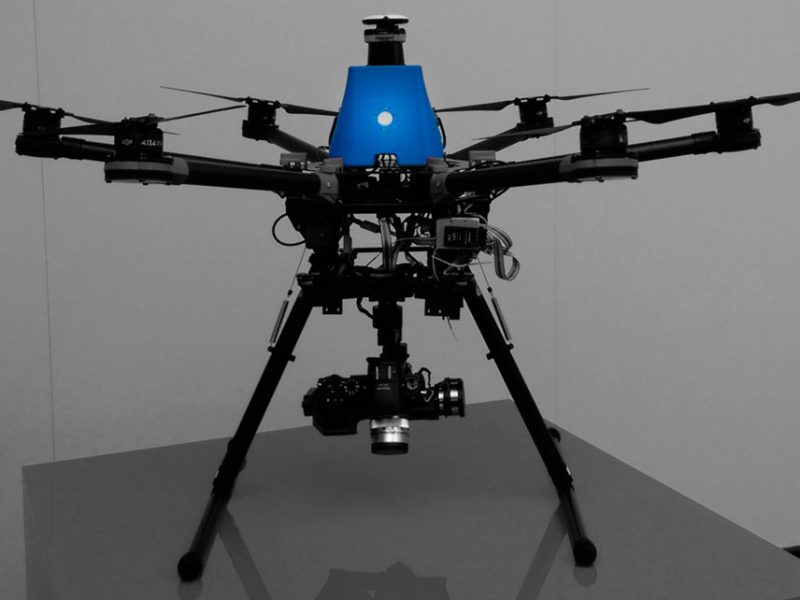
Ann Arbor’s SkySpecs preps to launch drone technology

SkySpecs is gearing up to launch its drone technology early next year. It's on the brink of raising a significant amount of seed capital and already testing its product with customers. The Ann Arbor-based startup is developing aerial drone technology that uses artificial intelligence to inspect infrastructure in dangerous locations, such as the blades of wind turbines. It's WingMan platform allows the aircraft to hover near an object without fear of hitting it. Check out a demonstration of the company's WingMan technology here. "Our first field prototypes are working well," says Danny Ellis, CEO of SkySpecs. "We have customers who are working with them in the field. We’re planning a full roll-out in 2016." SkySpecs got its start three years ago with aspirations of making drones in the rapidly growing industry. That focus shifted to creating technology that makes sure drones can avoid running into objects they are buzzing around, such as wind turbines or hard-to-reach parts of bridges. Now SkySpecs has shifted again to offering an end-to-end solution for its customers, equipping drones with its technology so operations are turn-key for its customers. Ellis noticed many of SkySpecs potential customers loved the technology but didn’t know much about drones. "It was extra work for us," Ellis says. "They would come to us and ask us which drones to buy." SkySpecs won the grand prize worth $500,000 from last year's Accelerate Michigan Innovation Competition and is part of the Techstars accelerator in New York City. It currently has a team of eight people mainly based in Ann Arbor after hiring a couple of engineers and a business development professional over the last year. The seed capital raise is expected to help SkySpecs grow out its team rapidly next year as it begins to roll out its technology on a national scale. It currently has two enterprise customers but Ellis doesn’t expect that his client list to remain that short for long. "We have more in the pipeline," Ellis says. Source: Danny Ellis, CEO of SkySpecs Writer: Jon Zemke Read more about Metro Detroit's growing entrepreneurial ecosystem at SEMichiganStartup.com.

Mountain Labs brings big data muscle to healthcare industry

Healthcare is known for its seemingly insurmountable bureaucracies and mountains of data. Mountain Labs wants to simplify that. The Ann Arbor-based startup recently launched a public health surveillance platform called "Symport" that helps hospitals and medical researchers simplify big data and complicated processes. The end goal is to streamline the healthcare system. "We're tracking clinical data to alert hospital administrators what they are doing that works," says Alex VanDerKolk, president of Mountain Labs. "It also helps clean and classify data sets." Mountain Labs counts the University of Michigan and Henry Ford health systems as customers, along with a smattering of other research health systems across the Midwest. It raised a $200,000 angel round last year and is in the process of securing more capital. "We raised another $350,000 on top of the seed round," VanDerKolk says. The 1-year-old company currently employs a team of eight people. VanDerKolk expects his staff to continue to grow as it targets more health systems as customers. "We are growing quickly," VanDerKolk says. "I'd like to have a presence in every state in the Midwest by the end of next year." Source: Alex VanDerKolk, president of Mountain Labs Writer: Jon Zemke

First electric scooters roll off GenZe’s Ann Arbor assembly line

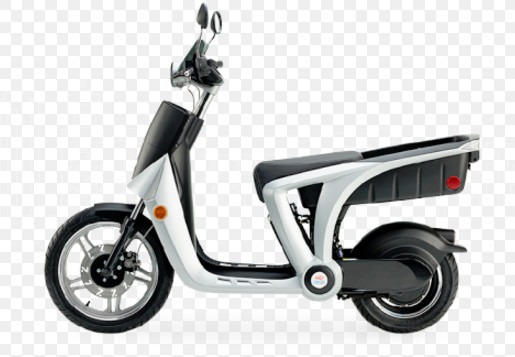
Michigan is famous for putting the world on four wheels in the 20th Century. Now Ann Arbor is making its mark in the world of two wheel vehicles. The first electric scooters are rolling off Ann Arbor-based GenZe production lines this month. Although the first order is just a few scooters, the company expects to hit its production goal of 3,000 scooters by next year. "We're going to ramp up pretty quickly," says Yesim Erez, head of marketing for GenZe. GenZe makes an electric scooter and an electric bike. The GenZe 2.0 electric scooter aims to make urban commuting more convenient by combining smart design with new technology. For instance, the scooter can recharge by plugging into a normal outlet but is equipped with a touch pad control center in the handlebars and mobile app so users can monitor power levels and travel plans through GPS. It has enough cargo to carry small loads, like groceries, but is small enough to fit in an elevator.  ?Check out a video on it here. "They have the built-in capacity for urban commuting," Erez says. "It can satisfy the urban commuters needs throughout the day." GenZe plans to start retailing its electric scooters for $2,999. It's targeting markets in Portland, San Francisco and Michigan to start, but plans to expand in urban areas across North America over the next couple of years. GenZe, formerly Mahindra GenZe, opened a tech center in Ann Arbor in 2014. It has since expanded that presence to include a manufacturing facility. It currently employs 36 people, including 10 new hires. The number of staff is expected to increase with sales over the next year. "We have been hiring as we ramp up production," Erez says. "We plan to continue to build out our staff."

Happy hour startup DrankBank capitalizes on 4 years of growth

Jordan Eckstein, Ian Sabbag and Brian Shepanek were working in digital marketing five years ago when the trio of recently graduated University of Michigan students stumbled upon a business idea: centralizing happy hour specials on the web. That idea launched DrankBank, an Internet startup that helps people find the best happy hour in their city. It started in Ann Arbor in 2011 and has grown to include major cities across North America from Portland to Chapel Hill. All of these dozens of cities shared one thing in common. "The happy hour information wasn't available," Sabbag says. "It wasn't easy to find." Most of the time people go to happy hours at bars they like to frequent or ones friends mention in passing. There wasn't a real option to find new ones outside of that person's regular orbit. DrankBank does that by collecting and centralizing happy hour information for bars and breweries across several major metropolitan areas. DrankBank has grown about 20-30 percent each year since its launch. The number of visitors has increased each month since its launch. The DrankBank team wants to grow it further by collaborating with some major alcohol brands to expand its reach and sharpen its offerings to users. Despite all of this growth, DrankBank is still an offshoot of the trio's digital marketing firm, Handprint Digital. The downtown Ann Arbor-based company calls an office in Nickels Arcade above Comet Coffee home. However, Eckstein, Sabbag and Shepanek believe they can turn DrankBank into its own standalone business in the not-too-distant future via its current growth curve. "We're profitable because we have a low-cost model," Eckstein says. "We want to make it into an viable business in the long run." Source: Jordan Eckstein and Ian Sabbag, co-founders of DrankBank Writer: Jon Zemke

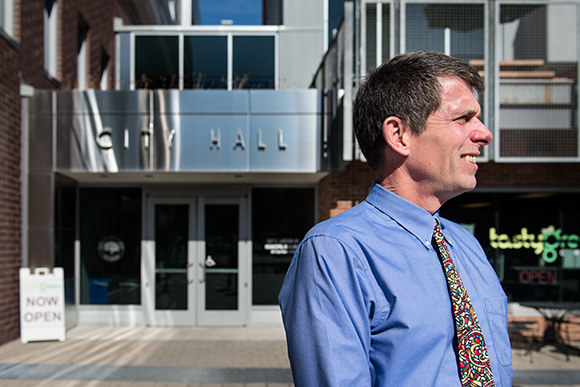
City Administrator Steve Powers at Ann Arbor City Hall
As Ann Arbor’s top administrator exits, he offers thoughts on the city’s future

Steve Powers, Ann Arbor's city administrator is moving on. Concentrate asks him to talk about his four years with the city, what challenges it faces in the future, and what advice he has for his replacement.

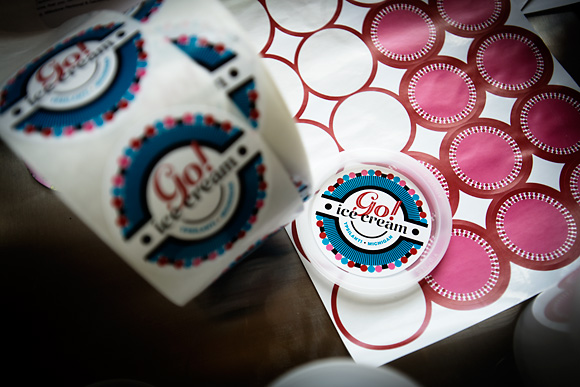
Packing pints of Go! Ice Cream
Hammers start swinging at Go! Ice Cream in downtown Ypsilanti

Work has begun in earnest on building out the first permanent home for Go! Ice Cream. The business plans to open early next year, adding one more cool thing to downtown Ypsilanti. Go! Ice Cream is taking over a vacant storefront on the alley side of 10 N Washington. It is utilizing $35,029 from a successful crowdfunding campaign to help jump start the build out. "We just tore out all of the stuff that was there before," says Rob Hess, owner of Go! Ice Cream. "It was an old office space with a drop ceiling and carpet." Hess started making ice cream in his home as a hobby. That grew into a part-time business of him selling his cold treats at events and from a tricycle all across Ypsilanti. Opening a brick-and-mortar storefront was the next logical step. The new space will feature a commercial kitchen for ice cream production. It will also have a 1920s-themed soda shop. Both are expected to open early next year. "We want to open up the kitchen by February and keep working on the soda shop," Hess says. "We want to have the soda shop open by May." Source: Rob Hess, owner of Go! Ice Cream Writer: Jon Zemke

Artisans fill Ypsi Alloy Studios’ new space in Ypsilanti

Ypsi Alloy Studios opened last summer but not in the space where it planned to stake its claim. The small artist community originally was looking in an the area between Ypsilanti and Ann Arbor. Instead it landed in a small industrial space within the Ypsilanti city limits. "It's a little bit smaller than the one before but it's perfect for us," says Elize Jekabson, co-founder of Ypsi Alloy Studios. Jekabson, Ilana Houten and Jessica Tenbusch are all artisans active in Ypsilanti’s dynamic art scene. They combined resources to come up with a community space for artisans like themselves. They now have 11 people working at Ypsi Allow Studios, including jewelers, metal smiths, sculptors, painters, illustrators, fiber artisans, fabricators, and a multi-media writer. There is a waiting list to get a space in Ypsi Alloy Studios but interested parties are encouraged to inquire at ypsi.alloy@gmail.com. The artist space is located in Mansfield Road in 2,440 square feet of a metal worker's shop. The group had to make some small changes to prep the space. "It ended up working much better," Tenbusch says. "It's in the city limits. The landlord has been a pleasure to work with. He understands what we're trying to do." "We didn't have much to do beyond adding electrical outlets for each individual space," Houten says. Ypsi Alloy Studios is looking at launching a crowdfunding campaign in the next few months to fund an expansion of its space. It would like to stay in the same complex. It also plans to host an open house in mid December. Source: Ilana Houten, Elize Jekabson and Jessica Tenbusch, co-founders of Ypsi Alloy Studios Writer: Jon Zemke

Dyson acquires Ann Arbor’s Sakti3 for $90M

It's the kind of acquisition many a startup hopes will come true: lithium-ion battery developer Sakti3 was bought by UK vacuum-maker Dyson to the tune of $90 million. No plans have yet been announced for where the battery production facility will be based but Michigan is a possibility. Excerpt: "The $90 million acquisition — first reported by business-news site Quartz — reflects a win for clean-tech investors in Sakti3, including General Motors and Khosla Ventures. Dyson itself had already invested $15 million in Sakti3. The University of Michigan spinoff company's founder and CEO Ann Marie Sastry will lead development of her technology as an executive for Dyson." Read the rest here.

Tantre Farm
Some communities embrace agrihoods (instead of golf courses)

Hey, here's an idea: How about Ann Arbor turn one of its two golf courses into a community farm? Or how about a few of our under-used pocket parks? Nearly 200 communities around the nation are embracing just such an idea. Excerpt: "Pushing back against that stereotypical image of suburban living is a growing number of so-called “agrihoods” springing up nationwide. These developments center around a real, functional farm as their crown jewel. According to CivilEats, there are currently about 200 of them nationwide." Read the rest here.

Our Partners

30044
30045
30046
30047
30049
Washtenaw ISD logo
Eastern Michigan University
Ann Arbor Art Center
UMS
U of M Arts Initiative
Engage EMU
Ann Arbor Housing Commission
University Bank

Don't miss out!

Everything Ann Arbor and Ypsilanti, in your inbox every week.

Close the CTA

Already a subscriber? Enter your email to hide this popup in the future.