Author

Newsroom

Newsroom's Latest Articles

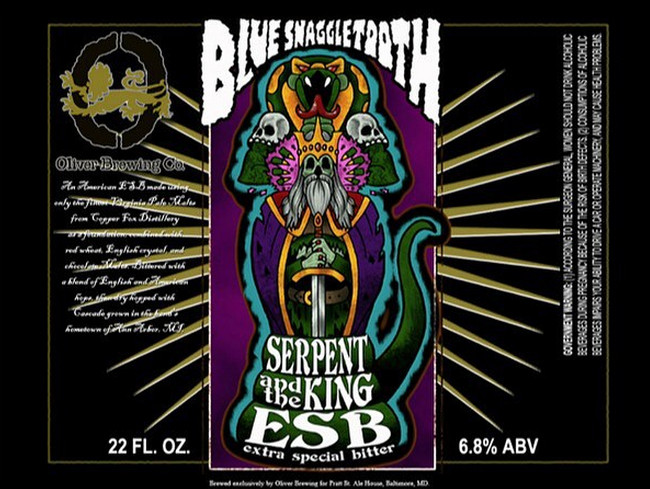
Baltimore brewer pays homage to Ann Arbor rock band

Ann Arbor-based stoner rock group Blue Snaggletooth has a serious fan at Oliver Brewing. The Baltimore brewery has dubbed their latest libation: Blue Snaggletooth Serpent and the King ESB (extra strong bitter). Excerpt: Originally, Serpent and the King ESB was only available on tap at the Oliver brewery in Baltimore. Taylor says the brewery was going to pay them a royalty for using Blue Snaggletooth’s name and logo, but the band opted to get paid in bottled beers instead. So Serpent and the King was put into 22-ounce bottles with a label designed by the band’s guitar player Casey O’Ryan. It will be available in this area only on Saturday in Ann Arbor. The release party is 9 p.m. at Vault Ultralounge, 219 S. Main St. Admission is free and for $5 guests get a cup of the beer and pizza. The band will have a limited supply of bottles available for sale at $25, which come with a signed silkscreen black light poster for the event. Read the rest here

Ann Arbor engineer helped expose Volkswagen’s diesel deception

It's pretty well known that Volkswagen tried to pull a fast one with its emissions-cheating software. What's less known is that it wasn't regulators who discovered this massive act of corporate fraud but rather a pair of engineers working at a non-profit lab with local roots. Excerpt: "Peter Mock of Berlin, Germany, and John German of Ann Arbor, Michigan, work for the International Council on Clean Transportation (ICCT). The organization’s mission as stated at the ICCT website is to “provide first-rate, unbiased research and technical and scientific analysis to environmental regulators.” Mock became suspicious when test results on diesel-powered vehicles in Europe were inconsistent. The tests were intended to convince European environmental regulators to loosen restrictions on the sale of diesel cars by verifying claims that their engines ran on “clean diesel.” Two of the models tested – the Volkswagen Jetta and Passat – passed emissions tests in the lab, but were still emitting unacceptably high levels of pollutants under real-world driving conditions. Since US clean air standards are higher than those in the EU, Mock contacted his American colleague. Would identical testing on vehicles made for the US market produce the same results?" Read the rest here.

Municipal admin services power Carlisle/Wortman Associates growth

Carlisle/Wortman Associates got its start offering civic planning services, such as helping local municipalities figure out zoning issues or plan for community growth. It built a respected brand around that work over the years. Today the Ann Arbor-based firm is increasingly known for more than that. Carlisle/Wortman Associates is generating more and more of its revenue from offering administrative services for local municipalities. Those typically include running community development departments or building departments. Last year it opened an office in Oakland to help facilitate such work. Today 40 percent of Carlisle/Wortman Associates' staff focuses on providing municipal administrative services, which is up from 30 percent last year. "It's becoming a much bigger part of the business," says Dick Carlisle, president of Carlisle Wortman Associates. The firm got its start offering municipal administrative services about 10-15 years ago at the specific request of its customers. The side business started out innocently enough but soon turned into something that needed to be paid attention to. "The more we did it the more we realized this is something we need to purposely try to do," Carlisle says. Today Carlisle/Wortman Associates employs a staff of 26 employees and an intern. It has hired two people over the last year, including a building inspector and a landscape architect. Carlisle expects those hires to continue as its municipal administrative service continues to grow. "I think its highly possible (municipal administrative services could equal half of the firm's work in the near future)," Carlisle says. "That part of the company is growing at a much more rapid rate than our core business. But it's only growing because of our core business." Source: Dick Carlisle, president of Carlisle Wortman Associates Writer: Jon Zemke

Goldman Sachs invests $50M in Ann Arbor’s LLamasoft

Goldman, Sachs & Co is placing a big bet on LLamasoft, a downtown Ann Arbor-based startup that has been growing rapidly for years. The New York City-based investment banking firm is sinking $50 million into LLamasoft as part of its Series B in exchange for a minority investment and a seat on LLamasoft's board.   ?Company leadership says it has been meeting with a who's who of private equity firms to further fund its growth and at the end of the day partnering with Goldman Sachs made sense because of the culture fit, the people working the deal, and access to large amounts of capital for future growth. "We felt the most comfortable with Goldman Sachs in the end," says Toby Brzoznowski, co-founder & executive vice president of LLamasoft. The 12-year-old company specializes in supply chain software that help optimize logistics for large corporations and organizations. Its customers include multi-national corporations in a large variety of industries, ranging from aerospace to pharmaceuticals. The $50 million from Goldman Sachs will help fund numerous technology development and growth initiatives, such as investing in supply chains analytics and developing new applications for its customers. All of that is expected to spike LLamasoft's growth in the near term. "We have averaged 50 percent growth over each of the last five years," Brzoznowski says. "That's revenue growth but you can’t do it without the people. We're adding a good deal of people every month." LLamasoft has hired 75 people over the last year, expanding its employee base to a little more than 300 people worldwide. Just under 200 of them are based in downtown Ann Arbor, and about 60 percent of its new hires work in Ann Arbor. Brzoznowski is optimistic those number will remain consistent, if not increase in the not-too-distant future. "We continue to add people at a rapid pace," Brzoznowski says. Source: Toby Brzoznowski, co-founder & executive vice president of LLamasoft Writer: Jon Zemke Read more about Metro Detroit's growing entrepreneurial ecosystem at SEMichiganStartup.com.

Ypsilanti aims to empower residents with new side-lot program

Ypsilanti wants to empower its residents by letting some of them purchase the lawns they mow. Talk about grassroots. The city of Ypsilanti is working to launch a side-lot program where homeowners who live next to vacant lots owned by the city can buy them for as little as $1. Often the lots in question are small city lots where the city razed a blighted building and left a grassy area that more times than not the neighbors take care of. "We're looking at increasing someone's yard," says Beth Ernat, director of community & economic development for the city of Ypsilanti. "It rewards property owners who have been taking care of the property." The city hopes selling the lots to local residents will mean generating more property tax revenue and spending less city resources on maintaining vacant land. Similar side-lot programs have been deployed in other Michigan cities, like Detroit, Saginaw and Flint. "It has worked in very well in other cities," Ernat says. "We think it's worth giving it a try here." The city of Ypsilanti hopes to have the program ready for launch in October and selling lots in November. Corner lots and lots of big acreage, such as the Water Street properties, are not available. Available lots will first be offered to adjacent owner-occupants who are in good standing with the city regarding property taxes and code violations. For information, contact Ernat at bernat@cityofypsilanti.com or (734) 482-9774. "We have received a lot of interest from word of mouth," Ernat says. "We will be notifying every neighbor about this." Source: Beth Ernat, director of community & economic development for the city of Ypsilanti Writer: Jon Zemke

Nutshell lands Series A2 round, plans to move to bigger home

Nutshell is making a sizable impact on Ann Arbor in two ways this year. First, the tech startup has just finished raising millions of dollars to fuel its rapid growth. Second, its co-founders and CEO have recently purchased three buildings in downtown Ann Arbor with the idea of creating a tech hub. "This is about creating a center of gravity for all things tech in downtown Ann Arbor," says Joe Malcoun, CEO of Nutshell. Malcoun and three of Nutshell's co-founders purchased 202, 206 and 208 E Huron St through their Cahoots Capital holding company earlier this year. They plan to turn the 24,000 square feet between the three buildings into one tech hub that will house Nutshell and other tech firms, including Notion and Coolhouse Labs. The group is in the process of choosing a general contractor for the renovation project. They hope to have the new space online and ready to go by summer of next year. Nutshell expects to move into the space not long after it becomes available. "We really don't want to leave downtown Ann Arbor," Malcoun says. "It's an important part of our value proposition to our employees our company culture." Nutshell makes customer relationship management software. The platform helps companies organize and automate its systems so its staff can work smarter and collaborate more with each other and their customers. The 4-year-old startup has watched its revenue jump 60 percent over the last year, prompting it to double its staff to 25 employees and an intern thanks to 12 new hires. Malcoun is looking to hire another 10-12 people now that it has landed a new round of investment. The rest of the money will go toward ratcheting up its marketing efforts. "The pure volume of marketing will increase," Malcoun says. "More importantly we are committing to an in-bound marketing campaign. We want to build a relationship with people before they purchase our product." Malcoun describes Nutshell’s latest investment round as a Series A2 worth "several million dollars." He declined to specify how much it was worth but did add that Ann Arbor-based Plymouth Venture Partners is leading the round. "It's a growth round, an extension of our Series A," Malcoun says. "We are calling it a Series A2 as a sort of homage to Ann Arbor." Source: Joe Malcoun, CEO of Nutshell Writer: Jon Zemke

Ann Arbor embraces Halloween season with creepy cinema

It's a first for Concentrate - sourcing a story to horror fan site Bloody Disgusting, but given that tomorrow is the start of October it seems apt to highlight the line up of scare flicks that'll be showing on local movie screens. Our fave: They Live! Excerpt: "I’m a big fan of going to both the State and Michigan theaters in downtown Ann Arbor, Michigan. What can I say, they’re my digs! That’s where I saw It Follows, Nosferatu with a live organist, Army of Darkness on the big screen, Paranormal Activity during its first run of 13 theaters, and more. They’re both wonderful theaters and it’s always a blast to see what they have playing, especially because it’s obvious that they show movies for the love of showing movies." Read the line-up here!

Coherix scores $12M to grow manufacturing software in China

Coherix recently landed $12 million to help rapidly grow sales of its manufacturing software around the world. But the Ann Arbor-based startup nearly perished before getting to this point. The company launched in 2004, making software that help streamline the advanced manufacturing process. Business grew quickly and the startup’s leadership had visions of going public. Then the Great Recession hit. The company's investors, never losing faith in Coherix's potential spent $9.6 million between 2008 and 2010 to keep the company afloat through hard times. "We have a tremendous group of investors," says Dwight Carlson, CEO of Coherix. When the economy turned around and Coherix extinguished its cash burn, Carlson had high hopes to raising a lot more money to fuel its growth. "I thought they would be throwing money at me because we survived (the Great Recession)," Carlson says. It didn't turn out that way. Investors saw that Coherix specialized in manufacturing, strike one. It is based in Michigan, strike two. Carlson cut his loses and went back to growing Coherix organically and further developing its technology. Today its principal technology provides high-speed, high-definition 3D measurement and inspection services for manufacturers that streamlines their production capability. It creates efficiencies through high-tech, optical-based measurement and inspection of the assembly processes. Coherix has found most of its success deploying this technology in China where 40 percent of that country’s gross domestic product is created through manufacturing. It employs 50 people globally, including 35 in Ann Arbor. It has hired two marketing people in Ann Arbor over the last year now that it has landed its latest investment round. Carlson expects to hire a lot more people as he starts to put the $12 million in new seed capital to work. One third of that money will go toward building out Coherix's operations in China. The rest of it will be spent building the business in Ann Arbor. Taking Coherix public in the next few years is a dream again. "Now we're pedal to the metal," Carlson says. "We are going from survival mode to rapid growth mode. We will be hiring an awful lot of people." Source: Dwight Carlson, CEO of Coherix Writer: Jon Zemke Read more about Metro Detroit's growing entrepreneurial ecosystem at SEMichiganStartup.com.

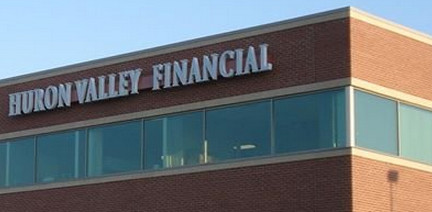
Huron Valley Financial growth rapidly with new service offerings

Huron Valley Financial got its start selling mortgages to people in Washtenaw County in the mid 1990s. Today it's doing the same across the country and offering a whole lot more as it grows at its fastest clip to date. "We have had some of our best months ever in 2015," says Casey Daniels, vice president of business development for Huron Valley Financial. The Ann Arbor-based company can now sell mortgages in Michigan, Ohio, Indiana, Illinois, Tennessee, California, Florida, Texas, Georgia and North Carolina. It is also in the process of getting approval to sell mortgages in South Carolina. To accommodate that growth the firm has hired 18 people in sales and operations over the last year and is looking to hire another six now. It currently has a staff of 90 people. The bigger staff and geographic footprint helps with Huron Valley Financial's growth. But its biggest gains are coming from its larger portfolio of services it can offer. Huron Valley Financial has been approved to service loans (a function it formerly had to outsource to larger financial institutions) and sell loans to Fannie Mae. "Us getting our Fannie Mae approval was pretty big," Daniels says. "It allows us to streamline a lot of our processes." Huron Valley Financial also launched a wholesale division earlier this month. It can now sell its mortgages and other lending products, like construction loans, to community banks and credit unions. The mortgage lender is also planning to further broaden its product portfolio, but Daniels declined to elaborate on those plans. "We are always looking at additional products to add," Daniels says. Source: Casey Daniels, vice president of business development for Huron Valley Financial Writer: Jon Zemke Read more about Metro Detroit's growing entrepreneurial ecosystem at SEMichiganStartup.com.

DTE opens huge solar farm next to Domino’s Farms

The largest solar farm in Michigan is generating clean energy next to Domino's Farms this fall. DTE Energy and Domino's Farms flipped the switch on the 1.1 megawatt solar array on Ann Arbor's northeast side earlier this month. Motorist driving past Domino’s Farms at the M-14/US 23 intersection will notice the 4,000 panels on the north side of M-14. DTE Energy owns the solar farm and will operate it for 20 years. It is leasing the land from Domino's Farms. "We were identified (as a potential home for the solar farm) because we are one of the larger landowners in the Ann Arbor area," says John Petz, director of real-estate and public affairs for Domino's Farms. "We also have a lot of freeway frontage." The solar farm is putting the undeveloped and underutilized land to use as part of DTE Energy's initiative to generate 10 percent of its electricity from renewable sources as mandated by state law. The Domino’s Farms solar array will generate enough electricity for 200 homes at any given time and is part of the 11 megawatts of solar farms run by DTE Energy at 23 sites across Michigan. The electricity generated at the Domino's Farms solar array will be enough to offset one quarter of its electrical needs, although the power will be sent directly to DTE Energy's grid. The solar array is part of Domino’s Farms overall effort to become more energy efficient, such as switching the green lights that make up the main building's outline to LED lights. Today Domino's Farms uses as much electricity as it did before it added 200,000 square feet of space several years ago. "We have been doing those sorts of things for a number of years," Petz says. Source: John Petz, director of real-estate and public affairs for Domino’s Farms Writer: Jon Zemke Read more about Metro Detroit's growing entrepreneurial ecosystem at SEMichiganStartup.com.

Our Partners

30044
30045
30046
30047
30049
Washtenaw ISD logo
Eastern Michigan University
Ann Arbor Art Center
UMS
U of M Arts Initiative
Engage EMU
Ann Arbor Housing Commission
University Bank

Don't miss out!

Everything Ann Arbor and Ypsilanti, in your inbox every week.

Close the CTA

Already a subscriber? Enter your email to hide this popup in the future.