
U-M students to run revolving energy fund for Michigan’s “Cities of Promise”
You’ve heard of plastic and glass recycling ad nauseum, but now, University of Michigan students are implementing a program to recycle greenbacks. A team of graduate students from U-M’s Erb Institute was one of only five student teams nationwide to receive a $50,000 grant from Ford Motor Company’s Community Challenge competition built around a sustainable communities theme. The team will use the grant money to create a revolving energy fund (REF) for Michigan’s designated “Cities of Promise”: Detroit, Muskegon Heights, Highland Park, Benton Harbor, Saginaw, Pontiac, Flint, and Hamtramck. The REF is under the umbrella of the Ypsilanti-based nonprofit Clean Energy Coalition (CEC), administrator of a $4.4 million grant from the Michigan Public Services Commission to fund energy upgrades to municipal buildings. The cities will use their savings on utilities costs to repay the REF, which will recycle the funds into future energy efficiency projects. “I think the perspective that we brought to the initial grant that appealed to Ford was our ability to take a one-time source of grant funding and make it a sustainable source of building retrofits rather than the Michigan Public Service Commission making a grant, doing some quick retrofits and then having it be over,” explains team member Ryan Flynn, an MBA/MS candidate at U-M’s Erb Institute. “The project savings come back to central funds in each of the cities and can fund retrofits in the future as well.”Daily administration of the grant is the responsibility of the CEC, Flynn says, but his team will help the CEC in structuring its financial relationships with the cities and will advise the coalition on what types of projects it should invest in. Green spending behooves local economies. As Flynn puts it: “Better-performing buildings help improve worker productivity within the facilities themselves. They help reduce the cities’ operating budgets, and the retrofits to be performed by definition have to be performed in place, so they create local jobs for surrounding members of the community as well.”According to a press release from U-M’s School of Natural Resources and Environment, the city of Ann Arbor successfully built an REF over five years beginning in 1998. The city contributed $100,000 annually to seed an initial capital fund for lighting upgrades and energy audits on city buildings. An $87,000 expenditure made for a 22% annual return, which was used to repay the fund and provide for future retrofits. Over its first 10 years, the $500,000 investment resulted in energy and labor savings of $1.4 million and $3.4 million, respectively. Sources: Ryan Flynn, graduate student at U-M’s Erb Institute; U-M’s School of Natural Resources and EnvironmentWriter: Tanya Muzumdar
You’ve heard of plastic and glass recycling ad nauseum, but now, University of Michigan students are implementing a program to recycle greenbacks.
A team of graduate students from U-M’s Erb Institute was one of only five student teams nationwide to receive a $50,000 grant from Ford Motor Company’s Community Challenge competition built around a sustainable communities theme.
The team will use the grant money to create a revolving energy fund (REF) for Michigan’s designated “Cities of Promise”: Detroit, Muskegon Heights, Highland Park, Benton Harbor, Saginaw, Pontiac, Flint, and Hamtramck. The REF is under the umbrella of the Ypsilanti-based nonprofit Clean Energy Coalition (CEC), administrator of a $4.4 million grant from the Michigan Public Services Commission to fund energy upgrades to municipal buildings. The cities will use their savings on utilities costs to repay the REF, which will recycle the funds into future energy efficiency projects.
“I think the perspective that we brought to the initial grant that appealed to Ford was our ability to take a one-time source of grant funding and make it a sustainable source of building retrofits rather than the Michigan Public Service Commission making a grant, doing some quick retrofits and then having it be over,” explains team member Ryan Flynn, an MBA/MS candidate at U-M’s Erb Institute. “The project savings come back to central funds in each of the cities and can fund retrofits in the future as well.”
Daily administration of the grant is the responsibility of the CEC, Flynn says, but his team will help the CEC in structuring its financial relationships with the cities and will advise the coalition on what types of projects it should invest in.
Green spending behooves local economies. As Flynn puts it: “Better-performing buildings help improve worker productivity within the facilities themselves. They help reduce the cities’ operating budgets, and the retrofits to be performed by definition have to be performed in place, so they create local jobs for surrounding members of the community as well.”
According to a press release from U-M’s School of Natural Resources and Environment, the city of Ann Arbor successfully built an REF over five years beginning in 1998. The city contributed $100,000 annually to seed an initial capital fund for lighting upgrades and energy audits on city buildings. An $87,000 expenditure made for a 22% annual return, which was used to repay the fund and provide for future retrofits. Over its first 10 years, the $500,000 investment resulted in energy and labor savings of $1.4 million and $3.4 million, respectively.
Sources: Ryan Flynn, graduate student at U-M’s Erb Institute; U-M’s School of Natural Resources and Environment
Writer: Tanya Muzumdar
Related Articles

New affordable senior housing development in Ypsi seeks to “cultivate a whole new community”
The Residences at Huron, an affordable senior housing development, recently opened at 945 W. Clark Rd. in Ypsilanti.
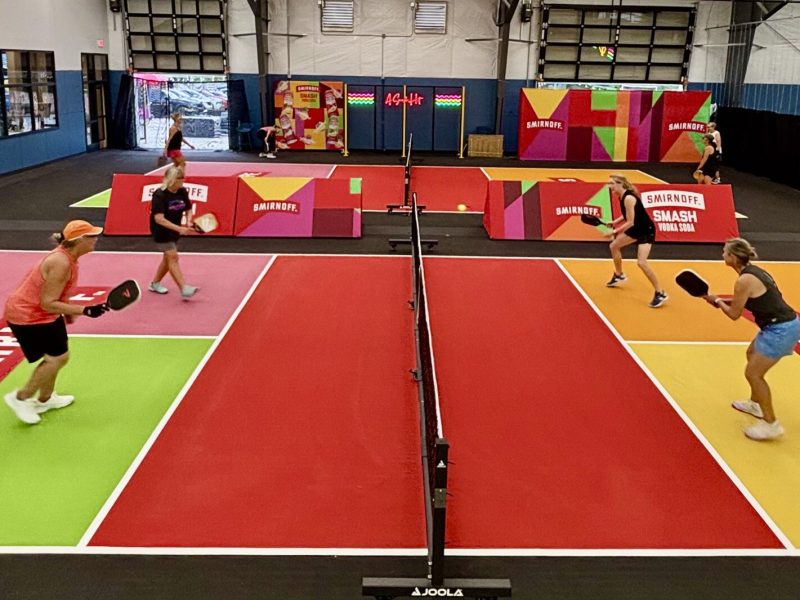
Ann Arbor pickleball facility wins statewide energy efficiency award
The award honors Wolverine Pickleball CEO and co-founder Christie Howden for making environmentally conscious choices during the building of her 39,000-square-foot pickleball facility.

Self-driving truck company opens $5.6 million Ann Arbor Twp. facility, creating 500 local jobs
TORC Robotics, an independent subsidiary of Daimler Truck AG and a leader in autonomous truck technology, has announced the opening of a new facility in Ann Arbor Township.


