Waypoint Outreach Initiative aims to support those dealing with reentry, homelessness, and other challenges
The new Ypsilanti-based organization focuses on street outreach, peer support, and recovery and reentry for women returning from incarceration.
On the Ground Ypsilanti is an “embedded journalism” program covering the city and township of Ypsilanti. It is supported by Ann Arbor SPARK, the Center for Health and Research Transformation, Destination Ann Arbor, Eastern Michigan University, Engage @ EMU, Washtenaw Community College, Washtenaw County Parks and Recreation Commission, and Washtenaw ISD.
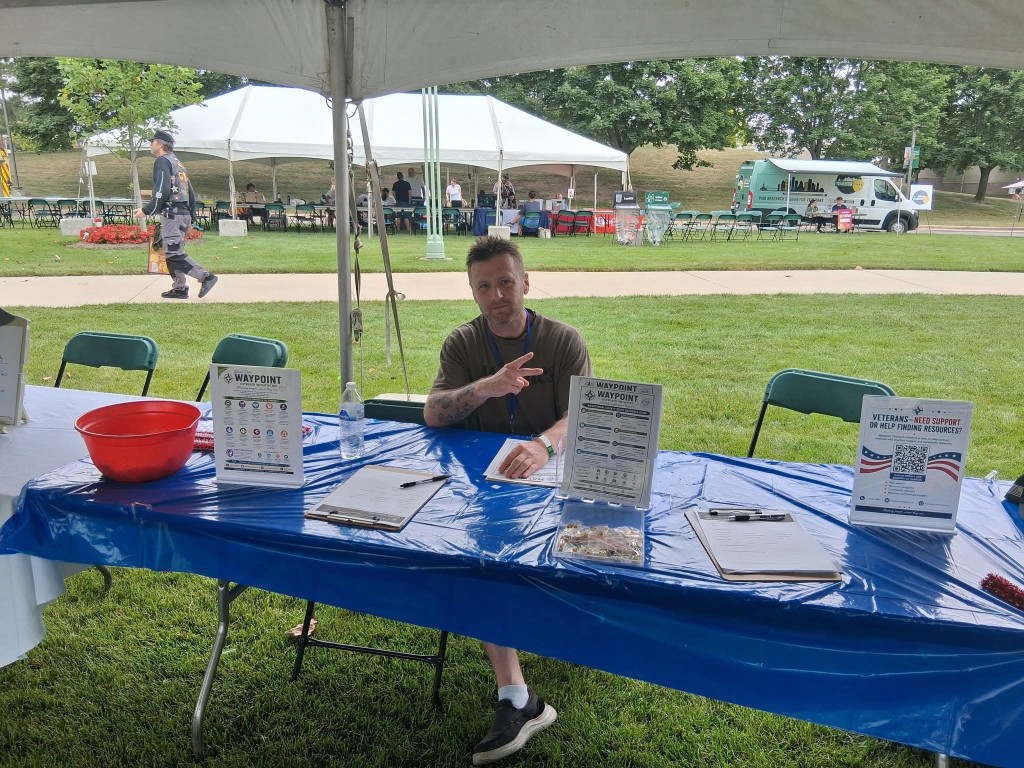
“I just want to help as many people as I can,” says Brandon McDonald, who oversees development, outreach, and programming for Waypoint Outreach Initiative.
The Ypsilanti-based organization, which launched in 2026, is hosting a public workshop, Our Starting Over: Community Resource and Reentry, on Saturday, Nov. 21, from 2:30 to 4 p.m. at the Ypsilanti District Library’s Superior branch. The workshop will introduce Waypoint’s three core programming areas—street outreach, peer support, and recovery and reentry for women returning from incarceration—and will also highlight other local organizations and the services they provide.
“Connecting people with existing community resources is an important part of our approach,” says McDonald.
The all-volunteer organization currently has five volunteers: two college students assisting with research and program development, and three individuals involved in peer support and recovery and reentry efforts.
During the workshop, current Waypoint team members will introduce themselves and share parts of their personal journeys, giving attendees an opportunity to learn about the people behind Waypoint and why this work matters to them. McDonald will cover practical planning and basic budgeting strategies that participants can apply to everyday situations. The workshop will finish with an interactive activity that challenges participants to make decisions while navigating realistic obstacles and unexpected circumstances.
“We try to find them options,” McDonald says. “I tell the team, ‘We don’t want to tell someone no. We want to point them in the right direction.’”
The street outreach program is focused on distributing hygiene kits, engaging community members, and providing resource navigation.
“The goal is to hand out items and find out if anyone wants to talk more,” says McDonald.
When the organization conducts street outreach, it typically starts at the Ypsilanti Transit Center, making its way toward the downtown branch of Ypsilanti District Library on Michigan Avenue.
While many services have moved to online interactions, Waypoint concentrates on face-to-face meetings.
“We ask people if they need resources, including housing, food, overnight shelter or if they need to know locations of warming centers,” says Joe Pauley, peer support specialist.
That includes people who have just gotten out of jail or rehab and those who don’t have an ID or other necessities.
“We offer them services where they can get an ID or get signed up for food stamps,” says Pauley.
Waypoint volunteers work with people to establish basic steps toward getting their life on track—like how to apply for food stamps or subsidized housing.
“Our goal isn’t simply to hand someone a bag and move on,” McDonald says. “We want to build relationships, understand the challenges individuals are facing, and help connect them with resources that may improve their circumstances.”
The organization has helped people navigate resources at the library, like using public computers to help access information and services.
“Resources can exist in a community, but that doesn’t necessarily mean people know how to find them or access them,” says McDonald. “Sometimes people need someone willing to sit down with them, listen, help them understand their options, and work through the next steps.”
Waypoint’s peer support and recovery program partners people who have lived experience with homelessness or incarceration with those seeking support, offering community-based encouragement and connections to recovery resources. McDonald himself is a former peer recovery coach.
“We want to be an organization that’s there to support somebody in their time of need,” says Pauley. “We are trained through everyday life and lived experiences and bring a lot of compassion and understanding while we try to meet people where they’re at.”
The reentry program is also focused on peer support for those returning from Women’s Huron Valley Correctional Facility. One of the organizations Waypoint collaborates with on reentry efforts is Catholic Charities Washtenaw County, which refers women to the organization.
“Our approach is to understand what someone needs, identify appropriate resources, and help them navigate the process of accessing those services,” says McDonald. “We recognize that no single organization can address every challenge someone may face, which is why building strong community relationships is important to us.”
“I want to build an organization that people in our community know they can turn to when they’re facing challenges or trying to start over,” McDonald adds. “Whether someone is returning home from incarceration, working through recovery, experiencing housing instability, or simply going through a difficult period, I want them to know they don’t have to navigate everything alone.”
Waypoint is planning to pursue 501(c)(3) tax-exempt status in spring or summer 2027. Another major goal is to transition its current volunteer positions into paid staff roles.
“The people helping build Waypoint deserve an opportunity to grow with the organization and be compensated for the work they do,” says McDonald.
Related Articles

WCC benefit concert to raise $15,000 to support girls’ education in Nepal
The Nov. 20 concert, headlined by Thornetta Davis, aims to raise $15,000 for Tsering’s Fund, a nonprofit dedicated to supporting education for girls and young women in Nepal.
What’s new at Growing Hope
It’s been a busy year for the nonprofit, with expansions of existing programs, farm updates and renovations, and several awards for the organization.

Beyond the books: How Toyota and the Ypsi District Library are opening doors to STEM
Since its partnership with the Ypsi District Library began in 2023, Toyota has provided $30,000 annually to expand programming, purchase educational equipment, and introduce young people to STEM professionals.