
From building a train to hosting an alpaca, this U-M facility serves student performers’ needs
For about 50 years, the University of Michigan’s Student Theatre Arts Complex has been quietly providing crucial pre-production support to student-run theater and other performance groups.
This story is part of a series about arts and culture in Washtenaw County. It is made possible by the Ann Arbor Art Center, Destination Ann Arbor, Larry and Lucie Nisson, the University of Michigan Arts Initiative, and the University Musical Society.
For about 50 years, the University of Michigan’s (U-M) Student Theatre Arts Complex (STAC) has been quietly providing crucial pre-production support to student-run theater and other performance groups.
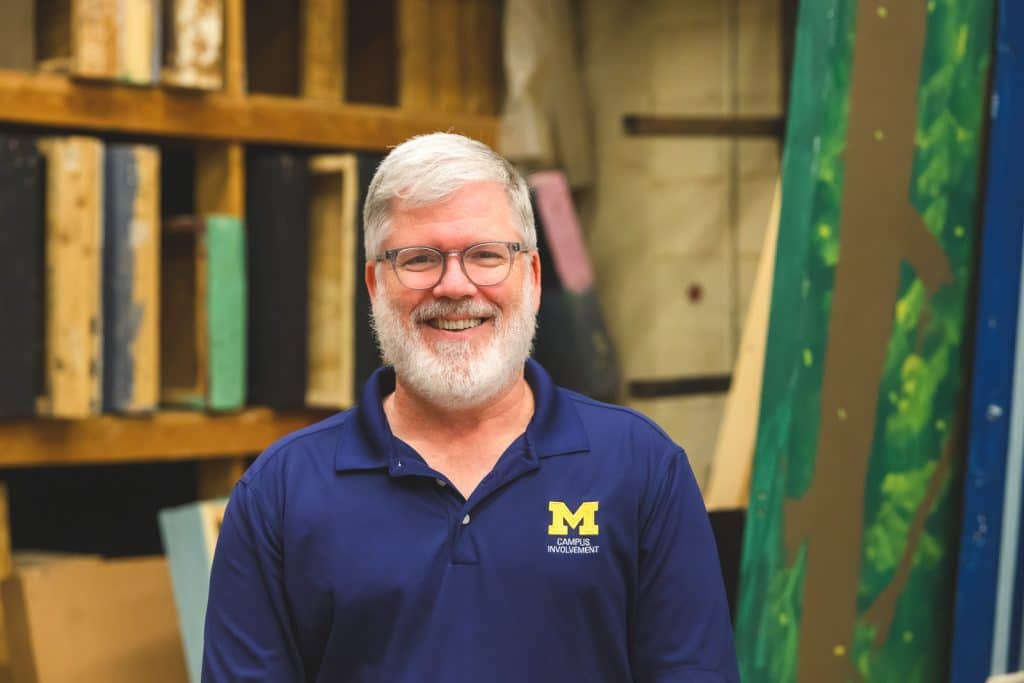
While that may sound abstract, it’s work that inspires great passion for STAC Program Manager Mark Haviland, who says he “still look[s] forward to coming to work” after about 25 years on the job. Before coming to U-M, he spent a number of years in Orlando, where he worked for Disney and eventually started his own special effects company. Haviland, who is practically overflowing with enthusiasm for his job, says, “I’ve learned as much from the students as the students have learned from me.”
Asked to share one of those things he’s learned, Haviland pauses for just a beat.
“Patience,” he says.
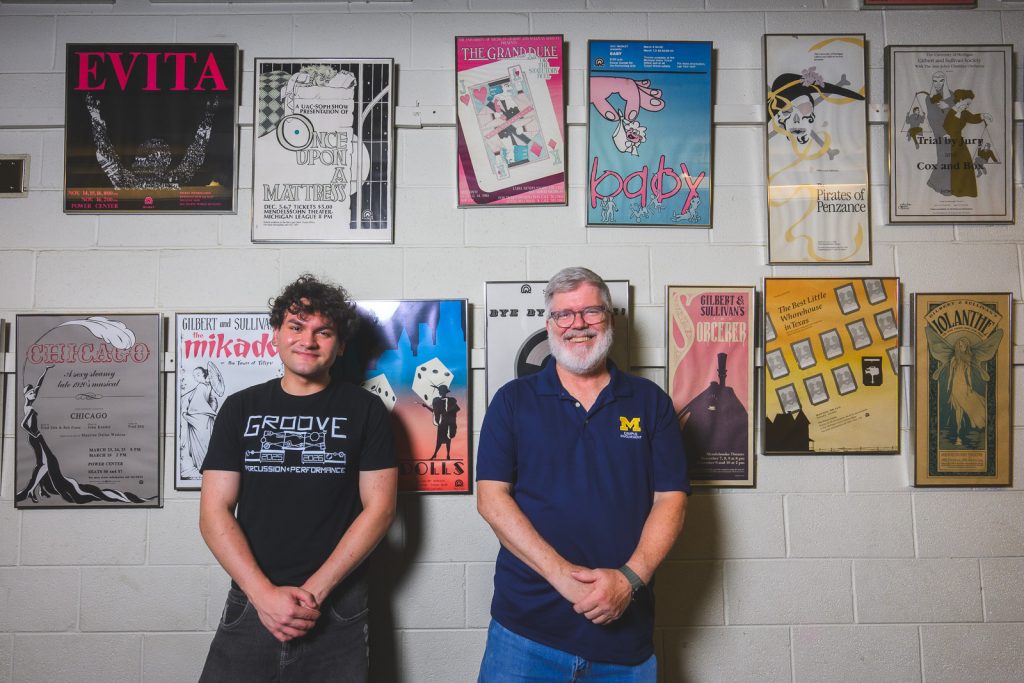
The STAC, which opened in February 1979, is tucked behind the Big House. It’s not physically connected to any U-M theaters, and if you don’t already know what it is, it’s easy to miss. The walls are lined with rows of posters advertising past student productions — “Grease,” “Bye Bye Birdie,” “Into the Woods,” “Cabaret,” “Dreamgirls,” “Tommy” — all in chronological order. At one point, Haviland points to a show poster on the wall to indicate when he started in his role.
As we walk through the building, Haviland points out the various work areas.
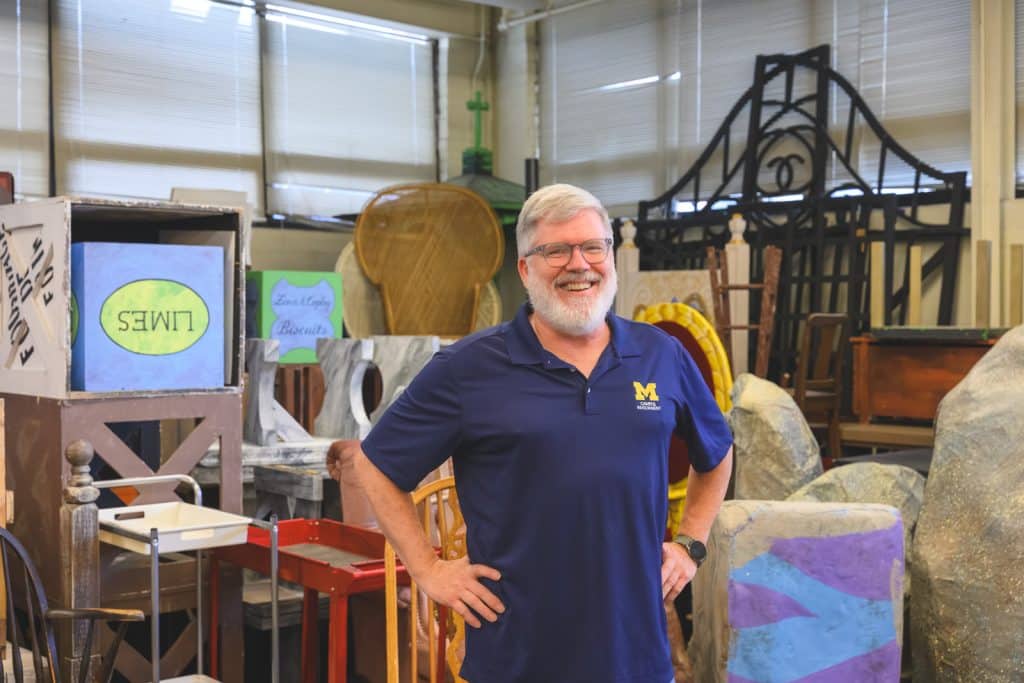
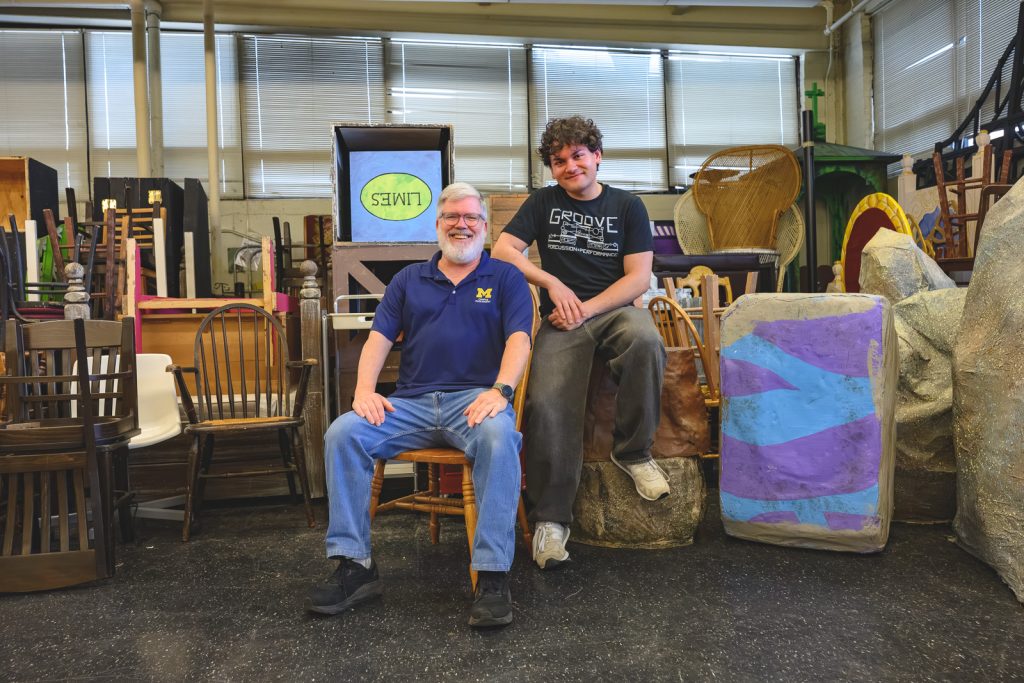
“We have a scene shop where they build their sets,” he says. “We have three rehearsal rooms where they rehearse their shows. We have a costume shop if they want to make costumes [or] props. They do all that pre-work — rehearsing and building — [here,] then they load the show into a truck, move to the theater a week before the performance, and set up in the theater.”
U-M houses approximately 1,700 student organizations, many of which stage performances, Haviland notes. Before the STAC was around, those organizations “were kind of infringing on the theater department,” Haviland says — all jostling for time and space to rehearse, build sets, and make costumes.
According to Haviland, the STAC emerged when U-M realized that student organizations “need their own space to thrive.”
The four primary groups housed by STAC are MUSKET, a musical theater company; the Gilbert & Sullivan Society; Rude Mechanicals, a theater company; and Groove (“They’re the ones that bang on cans and make musical instruments out of anything,” Haviland says). But a cappella, dance, and martial arts groups all rehearse at STAC, too.
And while student groups get first priority when it comes to booking the space, local groups unaffiliated with U-M, like the Burns Park Players, also utilize the space during the summer and other periods of student downtime.
Haviland says his role involves a “little bit of mentoring.”
“I am a resource to help [students] make their dreams come true,” he says. “I’m here as a resource to help them produce the best show [possible].”
And while Haviland insists that the STAC facility already contains “everything here that they need to put on the production,” he also says, “If we don’t have it, I can get it” — and “[if] they need something weird, I’ll try to find it.”
It turns out that “something weird” can mean just about anything. Once, for a MUSKET production of “Tommy,” students asked Haviland to find a huge two-way mirror for their set.
Another time, Haviland says a now-defunct student group brought a live alpaca in to rehearse for a show that would be performed at the Lydia Mendelssohn Theatre, where a short staircase leads up to the stage. That alpaca would need to be able to handle stairs, which meant it needed a place to rehearse.
“STAC smelled like a barn for the next week,” Haviland says — but the alpaca performed well: “No difficulty handling the steps up to the stage.”
Learning to fail
“I love the STAC,” Henry Morse tells me. “It’s this hidden gem that is the ultimate driving force that allows student theater to happen.”
Morse is a rising senior in the U-M School of Kinesiology, where he majors in sports management. For the past three years, he’s also been involved with the Rude Mechanicals, first as an actor and most recently as an executive producer. The STAC facility is the Rude Mechanicals’ “hub,” Morse says.
“We have traditions there, … some of my favorite college memories,” he adds.
He’s also effusive about Haviland, who he describes as “the best” and “a mentor to all of us” who “goes way above and beyond to meet all of our crazy requests.”
For a 2024 production of “Murder on the Orient Express,” Morse says, the Mechanicals wanted to build a huge, onstage train with three separate train cars, which rotated or revolved so that one was always onstage while the others rested in the wings.
Exactly how the train worked was “above my pay grade,” Morse says, but he remembers one platform on top of another, maybe six feet tall altogether, all connected by two-by-fours, with wheels lining the bottom of the structure. “Originally we wanted to … lay a track on the ground,” he adds, but for one reason or another, the track didn’t work.
“We wanted fog, too. It was nuts,” Morse says. “That was a crazy request, but instead of saying no, Mark … just went all in on making it happen.”
Now, he says, he thinks of STAC as “a place where we problem-solved and tried and tried and failed and tried until eventually we hopefully succeeded.”
Plus, as executive producer, Morse says he learned “to realistically run an organization of 50 people and put on an event that had hundreds of complex moving parts.”
“I got to organize and lead a group of people to achieve a common goal,” he says.
Haviland says one of the defining principles of U-M’s Student Affairs (under whose umbrella STAC falls) is “Support and Challenge,” which means “we can allow [students] to fail to a certain point — because that’s where learning comes [in].”
Student organizations like the Rude Mechanicals are considered extracurricular activities — but there’s a lot of learning happening there, too, Haviland points out.
“They’re learning collaboration,” he says. “They’re learning how to get along. They’re learning how to produce, direct, act.”
But a certain amount of failure can teach you even more than a smooth, successful effort.
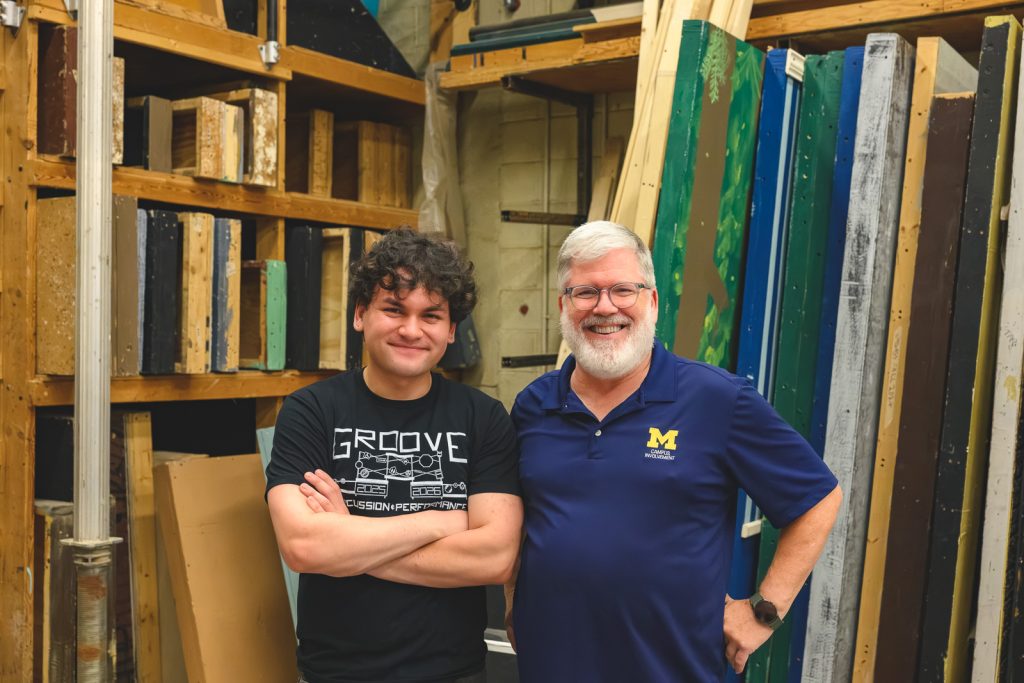
Once, for a production of “Into the Woods” at the Power Center, students were using 16-foot-high tubes as trees (the stage was huge and they needed the set to fill it, Haviland says with a shrug). They’d stacked six of the tubes on top of each other, “so now you have [six] 32-foot-tall trees,” Haviland says, and all of them needed to be painted — fast.
“I remember the set designer was sitting on top of one of them in the shop, very depressed because they only had, like, two days left [to finish painting]. He said, ‘Yeah, I think I overdid it.’ It ended up looking fine,” Haviland acknowledges.
But the students had to keep painting up until the last minute, and, as they were being loaded up to be taken to the Power Center, the “trees” were still wet.
“I gave them options, but students want to do what students want to do,” Haviland says, amused. “I can’t tell them, ‘No, you can’t do that,’ because it was their design. It was safe, and it was fine. It just was big. Maybe if they had a year or six months to put their show together — but they only had six weeks.”
The point when Haviland does need to get involved, he says, is really only when safety is in question.
“If they’re going to start doing something that’s potentially dangerous, then yes, we will step in,” he says. “If it’s more of a performance thing, like, ‘That dance could be better,’ I’m not going to get involved with that because that’s their show and that’s not my job.”
The incidents that have come up have mainly had to do with falling — or appearing to fall — from a great height mid-performance.
“There’s been some really high stuff that gets eyebrows raised, and we have to tone that down,” he says. “But … we find a compromise. It’s a win-win. It’s like, ‘Yeah, you can’t do that, but how about if you do this?’”
Working out a compromise is itself a good learning experience for students, Haviland points out.
“They learn they can’t just do everything when they get in the real world — so they learn to negotiate,” he says.
“Creating a community … and lifelong memories”
Benjamin Matich, a U-M senior studying user experience design, has recently been elected president of Groove, which he describes as a “non-traditional percussion performance” group. He calls Groove “a creative outlet” and “a passion thing.” He didn’t have much experience as a percussionist before auditioning for and then joining the group his sophomore year — but now he thinks of Groove as one of the highlights of his time at U-M.
Matich says that Groove — and, by extension, STAC, where the group does all its rehearsing and prep work — was his “entryway” into meeting people at U-M, many of whom he likely wouldn’t have met otherwise.
“Everyone comes in with all these different perspectives from all over the country — and the world. We even have a few international students,” he says.
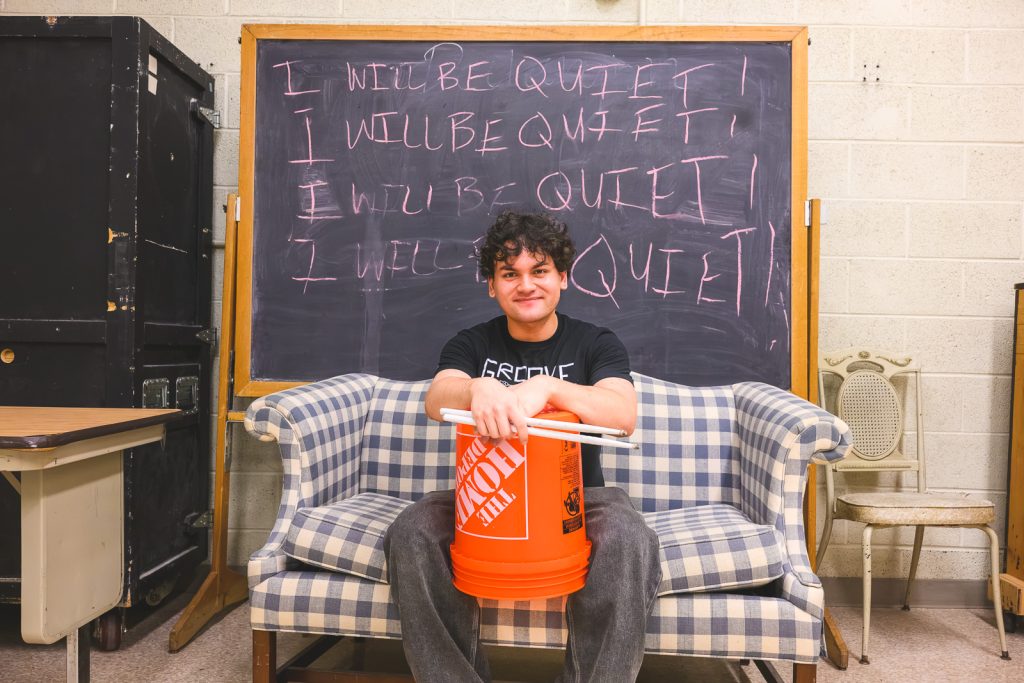
For Haviland, Matich’s experience gets at the heart of STAC’s most essential mission: “creating the best possible production that they can achieve — but also creating a community … and lifelong memories,” he says.
Haviland also says he’s heard from numerous alumni who’ve told him that years after they graduated, they reconnected with former members of a student group, even after they’d fallen out of touch with former roommates or classmates.
For that reason, more than any other, he’s hoping that STAC isn’t shuttered in the next few years — but there’s a possibility that might happen. On “a sad note,” he says, “this building will be coming down in the near future. No date has been set but all the buildings in here are over 100 years old, and they’re showing their wear.”
While the building’s demolition is inevitable — “I mean, the ceiling’s coming down,” Haviland says — he’s confident the STAC will find a way forward. He’s hoping to move the facility to a new location, especially since “there is a strong indication that this is important to the students.”
(“I really hope that does not happen,” Morse says of STAC’s potential shuttering. “It would rob thousands of future Michigan students from the opportunity to work in that space and work with Mark. … It’s truly a special place.”)
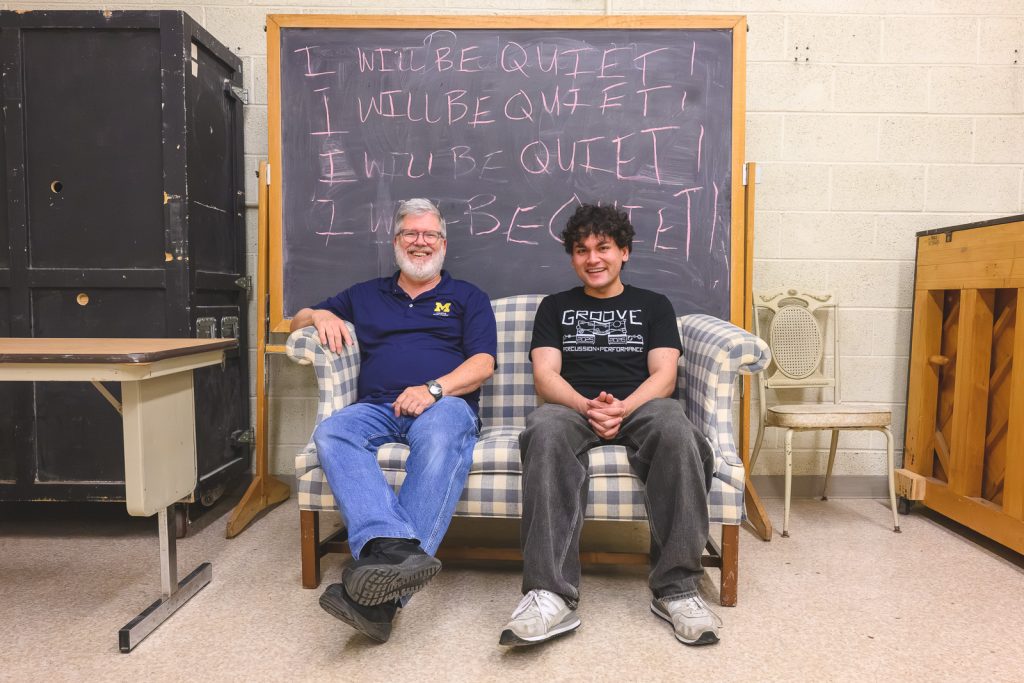
In the meantime, Haviland admits that his least favorite part of his job involves scheduling. He’s “always negotiating,” Haviland shrugs. There’s never as much time or space as students are hoping for.
“We have basically two and a half rehearsal rooms … and over 20 groups that want to come in here and rehearse,” he says. “So my calendar looks like a Tetris game.”
The current building “is what it is,” he says. “We can’t make it bigger.”
“There’s a need for more of this kind of space,” Haviland says.
There’s also “nothing like this anywhere in the country, really,” he adds. “A lot of schools have rehearsal space, but none of them have a scene shop — so they usually have to use the theater departments.”
“I think it’s a credit to U of M supporting students and student organizations,” he says.
Author

Related Articles
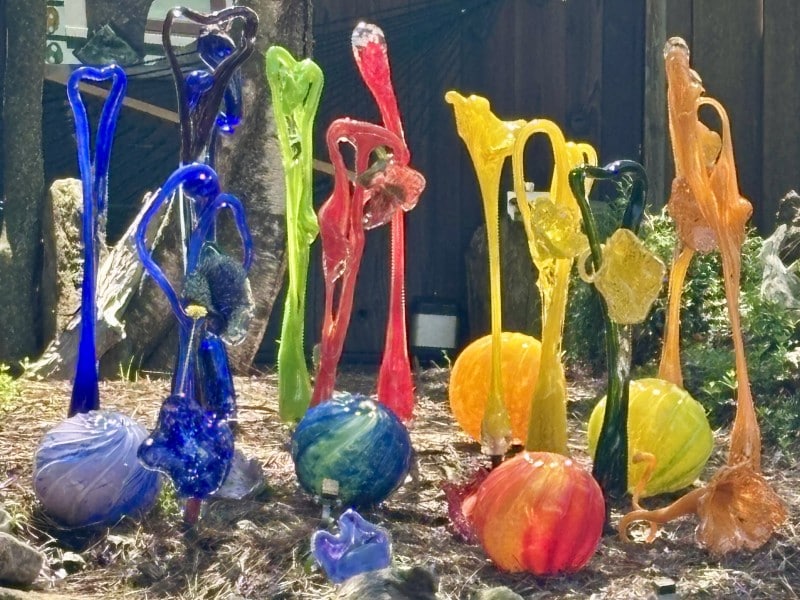
Ann Arbor artist hosts annual outdoor sale to benefit public art program
Glass artist Larry Nisson hosts an annual sale of his work from noon to 5 p.m. on Sept. 27 at his Ann Arbor home.
The Ann Arbor Symphony Orchestra brings its concert series to Ypsi for the first time
The 2026-27 season offers many firsts for the Ann Arbor Symphony Orchestra, from an Ypsilanti footprint to a live accompaniment of Disney’s ‘Frozen.’

Michigan League of Handweavers’ biennial show in Ann Arbor will feature myriad disciplines
From weaving to doll-making, a broad range of craftsmanship will be featured in both exhibitions and public demonstrations at the Michigan League of Handweavers’ 23rd Biennial Fiber Show.


