
New Ann Arbor public art will guide visitors from parking to farmers market
A new public art installation in downtown Ann Arbor aims to guide pedestrians between the Ann Ashley parking structure and the Ann Arbor Farmers Market.
This story is part of a series about arts and culture in Washtenaw County. It is made possible by the Ann Arbor Art Center, Destination Ann Arbor, Larry and Lucie Nisson, the University of Michigan Arts Initiative, and the University Musical Society.
A new public art installation in downtown Ann Arbor aims to guide pedestrians between the Ann Ashley parking structure and the Ann Arbor Farmers Market.
The wayfinding project, which is scheduled for completion by the end of July, is the result of a collaboration between the Ann Arbor Downtown Development Authority (DDA) and the Ann Arbor Art Center (A2AC).
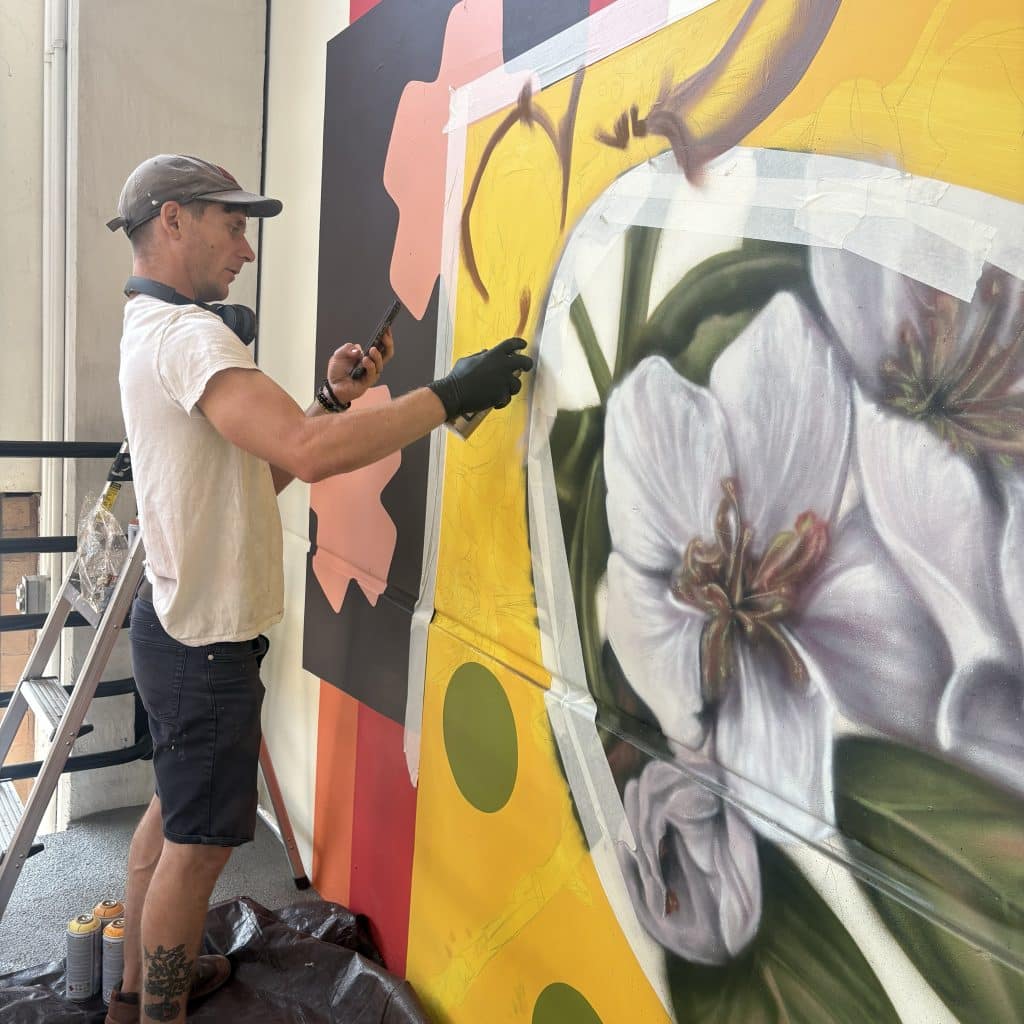
Artwork by Memphis-based muralist Brandon Gaia Marshall and Detroit-based artist Jesse Kassel is intended “to make a visual connection” between the farmers market and the parking structure at Ann and Ashley streets, says Charlotte Beers, communications specialist for the DDA.
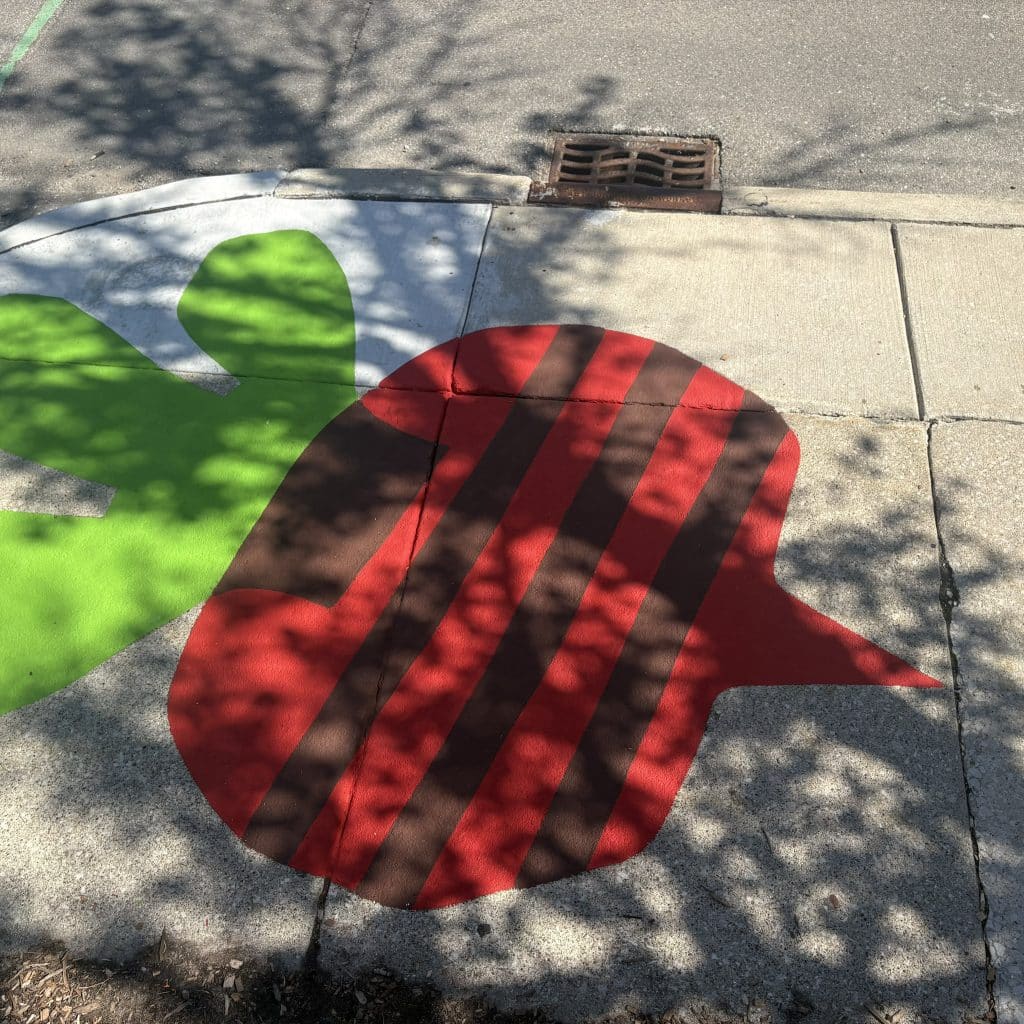
The installation will feature murals in the parking structure itself, on the sides of buildings, and on sidewalks along Miller Ave. and Catherine St., culminating on Detroit St. near Kerrytown. Artwork will feature fruits, vegetables, and other images related to nature in “a mix of photorealistic and blocky geometric icon designs,” Beers says. “… Essentially, what’s sold in the market is reflected in the artwork.”
Beers says the installation will “hopefully give a visual identity to the space to help people go from point A to point B.” For those visiting Kerrytown by car, the Ann Ashley structure provides the most easily accessible parking options.
“When you map it out, it’s not too far of a walk [from the structure to the market],” Beers says. “But you do have to cross a few streets. You have to wait at signals.”
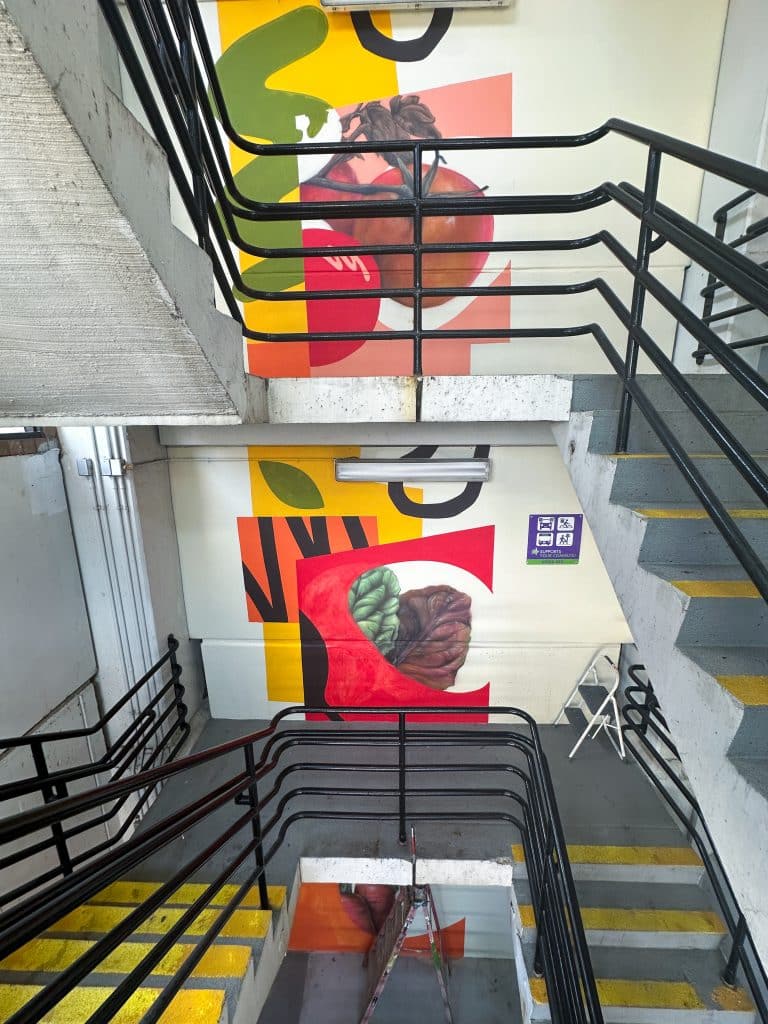
The wayfinding project is meant to visually reinforce for pedestrians that, as Beers says, “this is all the same neighborhood.” But the project also has a broader purpose. It’s one in a series of installations — some permanent, some temporary — that the DDA refers to as the Elevate program. (Murals at Liberty Plaza were installed last year as part of Elevate.)
“We call it our public art and placemaking program,” Beers says, adding that the program is designed to “enhance the downtown experience for all.”
“It’s essentially to make downtown a more welcoming and engaging place for people to experience through public art,” she says.
Beers praises the A2AC, which has partnered with the DDA on many of the Elevate installations, for “the integral role they’ve played in all of the Elevate programs so far — but especially this one. They’ve been great facilitators and great partners to work with.”
“I really believe that public art helps people connect more with the communities that they’re experiencing, whether [as] a visitor or a resident,” she says.
“Public art … establishes the feel of the place you’re in,” Beers adds, providing downtown spaces with “a renewed purpose — an enhanced purpose.”
Author

Related Articles
Ann Arbor artist hosts annual outdoor sale to benefit public art program
Glass artist Larry Nisson hosts an annual sale of his work from noon to 5 p.m. on Sept. 27 at his Ann Arbor home.
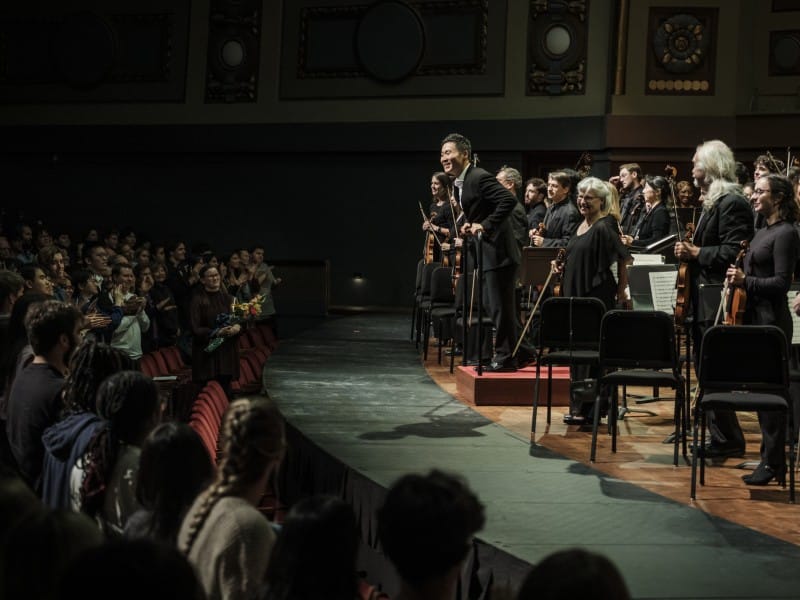
The Ann Arbor Symphony Orchestra brings its concert series to Ypsi for the first time
The 2026-27 season offers many firsts for the Ann Arbor Symphony Orchestra, from an Ypsilanti footprint to a live accompaniment of Disney’s ‘Frozen.’
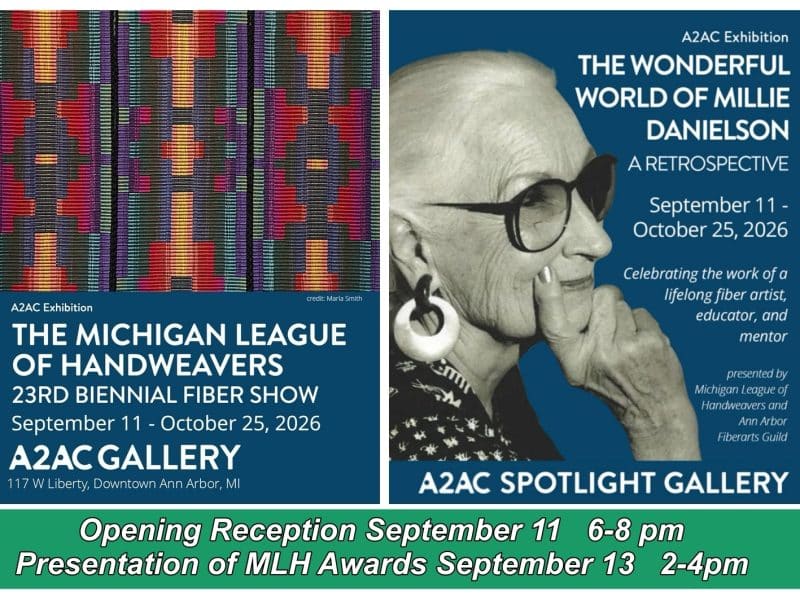
Michigan League of Handweavers’ biennial show in Ann Arbor will feature myriad disciplines
From weaving to doll-making, a broad range of craftsmanship will be featured in both exhibitions and public demonstrations at the Michigan League of Handweavers’ 23rd Biennial Fiber Show.


