
Who actually lives in Ann Arbor’s affordable housing?
Affordable housing residents are a diverse bunch who defy the stereotypes often assigned to them.
The following story is part of a series highlighting solutions to housing and homelessness challenges in Washtenaw County. It is supported by the Ann Arbor Housing Development Corporation and University Bank.
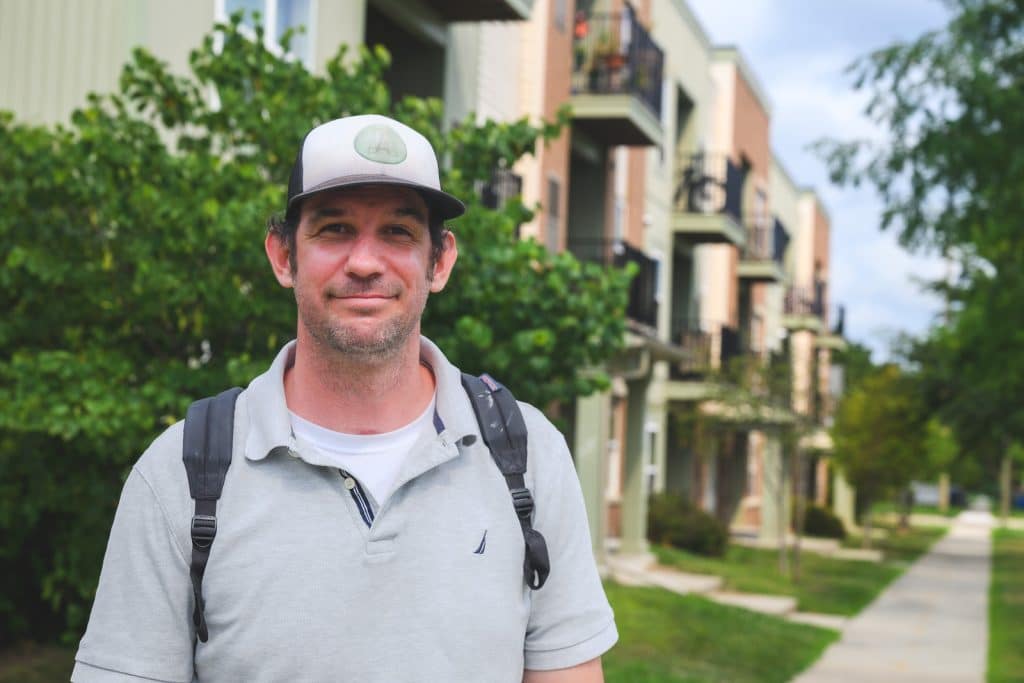
Ann Arbor resident Aaron Palmer describes himself as “an outgoing, caring, kind of trusting guy.” But because he lives in affordable housing, he says others might not perceive him in such a positive light.
Palmer says he’s encountered people who presume that those living in affordable housing “don’t pay any bills or anything, they’re all on food stamps, and everybody’s just doing drugs.” Palmer says that’s not true at all.
“I trust people, and I really don’t care if somebody has money or if they don’t have money,” he says. “Everybody, when you’re down, in my experience, always picks on the people that are right below them.”
Jennifer Hall is the executive director of the Ann Arbor Housing Commission (AAHC), which operates the State Crossing housing complex in Ann Arbor, where Palmer lives. She says residents of affordable housing properties are a diverse bunch who defy the stereotypes Palmer mentions. Hall says a little over 40% of households experience homelessness before they move into AAHC-owned properties.
“Statistically, demographically, our average income of our household is about $14,000 a year, so extremely low income on average,” she says. “We do have a lot of households who are on fixed incomes for disability, Social Security Disability, retired, that kind of thing.”
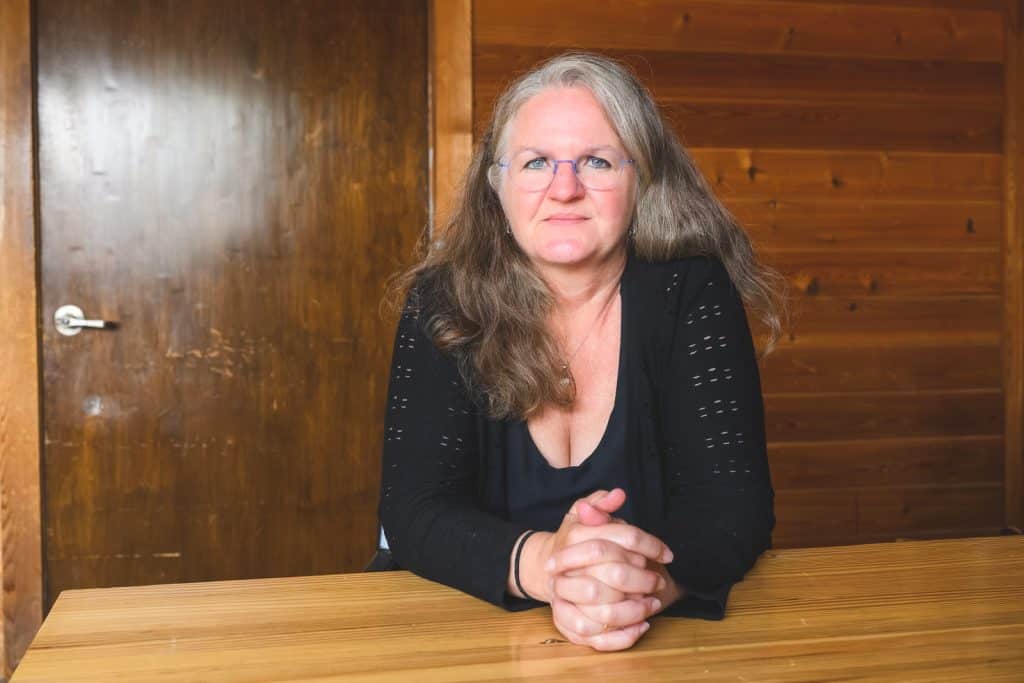
A lot of people living in affordable housing work in the service industries, retail, housekeeping, and caregiving. Over half of AAHC households have a family member with a disability. About 60% of households are Black, just under 40% are white, and a small percentage are Asian and Native American. Around 18% of households are seniors. Hall says the populations that struggle most with housing are seniors and people with children.
She explains that many people make assumptions based on affordable housing residents’ low income. Many think the residents are drug addicts or that they’re going to increase crime in neighborhoods.
“There’s all kinds of crime in the world – blue color, white collar,” Hall says, adding that most of the drug and alcohol users she knows are in fact “not homeless” and “not low-income.”
Palmer says he thinks people who stereotype affordable housing residents may be doing so just to make themselves feel better.
“They still keep fighting against whatever the truth is, for whatever reason. Maybe they were raised to believe that all certain people are a certain way,” Palmer says. “Then you realize that there are reasons for things being what they are, and these reasons aren’t always so obvious.”
“if the community here is going to support me, I should support myself”
Born in Midland, Palmer faced a number of challenges growing up, including living with alcoholic relatives. Palmer developed an addiction himself, along with multiple legal troubles. He persevered and went to college. However, his legal challenges were a repeated obstacle. Today, Palmer is still dealing with that fallout, but he’s proud that he doesn’t smoke cigarettes anymore and has been sober for four and a half years.
Palmer moved to Ann Arbor, where he experienced homelessness before moving into affordable housing, which has given him some respite. He says he’s “in love with” writing and researching essays. Palmer pursued writing and philosophy in college and his talents lend themselves well to leading the newsletter for Avalon Housing‘s Voices of Community Advocates and Leaders (VOCAL) group.
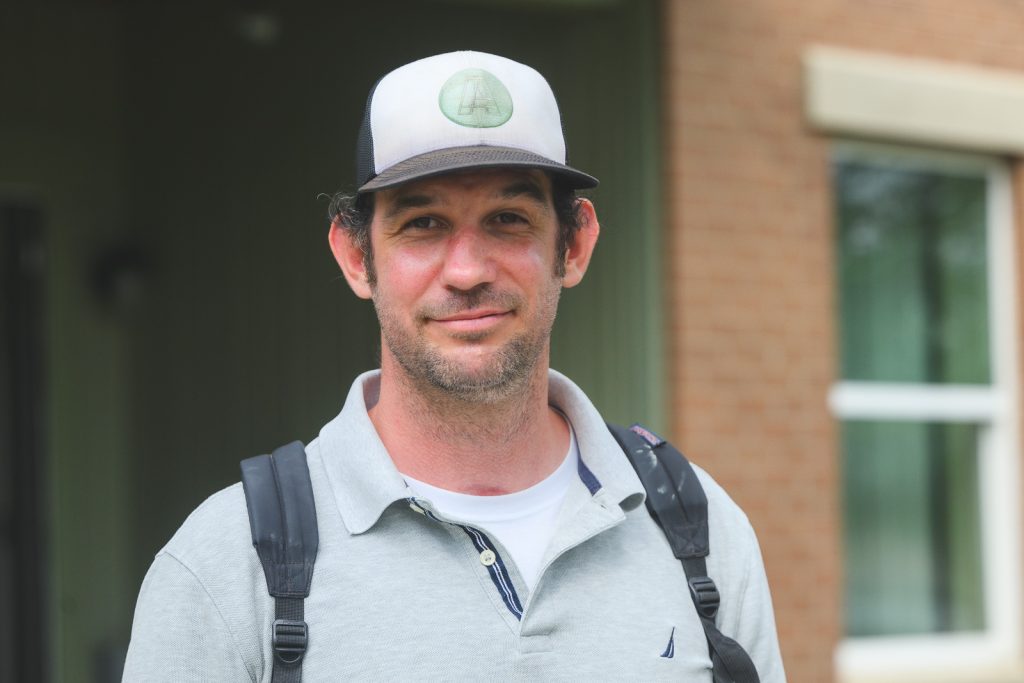
Palmer is paid a nominal amount for his work with VOCAL. He also got a construction job through the AAHC. It’s only one day a month, though, so he says “it’s not enough.” He notes that if he earns too much income, he won’t qualify for affordable housing. Despite this, Palmer plans to own a home and continue advocacy work.
“I figured if the community here is going to support me, I should support myself and then later I can help support the community and hopefully blossom all this great stuff that I’ve come to find here,” he says.
“They have this chance to see the light again”
Hall says people with mental health conditions also have great need for affordable housing, pointing to the challenges created by a “complete lack” of a robust residential mental health system.
“We do end up with a lot of folks in our households who do have mental health issues that are potentially undiagnosed, potentially untreated,” she says.
One such person is Monty, a resident at Avalon Housing’s Dunbar Tower affordable housing development in Ann Arbor. He asked that we refer to him by a pseudonym to protect his privacy. Monty struggles with multiple mental health conditions that have been so severe and persistent that he’s working to get Social Security Disability Insurance. He was born in Chicago and moved to live with his dad in Michigan when he was six.
“I was with my dad until I graduated from high school, and then I went to college at U of M. I studied biomedical engineering,” he says. “I know it’s weird to say this, but I kind of at times struggle with thinking that I’m unwilling to work, and I’m like, ‘No, that’s not true.'”
At the tail end of the 2000 recession he took a full-time job working on medical devices and worked there for about six years. Monty wasn’t diagnosed with any mental health conditions at the time and, in hindsight, says he worked there four years too long. He wasn’t able to sustain that job, so he tried working at other companies and independent contracting. Just a few months before the COVID-19 pandemic, life stressors accumulated to the point that Monty couldn’t keep his apartment clean and he was falling behind on contracting deadlines.
“I am still a very capable person, but I don’t have the capacity that I used to. It’s disheartening to think, ‘Yeah, I could be in the workforce if the 40-hour work week was the bare minimum expected type of thing,'” he says. “So many of the careers that I’ve been trained for, it’s like, ‘You need to commit 40, but we want you to do even 60.'”
Monty has been a resident at Dunbar Tower since April. He’d been dealing with homelessness for several years and ended up living in his car for months during the pandemic.
He reports that he’s doing a lot better now. When he was working, Monty was only able to afford shared accommodations. Having roommates was not conducive to his mental health for a variety of reasons, so the opportunity to live alone at Dunbar Tower has proven beneficial. Monty still loves computers, and he enjoys artistic pursuits, such as playing the piano. His hope is to take control of his mental health conditions instead of them controlling him.
“I hope it improves to the point that I can maybe have a relationship with somebody, and ideally get back into the workforce, and make a positive difference in the world,” he says.
Monty has a suggestion for people who are dismissive of those living in affordable housing.
“I hope people can try to imagine themselves being homeless for multiple years and thinking that there’s no light at the end,” he says. “Then they have this chance to see light again. It’s probably a tough thought experiment for a lot of people.”
“Don’t be afraid to just say hi”
Dunbar Tower resident Martez Claybren works at the Delonis Center in Ann Arbor, where he helps people like Monty. Claybren moved to Ann Arbor from Detroit after many hardships, including addiction issues and family struggles. He describes Dunbar Tower as a stepping stone and “an opportunity … to have a training ground to instill the best financial habits possible.”
“My life looks a lot different now. … My entire familial generation was destitute,” he says. “I have to own where I come from, but I also am able to own where I am now and where I’m going.”
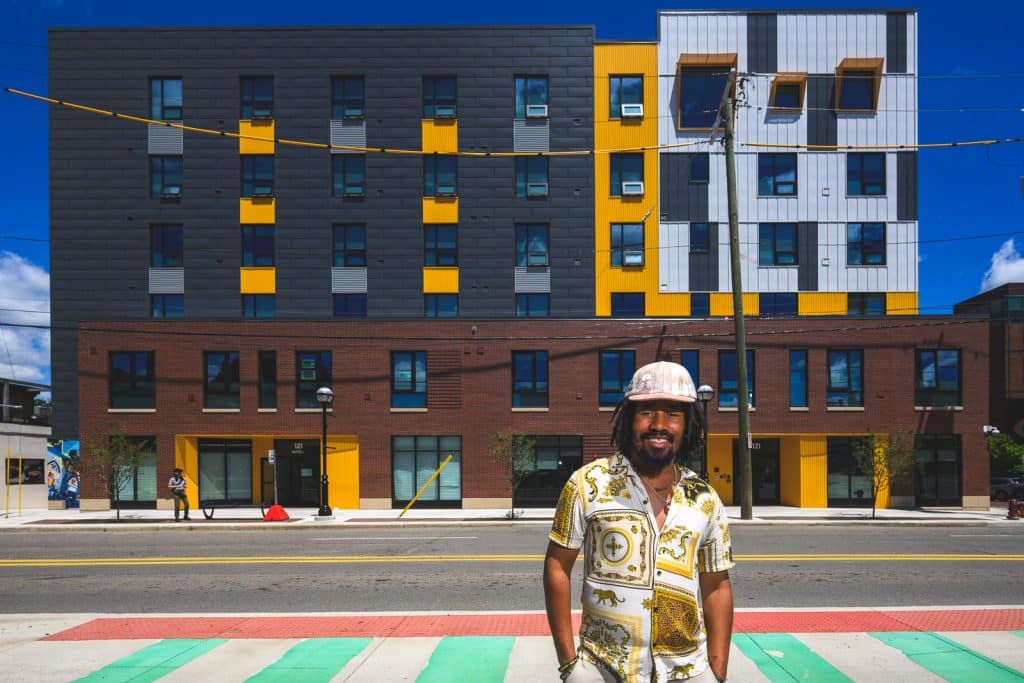
Claybren has been practicing how to not live in a victim mentality, and he’s been making other progress in his life. He’s built a really good relationship with his mom, who he influenced to come to Washtenaw County. They are both in recovery, and they count on each other for support.
“Like how some people say they found God, I found recovery,” Claybren says. “It teaches me I can’t be worried about other people’s perceptions of me. I need to focus on keeping my side of the street clean and focus on how I’m perceiving people.”
Claybren adds that he’s also “very, very, very spiritual” and he realized that he’s “here for a reason and a purpose.”
“I’m active in my recovery community. I support others who are new or new in recovery,” he says. “All the while I’m trying to chase my goals, dreams, and ambitions in the time that I do have.”
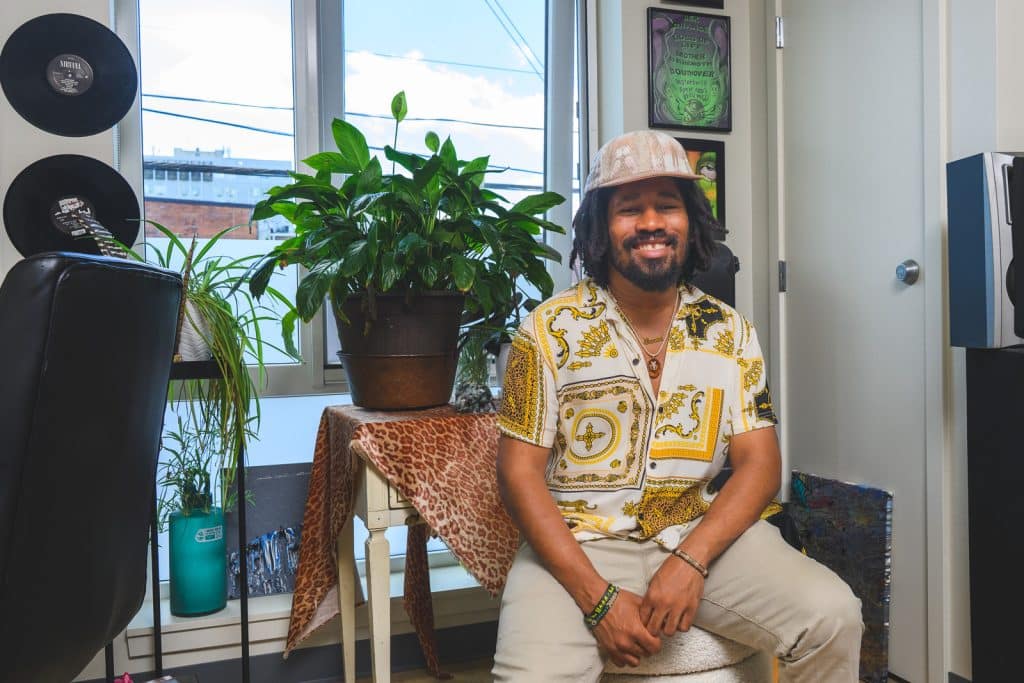
Claybren thinks it’s important for people to get to know their neighbors, as everybody deserves to feel seen. He says he thinks “human exploration” is “imperative for growth.” He suggests people ask themselves: When was the last time you spoke with a homeless person?
Instead of asking about the weather, he suggests asking them what’s troubling them, what goals they’re working toward, what made them happy recently, or how their family is doing.
“Don’t be afraid to just say hi, because we never know how that human connection may give spark to someone who really needs the motivation,” he says.
Author

Related Articles
University Lending offers $10,000 grants for low- and moderate-income homebuyers
University Bank’s lending division is providing up to $10,000 grants for low- to moderate-income borrowers in Washtenaw County to achieve their homeownership dreams.
Washtenaw County housing documentary creators plan free screenings countywide
“The Road Home,” a new documentary examining challenges in Washtenaw County’s housing and homelessness systems, is now available for anyone interested in organizing a public or private screening.
Ann Arbor millage yields big results in affordable housing development
Over $27 million from Arbor’s Affordable Housing Millage has been spent or committed to 14 housing projects, four renovations, and five supportive services initiatives.


