
Ann Arbor Y opens low-cost Ypsi wellness center in former preschool collaborative
Ypsilanti’s YMCA preschool collaborative closed its doors in March, but the facility reopened in June as something else entirely — a neighborhood center offering affordable wellness and community programs.
On the Ground Ypsilanti is an “embedded journalism” program covering the city and township of Ypsilanti. It is supported by Ann Arbor SPARK, the Center for Health and Research Transformation, Destination Ann Arbor, Eastern Michigan University, Engage @ EMU, Washtenaw Community College, Washtenaw County Parks and Recreation Commission, and Washtenaw ISD.
Ypsilanti’s YMCA preschool collaborative closed its doors in March, but reopened in June as something else entirely — a neighborhood center offering affordable wellness and community programs. The Ann Arbor YMCA recently launched the center, called the Neighborhood Collaborative, on June 1 at 111 S. Wallace Blvd. in the former Chapelle Elementary School.
The Collaborative: Ypsilanti YMCA Child Development Center was the YMCA’s previous endeavor on that site, offering affordable child care for Ypsi residents and Eastern Michigan University students. Ann Arbor YMCA President James Highsmith says his staff had noted declining enrollment in that program, driven in part by Michigan’s free Pre-K for All/Great Start Readiness Program expansion. He says COVID-19 also hurt the multi-partner funding collaborative that kept the child care center running. Rather than vacate the Wallace Blvd. facility, the Y pivoted to serve the community differently, Highsmith says.
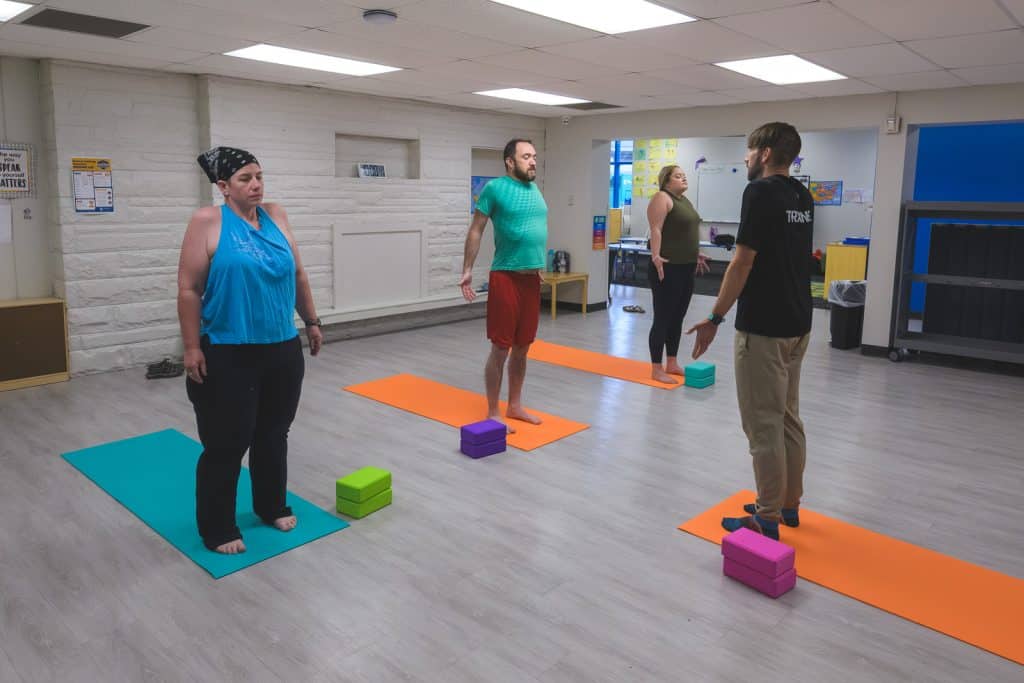
The Y repurposed media center/library/classroom space, splitting it into three zones — a community lounge, a workshop space, and a group exercise studio with new equipment, explicitly built as an Ypsi-based equivalent to the Y’s downtown Ann Arbor branch.
The Neighborhood Collaborative introduced itself to the public with free exercise and wellness classes. Through the end of July, new visitors can claim five free group exercise classes. After that, community members can purchase a $50 punch card that entitles them to 10 classes and an 11th for free. Other programs have a similarly low price point. For instance, a Beginner Spanish class at the collaborative is priced at $50 for four sessions. A Y membership is not required to use the facility.
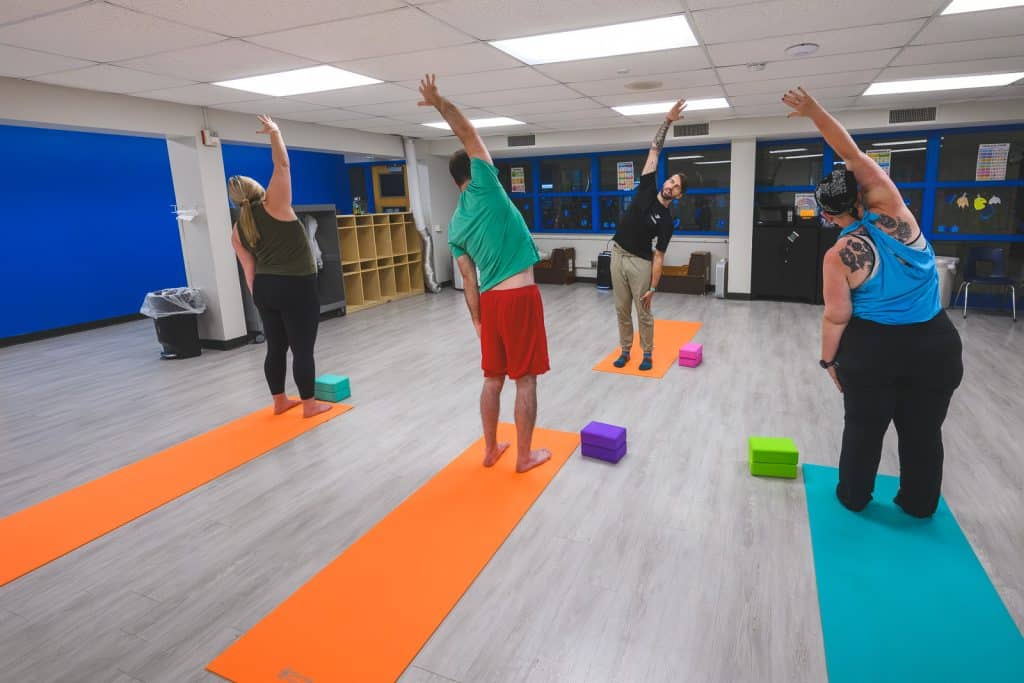
Initial feedback suggested community members want programming focused strongly on physical and mental health. Classes offered throughout the summer will focus on physical and mental well-being. Group fitness offerings will include yoga and tai chi/meditation, as well as CPR/first aid, diabetes prevention, and nutrition workshops. The collaborative will also offer formal Spanish language instruction once a week and an informal Spanish club for practicing conversational speaking.
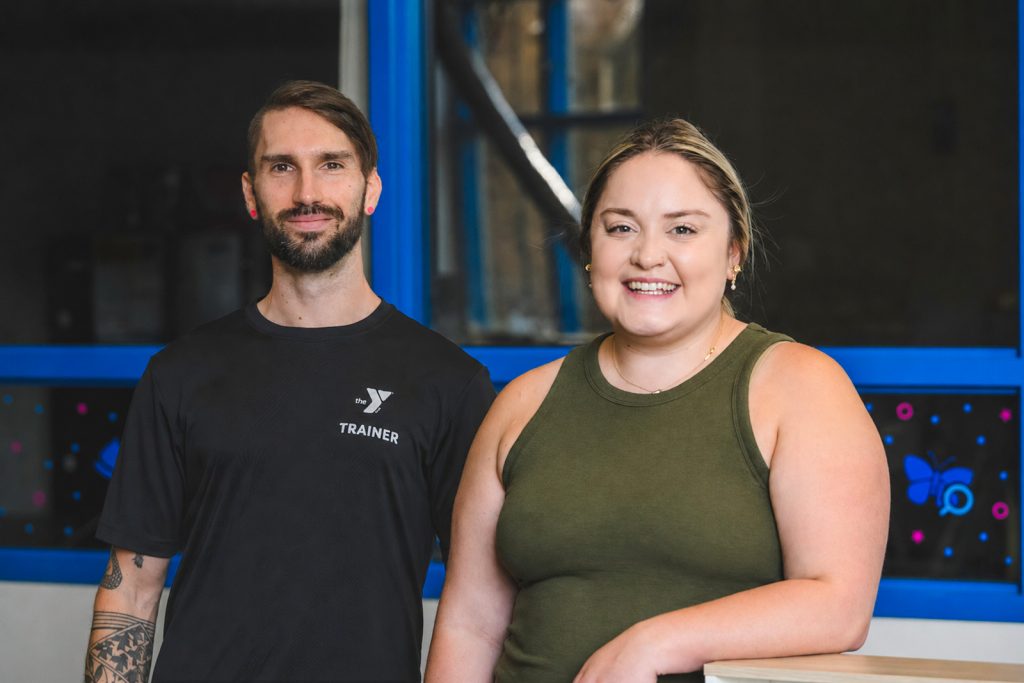
Taylor Michela, the Neighborhood Collaborative’s director of member experience, says community members seem excited about the new offerings. She remembers that a few weeks into June, a woman came up to the front desk and began chatting with a yoga instructor who asked the woman what brought her in.
She told the instructor she’d hadn’t worked out in years and had never been to a yoga class. She said she lived nearby, had heard that free classes were available, and wanted to try it out.
“That is exactly what we want to be able to do and offer for that community,” Michela says.
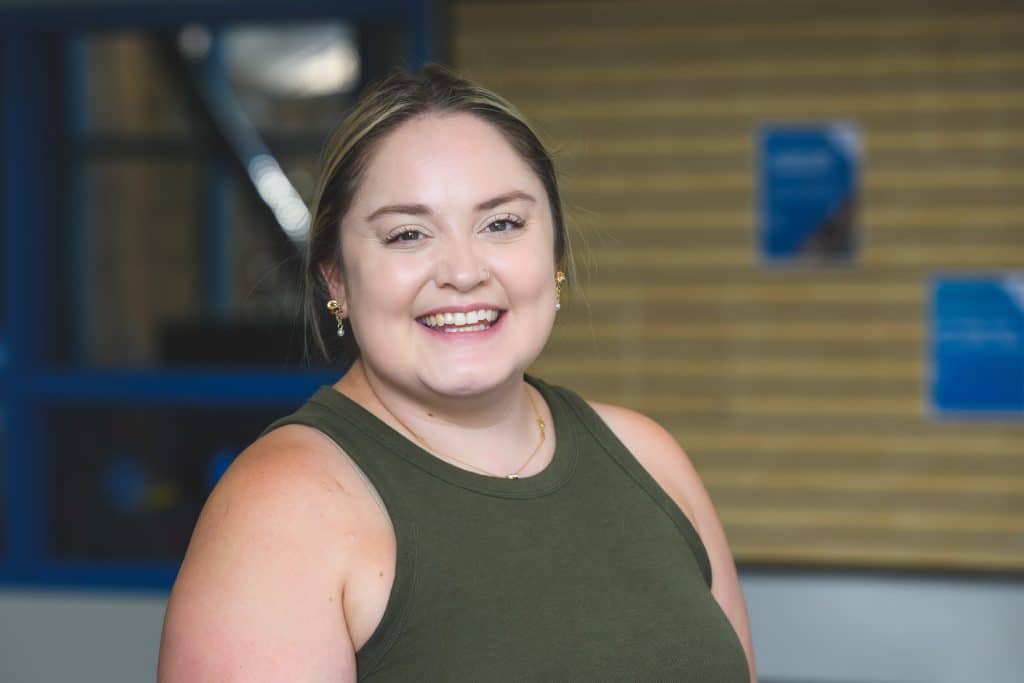
Yoga instructor Natalie Willyerd says turnout at the two yoga classes she’s taught have been small, with one drawing just two attendees, but that’s a chance for one-on-one instruction. Still, she says she’d like to see her class grow. She says drop-in classes around the county can be pricey, averaging around $35 per drop-in session. By contrast, those who purchase a punch card from the Neighborhood Collaborative pay less than $5 per group fitness class.
“To have an option so close in Ypsilanti, where it’s the punch card system, that makes it so much more affordable,” she says. “I think people feel like they can try out a new thing, and it’s not a big financial commitment.”
Willyerd notes that the Neighborhood Collaborative space has been built to foster community. For example, there’s a little free bookshelf, and a waiting area for parents whose children are in class is designed to be comfortable and encourage conversations.
“I think they were very intentional in the design, and it’s meant to really be a space that you feel comfortable in. It’s not like you’re just waiting on a bench outside for the kids to be done,” Willyerd says.
She says she hopes for the collaborative to function as a “third space,” a place beyond work or home where community and fellowship happen naturally.
Plans for the Neighborhood Collaborative’s future include offering the Y’s already-established day camp, Camp New Heights, and a monthly movie afternoon that welcomes participants to discuss and critique the film afterward.
Additional programming in 2027 is expected to include dance, sports, and martial arts classes; flu shot clinics; voter registration drives; college readiness programs; career fairs; a community garden; tutoring; English as a second language classes; music programs; and more. Programming will continue to expand in response to what the community wants and needs, Michela says.
Both Michela and Highsmith say they’d like existing neighborhood groups and clubs to consider the collaborative for a meeting space. Highsmith says he’d love to explore hosting a farmers market there as well.
Now that the center is open and offering programming, Highsmith says he wants to expand the Y’s relationship with the community.
“My goal is more partnering with neighbors,” Highsmith says. “This center is powered by the YMCA, but I want it to be a space that is volunteer-driven, bringing resources into the community, and amplifying local voices.”
More information about the Neighborhood Collaborative is available here.
Author
Related Articles
COVID kids and mental health: How are pandemic littles doing today?
Mental health challenges have surfaced but kids also benefited from increased family time and less hectic schedules.
Mental health millage means help for more people — and a healthier community
In Washtenaw County, adults served by community mental health increased 147%, and youths served 104%.
Recovery: Michigan offers many options outside of residential care.
Washtenaw County professionals providing substance use disorder services contend that Michigan’s far from being a rehab desert.


