A group of U-M students are redefining what it means to build something from scratch. The first Makeathon launches later this month, where teams of students from U-M and the College for Creative Studies must develop and fabricate a physical prototype in 36 hours. Luckily they have the resources of Detroit's TechShop at their disposal.
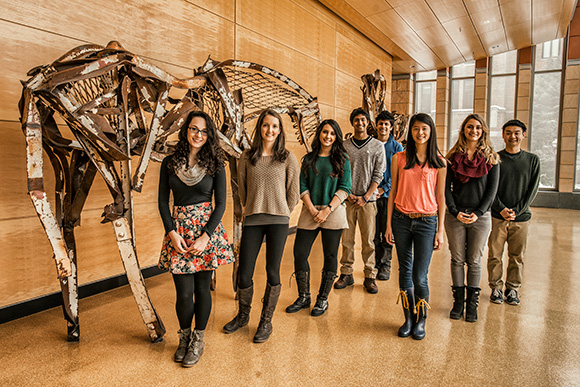
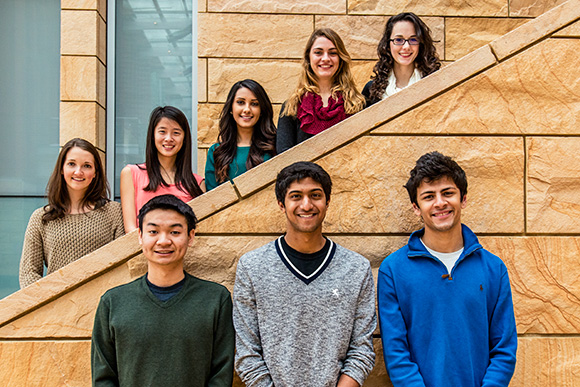
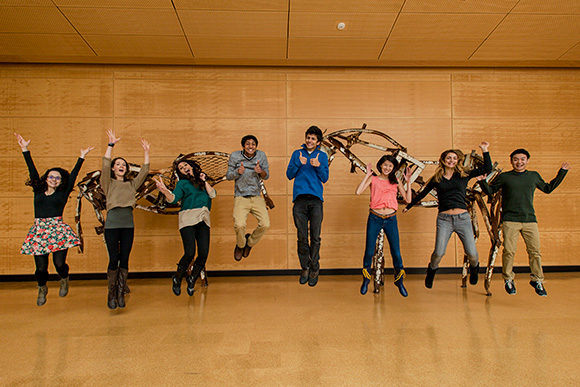
Doug Coombe – U of M Makeathon organizers at the Ross School of Business
Doug Coombe – The U of M Makeathon organizers at the Ross School of Business
Doug Coombe – U of M Makeathon Co-director Beverly Chou
Doug Coombe – U of M Makeathon organizer Sydney Bigelow
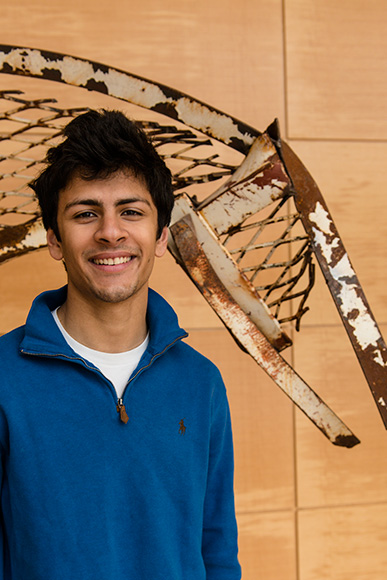
Doug Coombe – U of M Makeathon organizer Anant Kesavan
Doug Coombe – U of M Makeathon organizer Liz Walvogel
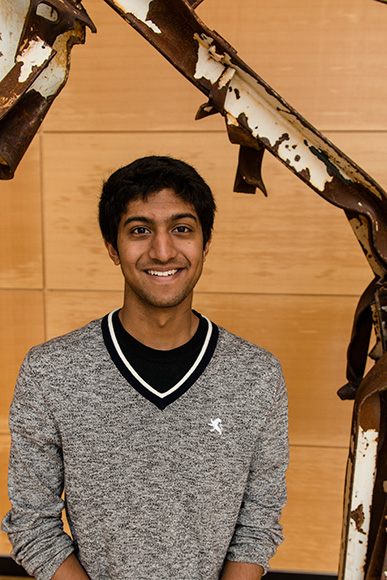
Doug Coombe – U of M Makeathon organizer Nikhil Misra
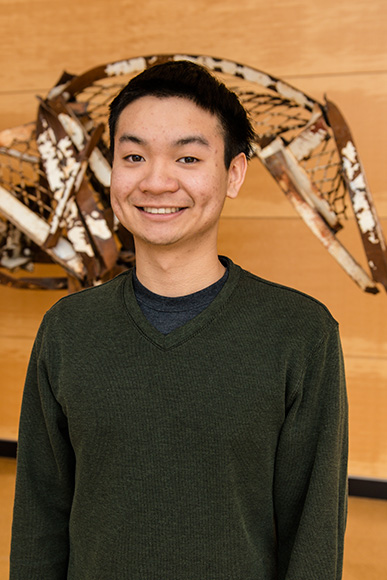
Doug Coombe – U of M Makeathon organizer Philip Yang
Doug Coombe – U of M Makeathon organizer Romina Potter
Doug Coombe – U of M Makeathon organizer Soona Ahmaz
Doug Coombe – The U of M Makeathon organizers at the Ross School of Business
After attending a campus hackathon, U-M mechanical engineering major Beverly Chou was disappointed that there wasn’t a similar event for her field. So she started one herself.
“I was jealous of all the coders and hackers because they get to work with all these other hackers from other universities, and get to win money and get hired and take their ideas to the next level,” Chou says. “I thought, ‘Why can’t I do that?'”
Chou is co-director of U-M’s Makeathon, which takes place February 21-23. The event is entirely student-run, presented by student entrepreneurship group MPowered. In the same way a hackathon gives computer programmers a concentrated time period to collaborate on software development projects, Makeathon will challenge participants to develop and fabricate a physical product in 36 hours.
The event kicks off with a brainstorming session on campus the night of Friday the 21st; then it’s off to TechShop Detroit in Allen Park for furious prototyping on Saturday, and a public product presentation on Sunday from 10am-1pm. Chou says she and her fellow organizers chose to focus most of the event at TechShop because of the wide assortment of maker tools it offers.
“They have a tech shop, a wood shop, spray paint, basically anything you can imagine that you would need to build something physical,” she says. “We’re focused on rapid prototyping because we only have 24 hours.”
Although it sounds like an engineer’s paradise, one of the event’s key goals is to bring together students of diverse majors and interests. Participants may sign up as a team, or be grouped into teams once the event begins. In addition to engineering majors, Chou says the event has drawn interest from music and liberal arts students.
“They might not be able to build that well, but they’re really good at visioning or they have great ideas,” she says. “They bring a different way of thinking about things to the table.”
Makeathon organizing team member Sydney Bigelow herself is a freshman with plans to study biology.
“Before I started working on this project I didn’t know anything about 3D printers or laser cutters or any of these prototyping tools we’re using,” Bigelow says. “But there’s a lot you can learn about prototyping and design and what it takes to make a project. If there’s something you want to make but you don’t know how to build it, Makeathon can teach you to do that.”
Makeathon organizers are also hoping the event will give participants a chance to market their products (again following the model of hackathons, which have become a breeding ground for market-viable new products and even companies). Chou says organizers will help put participants in touch with MPowered’s Venture Expo, a storefront for student entrepreneurs’ products.
Organizers are also hoping to partner with Hatch Hub, an online store offering independent designers’ work as chosen by customer vote. Chou sees the effort as a way to encourage young entrepreneurs to experiment with the physical.
“People shy away from wanting to pursue an idea that’s tangible,” she says. “Michigan has a really strong background in manufacturing. We’re trying to make it a more popular thing instead of everyone just programming apps.”
But even if Makeathon doesn’t jump-start a fresh industrial revolution in Michigan, organizers are happy to promote a collaborative spirit across campus – and beyond. U-M Dearborn students can participate, and the Makeathon team has partnered with the College for Creative Studies to welcome teams from that school as well.
“Different ideas, different viewpoints, different experiences coming together – I think that’s amazing,” Bigelow says. “Not only does it bring people together, but it creates these amazing things that are beneficial to everyone that can use them.”
Patrick Dunn is an Ann Arbor-based freelance writer and regular contributor to Metromode and Concentrate.
As extreme heat, wildfire smoke, and power outages become more and more prevalent in Washtenaw County, a growing network of local officials, health professionals, and community organizers is working to help Ypsilanti residents do more than simply weather the next emergency.
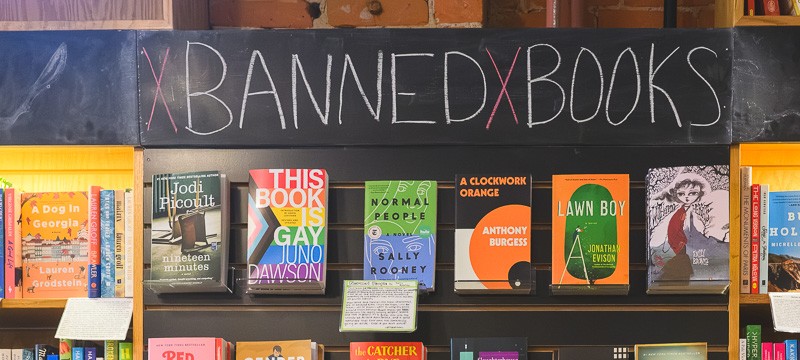
Banned Books Week, Oct. 4 – 10, aims to draw attention to censorship and promote access to information. This year’s theme, “Let Books Be. Protect the Freedom to Read,” will be reflected through programming at local libraries, bookstores, and other institutions.